Economic Pulse Net | Sources: World Bank World Development Indicators, Government Sources | 2026
Key Takeaways
– Guyana is experiencing a historic economic transformation driven by offshore oil production, yet official economic indicators like GDP growth, inflation, and unemployment remain unavailable from the World Bank, leaving analysts to rely on fragmented reporting.
– The political landscape remains deeply polarized, with electoral violence a recurring threat despite the country’s parliamentary democratic framework.
– Major companies are dominated by state-owned utilities and consumer goods conglomerates, suggesting limited private-sector diversification beyond traditional industries.
– The cost of living and safety data are absent from international indices, making it difficult to assess the lived reality for ordinary Guyanese citizens.
– Despite immense oil wealth, the country’s infrastructure, utilities, and telecommunications sectors remain in the hands of legacy companies, raising questions about how effectively resource revenues are being deployed.
The Great Unknown — Guyana’s Missing Economic Picture
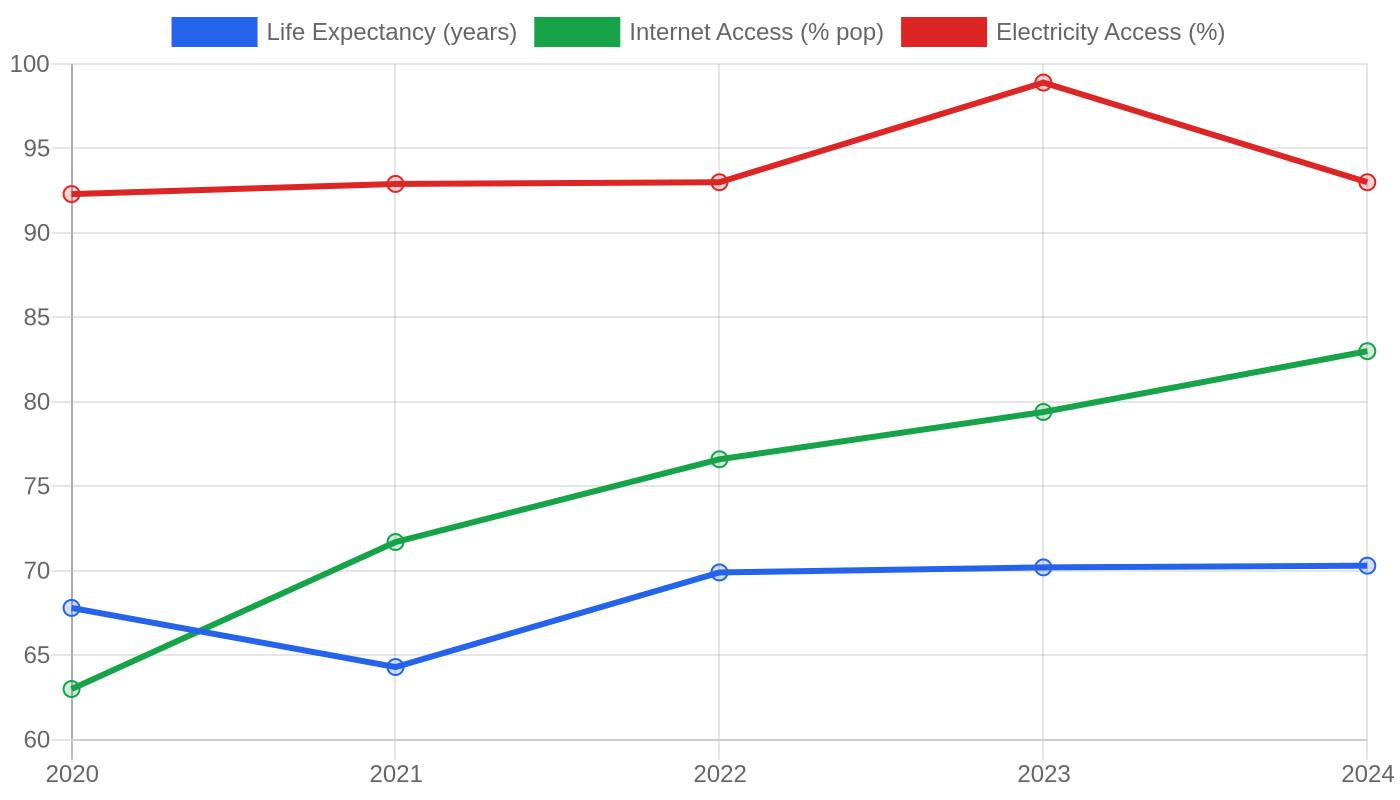
The World Bank’s latest data on Guyana presents a paradox of silence. GDP growth, inflation, unemployment, GDP per capita, GNI per capita, and even population figures are all listed as unavailable. For a country that has been described as one of the fastest-growing economies in the world since ExxonMobil struck oil in 2015, this data vacuum is itself a story.
The absence of basic macroeconomic indicators from the World Bank suggests either significant reporting lags or challenges in data collection. Without inflation figures, it is impossible to gauge whether the oil boom has triggered price pressures in the domestic economy, a common phenomenon in resource-rich developing nations.
Without unemployment data, there is no way to measure whether the oil sector has created meaningful jobs for Guyanese workers or whether the benefits remain concentrated among foreign firms and a small local elite.
What is clear is that Guyana’s economy has historically been anchored in agriculture and mining, with sugar, rice, gold, and bauxite forming the backbone of exports. The emergence of offshore oil has fundamentally altered that equation. Yet the World Bank’s silence on GDP per capita and GNI per capita leaves a critical question unanswered: is the average Guyanese citizen actually better off?
Without these figures, the narrative of Guyana as a petrostate success story remains more aspiration than evidence.
The Cost of Living in a Boom Economy — What the Data Doesn’t Tell You
Housing costs, rent prices, and daily expenses in Guyana are not captured in the available data, leaving a significant gap in understanding how ordinary people fare in an economy undergoing rapid change. In many oil-boom economies, housing markets in capital cities become unaffordable for local residents as expatriate workers and international firms drive up prices.
Georgetown, the capital, has historically been a city of wooden colonial buildings and modest concrete structures. The influx of oil sector workers and international consultants has placed pressure on the limited housing stock. Rent for a modest apartment in a desirable neighborhood can consume a significant portion of a local salary, while purchasing property remains out of reach for many.
Daily expenses for food, transportation, and utilities are shaped by Guyana’s reliance on imports for many consumer goods. The country’s sugar industry, once a major employer, has struggled in recent decades, and the Guyana Sugar Corporation remains a state-owned enterprise that reflects the challenges of competing in global markets.
For the average Guyanese household, the cost of living is influenced by currency fluctuations, import tariffs, and the uneven distribution of oil revenues across the economy.
Investment and Business — Old Guard Companies in a New Economy
The list of top companies in Guyana reveals an economy that has not yet fully modernized despite the oil boom. The Bank of Guyana, the central bank, sits at the top of the financial sector. Banks DIH, a consumer goods conglomerate, and Demerara Distillers, famous for its rum exports, represent the traditional private sector.
The telecommunications sector is dominated by ENet and the Guyana Telephone and Telegraph Company, both legacy operators in a market that has been slow to embrace competition and innovation. The Guyana Power and Light utility remains a state monopoly, and its performance has been a persistent source of frustration for businesses and households alike due to unreliable electricity supply.
The Guyana Sugar Corporation and the Guyana Broadcasting Corporation are state-owned enterprises that reflect the government’s continued role in key sectors. The presence of two newspapers — the Guyana Chronicle and Kaieteur News — on the list of top companies underscores the importance of media in a politically charged environment, but also highlights the limited diversification of the corporate landscape.
For investors, the business climate in Guyana presents both opportunity and risk. The oil sector offers enormous potential, but the supporting infrastructure, regulatory framework, and skilled labor force remain underdeveloped. The dominance of state-owned enterprises and legacy firms suggests that new entrants may face barriers to competition.
Politics, Safety, and the Fragile Social Contract
The politics of Guyana takes place within a parliamentary representative democratic republic, where the president serves as both head of state and head of government in a multi-party system. Executive power is exercised by the president and the government, while legislative power is vested in both the president and the National Assembly.
Historically, politics has been a source of tension in the country, and violent riots have often broken out during elections. This pattern of electoral violence is deeply rooted in Guyana’s ethnic divisions, with politics largely organized along Indo-Guyanese and Afro-Guyanese lines. The two main political parties — the People’s Progressive Party and the People’s National Congress — have alternated power in an atmosphere of mutual suspicion and occasional unrest.
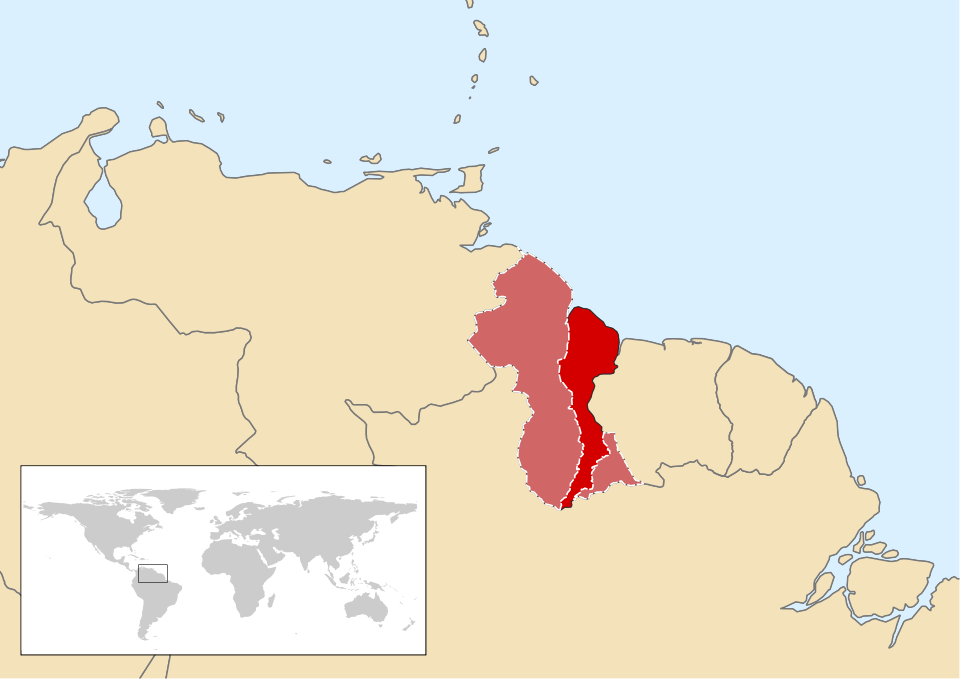
Crime and safety data are unavailable from the available sources, but anecdotal reporting suggests that Georgetown faces challenges with petty crime, gang activity, and drug trafficking. The country’s location on the South American mainland, bordering Venezuela, Brazil, and Suriname, makes it a transit point for illicit goods. The safety index remains unmeasured, which itself is a concern for potential investors and expatriates considering relocation.
Quality of life in Guyana is shaped by the tension between immense natural resource wealth and underdeveloped public services. Healthcare, education, and infrastructure have not kept pace with the oil boom, and the benefits of resource extraction have not been evenly distributed. For many Guyanese, the daily reality is one of high expectations and slow delivery.
What’s Happening Now — The Oil Boom’s Unfinished Business
Right now, Guyana is at a critical juncture. The offshore oil fields operated by ExxonMobil continue to produce at record levels, generating billions of dollars in government revenue. Yet the transformation of that revenue into tangible improvements in the lives of ordinary citizens remains a work in progress.
The political landscape remains volatile. Elections are always high-stakes events, and the threat of violence looms over each electoral cycle. The current government faces pressure to demonstrate that the oil wealth is being managed transparently and effectively, while opposition parties accuse the administration of corruption and mismanagement.
On the business front, the telecommunications and energy sectors are under scrutiny. The Guyana Power and Light utility continues to struggle with reliability, and the Guyana Telephone and Telegraph Company faces growing demand for better internet and mobile services. There is pressure for reform and liberalization, but legacy state-owned enterprises resist change.
The media environment is active, with the Guyana Chronicle and Kaieteur News providing competing narratives about the country’s direction. The Bank of Guyana is tasked with managing the macroeconomic implications of the oil boom, including the risk of Dutch disease — where a resource boom harms other sectors of the economy.
The Bottom Line
Guyana is a country of immense promise and persistent uncertainty. The oil boom has the potential to transform one of South America’s poorest nations into a regional economic powerhouse, but the data gaps, political tensions, and underdeveloped institutions raise serious questions about whether that potential will be realized. Investors should watch Guyana for its resource opportunities but proceed with caution. Journalists and analysts should demand better data.
And ordinary Guyanese deserve to know whether the oil beneath their feet will finally lift their boats — or merely float a few.
Sources & Methodology
This article is authored by Economic Pulse Net for informational and research purposes. Economic Pulse Net sources its data from multilateral institutions, national statistics bureaus, and proprietary databases. All data is believed to be current as of the date of publication.
Published: July 18, 2026 | Category: Research — Guyana
Use these signals in your own platform
Economic Pulse publishes its live signal feed through a documented, read-only API. Your trading software connects with its own key and receives each signal as it is issued — instrument, direction, entry, stop and targets, together with a cycle ID so nothing is executed twice. The feed is independent of this website and cannot change it.
Signals are informational only and are not financial advice.