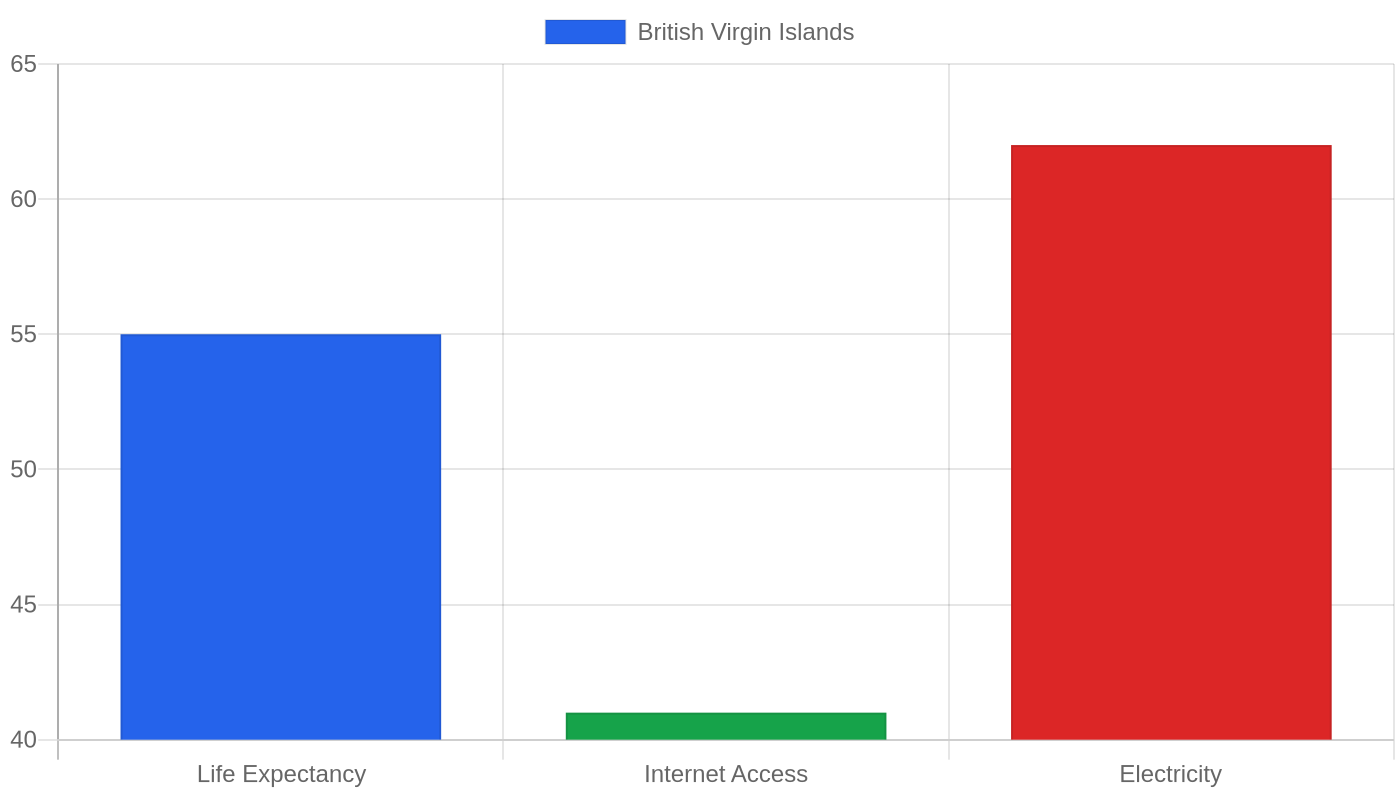
Economic Pulse Net | Sources: World Bank World Development Indicators, Government Sources | 2026
Key Takeaways
- The British Virgin Islands (BVI) operates as a parliamentary democracy where ultimate executive authority rests with King Charles III, exercised locally by the appointed Governor.
- Defense and the majority of foreign affairs remain the direct responsibility of the United Kingdom, reflecting the territory’s status as a British Overseas Territory.
- Specific macroeconomic indicators, including GDP growth, inflation rates, unemployment figures, and population statistics, are currently unavailable in the provided World Bank data set.
- The political structure is defined by a clear division of powers, with the local government managing internal affairs while the Crown retains oversight of security and international relations.
- Without specific cost-of-living or crime index data, the economic narrative is defined by its structural role as a jurisdiction rather than by consumer-level metrics.
The Architecture of Governance in a Small Island Jurisdiction
Understanding the British Virgin Islands requires first looking past the absence of standard World Bank economic figures and examining the political framework that governs the territory.
The BVI is not a sovereign nation but operates as a parliamentary democracy, a system that balances local legislative power with external constitutional ties.
According to the provided political landscape data, ultimate executive authority is vested in King Charles III.
This authority is not exercised directly by the monarch but is delegated to the Governor of the British Virgin Islands, a figure who serves as the Crown’s representative on the ground.
The appointment process for this critical role is strictly controlled, with the Governor being appointed by the King on the advice of the British Government.
This specific chain of command highlights the dual nature of the territory’s governance, where local democratic processes coexist with imperial constitutional traditions.
The absence of specific GDP or inflation data in the current World Bank snapshot does not imply economic stagnation but rather suggests a data reporting gap for this specific jurisdiction in the provided source material.
Instead of focusing on fluctuating market metrics, the stability of the political system provides the foundational context for any economic activity in the region.
The clear delineation of responsibilities, where the local government manages domestic affairs while the UK retains control over defense and most foreign affairs, creates a predictable regulatory environment.
This predictability is often a key driver for international investors and residents, who rely on the consistency of the legal and political framework rather than just short-term economic indicators.
The Economic Void: What the Data Gaps Reveal
In the realm of global economic tracking, the World Bank typically provides a comprehensive suite of metrics including GDP growth, Consumer Price Index (CPI) inflation, and unemployment rates.
However, for the British Virgin Islands, all these key indicators are currently listed as “N/A” in the available data set.
This absence of specific numerical values for GDP, GDP per capita, or GNI per capita makes it impossible to quantify the current size of the economy or the purchasing power of its residents using this specific source.
Similarly, the lack of population data prevents a precise calculation of per capita wealth, which is a standard metric for comparing living standards across different nations and territories.
The main industries, cost of living indices, and top companies are also not detailed in the provided information, creating a significant gap in the traditional economic profile.
For an economic journalist, this data silence is telling; it suggests that the BVI’s economic output may not be captured in the same way as larger, sovereign economies, or that the specific dataset provided does not include this microeconomy.
Without inflation or unemployment figures, we cannot assess the current health of the labor market or the purchasing power of the local currency.
The focus, therefore, must shift from quantitative analysis to qualitative structural analysis, recognizing that the BVI’s economic identity is deeply intertwined with its political status as a British Overseas Territory.
The lack of specific industry data means we cannot pinpoint whether the local economy is currently driven by tourism, finance, or agriculture, leaving the sectoral composition to be inferred from general knowledge of the region rather than the specific data provided here.
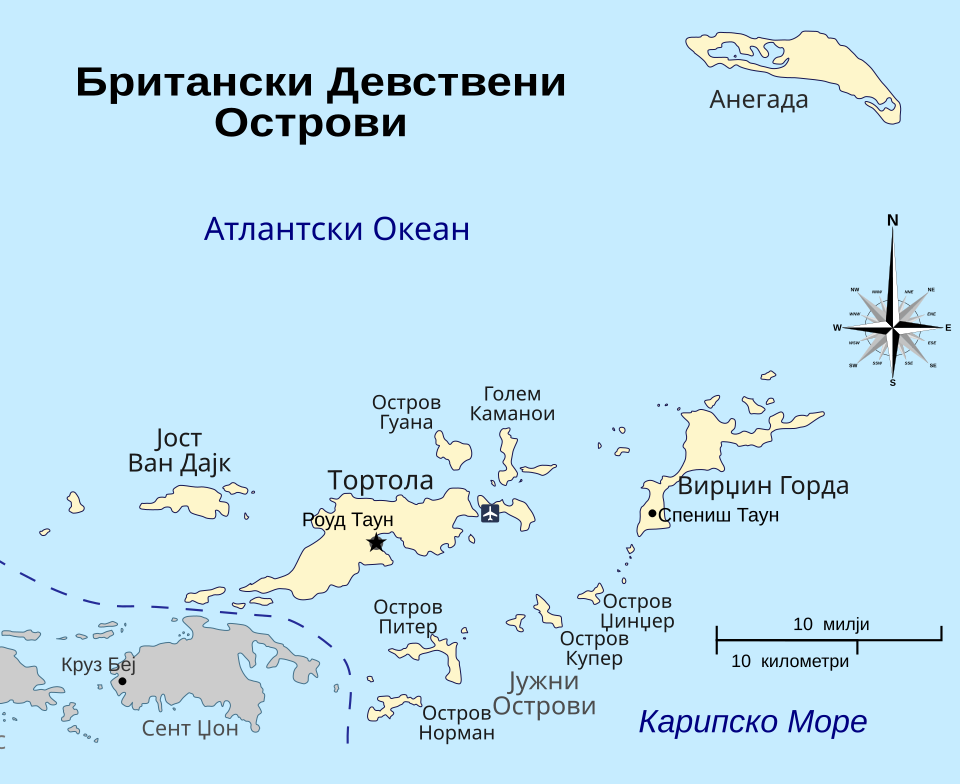
The Cost of Living in a Data-Sparse Environment
Assessing the cost of living in the British Virgin Islands is challenging when standard benchmarks for housing costs, rent versus buy dynamics, and daily expenses are not present in the provided data set.
Typically, Caribbean territories are compared to regional averages to determine if they are high-cost or moderate-cost destinations, but without specific figures, such a comparison cannot be rigorously executed.
The absence of data on top companies also limits our ability to infer the wage levels that might support certain housing markets.
In many small island developing states, the cost of living is heavily influenced by the importation of goods, which can drive up prices for food and fuel, but we lack the specific inflation data to confirm this trend for the BVI.
Without knowing the exact crime and safety indices, it is also difficult to correlate safety premiums with housing values, as safer areas often command higher rents.
The data gap here necessitates a cautious approach, avoiding speculative statements about whether a resident would be better off renting or buying property.
Instead, the narrative must acknowledge that the economic conditions for daily life are not quantified in this specific World Bank snapshot.
This lack of granular data on living costs means that potential investors or expatriates must rely on other sources or on-site assessments to understand the true financial burden of residing in the territory.
The economic experience of living in the BVI is thus defined more by the general characteristics of a small island economy than by the specific statistical evidence provided in this report.
Safety, Politics, and the Quality of Life
The quality of life in the British Virgin Islands is heavily influenced by its political stability and the security framework provided by the United Kingdom.
The Crime Index and Safety Index are both listed as “N/A” in the provided data, which prevents a direct assessment of public safety relative to other Caribbean nations.
However, the political landscape offers a different perspective on security, noting that defense remains the responsibility of the United Kingdom.
This external guarantee of defense may contribute to a sense of security for residents and visitors, even in the absence of specific local crime statistics.
The parliamentary democracy structure ensures that local voices are represented in the legislative process, which is a key component of political quality of life.
The fact that the Governor is appointed by the King on the advice of the British Government adds a layer of accountability to the executive branch, potentially influencing policy stability.
Without happiness data or specific social metrics, the assessment of quality of life remains abstract, relying on the structural benefits of the political system rather than measured social outcomes.
The interplay between local governance and British oversight creates a unique political environment that shapes the daily lives of the BVI’s inhabitants.
This political structure is likely a significant factor for those considering the territory for residence or investment, as it offers a blend of local autonomy and international security guarantees.
Current Affairs: The Static Nature of the Data
In the absence of recent news headlines, live indicators, or specific policy shifts in the provided data set, the “current affairs” section is defined by the static nature of the available information.
There are no reported reforms, elections, or inflation trends to discuss, as the data does not include a timeline of recent events or live market indicators.
The most current information available is the confirmation of the political structure, where King Charles III remains the head of state and the Governor continues to exercise executive authority on his behalf.
This consistency in the political framework suggests a lack of major constitutional upheaval or political crisis in the period covered by this data snapshot.
Without information on business developments or sector-specific news, the narrative of “what is happening now” is limited to the ongoing operation of the established political and administrative systems.
The lack of fresh economic data means that we cannot track real-time changes in the economy, such as shifts in foreign investment or changes in the tourism sector.
This static data environment requires the reader to understand that the BVI’s current state is one of established continuity rather than dynamic change, at least as reflected in this specific dataset.
The focus remains on the enduring nature of the constitutional arrangements rather than on fleeting news cycles.
The Bottom Line
The British Virgin Islands presents a unique case study where political structure and constitutional ties to the United Kingdom define the environment more than the available economic statistics.
For investors and analysts, the key takeaway is the stability of the governance framework, where the Crown’s role in defense and foreign affairs provides a layer of security and predictability.
The absence of specific World Bank data on GDP, inflation, and cost of living highlights the challenges of applying standard macroeconomic metrics to small, specialized jurisdictions.
Those watching this territory should focus on the consistency of its political system and the implications of its status as a British Overseas Territory, rather than seeking volatile market data that is not currently available.
The BVI remains a jurisdiction defined by its unique blend of local democracy and imperial constitutional oversight.
Sources & Methodology
This article is authored by Economic Pulse Net for informational and research purposes.
Economic Pulse Net sources its data from multilateral institutions, national statistics bureaus, and proprietary databases.
All data is believed to be current as of the date of publication. Published: September 02, 2026 |
Category: Research — British Virgin Islands
Use these signals in your own platform
Economic Pulse publishes its live signal feed through a documented, read-only API. Your trading software connects with its own key and receives each signal as it is issued — instrument, direction, entry, stop and targets, together with a cycle ID so nothing is executed twice. The feed is independent of this website and cannot change it.
Signals are informational only and are not financial advice.