Economic Pulse Net | Sources: World Bank World Development Indicators, Government Sources | 2026
🇳🇿 New Zealand 2026 — Steady State in a Shifting World
Key Takeaways
- Modest Growth Amidst Global Uncertainty: New Zealand’s economy is projected to expand by just 0.46% in 2025, signaling a period of consolidation rather than rapid expansion, according to World Bank data.
- Resilient Purchasing Power: Despite inflation ticking up to 2.84%, the country maintains a high GDP per capita (PPP) of approximately $57,350, reflecting strong underlying economic value.
- Labor Market Stability: The unemployment rate sits at 5.07%, indicating a balanced labor market that is neither overheated nor in recession.
- Corporate Backbone: The economy is anchored by major players like Fonterra and Fletcher Building, spanning agriculture, construction, and telecommunications.
- Political Continuity: As a constitutional monarchy with a parliamentary democracy, New Zealand offers a stable political framework under the reign of King Charles III, represented locally by the Governor-General.
A Slow Burn: The Economics of Stability
The economic pulse of New Zealand in 2025 is defined by cautious optimism and steady, if slow, momentum.
According to the World Bank, the country’s Gross Domestic Product (GDP) is expected to grow by a modest 0.462871830681081% this year.
While this figure might appear unimpressive compared to high-growth emerging markets, it reflects a mature economy adjusting to post-pandemic realities and global supply chain shifts.
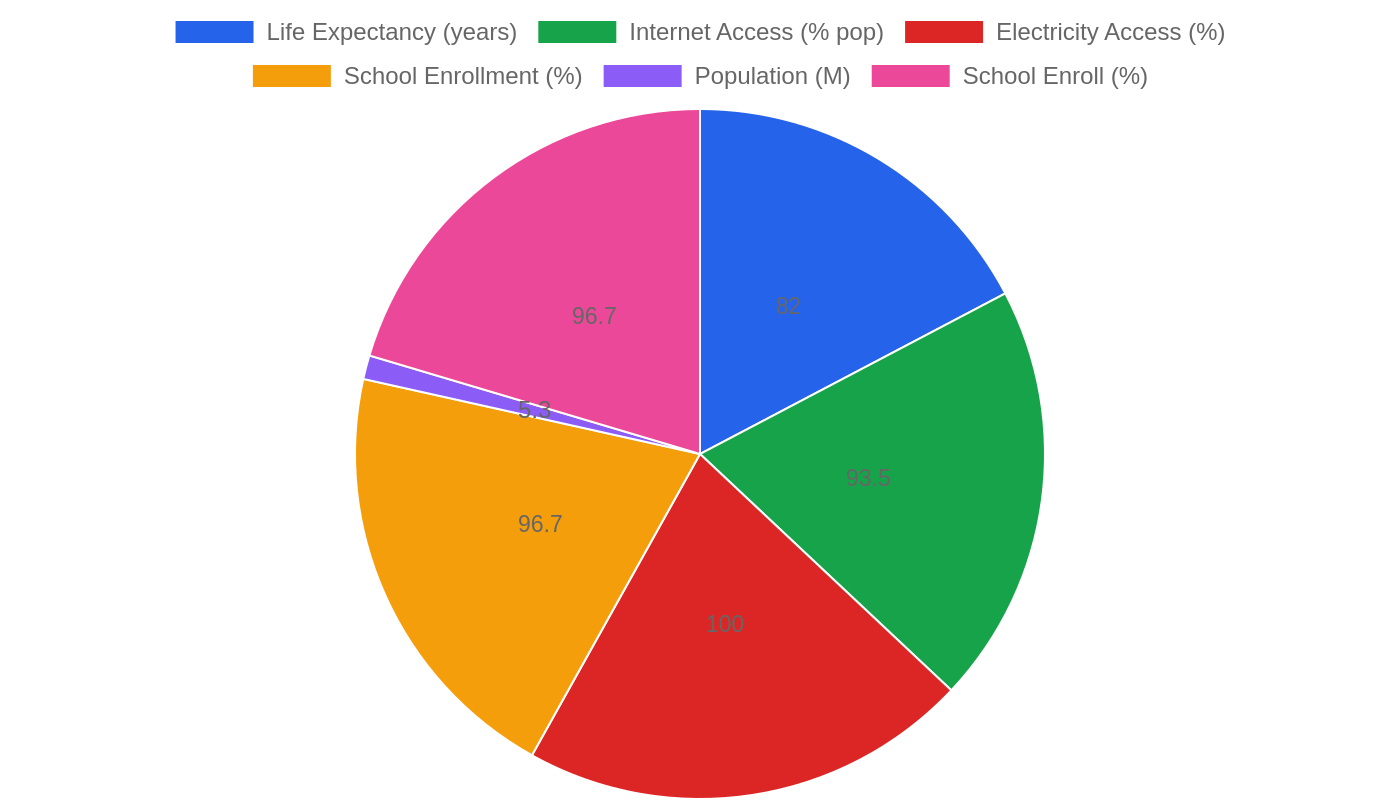
The total GDP stands at approximately $264.05 billion USD, a significant figure for a nation with a population of just 5.32 million people.
This density of economic output is further highlighted by the GDP per capita at Purchasing Power Parity (PPP), which reaches $57,350.36.
This metric is crucial because it adjusts for local price levels, revealing that the average New Zealander enjoys a high standard of living relative to their global peers.
The Gross National Income (GNI) per capita also remains robust at $46,630.00, suggesting that the benefits of economic activity are broadly distributed across the population.
These numbers indicate an economy that is not in crisis but is also not experiencing a boom, settling into a “new normal” of low single-digit growth.
The Cost of Living and Daily Reality
For the average resident, the abstract figures of GDP translate into tangible daily experiences, particularly regarding the cost of living.
Inflation, measured by the Consumer Price Index (CPI), has risen to 2.8397963180572% in 2025.
While this rate is relatively moderate by historical standards, it still impacts household budgets, particularly for essentials like food, energy, and housing.
The high GNI per capita of $46,630 suggests that wages have likely kept pace with these price increases, preserving the real purchasing power of the median household.
However, the specific breakdown of housing costs and rent-to-buy ratios is not detailed in the provided data, though the presence of major construction firms like Fletcher Building in the top companies list suggests that the built environment remains a critical sector for managing living costs.
The stability in inflation suggests that the central bank’s policies are effectively managing price pressures, preventing the kind of hyperinflationary spikes that can erode savings.
For consumers, this means a predictable economic environment where planning for long-term goals, such as home ownership or retirement, remains feasible despite the gradual rise in prices.
Corporate Giants and Sectoral Strength
The business landscape in New Zealand is dominated by a handful of large-cap companies that serve as the pillars of the national economy.
Fonterra, with a valuation metric of 22,953, stands out as the largest entity, reflecting the nation’s deep-rooted connection to the dairy and agricultural export sectors.
Following closely is Fletcher Building (8,498) and Woolworths (7,585), which represent the construction and retail industries, respectively.
These sectors are vital for domestic consumption and infrastructure development.
The telecommunications sector is also well-represented by Spark New Zealand (3,694) and 2degrees, highlighting the importance of digital connectivity in a modernized service economy.
In the consumer services and industrials space, Air New Zealand (2,734) and Airwork play significant roles, particularly in logistics and transport.
The presence of AFFCO Holdings in consumer goods and AHI Roofing in industrials further diversifies the corporate portfolio.
This concentration of value in a few major firms suggests a mature market where scale and brand loyalty are key competitive advantages.
Investors looking at New Zealand will likely focus on these established blue-chip names as they offer stability and dividend potential in a slower growth environment.
Political Stability and Social Safety
New Zealand operates as a constitutional monarchy with a parliamentary democracy, a system that provides a layer of political continuity and institutional stability.
Although the constitution is not codified, the framework is well-established, with King Charles III serving as the head of state.
He is represented locally by the Governor-General, who is appointed on the advice of the Prime Minister.
The Governor-General holds significant prerogative powers, including the ability to review cases of injustice and appoint key public officials such as ministers and ambassadors.
This structure ensures that even in times of political change, there is a consistent executive authority.
While specific crime and safety indices are not provided in the data, the political structure suggests a society that prioritizes rule of law and institutional integrity.
The absence of codified constitutional crises in the recent data implies a functioning democratic process where power transitions are managed through established parliamentary channels rather than abrupt systemic shocks.
This political stability is a key attraction for both domestic residents and international investors who value predictability in governance.
Current Affairs: Navigating the 2025 Landscape
The current economic narrative for New Zealand in 2025 is one of careful navigation.
With GDP growth hovering just above 0.46%, policymakers are likely focused on maintaining this fragile equilibrium without triggering higher inflation or unemployment.
The unemployment rate of 5.076% is a critical indicator, sitting at a level that suggests a healthy labor market without the risk of wage-driven inflationary spirals.
The rise in CPI to 2.84% is a point of close watch, as it indicates that price pressures are not entirely extinguished but are under control.
The business environment is adapting to these conditions, with major companies like Fonterra and Fletcher Building likely adjusting their investment strategies to align with the slower growth trajectory.
The political landscape, under the guidance of the Governor-General and the parliamentary system, provides the stability needed to implement long-term economic reforms.
As the year progresses, the focus will remain on whether this steady state can be sustained or if external shocks will disrupt the delicate balance of low growth and low unemployment.
The data suggests a nation that is prioritizing stability over rapid expansion, a strategy that may appeal to risk-averse investors and residents alike.
The Bottom Line
New Zealand presents a compelling case for those seeking economic stability and high quality of life in a developed nation.
The combination of a high GDP per capita, moderate inflation, and a stable political system makes it a resilient economy.
While growth is slow, the underlying strength of the corporate sector and the labor market suggests that the economy is healthy and well-managed.
For investors, the focus should be on the major industrial and agricultural firms that drive the national output.
For residents, the data points to a society where purchasing power is preserved and political institutions function reliably.
New Zealand is not a destination for high-risk, high-reward speculation, but rather a solid, steady anchor in a volatile global economy.
Sources & Methodology
This article is authored by Economic Pulse Net for informational and research purposes.
Economic Pulse Net sources its data from multilateral institutions, national statistics bureaus, and proprietary databases.
All data is believed to be current as of the date of publication. Published: September 03, 2026 |
Category: Research — New Zealand
Use these signals in your own platform
Economic Pulse publishes its live signal feed through a documented, read-only API. Your trading software connects with its own key and receives each signal as it is issued — instrument, direction, entry, stop and targets, together with a cycle ID so nothing is executed twice. The feed is independent of this website and cannot change it.
Signals are informational only and are not financial advice.