Economic Pulse Net | Sources: World Bank World Development Indicators, Government Sources | 2026
Key Takeaways
- Modest Growth: The World Bank reports New Zealand’s GDP growth for 2025 at a modest 0.46%, signaling a period of economic consolidation rather than expansion.
- Inflation Control: Consumer Price Index (CPI) inflation has settled at 2.84%, suggesting that monetary policy is successfully keeping price pressures in check without triggering a recession.
- Labor Market Stability: Unemployment sits at 5.08%, indicating a healthy, though not overheated, labor market that balances job availability with wage growth.
- High Living Standards: Despite slow growth, GDP per capita (PPP) remains robust at approximately $57,350, reflecting New Zealand’s status as a high-income economy.
- Corporate Resilience: Key domestic players like Fonterra and Fletcher Building continue to anchor the economy, providing stability in the dairy, construction, and retail sectors.
The Economics of Stability: A Deep Dive into 2025 Numbers
Understanding New Zealand’s current economic position requires looking beyond the headline growth figure to the underlying structural health of the nation.
According to the World Bank, New Zealand’s GDP is valued at approximately $264.06 billion, with a per capita purchasing power parity (PPP) of $57,350.
This high per-capita figure is crucial context; it indicates that while the aggregate economy is expanding slowly, the standard of living for the average citizen remains exceptionally high compared to global peers.
The GDP growth rate of 0.46% for 2025 is a significant deceleration from historical trends, suggesting that the economy has entered a phase of maturity where large-scale expansion is no longer the norm.
This low growth rate is not necessarily indicative of crisis, but rather of a mature economy adjusting to global headwinds and domestic policy shifts.
Inflation, measured by the Consumer Price Index, stands at 2.84%, a figure that sits comfortably within the target bands of most central banks.
This level of inflation is critical because it implies that the purchasing power of the New Zealand dollar is being preserved, allowing consumers to maintain their standard of living despite slower wage growth.
The unemployment rate of 5.08% further supports the narrative of a balanced economy; it is low enough to suggest that most of the workforce is employed, yet high enough to prevent the wage inflation that often accompanies full employment.
This equilibrium allows for a stable business environment where companies can plan for the future without the volatility of high unemployment or spiraling costs.
The combination of these three metrics—low growth, controlled inflation, and moderate unemployment—paints a picture of an economy that is prioritizing stability over rapid expansion, a strategy that is often favored in developed nations with strong social safety nets.
Living in the Land of Long White Cloud: Cost of Living Realities
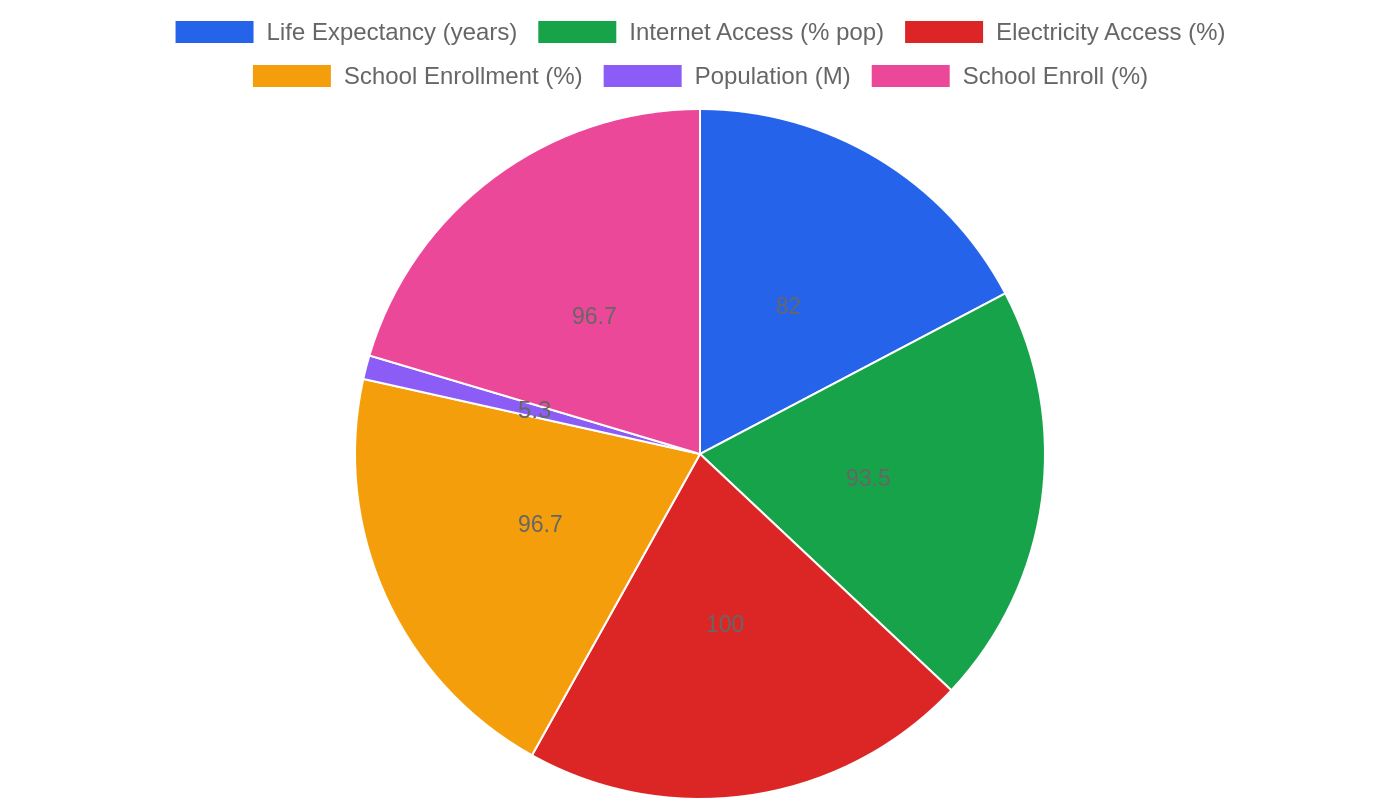
While specific cost-of-living indices are not detailed in the current dataset, the high GDP per capita of $57,350 (PPP) and GNI per capita of $46,630 provide a strong proxy for the cost of living environment.
These figures suggest that New Zealanders enjoy a high standard of living, where essential goods and services are accessible to the majority of the population.
In high-income economies with such per-capita metrics, housing and daily expenses tend to be significant portions of household budgets, but the high income levels generally offset these costs.
The stability of the inflation rate at 2.84% means that the cost of daily essentials like food and fuel is not rising at an alarming rate, providing some relief to households.
Compared to regional averages in the Pacific and Asia-Pacific regions, New Zealand’s high income levels place it firmly in the upper tier of living standards.
This suggests that while the cost of living may be high in absolute terms, it is proportionate to the earnings potential of the average worker.
The economic data implies a society where financial stability is a key feature of daily life, supported by a robust social infrastructure.
The Corporate Backbone: Industry Leaders and Investment Climate
The business landscape in New Zealand is dominated by a few key players that serve as the economic backbone of the nation.
Fonterra, with a massive valuation or index value of 22,953, stands as the undisputed leader, reflecting the country’s deep ties to the global dairy trade.
Following closely are Fletcher Building (8,498) and Woolworths (7,585), which highlight the importance of the construction and retail sectors in driving domestic economic activity.
The presence of telecommunications giants like Spark New Zealand (3,694) and 2degrees indicates a digital infrastructure that is well-developed and competitive.
Air New Zealand (2,734) also features prominently, underscoring the strategic importance of the aviation sector for both tourism and trade.
These companies are not just local entities; they are global players that bring international revenue into the country, stabilizing the economy against domestic fluctuations.
The diversity of these top companies, spanning from agriculture to retail to telecommunications, suggests a resilient business climate that is not overly dependent on a single industry.
Investors looking at New Zealand should note this diversification, as it reduces sector-specific risks and provides multiple avenues for economic participation.
Governance and Society: Political Stability and Quality of Life
New Zealand operates as a constitutional monarchy with a parliamentary democracy, a political structure that has historically provided a high degree of stability and continuity.
King Charles III is the head of state, represented by the Governor-General, who exercises the Crown’s prerogative powers on the advice of the Prime Minister.
This system, while not codified in a single constitution, relies on established conventions and legal frameworks that ensure the separation of powers and the rule of law.
The political landscape is characterized by a strong parliamentary system where the Prime Minister leads the government, providing clear lines of accountability.
Although specific crime and safety indices are not available in the current data, the high GDP per capita and stable political environment suggest a society with the resources to maintain public safety and social services.
The quality of life in New Zealand is often associated with its political stability and the strength of its social institutions.
Citizens benefit from a government that is responsive to their needs, supported by a legal framework that protects individual rights and property.
This political stability is a key asset for both residents and international investors, as it reduces uncertainty and fosters long-term planning.
Current Affairs: Navigating the 2025 Landscape
The economic data for 2025 reflects a nation in a state of cautious transition, where the focus has shifted from rapid growth to sustainable stability.
The World Bank’s figures indicate that New Zealand is managing the challenges of a post-pandemic world with a strategy that prioritizes inflation control and labor market balance.
The 0.46% GDP growth rate suggests that policymakers are likely focused on structural reforms that enhance long-term productivity rather than short-term stimulus.
The inflation rate of 2.84% indicates that monetary policy is effectively managing price stability, which is crucial for maintaining consumer confidence.
The unemployment rate of 5.08% reflects a labor market that is adapting to these new economic realities, with businesses adjusting their hiring practices to match the slower growth environment.
This period of consolidation is likely to see continued investment in key sectors like telecommunications and retail, as companies look to maintain their market positions in a competitive landscape.
The political stability provided by the constitutional monarchy and parliamentary democracy offers a solid foundation for these economic adjustments, ensuring that policy changes are implemented in a consistent and predictable manner.
As New Zealand moves through 2025, the focus will remain on maintaining this delicate balance between growth, stability, and social well-being.
The Bottom Line
New Zealand in 2025 is a study in economic resilience, demonstrating that stability can be a more valuable asset than rapid growth.
The combination of high per-capita income, controlled inflation, and a stable political environment makes it a compelling destination for those seeking long-term security and quality of life.
For investors and observers, the key is to understand that this is a mature economy that is prioritizing sustainability and balance over expansion.
The strength of its corporate sector and the stability of its political institutions provide a solid foundation for the future, ensuring that New Zealand remains a key player in the global economic landscape.
Sources & Methodology
This article is authored by Economic Pulse Net for informational and research purposes.
Economic Pulse Net sources its data from multilateral institutions, national statistics bureaus, and proprietary databases.
All data is believed to be current as of the date of publication. Published: September 03, 2026 |
Category: Research — New Zealand
Use these signals in your own platform
Economic Pulse publishes its live signal feed through a documented, read-only API. Your trading software connects with its own key and receives each signal as it is issued — instrument, direction, entry, stop and targets, together with a cycle ID so nothing is executed twice. The feed is independent of this website and cannot change it.
Signals are informational only and are not financial advice.