Economic Pulse Net | Sources: World Bank World Development Indicators, Government Sources | 2026
Key Takeaways
* Political Complexity: New Caledonia operates as a *territoire sui generis*, a unique status where France has gradually transferred powers, creating a complex governance structure involving French national elections, European Parliament representation, and local provincial assemblies.
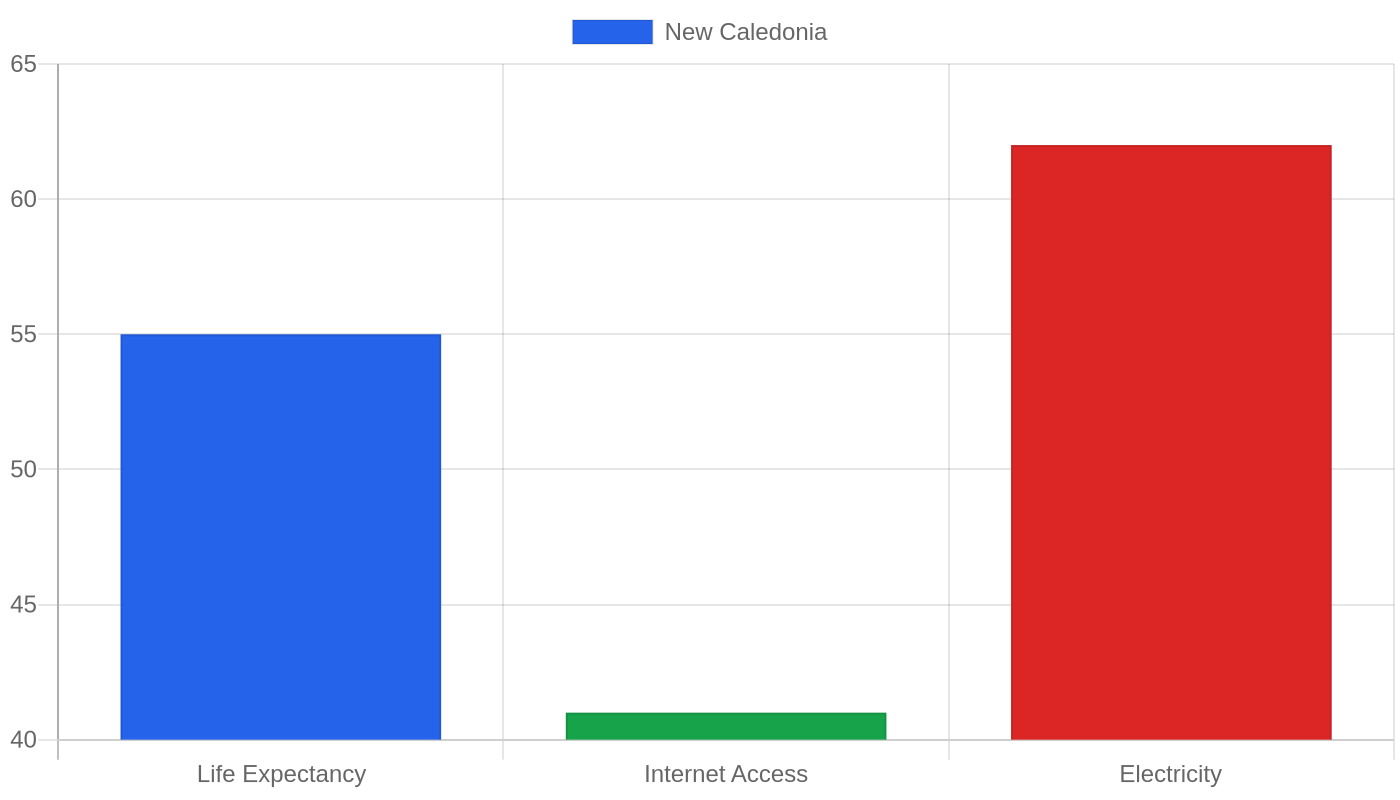
Data Gaps in Macro Indicators: Official World Bank data for key economic metrics—including GDP growth, inflation, unemployment, and per capita income—is currently listed as unavailable, necessitating a focus on structural and political factors rather than traditional quantitative benchmarks.
Governance Structure: The territory is governed by a 54-member Territorial Congress, composed of members from three provincial assemblies, while the French State retains significant oversight through a High Commissioner.
National Integration: Despite its distinct territorial status, citizens hold French nationality, vote for the President of France, and participate in European Parliament elections, linking their fate directly to broader French and EU policy frameworks.
Information Scarcity: Detailed data on main industries, cost of living, top companies, and crime indices are not provided in current datasets, requiring an analysis based on the known political and administrative framework.
Economic Landscape: Navigating the Data Void
The economic narrative of New Caledonia is currently obscured by significant gaps in available statistical reporting. According to the World Bank, critical macroeconomic indicators such as GDP growth, inflation rates (CPI), and unemployment figures are marked as “N/A,” leaving analysts without standard quantitative tools to measure the territory’s economic health.
Similarly, absolute values for GDP in USD, GDP per capita in PPP terms, and GNI per capita are absent from the latest dataset, making direct comparisons with other Pacific or OECD economies impossible at this time. This lack of data does not imply economic stagnation but rather highlights a disconnect between local administrative realities and international statistical collection methods.
Without these numbers, understanding the economy requires looking beyond spreadsheets to the structural dependencies that define the territory’s financial life. The absence of population data further complicates any attempt to calculate per-capita productivity or labor market dynamics. Consequently, investors and policymakers must rely on qualitative assessments of the territory’s relationship with France and its resource-based potential rather than hard economic metrics.
Cost of Living and Housing: The Price of Isolation
Detailed metrics regarding the cost of living, housing markets, and daily expenses are not included in the provided data set, preventing a precise numerical comparison with regional averages. However, the nature of New Caledonia as a remote French territory in the South Pacific inherently suggests a cost structure influenced by import dependency and logistical challenges.
Typically, such jurisdictions experience higher prices for consumer goods and real estate due to transportation costs and limited local manufacturing bases. Without specific rent-to-price ratios or inflation data, it is difficult to assess whether housing affordability has improved or deteriorated in recent years. The lack of data on top companies also means we cannot gauge whether corporate concentration is driving up local service costs or if a diversified market exists.
For residents and newcomers, the financial burden is likely shaped more by the legal and currency ties to the Eurozone than by transparent local price indices. Understanding the economic reality here requires acknowledging that official statistics may lag behind the lived experience of those navigating the local market.
Investment and Business Climate: Governance Over Metrics
The business environment in New Caledonia is defined less by a list of top corporations—which are not specified in the current data—and more by its unique political-administrative framework. Investors must navigate a system where the French State is represented by a High Commissioner, ensuring that national French laws and regulations play a significant role in local commerce.
The presence of a 54-member Territorial Congress, made up of representatives from three provincial assemblies, indicates a decentralized legislative process that can either facilitate or hinder local business initiatives depending on political consensus. While specific industry sectors are not enumerated in the provided text, the *sui generis* status implies that certain strategic sectors may be subject to special regulatory regimes designed to protect local interests or manage resource allocation.
The fact that citizens vote for the President of France and sit in the European Parliament suggests that broader EU trade policies and French fiscal policies will heavily influence the investment climate. Therefore, the primary risk factor for businesses is not necessarily market volatility, measured by missing GDP data, but rather political stability and the ongoing negotiation of autonomy within the French Republic.
Safety, Politics, and Quality of Life: A Complex Social Fabric
Safety indices for crime and general safety are listed as “N/A” in the provided data, meaning there are no quantifiable metrics to assess the security environment for travelers or expatriates. In the absence of crime statistics, the quality of life discussion must pivot to the political landscape, which is notably intricate.
New Caledonia’s status as a *territoire sui generis* creates a dual identity: residents are fully integrated into the French nation yet maintain distinct provincial identities and legislative powers. This political arrangement has historically been a source of both stability and tension, as the gradual transfer of powers from Paris to local assemblies reflects ongoing negotiations over sovereignty and identity.
The involvement of the European Parliament and French presidential elections underscores that local political disputes have national and continental reverberations. Without happiness data or social cohesion indices, the subjective experience of living in New Caledonia remains a matter of individual perspective rather than aggregate measurement. Nevertheless, the structured governance model provides a clear, albeit complex, framework for civic participation and legal recourse.
Current Affairs: The Pulse of Political Negotiation
The most dynamic aspect of New Caledonia’s current affairs lies in its political evolution rather than its economic output. The territory continues to operate under a delicate balance of power, where the French State and local provincial assemblies negotiate the extent of self-governance. Recent developments likely center on the implementation of powers already transferred to the Territorial Congress, shaping how local laws interact with French national codes.
With no new inflation trends or major business mergers reported in the available data, the news cycle is dominated by constitutional and administrative updates. The representation of New Caledonia at the national level in France ensures that local concerns are raised in the broader French political arena, influencing national policy just as much as French policy influences the territory.
Any shifts in the composition of the Territorial Congress or changes in the role of the High Commissioner would signal significant moves in the ongoing dialogue about the territory’s future status. For observers, the key indicator is not economic growth, but the steady progression of political autonomy and its impact on social cohesion.
The Bottom Line
New Caledonia presents a unique case study in political economy, where governance structures and sovereignty debates overshadow traditional economic indicators. Potential stakeholders should view this territory not through the lens of standard GDP growth or consumer price indices, which are currently unavailable, but through its stable integration with France and its complex internal legislative processes.
It is best suited for readers interested in geopolitical nuances, post-colonial administrative models, and the intersection of local autonomy with national frameworks. Those seeking high-frequency trading opportunities or detailed cost-of-living analytics will find the data insufficient, but those analyzing political risk and institutional design will find a rich, if opaque, environment.
Sources & Methodology
This article is authored by Economic Pulse Net for informational and research purposes. Economic Pulse Net sources its data from multilateral institutions, national statistics bureaus, and proprietary databases. All data is believed to be current as of the date of publication.
Published: October 20, 2026 | Category: Research — New Caledonia
Use these signals in your own platform
Economic Pulse publishes its live signal feed through a documented, read-only API. Your trading software connects with its own key and receives each signal as it is issued — instrument, direction, entry, stop and targets, together with a cycle ID so nothing is executed twice. The feed is independent of this website and cannot change it.
Signals are informational only and are not financial advice.