Economic Pulse Net | Sources: World Bank World Development Indicators, Government Sources | 2026
Key Takeaways
* Robust Growth Trajectory: Malaysia is projected to achieve a GDP growth rate of over 5.17% in 2025, signaling strong economic momentum and resilience in Southeast Asia’s only federal elective monarchy.
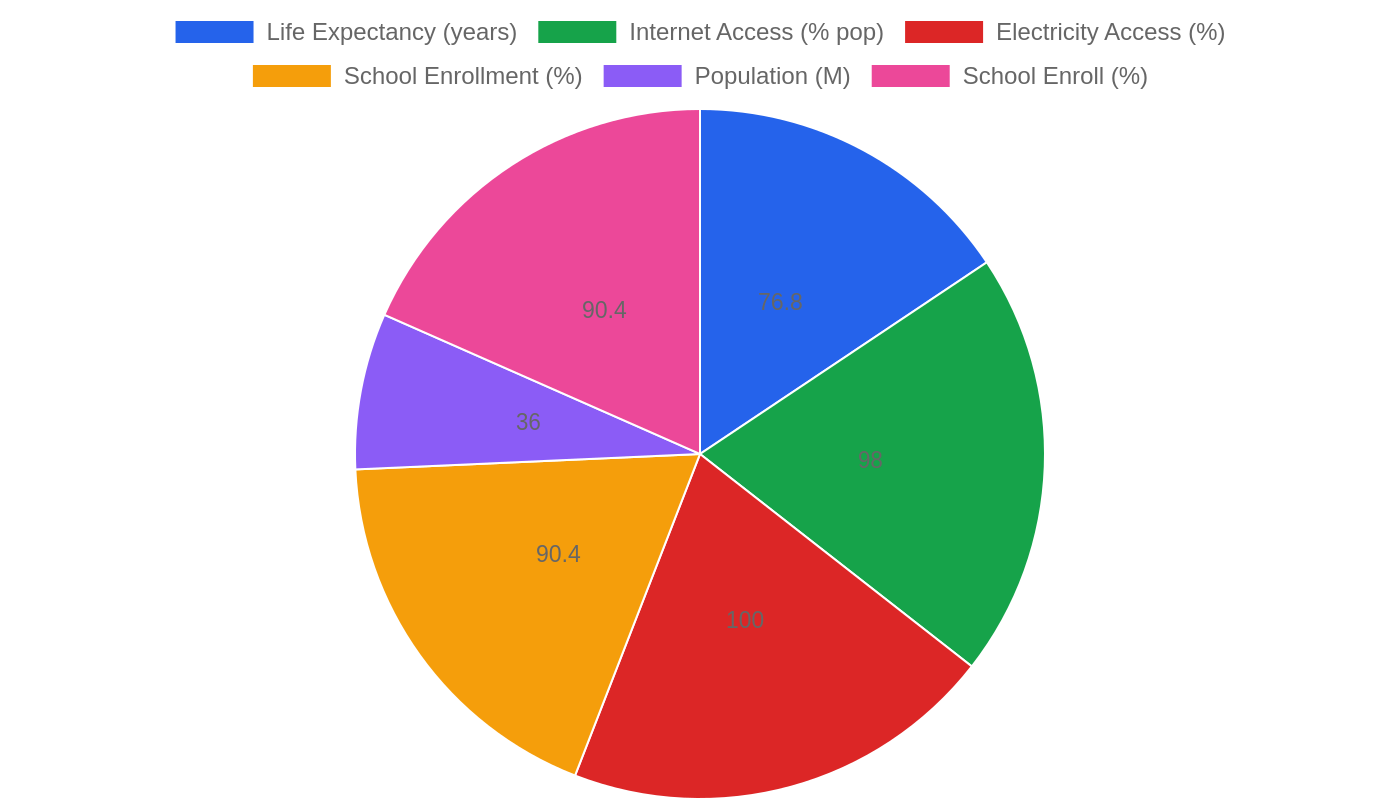
Tight Labor Market: With an unemployment rate hovering at a low 3.764%, the nation is experiencing a near-full employment scenario, suggesting high labor demand despite a population base of nearly 36 million.
Corporate Powerhouses: The business landscape is dominated by diverse giants such as Axiata in telecommunications, Adventa in health care, and Boustead Holdings in conglomerates, indicating a mature and varied industrial base.
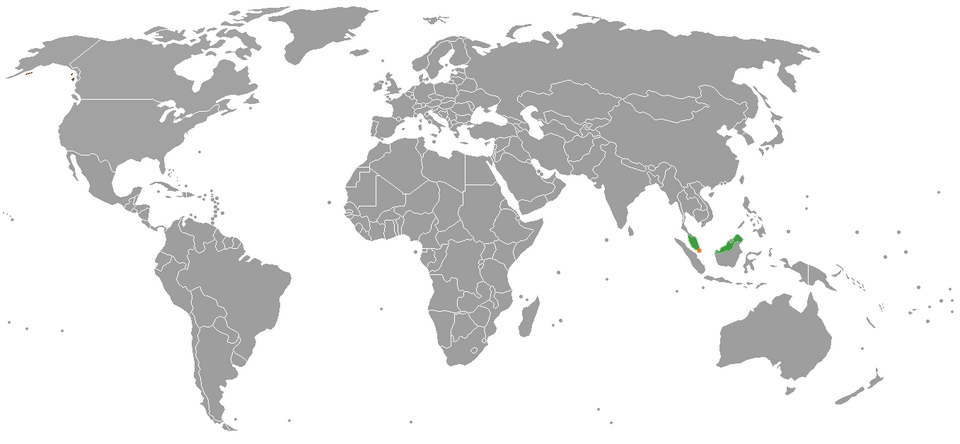
Unique Political Stability: As a federal constitutional elective monarchy modeled on the Westminster system, Malaysia offers a distinct political framework that contrasts with its regional neighbors, potentially providing a stable environment for long-term planning.
Economic Engines: Growth and Employment Dynamics
Malaysia’s economic engine is currently running hot, with the World Bank projecting a robust GDP growth rate of 5.17127082911057% for 2025. This figure is not merely a statistical bump; it represents a significant expansionary phase for a nation with a total GDP valued at approximately $472 billion USD.
For an emerging market in Southeast Asia, sustaining double-digit percentage growth is rare, but Malaysia’s single-digit yet solid 5%+ trajectory suggests a healthy, sustainable expansion rather than a volatile boom. The underlying strength of this growth is supported by a remarkably tight labor market. The unemployment rate stands at just 3.764%, one of the lowest in the region, which indicates that businesses are actively hiring and consumer confidence is likely high due to widespread job availability.
When paired with a population of roughly 35.98 million people, this low unemployment rate implies that the vast majority of the working-age population is engaged in productive economic activity. Furthermore, the purchasing power of the average citizen appears substantial, with a GDP per capita (PPP) of $41,497.67, suggesting that while nominal income matters, the real value of goods and services available to Malaysians is quite high.
This combination of strong aggregate growth and high individual purchasing power creates a fertile ground for domestic consumption-led expansion.
Living Standards and Daily Expenses
While specific inflation CPI figures are listed as N/A in the current dataset, the broader economic indicators paint a picture of a society with considerable disposable income. With a GDP per capita in PPP terms exceeding $41,000, the cost of living, while present, is balanced against a high standard of material well-being.
In a country where the population exceeds 35 million, maintaining such a high level of parity purchasing power often requires efficient supply chains and competitive local industries, particularly in manufacturing and services. For residents and expatriates alike, the daily expense structure is likely influenced by the dominance of consumer service sectors, including major players like AirAsia and Astro Malaysia Holdings, which keep travel and entertainment costs accessible.
Although precise housing metrics are not provided in the immediate data set, the high PPP figure generally correlates with a middle-to-upper-middle-class lifestyle for the average urban dweller in Kuala Lumpur and other major hubs. The absence of extreme inflation data in the short term, combined with strong growth, suggests that price stability may be a secondary concern compared to the primary driver of economic velocity: employment and production.
Consequently, the financial burden on households is likely manageable relative to their earnings, allowing for savings and investment rather than mere survival spending.
Investment Landscape and Corporate Giants
The corporate sector in Malaysia is characterized by a mix of traditional conglomerates and modern service-oriented leaders, offering investors a diversified portfolio of opportunities. At the forefront is Axiata, a telecommunications giant that serves as a critical infrastructure backbone for the nation’s digital economy. In the health care sector, Adventa stands out, reflecting a growing emphasis on wellness and medical services within the national budget and private spending.
The financial sector remains robust, anchored by institutions like AmBank, which facilitates the capital flows necessary for both domestic enterprises and foreign direct investment. Consumer services also play a pivotal role, with companies such as AirAsia, Astro Malaysia Holdings, Berjaya Group, and Bonia driving revenue through tourism, media, and retail.
These entities are not isolated; they operate within a larger ecosystem supported by conglomerates like Boustead Holdings and manufacturers like BSA Manufacturing, creating vertical integration and supply chain efficiencies. For international observers, these top companies represent gateways into the ASEAN market, leveraging Malaysia’s strategic location and bilingual workforce.
The presence of such established, publicly traded firms provides a layer of transparency and regulatory compliance that appeals to institutional investors seeking stable returns in emerging markets.
Political Framework and Social Stability
Malaysia’s political landscape is unique in Southeast Asia, operating as a federal constitutional elective monarchy that closely mirrors the Westminster parliamentary system inherited from British rule. This structure provides a fascinating dynamic where the head of state, the Yang di-Pertuan Agong, is elected every five years from among nine hereditary rulers of Malay states, ensuring a rotational leadership that prevents the entrenchment of a single dynasty.
The remaining four states are represented by titular Governors who do not participate in this selection, adding another layer of complexity to the federal balance. While specific crime indices and safety scores are currently marked as N/A, the structural stability of this government model often correlates with lower risks of political upheaval compared to purely presidential systems.
The informal agreements that govern these transitions, though detailed only partially in the provided text, suggest a culture of negotiation and consensus-building among elites. For quality of life assessments, the high GDP per capita (PPP) serves as a proxy for social welfare capabilities, implying that the state has the fiscal capacity to provide public services, healthcare, and infrastructure.
This political maturity, combined with economic growth, creates a predictable environment for long-term social development.
Current Affairs and Policy Directions
The freshest developments in Malaysia revolve around the consolidation of its federal identity and the management of its rapid economic transition. As the only federal country in Southeast Asia, Malaysia continues to refine the balance of power between the central government in Putrajaya and the various sultanates, a process that directly impacts policy implementation and regional development funds.
Recent news cycles have highlighted the importance of maintaining the Westminster legacy while adapting to modern democratic pressures, particularly regarding the election of the Yang di-Pertuan Agong. The focus now is on leveraging the 5.17% growth projection to address structural inefficiencies, particularly in how resources are distributed across the different states.
Business leaders are closely watching the performance of key sectors like telecommunications and health care, as these areas are likely to receive targeted policy support to enhance global competitiveness. Meanwhile, the low unemployment rate of 3.764% puts pressure on the government to ensure that job creation is sustainable and not just a temporary spike driven by cyclical factors.
The interplay between the elected monarchy’s ceremonial duties and the executive branch’s policy-making powers remains a key topic for analysts tracking the nation’s future trajectory.
The Bottom Line
Malaysia presents a compelling case for investors and economists looking at Southeast Asia, offering a blend of high growth, low unemployment, and a unique political stability. The strong GDP per capita (PPP) and robust corporate sector provide a solid foundation for continued expansion. Those interested in emerging markets should watch Malaysia closely, not just for its economic numbers, but for its innovative federal political model that ensures continuity amidst change.
Sources & Methodology
This article is authored by Economic Pulse Net for informational and research purposes. Economic Pulse Net sources its data from multilateral institutions, national statistics bureaus, and proprietary databases. All data is believed to be current as of the date of publication.
Published: October 20, 2026 | Category: Research — Malaysia
Use these signals in your own platform
Economic Pulse publishes its live signal feed through a documented, read-only API. Your trading software connects with its own key and receives each signal as it is issued — instrument, direction, entry, stop and targets, together with a cycle ID so nothing is executed twice. The feed is independent of this website and cannot change it.
Signals are informational only and are not financial advice.