Economic Pulse Net | Sources: World Bank World Development Indicators, Government Sources | 2026
Key Takeaways
- Resilient but Moderate Growth: According to the World Bank, Australia’s GDP is projected to grow by approximately 1.35% in 2025, signaling a steady but cautious economic pace.
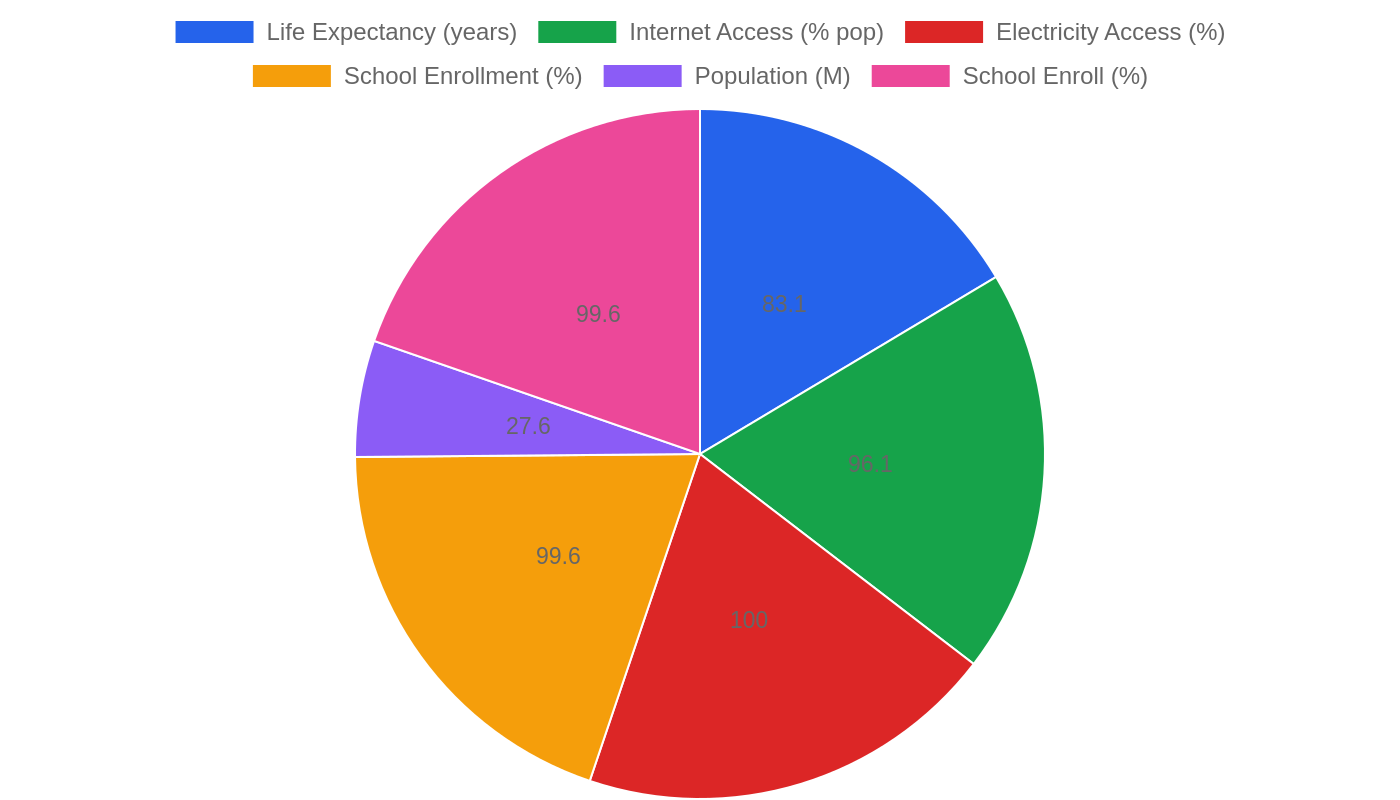
- High Standard of Living: With a GDP per capita (PPP) of $71,934 and a GNI per capita of $64,120, Australia maintains one of the highest standards of living globally, supported by a population of roughly 27.6 million.
- Labor Market Tightness: Unemployment stands at a low 4.09%, indicating a robust job market that continues to support consumer confidence despite moderate inflation.
- Political Stability as an Asset: As a constitutional monarchy and parliamentary democracy with a stable liberal democratic system since 1901, the political environment remains a key pillar for long-term investment security.
- Rising Political Polarization: Recent business news highlights growing concern among corporate leaders regarding the political rise of One Nation, suggesting that domestic policy debates are becoming more contentious.
The Engine Room: Steady Growth in a High-Income Economy
The Australian economy in 2025 is characterized by a blend of macroeconomic stability and moderate expansion.
The World Bank reports a GDP growth rate of 1.35%, a figure that, while not explosive, reflects a mature economy that is avoiding recessionary traps.
This total GDP value stands at approximately $1.79 trillion USD, underscoring Australia’s status as a major global economic player.
For an economy of this size, single-digit growth is often a sign of structural maturity rather than weakness, particularly when viewed alongside the country’s high per-capita metrics.
Inflation remains a key variable in this equation, with the Consumer Price Index (CPI) recorded at 2.87%.
This rate suggests that while price stability has largely been achieved, the cost of goods and services is still edging upward, requiring careful monetary management.
The labor market provides a strong counterweight to these inflationary pressures; with unemployment at 4.09%, the economy is operating near full capacity.
This low level of joblessness is critical for sustaining household income and, by extension, consumption, which drives much of the domestic economic activity.
The combination of near-full employment and moderate inflation creates a delicate but manageable balance for policymakers, who must ensure that wage growth keeps pace with price increases without overheating the system.
Living in the Land of the Superannuation
For residents, the high GDP per capita (PPP) of $71,934 translates into a robust standard of living, although the specific breakdown of daily expenses and housing costs is not detailed in the current dataset.
However, the high GNI per capita of $64,120 indicates that the average Australian has significant disposable income, which typically supports a high quality of life, including access to healthcare, education, and leisure.
The economic data suggests that the cost of living is underpinned by strong earning power rather than low prices, a dynamic common in advanced economies.
A significant aspect of the Australian lifestyle and financial planning is the superannuation system, which is currently under intense scrutiny.
Recent reports from the Australian Financial Review (AFR) highlight that individuals with over $3 million in superannuation are facing “quite a different tax bill.” This indicates that while the system is a cornerstone of retirement security, the regulatory and tax frameworks governing it are becoming more complex and impactful for high-net-worth individuals.
For the average worker, the stability of the labor market, evidenced by the 4.09% unemployment rate, provides the security needed to navigate these financial structures.
The interplay between high incomes, moderate inflation, and evolving retirement tax laws defines the current cost-of-living reality in Australia.
Business Climate: Navigating Political Shifts
The business environment in Australia is currently defined by a mix of institutional stability and emerging political challenges.
The country’s status as a constitutional monarchy and parliamentary democracy, with a stable liberal democratic system since Federation in 1901, provides a foundational level of security for both domestic and international investors.
This long-standing political framework, which divides power between federal and state governments, offers predictability that is highly valued in corporate planning.
However, the current political landscape is not without friction.
Recent analysis from the Australian Financial Review (AFR) points to a growing war-game among business leaders regarding the rise of the One Nation party.
The headline “‘Ignore them at your peril’” suggests that corporate Australia is taking the political shift seriously, recognizing that policy changes driven by this party could impact business operations, trade regulations, or social policies.
This indicates that while the core institutional stability remains, the specific policy direction is becoming a variable that businesses must actively manage.
The absence of data on major companies in the provided text does not diminish the importance of this political-business interaction; rather, it highlights that the current business climate is heavily influenced by the political discourse surrounding national identity and economic protectionism.
Safety, Politics & Quality of Life
While specific crime and safety indices are marked as “N/A” in the provided data, the political and social context offers strong indicators of a safe and orderly society.
Australia’s political system, described as a stable liberal democracy with a mostly unchanged constitution since 1901, is widely regarded as one of the most reliable in the world.
This political stability is a primary driver of the high quality of life reflected in the per-capita income figures.
The fusion of executive power and the strong party systems derived from the United Kingdom’s political model ensure that governance is consistent and accountable.
The high GNI per capita of $64,120 further supports the notion that resources are effectively distributed to maintain social services and infrastructure, which are key components of quality of life.
Although we do not have specific crime statistics to cite, the overall economic health and political stability suggest a society that is generally secure and functional.
The focus on “stability” in the political description is a testament to the country’s ability to maintain social order and economic continuity over more than a century.
For residents and expatriates alike, the primary concern is less about immediate safety risks and more about navigating the evolving political landscape and its potential impact on long-term economic policy.
The Bottom Line
Australia in 2025 is a story of enduring strength meeting new challenges.
The World Bank data paints a picture of a wealthy, stable economy with low unemployment and moderate inflation, making it a resilient destination for both residents and investors.
However, the recent business news highlights that this stability is being tested by internal political shifts, particularly regarding the rise of One Nation and the complex tax implications of superannuation.
For global observers, Australia remains a top-tier economy, but one that requires close attention to its political dynamics.
The key takeaway is that while the economic fundamentals are solid, the policy environment is becoming more complex, demanding a nuanced understanding of both the macroeconomic data and the domestic political currents.
Sources & Methodology
This article is authored by Economic Pulse Net for informational and research purposes.
Economic Pulse Net sources its data from multilateral institutions, national statistics bureaus, and proprietary databases.
All data is believed to be current as of the date of publication. Published: September 05, 2026 |
Category: Research — Australia
Use these signals in your own platform
Economic Pulse publishes its live signal feed through a documented, read-only API. Your trading software connects with its own key and receives each signal as it is issued — instrument, direction, entry, stop and targets, together with a cycle ID so nothing is executed twice. The feed is independent of this website and cannot change it.
Signals are informational only and are not financial advice.