Economic Pulse Net | Sources: World Bank World Development Indicators, Government Sources | 2026
🇪🇭 Western Sahara 2024 — The Economic Void in a Contested Territory
Key Takeaways
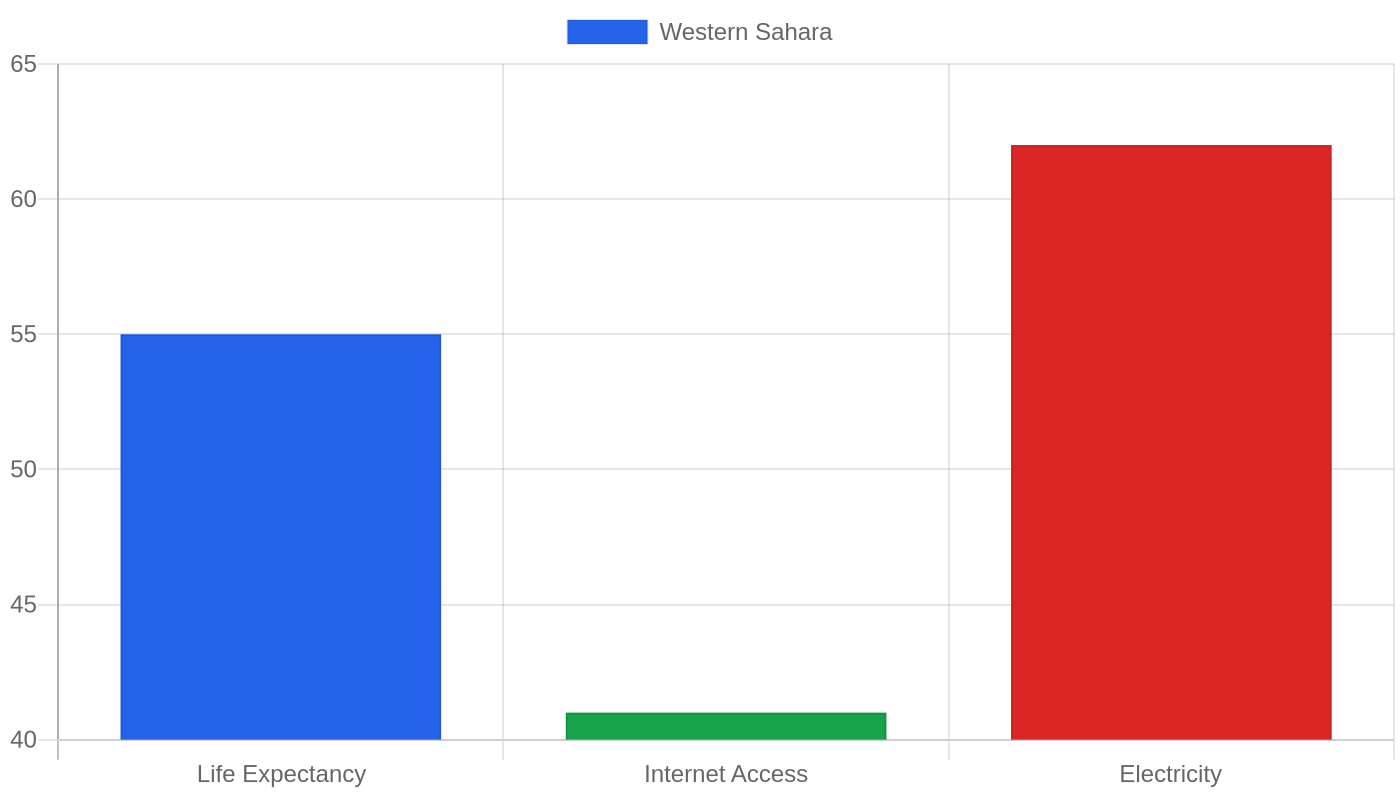
- Statistical Blackout: The World Bank currently reports “N/A” for all key macroeconomic indicators, including GDP, inflation, unemployment, and population, reflecting the territory’s unique and complex legal status.
- Sovereignty Dispute: Western Sahara is not a fully recognized sovereign state; its status is contested between Morocco and the Polisario Front, with the United Nations classifying it as a “non-self-governing territory.”
- Lack of Corporate Data: There is no available data on major companies, specific industries, or the cost of living, indicating a severe lack of independent economic infrastructure or reporting mechanisms for the territory.
- Security and Safety Unknowns: Crime and safety indices are unavailable, making it impossible to assess the daily security environment for residents or potential visitors based on standard metrics.
- Investment Opacity: With no defined business climate data or top company listings, the economic landscape remains largely opaque to international investors and analysts.
The Shadow Economy of Unrecorded Growth
In most parts of the world, economic health is measured by the steady rise of Gross Domestic Product, the fluctuation of consumer price indices, and the percentage of the population employed.
In Western Sahara, these fundamental metrics are conspicuously absent.
According to the World Bank, the latest figures for GDP growth, inflation (CPI), and unemployment are all listed as “N/A,” creating a statistical void that is as significant as the territory’s geopolitical complexity.
This lack of data is not merely a bureaucratic oversight; it is a direct consequence of the region’s unresolved legal status.
Without a universally recognized sovereign government to conduct censuses, track business registrations, or manage central banking functions, the economic activity that does occur remains largely informal and unrecorded.
Consequently, the GDP in USD, GDP per capita (PPP), and GNI per capita are all unavailable, leaving economists and policymakers without a baseline to measure progress or identify sectors requiring intervention.
The absence of population data further compounds this issue, as it is impossible to calculate per-capita indicators or understand the demographic pressures on local resources.
This economic invisibility means that any discussion of growth or recession in the region is speculative at best, grounded in anecdotal evidence rather than hard statistical evidence.
The World Bank’s classification of these metrics as undefined underscores the profound challenges in integrating the territory into the global statistical framework.
The Price of Uncertainty: Living Without Metrics
For residents and potential observers, the lack of official cost-of-living data presents a unique challenge in understanding daily life.
There are no reported figures for housing costs, rent versus buy scenarios, or the price of daily essentials, which makes it difficult to compare the standard of living to regional averages or international benchmarks.
In a typical economic feature, one would analyze whether housing is affordable or if inflation is eroding purchasing power, but in this case, the data simply does not exist.
This opacity suggests that the local economy may rely heavily on cross-border trade, aid, or informal networks that do not leave a digital or statistical trail.
Without reliable data on inflation, it is impossible to determine if the cost of bread, fuel, or utilities is rising or falling, leaving consumers to navigate their budgets without the guidance of macroeconomic indicators.
The absence of a defined currency management framework or clear fiscal policy further complicates the picture, as prices may be influenced by external factors beyond local control.
This lack of transparency in daily expenses creates an environment where economic planning is difficult for both individuals and any local administrative bodies that may be operating in the region.
Business in the Blind Spot
The corporate landscape of Western Sahara is equally elusive, with no data provided on top companies, key industries, or the general business climate.
There is no list of major corporations operating in the territory, nor are there identified sectors to watch for investment opportunities.
This absence of corporate data reflects the broader lack of formal economic infrastructure, suggesting that the business environment is not conducive to the types of large-scale, transparent operations that are typically tracked by global economic monitors.
Without a clear regulatory framework or recognized sovereign authority, international companies are likely to approach the region with extreme caution, if at all.
The lack of information on business regulations, tax codes, or property rights further deters formal investment, leaving the local economy dependent on smaller, informal enterprises that do not appear in global databases.
This creates a paradox where economic activity may be occurring, but it remains invisible to the global market, limiting the potential for foreign direct investment and economic development.
The business climate, therefore, is defined not by specific policies or incentives, but by the overarching uncertainty of the political and legal situation.
Security, Politics, and the Quest for Stability
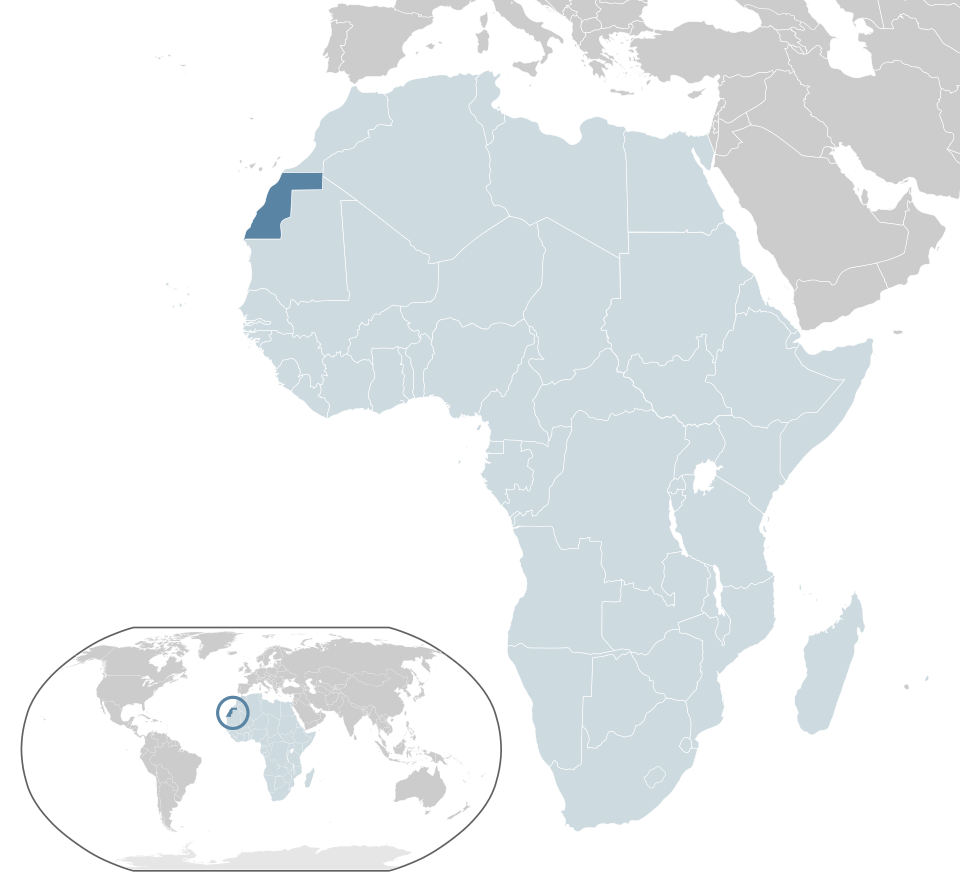
The political landscape of Western Sahara is defined by a prolonged and complex sovereignty dispute between Morocco and the Polisario Front.
The United Nations continues to classify the territory as a “non-self-governing territory,” a designation that highlights the unresolved legal status and the lack of full self-determination.
This political ambiguity has profound implications for security and quality of life, as the region lacks the stable institutional frameworks that typically underpin public safety and social services.
Crime and safety indices are unavailable, meaning there is no objective measure of the level of violence, theft, or other criminal activities within the territory.
This lack of safety data makes it difficult for residents to assess their personal security or for potential visitors to make informed decisions about travel.
The political tension between the two main parties involved in the dispute creates a backdrop of uncertainty that can influence social cohesion and economic stability.
Without a clear path to resolution or a recognized sovereign government, the quality of life remains dependent on the outcomes of diplomatic negotiations and the ability of local communities to maintain stability in the face of external pressures.
The Current Stalemate: A Region Waiting for Clarity
In the current political and economic moment, Western Sahara remains in a state of limbo, characterized by a lack of definitive news or live economic indicators that would signal a shift in status.
There are no recent reports of new reforms, elections, or policy shifts that would alter the economic trajectory of the region.
The absence of live indicators such as inflation trends or business developments suggests that the status quo remains entrenched, with no immediate catalysts for change visible in the available data.
This stagnation is both a reflection of the deep-seated nature of the sovereignty dispute and the lack of international consensus on how to resolve it.
Without new developments in the political arena, the economic landscape is likely to remain static, with no significant changes in investment, trade, or living standards.
The focus, therefore, remains on the diplomatic front, where the outcome of negotiations between Morocco and the Polisario Front will ultimately determine the future of the territory.
Until such a resolution is reached, Western Sahara will continue to exist in a statistical and political gray zone, challenging the conventional tools used to analyze national economies.
The Bottom Line
Western Sahara presents a unique case in global economic analysis, where the lack of data is as telling as any statistic could be.
For investors, policymakers, and researchers, the territory serves as a reminder that economic development is inextricably linked to political stability and legal clarity.
Until the sovereignty dispute is resolved and a recognized administrative framework is established, the region will remain on the periphery of global economic discussions.
It is a territory to watch not for immediate investment opportunities, but for the potential long-term impact of a political resolution on its economic future.
Sources & Methodology
This article is authored by Economic Pulse Net for informational and research purposes.
Economic Pulse Net sources its data from multilateral institutions, national statistics bureaus, and proprietary databases.
All data is believed to be current as of the date of publication. Published: September 05, 2026 |
Category: Research — Western Sahara
Use these signals in your own platform
Economic Pulse publishes its live signal feed through a documented, read-only API. Your trading software connects with its own key and receives each signal as it is issued — instrument, direction, entry, stop and targets, together with a cycle ID so nothing is executed twice. The feed is independent of this website and cannot change it.
Signals are informational only and are not financial advice.