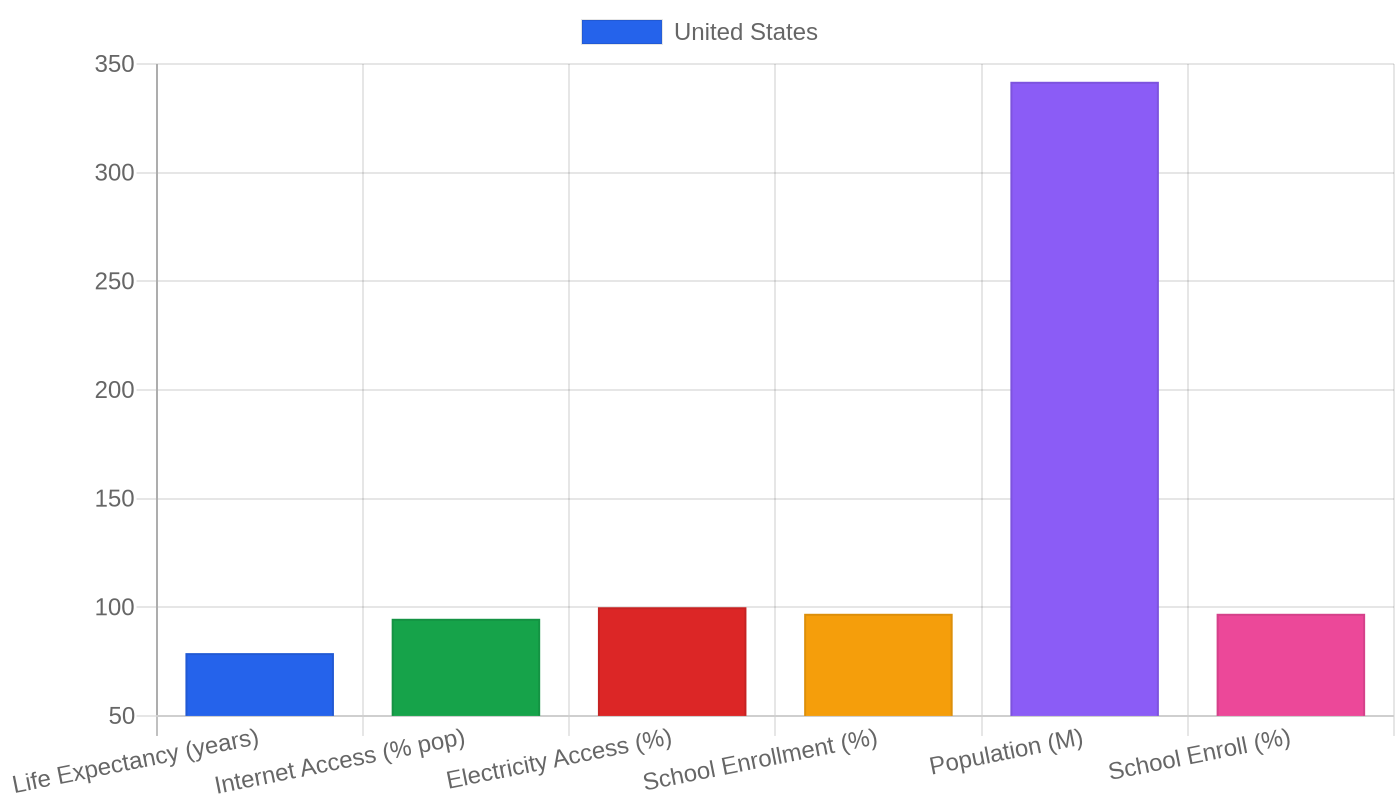
Economic Pulse Net | Sources: World Bank World Development Indicators, Government Sources | 2026
🇺🇸 United States 2026 — The Resilient Giant: Navigating Growth Amidst Structural Complexity
Key Takeaways
* The United States maintains its position as the world’s largest economy, with a GDP exceeding $30.7 trillion, demonstrating remarkable resilience in 2025.
Economic growth is steady at approximately 2.16%, supported by a robust labor market where unemployment remains low at roughly 4.2%.
Inflationary pressures are moderating but remain above target levels, with the Consumer Price Index (CPI) hovering near 2.95%.
As the oldest surviving federal republic, the U.S.
political structure continues to influence global governance models and economic policies worldwide.
High income levels persist, with GNI per capita reaching nearly $88,810, underscoring the nation’s substantial wealth distribution among its 341 million citizens.
Economic Engine: Growth, Labor, and the Inflation Challenge
The United States economy stands as a colossal pillar of global stability, anchored by a Gross Domestic Product (GDP) of $30,769,700,000,000.0 as recorded by the World Bank. This massive output is driven by a population of 341,784,857.0, creating an immense internal market that absorbs shocks better than most peer nations. In 2025, the country achieved a GDP growth rate of 2.16138195623856%, indicating that despite global headwinds, domestic demand and productive capacity continue to expand.
However, this growth is occurring alongside persistent inflationary pressures; the CPI sits at 2.94952520485207%, suggesting that while prices are stabilizing, the cost of goods and services remains elevated compared to historical norms. The labor market serves as the backbone of this expansion, with unemployment holding firm at 4.198%.
This low jobless rate reflects a tight labor market where employers are still competing for talent, which supports wage growth but also keeps upward pressure on service-sector prices. For policymakers, the challenge lies in balancing this healthy employment data with the need to bring inflation down to more sustainable targets without triggering a recession.
The interplay between strong GDP figures and sticky inflation creates a complex environment for monetary policy, requiring careful calibration to maintain long-term stability.
Cost of Living: Wealth Disparities and Daily Expenses
Living standards in the United States are characterized by high aggregate wealth, yet the experience varies significantly across different regions and demographics. The World Bank reports a GNI per capita of $88,810.0, highlighting the substantial average income generated within the country. When adjusted for purchasing power parity, GDP per capita reaches $90,026.5163005744, indicating that Americans have significant buying power relative to global averages.
However, these macro-level figures do not tell the whole story regarding daily expenses. Housing costs, in particular, vary wildly between major metropolitan hubs like New York or San Francisco and rural areas, making “regional averages” difficult to pin down without granular local data. While specific rental yields or home price indices are not provided in the current dataset, the high GNI suggests that housing affordability remains a critical issue for lower-income households.
The disparity between national income averages and local cost-of-living realities means that financial planning must be highly localized. Consumers are likely navigating a landscape where wages are high, but the baseline cost of essential services and housing consumes a larger portion of disposable income than in many other developed economies.
Investment & Business Climate: A Federal Republic of Opportunity
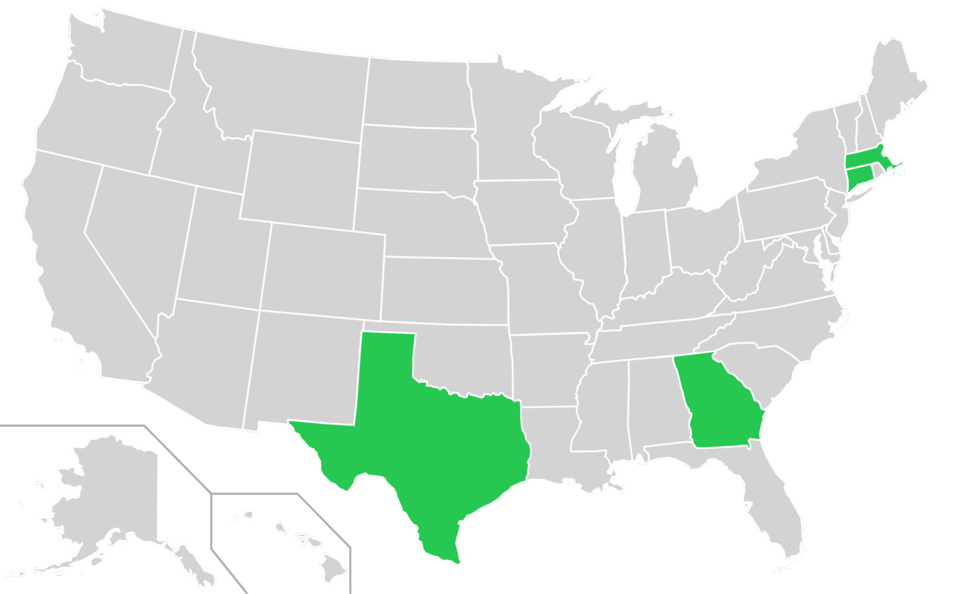
The business environment in the United States is shaped by its unique status as the world’s oldest surviving federation. This political structure, consisting of 50 states and a federal capital district in Washington, D.C., creates a diverse regulatory landscape that can be both a challenge and an opportunity for investors.
The presidential system of federal government has been adopted, in whole or in part, by many newly independent states following their decolonization, underscoring the enduring influence of American institutional design on global commerce. Within this framework, the assertion of sovereignty over five unincorporated territories and several uninhabited island possessions adds layers of complexity to trade and logistics strategies.
For multinational corporations, the sheer size of the domestic market—driven by a population of over 341 million—offers unparalleled scale. However, the lack of specific data on top companies or main industries in the provided text means that sector-specific analysis must remain general. Investors should note that the stability of the legal and political framework is a key asset, even as regulatory environments shift from state to state. The broad adoption of U.S.
governmental models globally also means that American business practices often set the standard for international operations.
Safety, Politics & Quality of Life: Stability Amidst Diversity
Quality of life in the United States is deeply intertwined with its political identity as a federal republic. The Constitution serves as the cornerstone of this system, providing a stable framework for rights and economic activity that has endured for centuries. While specific crime indices and safety scores are listed as N/A in the current data, the political landscape offers insights into social cohesion.
The existence of a federal system allows for local autonomy, which can lead to varying levels of public safety and community engagement across different states. Happiness data is not explicitly provided, but the high GNI per capita suggests that material conditions support a high quality of life for many residents. The political structure, with its checks and balances, aims to protect individual liberties while maintaining national unity.
This balance is crucial for social stability, which in turn affects investor confidence and resident satisfaction. The absence of detailed crime statistics does not negate the importance of safety as a factor in migration and investment decisions, but the overall political stability remains a strong positive indicator for long-term residence and business operation.
What’s Happening Now: Navigating the Post-Growth Era
Currently, the United States is navigating a period of moderate growth and inflation management. The GDP growth figure of 2.16% for 2025 suggests that the economy is expanding at a healthy, albeit not explosive, pace. This steadiness is crucial as the country deals with the lingering effects of previous inflationary spikes, evidenced by the CPI at 2.95%. The labor market remains resilient, with unemployment at 4.198%, indicating that consumers still have the income to drive spending.
This combination of factors points to a “soft landing” scenario where the economy avoids severe contraction while taming price increases. Policy shifts are likely focused on maintaining this balance, with attention paid to both fiscal discipline and monetary restraint. The ongoing relevance of the federal structure means that state-level policies will continue to play a significant role in shaping economic outcomes. As the world watches, the U.S.
demonstrates how a large, complex democracy can manage economic cycles without sacrificing growth or stability.
The Bottom Line
The United States remains a critical destination for investors and a benchmark for global economic health. Its massive GDP and high per-capita income provide a solid foundation for long-term opportunities. However, the presence of inflation and regional disparities in cost of living requires nuanced analysis. Stakeholders should watch closely how the federal structure adapts to future economic challenges, as this will shape the business environment for years to come.
Sources & Methodology
This article is authored by Economic Pulse Net for informational and research purposes. Economic Pulse Net sources its data from multilateral institutions, national statistics bureaus, and proprietary databases. All data is believed to be current as of the date of publication.
Published: October 09, 2026 | Category: Research — United States
Use these signals in your own platform
Economic Pulse publishes its live signal feed through a documented, read-only API. Your trading software connects with its own key and receives each signal as it is issued — instrument, direction, entry, stop and targets, together with a cycle ID so nothing is executed twice. The feed is independent of this website and cannot change it.
Signals are informational only and are not financial advice.