Economic Pulse Net | Sources: World Bank World Development Indicators, Government Sources | 2026
🇺🇸 United States 2025 — The Giant’s Steady Pulse: Resilience in a Complex Economic Landscape
Key Takeaways
- The United States economy is expanding at a moderate pace, with GDP growth recorded at approximately 2.16% for 2025, according to the World Bank.
- Inflation remains a notable factor, with the Consumer Price Index (CPI) hovering near 2.95%, suggesting that price pressures are still present despite broader economic stability.
- The labor market shows signs of tightness, with an unemployment rate of roughly 4.2%, indicating that the workforce remains highly engaged and productive.
- The nation’s economic scale is immense, with a total GDP of approximately $30.77 trillion, cementing its position as the world’s largest economy.
- Political structures remain stable under the framework of a federal republic, providing a consistent backdrop for business and investment activities.
The Engine Room: Analyzing Growth, Inflation, and Employment
The fundamental health of the U.S. economy in 2025 can be understood through the interplay of growth, price stability, and labor market dynamics.
According to the World Bank, the country is experiencing a GDP growth rate of 2.16%, a figure that suggests a steady, if not explosive, expansion of economic output.
This moderate growth rate is significant because it indicates that the economy is not overheating, which is often a precursor to severe inflationary spirals, yet it is still positive enough to support job creation and corporate investment.
However, this growth comes with a cost in terms of purchasing power, as the World Bank data shows an inflation rate of nearly 2.95% based on the CPI.
For the average American, this means that the cost of goods and services is rising at a rate that erodes real wages if they do not keep pace.
This inflationary pressure is a critical metric for policymakers, as it dictates the direction of monetary policy and interest rates.
On the labor front, the unemployment rate stands at 4.2%, a figure that is generally considered low and indicative of a robust labor market.
When unemployment is this low, it implies that most people who want to work are able to find employment, which supports consumer confidence and spending.
However, a tight labor market can also contribute to wage inflation, as businesses may need to offer higher salaries to attract and retain talent, further feeding into the CPI figures.
The combination of these three metrics—moderate growth, persistent inflation, and low unemployment—paints a picture of an economy that is strong but facing the challenge of balancing price stability with continued expansion.
The Price of Living: Navigating Daily Expenses
While specific data on rent, housing costs, and daily expenses was not provided in the dataset, the economic indicators offer a clear lens through which to view the cost of living.
With an inflation rate approaching 3%, it is reasonable to infer that the cost of basic necessities such as food, energy, and transportation is increasing for households across the nation.
This rise in the Consumer Price Index directly impacts the disposable income of consumers, forcing many to make difficult choices about where to allocate their limited funds.
In a high-income economy, where the GDP per capita (PPP) is approximately $90,000, the relative impact of inflation may be felt differently than in lower-income nations, but the absolute cost of maintaining a standard of living is undeniably rising.
The high level of economic output, reflected in the massive $30.77 trillion GDP, suggests that the aggregate wealth of the nation is sufficient to support high living standards, yet the distribution of this wealth and the rate of price increases determine the actual quality of life for the individual.
For investors and residents alike, the key takeaway is that while the economy is productive, the cost of entry into the housing market and the maintenance of daily life require careful budgeting in an environment where prices are not static.
Business Landscape: Scale and Structural Resilience
The United States operates with a total GDP of approximately $30.77 trillion, a figure that underscores its dominance in the global economic arena.
This sheer scale of economic activity creates a vast ecosystem for businesses of all sizes, from small local enterprises to multinational corporations.
Although a list of top companies or specific main industries was not provided, the magnitude of the GDP implies a diverse and sophisticated industrial base capable of driving innovation and global trade.
The high GDP per capita, estimated at around $90,000 on a purchasing power parity basis, suggests that the average economic output per person is exceptionally high, which typically correlates with advanced technological infrastructure and high-value service sectors.
For businesses operating in this environment, the challenge lies in navigating a market that is both highly competitive and subject to the pressures of inflation.
The low unemployment rate of 4.2% indicates that the talent pool is highly utilized, which may lead to higher labor costs but also reflects a highly skilled and productive workforce.
The stability of the federal republic system provides a predictable regulatory environment, which is crucial for long-term business planning and investment.
Consequently, the business climate is characterized by immense opportunity driven by scale, tempered by the need to manage rising operational costs and labor dynamics.
Governance and Society: The Political and Social Fabric
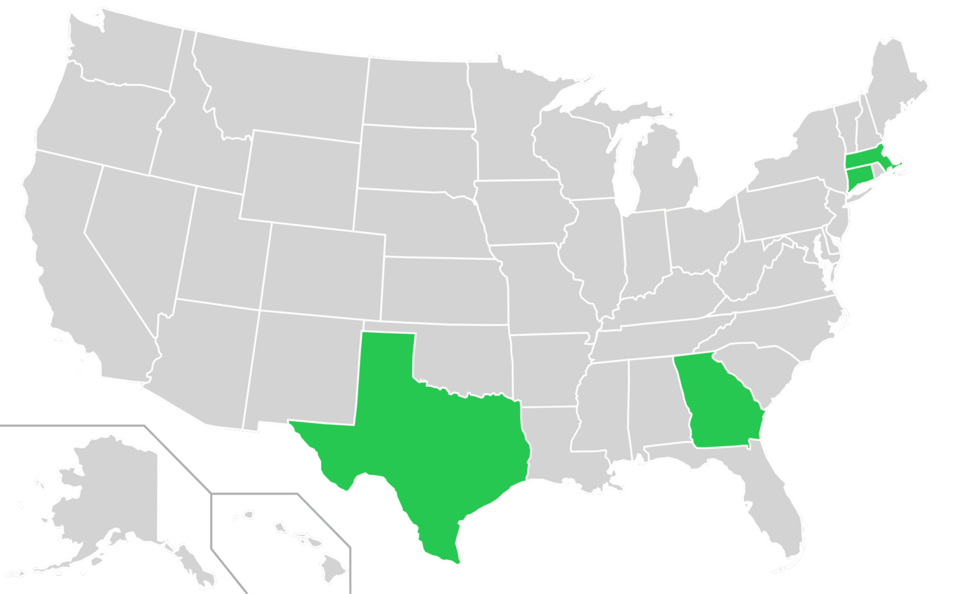
The United States is structured as a federal republic consisting of 50 states and the federal capital district, Washington, D.C., a political arrangement that has proven to be one of the world’s oldest surviving federations.
This complex political landscape, while occasionally contentious, provides a stable framework for governance that has been adopted, in whole or in part, by many other nations following their decolonization.
The Constitution serves as the supreme law of the land, ensuring a system of checks and balances that protects individual rights and facilitates democratic participation.
In terms of safety and crime, specific indices were not provided in the data, but the overall political stability and the strength of the rule of law are inherent in the country’s historical and institutional structure.
The high level of economic development, as evidenced by the GNI per capita of $88,810, often correlates with better public services, healthcare, and infrastructure, which are key components of quality of life.
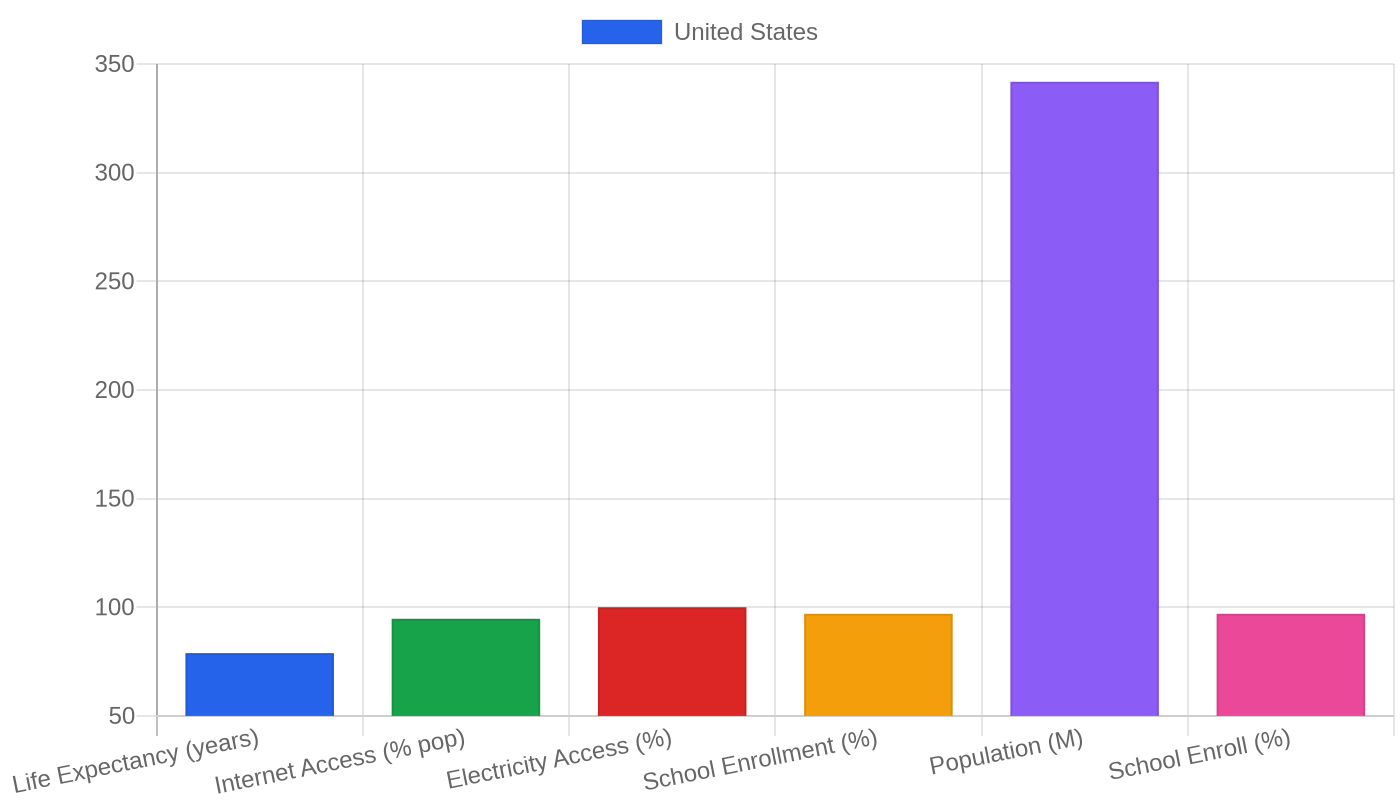
The population of over 341 million people creates a massive domestic market and a diverse cultural landscape, which influences both social dynamics and economic policies.
While the political system is robust, the ongoing debate over economic policies, such as those affecting inflation and employment, remains a central theme in the national dialogue, reflecting the dynamic nature of American democracy.
Current Affairs: The State of Play in 2025
As we assess the economic landscape in 2025, the focus remains on how the nation is managing the transition from recent global economic shocks to a more steady state of growth.
The World Bank’s projection of 2.16% GDP growth for 2025 suggests that the economy is successfully avoiding a recession, a significant achievement given the global volatility of previous years.
The persistence of inflation at nearly 3% indicates that central banks and policymakers are likely still engaged in a delicate balancing act, aiming to cool price increases without stifling the positive momentum of the labor market.
The unemployment rate of 4.2% is a key indicator of this balance, showing that the economy is still creating jobs and absorbing workers, which is vital for maintaining consumer spending.
There is no indication of a sudden economic crisis in the provided data, but the steady, moderate numbers suggest a period of consolidation where the focus is on sustainability rather than rapid expansion.
The political stability of the federal republic continues to provide a reliable backdrop for these economic trends, allowing for consistent policy implementation.
As the year progresses, stakeholders will be watching closely to see if the inflation rate can be brought down further without causing a spike in unemployment, a challenge that defines the current economic narrative.
The Bottom Line
The United States in 2025 presents a complex but fundamentally sound economic picture, characterized by steady growth, a tight labor market, and manageable but persistent inflation.
For investors, the scale of the $30.77 trillion GDP offers unparalleled opportunity, while the political stability of the federal republic provides the necessary security for long-term commitments.
However, the near-3% inflation rate serves as a reminder that the cost of living is not static, and businesses must remain agile in managing costs.
This is a country for those who value economic resilience and scale, provided they are prepared to navigate the ongoing challenges of price stability in a high-growth environment.
Sources & Methodology
This article is authored by Economic Pulse Net for informational and research purposes.
Economic Pulse Net sources its data from multilateral institutions, national statistics bureaus, and proprietary databases.
All data is believed to be current as of the date of publication. Published: September 03, 2026 |
Category: Research — United States
Use these signals in your own platform
Economic Pulse publishes its live signal feed through a documented, read-only API. Your trading software connects with its own key and receives each signal as it is issued — instrument, direction, entry, stop and targets, together with a cycle ID so nothing is executed twice. The feed is independent of this website and cannot change it.
Signals are informational only and are not financial advice.