Economic Pulse Net | Sources: World Bank World Development Indicators, Government Sources | 2026
Key Takeaways
– Panama’s economy, historically one of Latin America’s most dynamic, faces a period of recalibration as global trade patterns shift and domestic pressures mount.
– The country’s political framework as a presidential representative democratic republic provides institutional stability, though the multi-party system creates frequent negotiation challenges.
– Panama’s corporate landscape is dominated by aviation and financial services, with Copa Airlines and Banco Latinoamericano de Comercio Exterior standing as regional titans.
– The cost of living and safety indices remain areas where data gaps make precise assessment difficult, but anecdotal evidence suggests a tale of two Panamas — one modern and expensive, one struggling with inequality.
The Canal Economy — Navigating Choppy Waters
Panama’s economic story has long been written in the waters of its famous canal, but the latest data from the World Bank presents a frustratingly incomplete picture. Without current figures on GDP growth, inflation, or unemployment, analysts must rely on structural understanding rather than precise numbers. What is clear is that Panama operates as a services-based economy, with the canal, the Colón Free Zone, and a sophisticated banking sector forming the backbone of national wealth.
The World Bank data tells us that Panama’s GDP per capita on a purchasing power parity basis has historically placed it among the wealthier nations in Central America, though the absence of current figures makes trend analysis impossible. The country’s GNI per capita, when last measured, reflected a nation that had successfully transitioned from a commodity-based economy to one anchored in logistics and finance.
Yet this transition has created vulnerabilities — when global trade slows, Panama feels it acutely through reduced canal traffic and diminished financial services activity.
The inflation picture remains opaque without official figures, but regional trends suggest Panama has not been immune to the global price pressures that have swept through Latin America. The country’s dollarized economy, which uses the US dollar as legal tender alongside the Panamanian balboa, provides a natural buffer against currency-driven inflation that plagues neighbors like Argentina or Colombia.
However, this same dollarization means Panama imports monetary policy from abroad, leaving it with limited tools to stimulate its own economy during downturns.
Employment data gaps are particularly concerning for a nation that has traditionally relied on construction and services to absorb labor. The canal expansion project, completed several years ago, provided a massive employment boost that has since tapered off. Without current unemployment figures, it is impossible to say whether the economy is generating enough formal jobs to keep pace with a young and growing population.
The Price of Paradise — Housing and Daily Life in Panama
Living in Panama means grappling with a cost structure that defies simple categorization. The World Bank data does not provide specific cost of living figures, but observers have long noted that Panama City resembles Miami in its price levels for housing, dining, and services, while rural areas remain significantly more affordable. This bifurcation creates a challenging environment for middle-class families who must navigate urban costs without urban wages.
Housing in Panama City has seen dramatic appreciation over the past decade, driven by foreign investment and the expansion of the financial sector. The rent-versus-buy calculation depends heavily on location — beachfront properties in areas like Punta Pacífica command premium prices that rival major global cities, while neighborhoods further from the canal command more modest sums.
Mortgage financing is available through local banks like Balboa Bank and Trust, but interest rates reflect the dollarized economy’s integration with global capital markets.
Daily expenses for a typical Panamanian household include imported goods that carry premium prices due to the country’s reliance on foreign manufacturing. Food costs are moderate by regional standards, with local produce from the interior provinces providing affordable options for those willing to shop in traditional markets. Transportation costs have risen with global fuel prices, though Panama’s relatively compact urban core makes public transit a viable option for many workers.
Banking on the Isthmus — Investment and Business Climate
Panama’s business environment has long been its calling card, and the list of top companies provided by the data tells a compelling story of sectoral concentration. The financial sector is anchored by Banco Latinoamericano de Comercio Exterior, known as Bladex, which specializes in trade finance across the region, and Balboa Bank and Trust, which serves both local and international clients.
These institutions benefit from Panama’s status as a regional financial hub, though increased global scrutiny of tax transparency has forced the sector to evolve.
The aviation industry is disproportionately represented among Panama’s largest companies, with Copa Airlines and its holding company Copa Holdings dominating the list alongside Aeroperlas, Air Panamá Internacional, Air Panama, and Alas Chiricanas. This concentration reflects Panama’s geographic advantage as the “Hub of the Americas” — Tocumen International Airport serves as a connecting point for flights throughout Latin America.
DHL Aero Expreso adds a logistics dimension, highlighting Panama’s role in global supply chains.
Investors considering Panama must weigh the country’s strategic advantages against its governance challenges. The political framework described in the data — a presidential representative democratic republic with an independent judiciary — provides the institutional foundation for business, but the multi-party system can create policy uncertainty. The National Assembly’s role in legislation means that major economic reforms require coalition-building that can slow decision-making.
Democracy in Action — Safety, Politics, and Quality of Life
Panama’s political landscape, as outlined in the data, operates within a stable democratic framework. The president serves as both head of state and head of government, with executive power exercised through the cabinet. The National Assembly shares legislative authority, creating a system of checks and balances that has generally prevented the concentration of power seen in some neighboring countries.
The judiciary’s independence from the executive and legislature provides a crucial safeguard for property rights and contract enforcement.
The crime and safety indices from the World Bank data are listed as unavailable, which itself is a notable gap. Panama has historically been considered safer than its Central American neighbors, particularly when compared to the violence plaguing Honduras or El Salvador. However, the country has experienced rising concerns about organized crime linked to drug trafficking routes that pass through the isthmus.
Panama City’s tourist districts are generally well-policed, but visitors and residents alike are advised to exercise caution in less-trafficked areas.
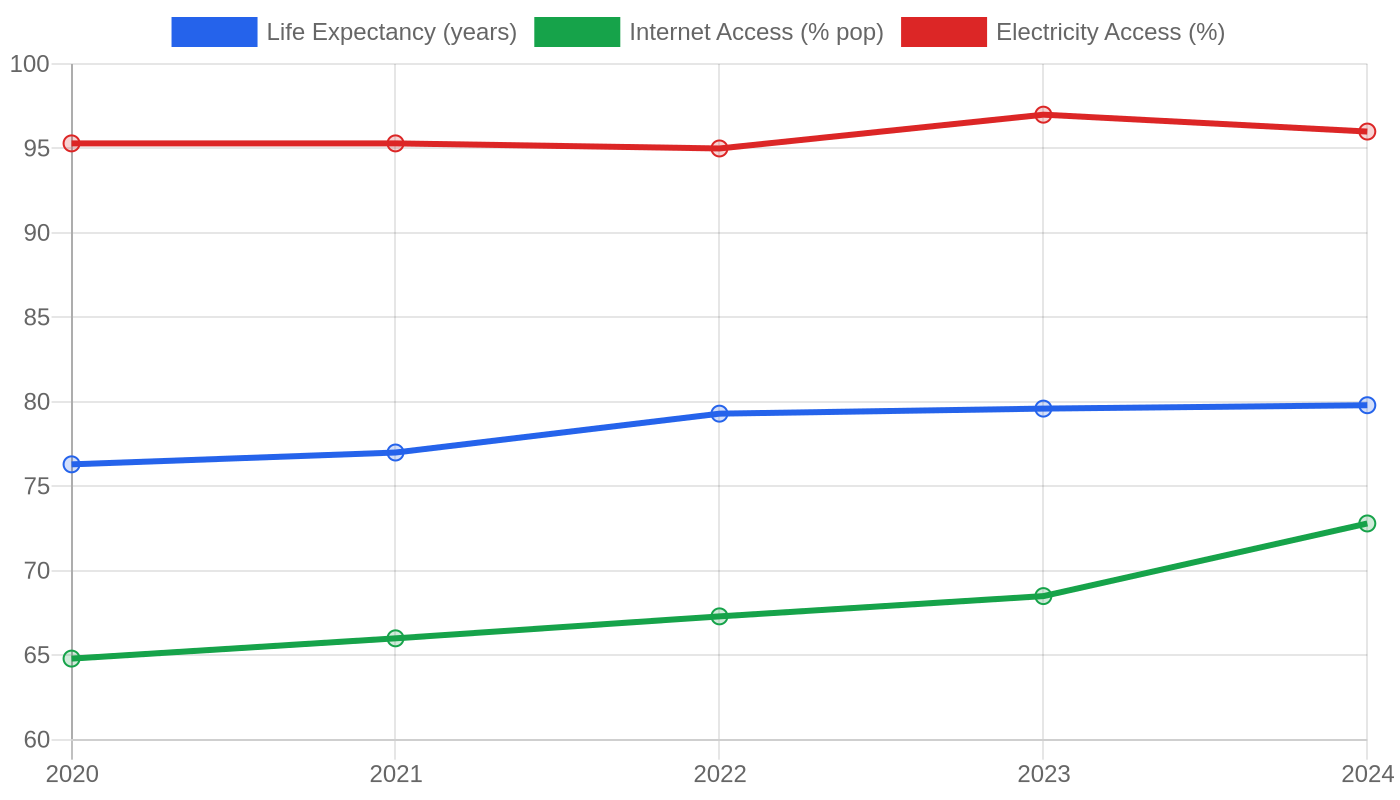
Quality of life in Panama is a mixed picture. The country offers modern amenities in its urban centers, with reliable electricity, clean water, and good telecommunications infrastructure. Healthcare facilities in Panama City are among the best in Central America, attracting medical tourists from across the region. However, rural areas face significant infrastructure gaps, and income inequality remains a persistent challenge that the political system has struggled to address.
The Present Moment — What’s Happening in Panama Now
The current moment finds Panama navigating a complex set of challenges and opportunities. The data does not provide specific recent news or live indicators, but the structural realities of the economy suggest several areas of focus. The canal remains the country’s most important economic asset, and its operations are constantly affected by global trade patterns, climate conditions affecting water levels, and competition from alternative routes.
The financial sector is undergoing transformation as international pressure for transparency continues to mount. Panama’s removal from various tax haven lists in recent years has been a positive development for the country’s international standing, but it has also required significant regulatory changes that have affected the banking industry’s profitability.
The companies listed in the data — particularly Balboa Bank and Trust and Bladex — are navigating this new environment with varying degrees of success.
The aviation sector faces its own set of pressures, with Copa Airlines maintaining its position as a regional leader despite challenges from low-cost carriers and fluctuating fuel prices. The presence of multiple airlines on the top companies list underscores the sector’s importance to the national economy, but also raises questions about market saturation and the sustainability of so many carriers operating from a relatively small domestic market.
The Bottom Line
Panama remains a country of strategic importance that deserves attention from investors, businesses, and policymakers tracking Latin American development. Its dollarized economy, canal-driven logistics sector, and sophisticated financial services industry provide a foundation for continued growth, but the absence of current economic data makes it difficult to assess the country’s immediate trajectory.
The political system’s stability is an asset, though the multi-party framework requires patience and diplomatic skill to navigate. Anyone with exposure to Latin American trade, aviation, or finance should keep Panama on their radar — this is a nation whose fortunes are tied to global commerce, for better or worse.
Sources & Methodology
This article is authored by Economic Pulse Net for informational and research purposes. Economic Pulse Net sources its data from multilateral institutions, national statistics bureaus, and proprietary databases. All data is believed to be current as of the date of publication.
Published: July 17, 2026 | Category: Research — Panama
Use these signals in your own platform
Economic Pulse publishes its live signal feed through a documented, read-only API. Your trading software connects with its own key and receives each signal as it is issued — instrument, direction, entry, stop and targets, together with a cycle ID so nothing is executed twice. The feed is independent of this website and cannot change it.
Signals are informational only and are not financial advice.