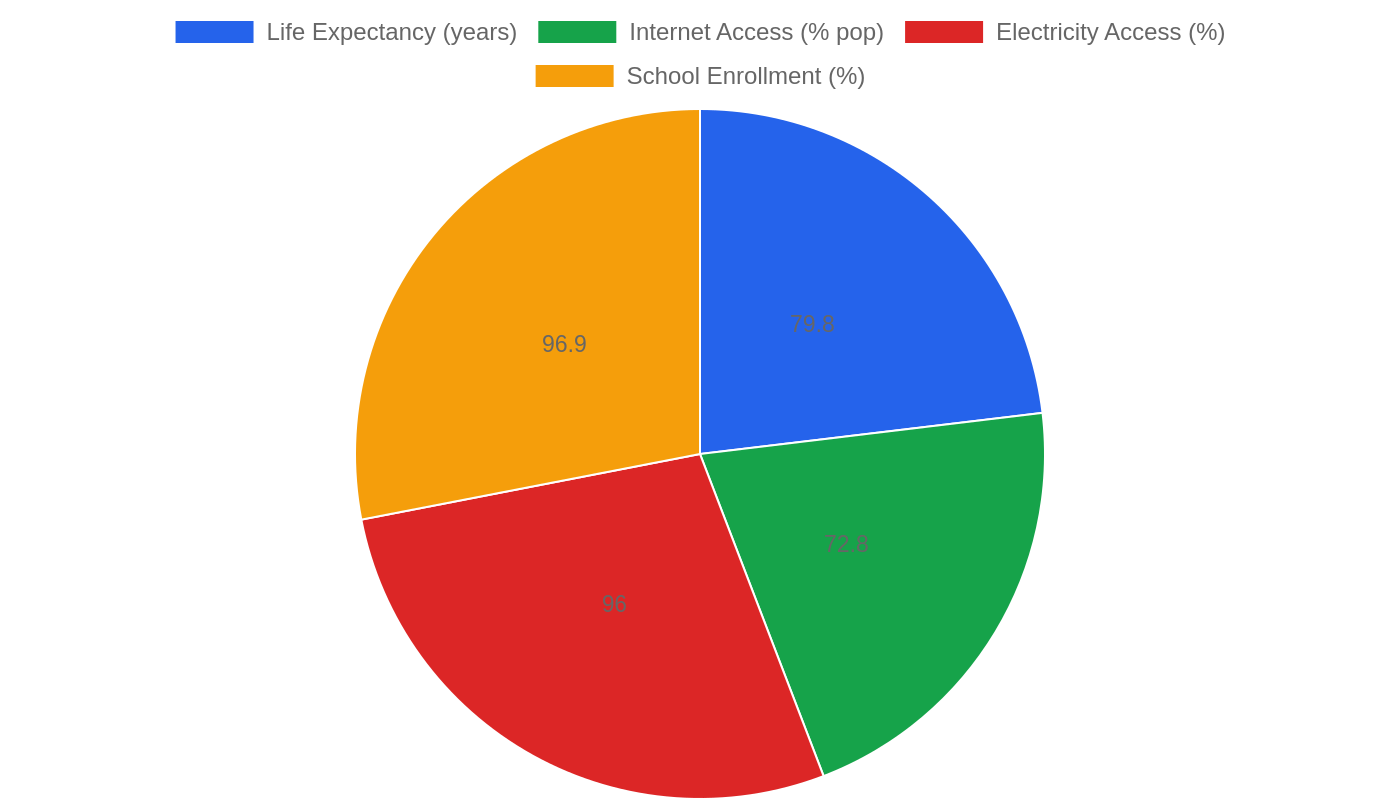
Economic Pulse Net | Sources: World Bank World Development Indicators, Government Sources | 2026
Key Takeaways
– Panama’s economy is anchored by its role as a global logistics hub, with major companies like Copa Airlines and DHL Aero Expreso driving the services sector.
– The country operates as a presidential representative democratic republic, with a multi-party system and an independent judiciary shaping its business environment.
– Panama’s corporate landscape is dominated by aviation and financial services, with Copa Holdings and Banco Latinoamericano de Comercio Exterior leading the charge.
– While comprehensive economic data is limited, the country’s strategic position continues to attract international business interest.
– The nation’s political framework provides stability, but observers should watch how governance evolves amid regional economic pressures.
The Economic Engine: Services, Skies, and Strategy
When economists talk about Panama, they are not just talking about a country — they are talking about a crossroads. The World Bank’s latest data may not provide a complete picture of GDP growth or inflation figures, but the structural story of Panama’s economy is written in its corporate roster and its geography. This is a nation that has built its economic identity on services rather than manufacturing, on movement rather than production.
The aviation sector stands as a towering pillar of this strategy, with Copa Airlines and its parent company Copa Holdings representing the country’s most visible global business success stories. Alongside them, DHL Aero Expreso anchors Panama’s position in international logistics and cargo movement, reinforcing the country’s role as a transit point for goods moving between continents.
The financial sector adds another layer of depth to Panama’s economic profile. Banco Latinoamericano de Comercio Exterior, often referred to as Bladex, is a regional institution that facilitates trade finance across Latin America, while Balboa Bank and Trust serves the domestic and international banking market. These institutions, along with the broader financial services ecosystem, make Panama a regional hub for capital and banking services.
The presence of multiple airlines — from Aeroperlas to Air Panamá Internacional — suggests a competitive domestic aviation market that supports both passenger travel and cargo operations. What emerges from this data is a picture of an economy that has deliberately positioned itself as a facilitator of global commerce rather than a producer of goods.
This service-oriented model has historically delivered steady growth, though it also leaves the country vulnerable to fluctuations in global trade volumes and regional economic conditions.
The Cost of Living: A Premium on Position
Living in Panama comes with a price tag that reflects its status as a regional business hub. While specific cost-of-living data is not captured in the available figures, the country’s economic structure offers important clues about what residents and expatriates can expect. Panama City, the capital and economic heart of the nation, has long been known as one of the more expensive cities in Central America, particularly for housing and imported goods.
The country’s reliance on services and its integration into global trade networks means that many consumer products carry import costs, pushing prices above regional averages. For those considering a move to Panama, the calculus typically involves weighing the country’s modern infrastructure and business opportunities against the higher cost of daily life.
Rental markets in Panama City have historically catered to a mix of wealthy locals, international professionals, and retirees, which keeps demand — and therefore prices — elevated. The choice between renting and buying often comes down to the buyer’s long-term intentions, with many expatriates choosing to rent initially before committing to property ownership.
Outside the capital, costs tend to decrease, but so do employment opportunities and access to the amenities that make Panama attractive to international workers. The economic reality is that Panama offers a first-world experience in a developing-world setting, and that experience commands a premium.
The Business Climate: Where Global Players Land
Panama’s business environment is defined by its openness to international commerce and its strategic location. The corporate landscape, as reflected in the country’s top companies, tells a story of an economy that has successfully attracted global players while also nurturing homegrown champions. Copa Holdings, the parent company of Copa Airlines, is arguably the most significant Panamanian success story in recent decades, having built a hub in Panama City that connects destinations across the Americas.
The airline’s growth has had multiplier effects throughout the economy, supporting jobs in aviation, tourism, and business travel. Similarly, the presence of DHL Aero Expreso underscores Panama’s importance in global logistics networks, with the country serving as a key node for air cargo operations.
The financial sector remains a cornerstone of the business climate, with Banco Latinoamericano de Comercio Exterior providing trade finance that supports commerce across the region. For investors, Panama offers a familiar regulatory environment and a government that has historically been welcoming to foreign capital. The country’s use of the US dollar eliminates exchange rate risk for international investors, and its banking sector is well-developed by regional standards.
However, the concentration of economic activity in services means that the country is exposed to downturns in global trade and aviation. Companies considering Panama must weigh these sectoral risks against the benefits of operating in a country that has made itself indispensable to regional commerce.
Politics, Safety, and the Quality of Life Equation
Panama’s political system is built on a framework of presidential representative democracy, with the President serving as both head of state and head of government. The country operates as a multi-party system, with executive power exercised by the government and legislative power vested in both the government and the National Assembly.
The judiciary is independent of the executive and the legislature, providing a system of checks and balances that is crucial for maintaining investor confidence and the rule of law. This political structure has provided Panama with a degree of stability that distinguishes it from some of its regional neighbors, though it is not without its challenges.
The question of safety in Panama is more difficult to assess without concrete crime statistics. The country has historically faced issues related to its role as a transit point for international drug trafficking, and certain areas of Panama City require caution. However, the overall quality of life in Panama is generally considered high by regional standards, with modern infrastructure, good healthcare options in the capital, and a vibrant cultural scene.
The country’s political stability and economic opportunities continue to attract expatriates and retirees, particularly from other parts of Latin America and Europe. For those who can navigate the cost of living and remain mindful of safety considerations, Panama offers a compelling combination of professional opportunity and lifestyle appeal.
What’s Happening Now: Navigating a Shifting Regional Landscape
The current moment for Panama is one of cautious optimism tempered by regional uncertainty. As a country deeply integrated into global trade and aviation networks, Panama is particularly sensitive to shifts in international commerce. The aviation sector, led by Copa Airlines and Copa Holdings, continues to be a bellwether for the country’s economic health, with passenger numbers and cargo volumes serving as real-time indicators of broader economic activity.
The financial sector, anchored by Banco Latinoamericano de Comercio Exterior, remains focused on facilitating trade across Latin America, a role that keeps Panama closely tied to the economic fortunes of its regional partners.
Political developments in Panama are being watched closely by investors and international observers alike. The country’s democratic institutions and independent judiciary provide a foundation for continued economic activity, but the government faces ongoing pressure to address social inequalities and ensure that the benefits of economic growth are broadly shared.
The business community is also monitoring how Panama positions itself in the face of changing global trade patterns, particularly as companies reassess their supply chains and logistics networks. For now, Panama’s strategic advantages remain intact, but the country must continue to adapt to maintain its competitive edge.
The Bottom Line
Panama is a country that has bet its future on being indispensable to global commerce, and so far, that bet has paid off. For investors, business leaders, and professionals looking at opportunities in Latin America, Panama offers a unique combination of strategic location, developed infrastructure, and a business-friendly environment that is hard to match elsewhere in the region.
The country’s aviation and financial sectors provide a solid foundation for continued economic activity, while its political system offers the stability that international investors require. However, the same factors that make Panama successful — its reliance on global trade and services — also make it vulnerable to external shocks. Those watching Panama should monitor the health of the aviation sector, the flow of regional trade, and the country’s political developments closely.
For the right investor or business, Panama remains one of the most compelling stories in the region — a small country with an outsized role in the global economy.
Sources & Methodology
This article is authored by Economic Pulse Net for informational and research purposes. Economic Pulse Net sources its data from multilateral institutions, national statistics bureaus, and proprietary databases. All data is believed to be current as of the date of publication.
Published: August 12, 2026 | Category: Research — Panama
Use these signals in your own platform
Economic Pulse publishes its live signal feed through a documented, read-only API. Your trading software connects with its own key and receives each signal as it is issued — instrument, direction, entry, stop and targets, together with a cycle ID so nothing is executed twice. The feed is independent of this website and cannot change it.
Signals are informational only and are not financial advice.