Economic Pulse Net | Sources: World Bank World Development Indicators, Government Sources | 2026
Mexico enters 2026 as a study in contrasts. The economy is growing, but slowly. Inflation is cooling, but still above target. Unemployment is remarkably low, yet the country’s true economic potential remains tethered to global supply chains and domestic policy decisions. For investors, policymakers, and observers alike, the question is no longer whether Mexico can grow — but whether it can grow *enough* to meet the expectations of its people and the demands of its position in the global economy.
Key Takeaways
– Growth is positive but underwhelming: The World Bank puts Mexico’s 2025 GDP growth at just 0.56% — enough to avoid recession, but far below what a country with Mexico’s potential needs to lift living standards meaningfully.
– Inflation is easing but not vanquished: At 3.81%, consumer price growth is within striking distance of central bank comfort zones, though persistent price pressures remain a watch item for households and businesses.
– Unemployment is strikingly low: At 2.67%, Mexico’s jobless rate is the envy of most major economies, reflecting a tight labour market — though informal employment dynamics complicate the headline figure.
– A corporate heavyweight roster: From América Móvil’s telecom dominance to ALFA’s industrial conglomerate reach, Mexico’s largest firms are deeply integrated into North American supply chains and global consumer markets.
– Political stability, constitutional continuity: Mexico’s federal, presidential system remains intact under the 1917 Constitution, providing institutional predictability even as policy debates intensify.
The Macro Picture — Growth That Flatters, Inflation That Lingers
Let’s start with the headline number: 0.56%. That is Mexico’s GDP growth for 2025, according to the World Bank. On its own, the figure looks anemic — a fraction of what emerging markets typically need to generate jobs, tax revenue, and social progress. But context matters. Mexico has spent the past several years navigating a complex web of global headwinds: supply chain recalibration, shifting trade patterns, and domestic policy transitions.
Against that backdrop, positive growth — however modest — signals resilience rather than collapse.
The inflation story is more encouraging, though not yet complete. At 3.81%, the CPI reading shows price pressures moderating from earlier peaks. For Mexican households, this means the cost of daily goods — food, transport, housing — is rising more slowly than it was. For the central bank, it opens a narrow window for policy flexibility. But 3.81% is still above the 3% target that anchors expectations, and service-sector inflation has a habit of proving stickier than forecasters hope.
The World Bank’s data suggests a gradual convergence, not a sudden victory.
Then there’s unemployment. At 2.67%, Mexico’s jobless rate is remarkably low — a figure that would be the envy of most OECD members. But economists caution against reading too much into the headline. Mexico’s labour market is heavily informal, meaning many workers are employed in sectors without contracts, benefits, or social safety nets. The low unemployment rate reflects a high degree of labour absorption, but the *quality* of that employment remains a structural challenge.
Still, for the average worker, the odds of finding a job are better now than they have been in years.
The macro picture, then, is one of stabilisation. Growth is weak but positive. Inflation is elevated but falling. Unemployment is low but structurally nuanced. Mexico is not booming — but it is not breaking either. In a world of uncertainty, that counts for something.
Cost of Living — The Squeeze Beneath the Surface
For ordinary Mexicans, the macro numbers translate into a daily reality of stretched pesos. With inflation at 3.81%, the cost of essentials — groceries, utilities, public transport — continues to climb, even if the pace has slowed. Wage growth, while present, has struggled to keep pace with cumulative price increases from previous years, meaning many households feel poorer than the official statistics suggest.
Housing presents a particular challenge. In major urban centres like Mexico City, Guadalajara, and Monterrey, rental costs have risen steadily, driven by demand from young professionals, remote workers, and foreign arrivals. The World Bank data shows GDP per capita at roughly $25,868 on a purchasing power parity basis — a figure that suggests a middle-income society, but one where housing affordability varies dramatically by region.
In prime neighbourhoods of the capital, rents can consume a disproportionate share of take-home pay; in smaller cities and rural areas, the calculus is very different.
The rent-versus-buy decision remains tilted toward renting for many Mexicans, largely due to high borrowing costs and the difficulty of securing long-term mortgage financing. Property ownership remains a middle-class aspiration, but one that increasingly requires dual incomes or family support.
Meanwhile, everyday expenses — food, transport, communication — are heavily influenced by the same global inflation pressures affecting markets worldwide, compounded by domestic supply chain bottlenecks that have yet to fully normalise.
The bottom line for cost of living: Mexico remains a comparatively affordable country by international standards, but the gap between headline affordability and lived experience is narrowing. For the urban middle class, the squeeze is real.
Investment & Business Climate — Heavyweights and Hidden Opportunities
Mexico’s corporate landscape is anchored by a familiar set of giants. América Móvil, the telecommunications behemoth, remains one of Latin America’s most valuable companies, with a reach that extends far beyond Mexico’s borders. ALFA, the Monterrey-based conglomerate, spans petrochemicals, food, and auto parts, making it a bellwether for industrial demand.
In the skies, Aeroméxico and its affiliates — Aeroméxico Connect, Aeromexpress — dominate domestic and international routes, while AeroUnion holds a niche in cargo. On the consumer front, Alpura and Ah Cacao Real Chocolate represent the strength of Mexico’s food and beverage sector, while Altos Hornos de México anchors the basic materials space and Alpek extends into petrochemicals.
What does this roster tell investors? First, that Mexico’s private sector is diversified — from telecoms to chocolate, from steel to aviation. Second, that the country’s industrial base is deeply integrated into global value chains, particularly in manufacturing and materials. Third, that family-controlled conglomerates still play an outsized role in the economy, bringing both stability and governance complexities.
For new entrants, the opportunities are concentrated in areas aligned with global trends: nearshoring, renewable energy, logistics, and technology services. The business environment is generally open, with a legal framework that protects foreign investment, though bureaucratic hurdles and regulatory unpredictability remain friction points.
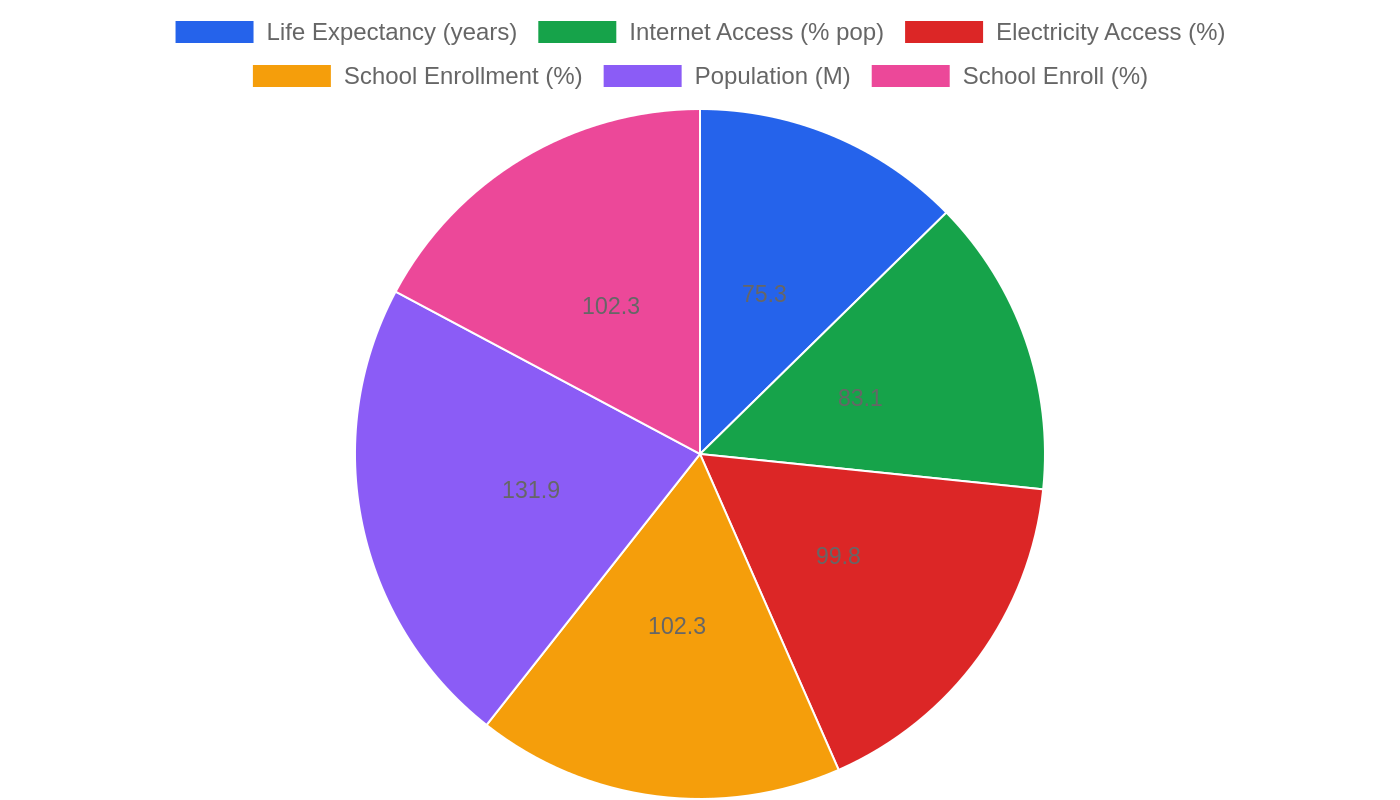
The World Bank’s GDP figures suggest a market of nearly 132 million people — a substantial domestic consumer base that, combined with export capacity, makes Mexico a compelling proposition for companies seeking scale.
Safety, Politics & Quality of Life — Stability Within Limits
Mexico’s political system is defined by the 1917 Constitution, which established a federal, representative, democratic, and republican framework. Power is distributed across three levels — federal, state, and municipal — with a presidential system at the centre. This structure has provided remarkable institutional continuity for over a century, offering investors and citizens a degree of predictability that many emerging markets lack.
That said, quality of life is shaped by more than political architecture. Public safety remains a concern across significant portions of the country, with crime and safety indices unavailable in the current data set — a gap that itself speaks to the unevenness of information and experience. In practice, security conditions vary enormously by region and even by neighbourhood. For many Mexicans, daily life is vibrant, community-oriented, and culturally rich; for others, it is shadowed by insecurity.
On the economic quality-of-life front, GNI per capita stands at $13,730, according to the World Bank — a figure that places Mexico firmly in the upper-middle-income bracket. That translates into access to modern healthcare, education, and consumer goods for a significant portion of the population, even as inequality remains a persistent feature of the social landscape.
The political system, for all its debates and tensions, continues to function within constitutional bounds — a stabilising force in a region where institutional fragility is all too common.
What’s Happening Now — The 2026 Agenda
The conversation in Mexico right now is about momentum — or the lack of it. With GDP growth at 0.56% for 2025, according to the World Bank, policymakers are under pressure to stimulate activity without reigniting inflation, which sits at 3.81%. The tightrope act is delicate: too much stimulus and price pressures return; too little and growth stalls further.
Inflation is the quiet obsession of the moment. At 3.81%, it is close enough to target to feel manageable, but far enough away to prevent complacency. The central bank’s next moves will be scrutinised for signals about the path forward. Meanwhile, the labour market’s strength — 2.67% unemployment — provides a cushion, but also raises questions about wage-driven price pressures in services.
On the business front, the corporate giants are adapting to a world of supply chain reconfiguration. América Móvil continues to expand its digital and financial services footprint. ALFA is navigating volatile petrochemical markets. The aviation sector is managing fuel costs and capacity constraints. For smaller firms, access to capital and regulatory clarity remain the watchwords.
The political calendar is dominated by debates over industrial policy, energy strategy, and social spending. With the constitutional framework providing stability, the battles are more about direction than survival. The question hanging over 2026 is whether Mexico can translate its structural advantages — proximity to major markets, a young workforce, a diversified industrial base — into faster growth. The World Bank’s numbers suggest the potential is there. The execution, as always, is the hard part.
The Bottom Line
Mexico is not a country in crisis — nor is it one in full bloom. It is a nation of 132 million people with a diversified economy, a stable political system, and a corporate sector that competes globally. The 0.56% growth figure is a reminder that potential alone does not produce prosperity; policy choices, investment, and global conditions all matter. For investors, Mexico offers exposure to manufacturing, telecommunications, and consumer markets with a risk profile that is manageable but not negligible.
For observers, it remains one of the most important economies in the hemisphere — a place where the outcomes of the next few years will resonate far beyond its borders. Watch Mexico not for the headlines it makes today, but for the trajectory it sets tomorrow.
Sources & Methodology
This article is authored by Economic Pulse Net for informational and research purposes. Economic Pulse Net sources its data from multilateral institutions, national statistics bureaus, and proprietary databases. All data is believed to be current as of the date of publication.
Published: August 27, 2026 | Category: Research — Mexico
Use these signals in your own platform
Economic Pulse publishes its live signal feed through a documented, read-only API. Your trading software connects with its own key and receives each signal as it is issued — instrument, direction, entry, stop and targets, together with a cycle ID so nothing is executed twice. The feed is independent of this website and cannot change it.
Signals are informational only and are not financial advice.