Economic Pulse Net | Sources: World Bank World Development Indicators, Government Sources | 2026
Key Takeaways
* Stagnant but Stable: With GDP growth projected at a mere 0.56% for 2025, Mexico’s economy is essentially flatlining, yet it maintains macroeconomic stability through controlled inflation and low unemployment.
Labor Market Strength: An unemployment rate of just 2.673% suggests a tight labor market, offering significant consumer spending power despite the broader economic slowdown.
Corporate Concentration: The business landscape is dominated by a few large conglomerates, particularly in telecommunications, aviation, and basic materials, highlighting a concentrated corporate structure.
Institutional Continuity: The political framework remains anchored in the 1917 Constitution, providing a predictable, albeit slow-moving, federal democratic structure that underpins long-term planning.
Economic Headwinds Masked by Labor Strength
Mexico’s economic trajectory for 2025 presents a complex picture of stagnation within a stable framework. According to data from the World Bank, the nation’s GDP growth is projected to be a modest 0.561683456144578%, indicating an economy that has largely lost its momentum compared to previous boom years. However, this sluggish growth does not equate to a recession; rather, it reflects a mature market absorbing structural adjustments.
Crucially, this slow expansion is supported by a remarkably healthy labor market, with unemployment standing at a low 2.673%. This low jobless rate implies that consumers remain employed and capable of spending, which helps sustain domestic demand even as overall production grows only marginally.
Inflation, measured by the CPI, is held at 3.80668650726485%, a figure that suggests monetary authorities are successfully keeping price increases within manageable bounds, avoiding the hyperinflationary pitfalls seen in other emerging markets. The total GDP stands at approximately $1.83 trillion USD, a substantial aggregate figure that underscores the country’s size, though per capita wealth remains constrained by population density.
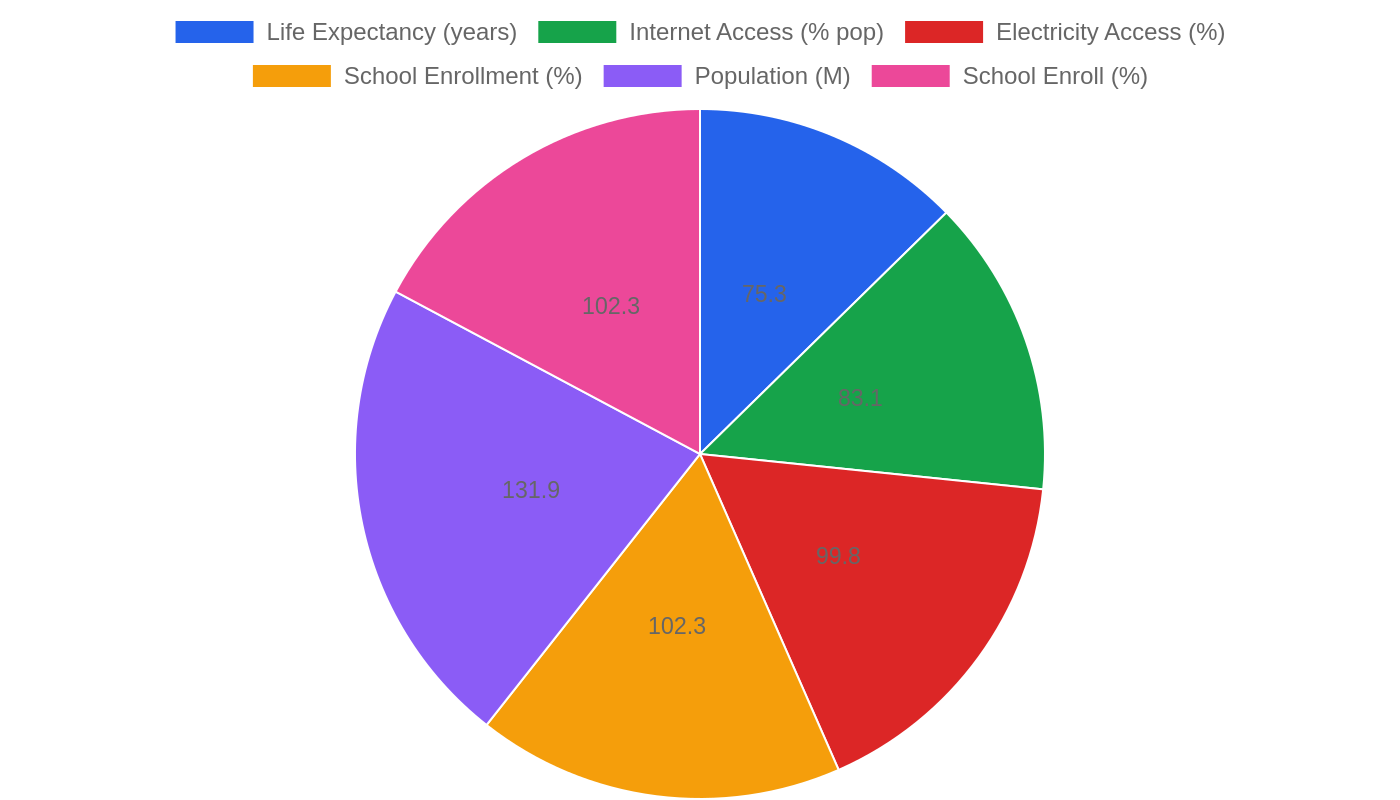
With a population of over 131 million people, the sheer scale of the market offers volume opportunities, even if individual purchasing power, indicated by a GNI per capita of $13,730, does not reach developed-nation levels. This combination of low growth and low unemployment creates a unique environment where businesses must focus on efficiency and retention rather than rapid expansion.
Cost of Living and Daily Expenses
Navigating the cost of living in Mexico requires an understanding of the interplay between income levels and daily expenses. While specific housing indices or detailed rent comparisons are not provided in the current dataset, the general economic indicators offer clues about household financial health. With a Gross National Income (GNI) per capita of $13,730, the average Mexican citizen operates within a middle-income bracket that is sensitive to price fluctuations.
The inflation rate of 3.80668650726485% means that the cost of everyday goods and services is rising, albeit slowly, which preserves some real wage value for workers. For residents, this environment likely prioritizes essential consumption, as the low unemployment rate ensures that most households have a steady income stream to cover these costs.
Without specific data on housing affordability, one can infer that the primary pressure points for families are likely food and energy, sectors heavily influenced by the broader industrial output. The absence of extreme inflation suggests that budgeting remains predictable, allowing for long-term financial planning without the panic associated with volatile price spikes.
Ultimately, the cost of living appears to be calibrated to the national income levels, creating a balanced but tight financial ecosystem for the average worker.
Investment & Business Climate: Giants and Conglomerates
The investment landscape in Mexico is characterized by the dominance of large, established players across key sectors. A review of top companies reveals a heavy concentration in consumer services, industrials, and basic materials, signaling where capital flows are safest. América Móvil leads in telecommunications, a critical infrastructure sector that drives digital connectivity and modern commerce.
In the industrial space, companies like ALFA, Alpek, and Altos Hornos de México represent the backbone of manufacturing and raw material production, essential for both domestic use and export. The aviation sector is also prominent, with Aeroméxico Connect, Aeroméxico, AeroUnion, and Aeromexpress forming a robust network that facilitates business travel and logistics. For investors, these entities offer stability due to their market leadership and diversified operations.
However, the lack of data on smaller enterprises or emerging startups suggests that the business climate may be less accessible to small-to-medium-sized foreign entrants who cannot compete with these conglomerates’ scale. Sectors such as consumer goods, represented by Ah Cacao Real Chocolate and Alpura, indicate strong local brand loyalty and a vibrant domestic market for packaged products.
This corporate structure favors partnerships with established local firms, as they possess the regulatory knowledge and distribution networks necessary to navigate the Mexican market effectively.
Safety, Politics & Quality of Life
Quality of life in Mexico is framed by a strong political tradition and mixed safety metrics. Politically, the country operates as a representative, democratic, and republican federation based on the 1917 Constitution. This system establishes three distinct levels of government—federal, state, and municipal—which provides a layered approach to governance and policy implementation.
This constitutional continuity offers a degree of political predictability, reducing the risk of sudden regime changes that could destabilize economic activities. However, when examining personal security, the data presents a gap; both the Crime Index and Safety Index are listed as N/A. This absence of specific safety metrics makes it difficult to quantify the day-to-day risks faced by residents or expatriates, leaving quality of life assessments reliant on anecdotal evidence or localized reports.
The lack of happiness data further complicates a holistic view of social well-being, meaning that while economic and political structures are clear, the subjective experience of living in Mexico remains opaque in this dataset. Despite these informational gaps, the democratic framework suggests that civic engagement and legal recourse are available mechanisms for addressing grievances, contributing to a baseline of social order.
What’s Happening Now: Navigating the Plateau
Currently, Mexico is navigating a period of economic consolidation where the focus has shifted from high-speed growth to maintaining stability. The projection of 0.56% GDP growth for 2025 indicates that policymakers are likely prioritizing inflation control and employment preservation over aggressive stimulus measures. With inflation capped at roughly 3.8%, the central bank’s monetary policy appears to be working, preventing the erosion of consumer savings.
Meanwhile, the persistent low unemployment rate of 2.673% suggests that the labor market is absorbing shocks effectively, possibly due to strong domestic consumption driven by the employed workforce. Businesses are likely adjusting strategies to focus on operational efficiency rather than market expansion, given the saturated nature of the top-tier industries dominated by giants like ALFA and América Móvil.
The political landscape remains static, with no immediate electoral upheavals disrupting the constitutional order, allowing for steady administrative continuity. This “wait-and-see” approach characterizes the current affairs, where the primary challenge is sustaining social cohesion and economic activity in a low-growth environment.
Investors and observers should watch for any shifts in fiscal policy that might aim to boost the stagnant GDP, as the current trajectory relies heavily on organic, rather than injected, economic vitality.
The Bottom Line
Mexico in 2025 is a case study in resilience over rapid expansion. It is a market best suited for investors seeking stability and access to a massive, employed consumer base rather than high-growth speculation. The presence of powerful conglomerates offers safe harbor investments, while the low unemployment rate ensures underlying demand remains intact.
For those considering entry, the lack of safety data necessitates careful, localized due diligence, but the political and economic frameworks provide a solid foundation for long-term engagement.
Sources & Methodology
This article is authored by Economic Pulse Net for informational and research purposes. Economic Pulse Net sources its data from multilateral institutions, national statistics bureaus, and proprietary databases. All data is believed to be current as of the date of publication.
Published: October 01, 2026 | Category: Research — Mexico
Use these signals in your own platform
Economic Pulse publishes its live signal feed through a documented, read-only API. Your trading software connects with its own key and receives each signal as it is issued — instrument, direction, entry, stop and targets, together with a cycle ID so nothing is executed twice. The feed is independent of this website and cannot change it.
Signals are informational only and are not financial advice.