Economic Pulse Net | Sources: World Bank World Development Indicators, Government Sources | 2026
Key Takeaways
– Cuba remains a unitary, one-party socialist state, with the Communist Party constitutionally enshrined as the “leading force of society and of the state,” according to the country’s 1976 Constitution as amended.
– The economy operates under a Marxist–Leninist framework of democratic centralism, which shapes everything from enterprise ownership to foreign investment policy.
– State-owned enterprises dominate the landscape, with major players spanning tobacco, energy, aviation, and telecommunications—most notably Habanos S.A. and Cubatabaco in consumer goods.
– Despite its political isolation, Cuba maintains a diverse industrial portfolio, though comprehensive economic data from the World Bank remains limited.
– For investors and analysts, understanding Cuba requires reading between the lines of scarce official statistics and focusing on the strategic sectors where the state has chosen to concentrate resources.
The Economic Engine: Central Planning in the 21st Century
The Cuban economy presents one of the most fascinating case studies in modern economics: a centrally planned system navigating the complexities of the 21st century global marketplace. According to World Bank data, comprehensive figures for GDP growth, inflation, and unemployment are not currently available—a situation that speaks volumes about the country’s limited integration into international financial reporting systems. This data gap itself is telling.
In an era of real-time economic tracking, Cuba’s opacity creates significant challenges for potential investors and policymakers attempting to gauge the island’s true economic trajectory.
What we do know is that Cuba’s economic structure reflects its political ideology. The Constitution of 1976, amended in 1992 and 2002, defines Cuba as a socialist republic guided by the ideas of José Martí and the political and social theories of Marx, Engels, and Lenin. This ideological foundation translates directly into economic policy, with the means of production largely held in state hands.
The absence of conventional market indicators suggests an economy that operates on different principles than its regional neighbors—one where state planning, rather than supply and demand, determines resource allocation.
The main industries tell a story of strategic prioritization. Consumer services feature prominently, with Aero Caribbean, Aerotaxi, and Cubana de Aviación representing the aviation sector. Cubatabaco and Habanos S.A. anchor the consumer goods sector, with Cuban cigars remaining globally renowned luxury products. Cuba Petróleo Unión manages the nation’s oil and gas interests, while ETECSA holds the telecommunications monopoly.
This industrial mix suggests an economy focused on high-value exports, domestic service provision, and energy self-sufficiency—all hallmarks of a state-directed development strategy.
The Cost of Living Puzzle: State Subsidies and Scarcity
In Cuba’s command economy, the concept of cost of living operates differently than in market-based systems. The state controls prices for basic goods and services through its central planning mechanisms, meaning that housing, food, and transportation costs do not necessarily reflect market realities.
The World Bank data provides no specific figures for Cuban living costs, which is unsurprising given the dual-currency history and complex subsidy systems that have characterized the island’s economic management.
What can be inferred is that Cuba’s approach to housing and daily expenses diverges significantly from its Latin American neighbors. In most regional economies, housing costs consume 30-40% of household income, driven by market forces. In Cuba, the state’s role in housing allocation and price controls creates a fundamentally different dynamic—one where scarcity and rationing, rather than price signals, shape access to goods and services.
For ordinary Cubans, the cost of living challenge manifests not in visible inflation but in limited availability and the need to navigate state distribution systems.
Business and Investment: The State’s Long Shadow
For businesses looking at Cuba, the landscape is defined by state dominance. The top companies list reads like a directory of state enterprises: the Central Bank of Cuba anchors the financial sector, while ETECSA controls telecommunications, and EGREM manages entertainment and consumer services.
Habanos S.A., the joint venture that markets Cuban cigars globally, represents one of the island’s most successful export operations, demonstrating that Cuban products can compete at the highest levels of international markets.
The business environment in Cuba is not for the faint-hearted. Foreign investors must navigate a system where the state is both regulator and competitor, where joint ventures require government approval, and where the legal framework is designed to protect socialist principles. However, sectors like tourism, energy, and telecommunications offer potential opportunities for those willing to work within the system.
The presence of Cuba Petróleo Unión in the oil and gas sector suggests ongoing efforts to develop domestic energy resources, while the aviation companies indicate a functioning transportation infrastructure.
Safety, Politics, and Daily Life Under Democratic Centralism
Cuba’s political system, as defined by its constitution, adheres to the Marxist–Leninist concept of democratic centralism. This means that while democratic processes exist in theory, they operate within a framework where the Communist Party maintains ultimate authority. The World Bank data provides no crime or safety indices for Cuba, making objective comparisons difficult.
However, Cuba has historically maintained a reputation for low violent crime rates compared to many regional neighbors, a factor often attributed to strong state presence and community surveillance systems.
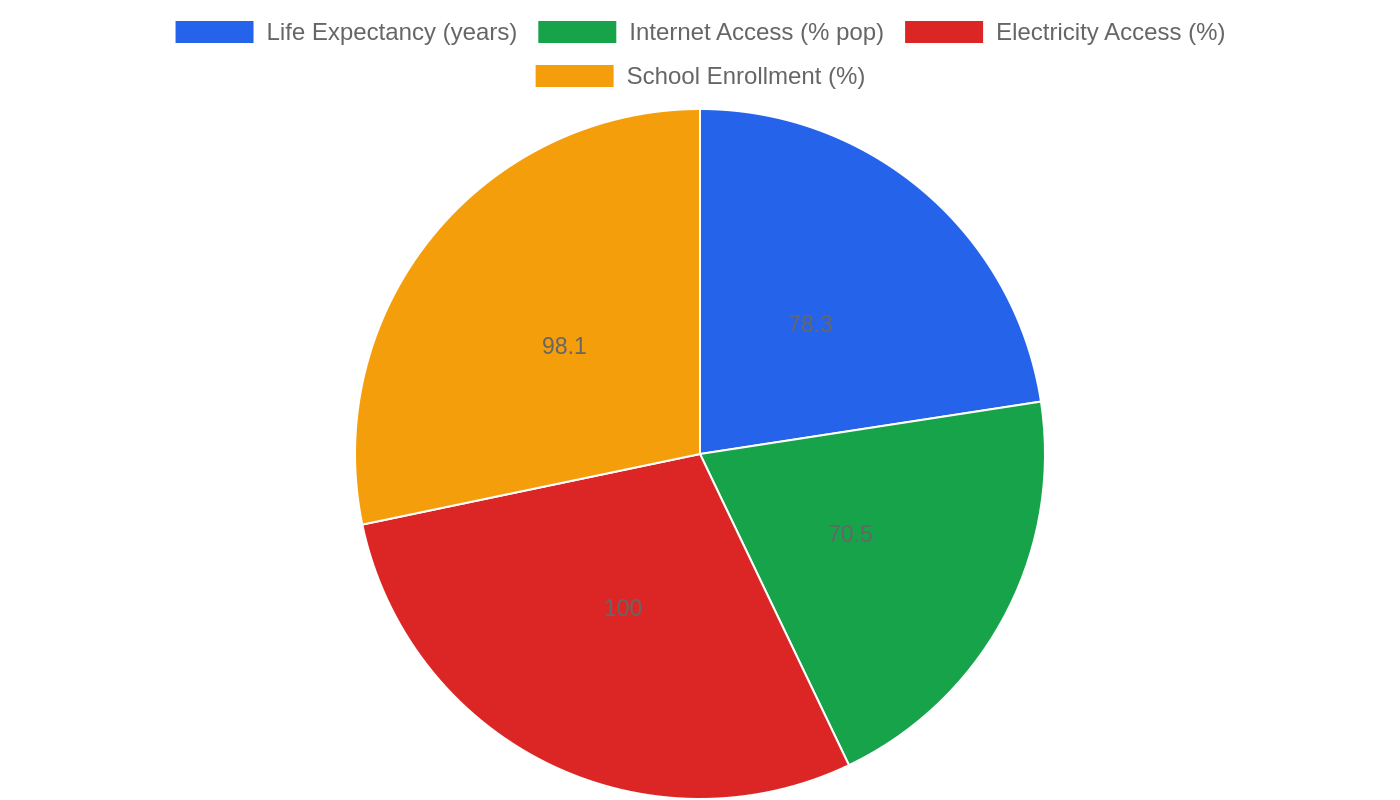
The quality of life in Cuba is a study in contradictions. The state guarantees universal healthcare and education, achievements that have earned international recognition. Yet economic scarcity, limited internet access (though ETECSA has expanded connectivity), and restricted political freedoms present significant challenges. The political landscape, as described in the constitutional framework, emphasizes collective welfare over individual rights, with the state playing a pervasive role in daily life.
For residents, this means security and stability in some areas, but limited personal and economic freedoms in others.
The Current Moment: Between Reform and Continuity
As Cuba navigates the mid-2020s, the tension between economic necessity and ideological purity defines the national conversation. The state enterprises that dominate the economy—from Habanos S.A. to ETECSA—face pressure to modernize and compete internationally, yet they operate within a system that prioritizes political control over market efficiency.
The recent expansion of private sector activities, including small businesses and self-employment, suggests a gradual opening, even as the Communist Party maintains its constitutional role as the “leading force of society and of the state.”
The energy sector bears watching, with Cuba Petróleo Unión central to the nation’s efforts to secure energy independence. Similarly, telecommunications through ETECSA represents a critical frontier, as expanded internet access could reshape Cuban society in unpredictable ways. The aviation sector, including Aero Caribbean and Cubana de Aviación, indicates ongoing efforts to maintain international connections despite economic constraints.
For observers, the key question is whether Cuba can achieve the economic reforms necessary to improve living standards without undermining the political system that has defined the nation since 1959.
The Bottom Line
Cuba remains a country that defies easy categorization—a socialist state with globally competitive products, a centrally planned economy navigating a globalized world, and a political system that has outlasted numerous predictions of its demise. For economists, political scientists, and investors willing to understand its unique dynamics, Cuba offers a compelling case study in alternative development models.
The absence of comprehensive World Bank data should be viewed not as a barrier to understanding, but as an invitation to look deeper into how this island nation continues to chart its own course in a region defined by market economies.
Sources & Methodology
This article is authored by Economic Pulse Net for informational and research purposes. Economic Pulse Net sources its data from multilateral institutions, national statistics bureaus, and proprietary databases. All data is believed to be current as of the date of publication.
Published: July 31, 2026 | Category: Research — Cuba
Use these signals in your own platform
Economic Pulse publishes its live signal feed through a documented, read-only API. Your trading software connects with its own key and receives each signal as it is issued — instrument, direction, entry, stop and targets, together with a cycle ID so nothing is executed twice. The feed is independent of this website and cannot change it.
Signals are informational only and are not financial advice.