Economic Pulse Net | Sources: World Bank World Development Indicators, Government Sources | 2026
Key Takeaways
* Canada’s economy is projected to grow at a modest 1.74% in 2025, reflecting a period of steady but cautious expansion amidst global uncertainties.
Inflation remains tightly controlled at approximately 2.07%, aligning closely with central bank targets and providing a stable backdrop for consumers.
The business landscape is anchored by a diverse mix of industrial giants and consumer service leaders, from logistics firms like 3Way International Logistics to household names such as A&W.
Political stability is defined by a tradition of liberal democracy and social justice, offering a predictable environment for long-term investment.
Current policy shifts, including significant tax breaks for energy executives, signal a government intent to balance environmental goals with industrial competitiveness.
Economic Resilience Amidst Modest Growth
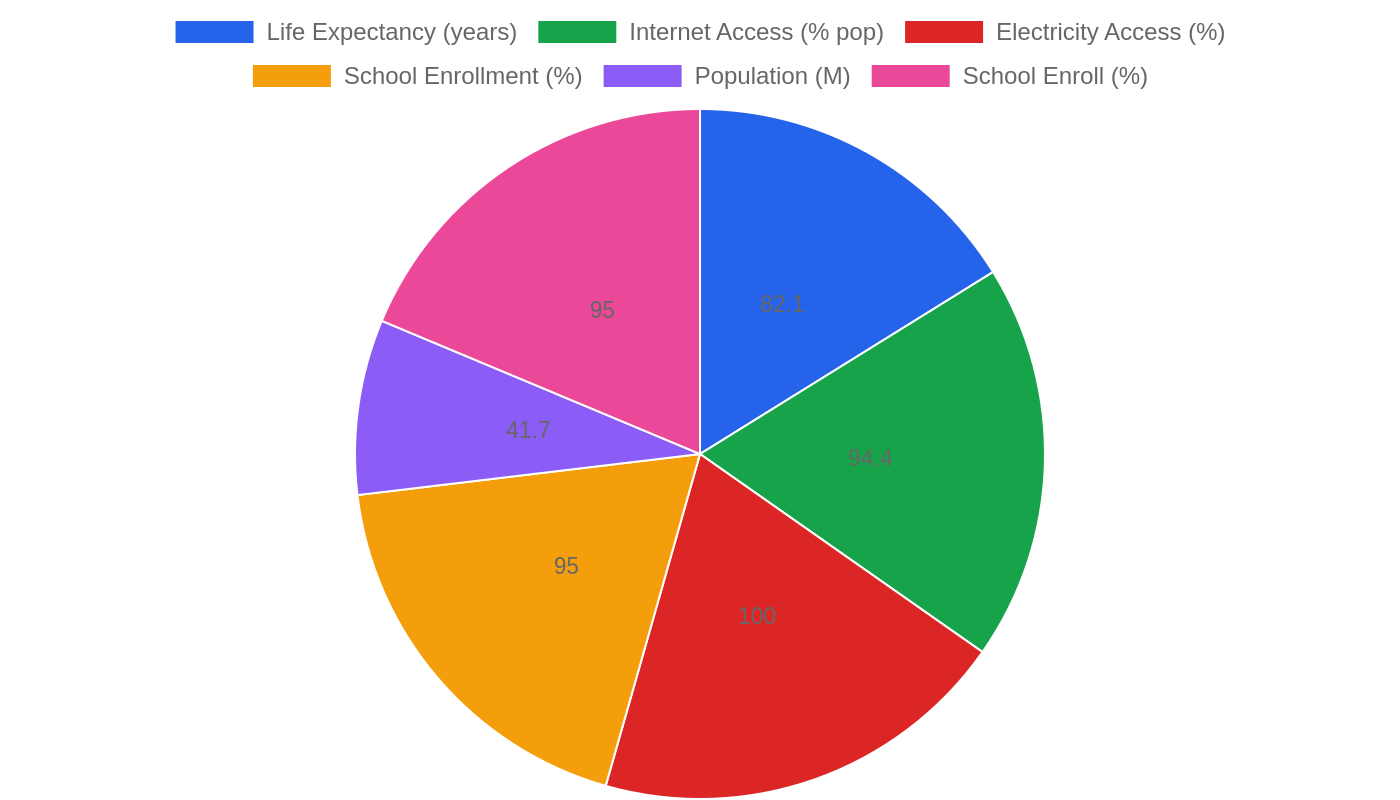
Canada’s economic trajectory for 2025 presents a picture of measured stability rather than explosive growth. According to World Bank data, the country’s GDP growth is projected at 1.74268536175708%, a figure that underscores a mature economy navigating complex global headwinds. This moderate expansion is supported by a substantial total GDP of USD 2,319,899,772,425.92, which positions Canada as a significant player in the North American market.
For the average citizen, this macroeconomic health translates into tangible prosperity; the GDP per capita based on purchasing power parity (PPP) stands at an impressive USD 66,745.82, while the GNI per capita is recorded at USD 56,420. However, the labor market shows signs of tightening, with unemployment hovering at 6.907%. While not alarming, this rate suggests a competitive job environment where wage pressures may influence broader economic activity.
Crucially, inflation has been brought under control, with the Consumer Price Index (CPI) settling at 2.07232411149103%. This near-target inflation rate indicates that monetary policies are effectively managing price stability, allowing businesses to plan with greater certainty and consumers to maintain their purchasing power without the erosion seen in higher-inflation economies.
The Cost of Living and Daily Expenses
For residents and expatriates alike, understanding the cost of living in Canada requires looking beyond headline inflation figures to the daily realities of housing and consumption. With a population of 41,651,653, the nation faces unique spatial dynamics that impact urban centers differently than rural areas. While specific rental indices are not provided in the current dataset, the high GDP per capita suggests that median incomes generally support a robust standard of living.
The low CPI of roughly 2.07% implies that essential goods and services are experiencing minimal price volatility, which is a significant relief for households managing budgets. Consumers can expect prices for daily necessities to remain relatively predictable, fostering a sense of financial security that is often absent in more volatile emerging markets.
Furthermore, the disparity between nominal GDP per capita and PPP-adjusted figures highlights how local purchasing power enhances the value of income within the domestic market. This dynamic allows Canadians to access a wider array of goods and services relative to their earnings compared to countries with similar nominal incomes but higher local costs.
Investment Opportunities and Corporate Landscape
The corporate sector in Canada is characterized by a blend of heavy industry innovation and strong consumer brand loyalty. Investors should note the prominence of companies across various sectors, particularly in industrials and consumer services. Notable entities include 1-800-GOT-JUNK? and Norda Stelo in the industrial space, alongside 3Way International Logistics, which points to a robust infrastructure and supply chain network.
In the consumer domain, brands like A&W and Addition Elle demonstrate the strength of domestic franchises that have achieved national recognition. The manufacturing sector is also well-represented by ABS Friction, indicating ongoing industrial production capabilities. Meanwhile, the healthcare sector features Advanced Cyclotron Systems, suggesting growth in specialized medical technology.
Access Communications highlights the importance of telecommunications infrastructure in connecting a geographically vast nation. These companies collectively illustrate an economy that is diversifying beyond raw resource extraction into value-added services and specialized manufacturing, offering investors a varied portfolio of opportunities ranging from traditional industrials to high-tech healthcare solutions.
Political Stability and Social Fabric
Canada’s political environment is widely recognized as one of the most stable in the world, underpinned by its status as a “full democracy.” Since the 1960s, the nation’s political culture has been distinguished by a deep emphasis on social justice, creating a societal framework that prioritizes equity and inclusion.
The founding principles of Canadian federalism—peace, order, and good government—alongside an Implied Bill of Rights, provide a legal and constitutional bedrock that encourages civic participation and protects individual liberties. The prevailing political ideology is described as egalitarian and moderate, which tends to reduce the risk of radical policy swings that can disrupt economic planning.
This commitment to liberalism and social cohesion contributes to a high quality of life, even though specific crime and safety indices are currently listed as N/A in the available data. The absence of these specific metrics does not detract from the general perception of Canada as a safe haven for expatriates and international businesses seeking a secure operational environment.
The consistent application of rule of law and democratic norms ensures that disputes are resolved through established legal channels, further enhancing investor confidence.
Current Affairs and Policy Shifts
The Canadian business landscape is currently undergoing significant shifts driven by both domestic policy adjustments and global geopolitical tensions. Recent developments highlight a strategic pivot in the energy sector, with Carney’s mega deduction tax break being hailed as a major boost by pipeline and South Bow executives. This move suggests a government effort to incentivize investment in critical infrastructure while maintaining fiscal discipline.
Simultaneously, Canada is positioning itself as a hub for technological innovation, as evidenced by coverage of the country’s largest AI and tech event, signaling growing interest in the digital economy. On the international front, experts are scrutinizing U.S.-China trade relations, noting the ‘hypocrisy’ of American trade policy during recent summits. This commentary reflects Canada’s delicate balancing act as it navigates trade dependencies between its northern neighbor and Asian markets.
Business briefs from major outlets like The Globe and Mail and CBC indicate a vibrant media ecosystem focused on dissecting these complex interplays. These news cycles underscore a period of active recalibration, where policy tools are being deployed to support key industries while remaining vigilant about external trade risks.
The Bottom Line
Canada offers a compelling case for investors and observers seeking stability in a turbulent global era. With controlled inflation, a solid GDP base, and a politically stable environment, the country provides a reliable foundation for long-term engagement. The emergence of new tax incentives for energy and a booming tech sector suggest dynamic opportunities for growth.
Those looking for a balanced mix of traditional industrial strength and modern technological ambition will find Canada to be a strategically vital market.
Sources & Methodology
This article is authored by Economic Pulse Net for informational and research purposes. Economic Pulse Net sources its data from multilateral institutions, national statistics bureaus, and proprietary databases. All data is believed to be current as of the date of publication.
Published: September 24, 2026 | Category: Research — Canada
Use these signals in your own platform
Economic Pulse publishes its live signal feed through a documented, read-only API. Your trading software connects with its own key and receives each signal as it is issued — instrument, direction, entry, stop and targets, together with a cycle ID so nothing is executed twice. The feed is independent of this website and cannot change it.
Signals are informational only and are not financial advice.