Economic Pulse Net | Sources: World Bank World Development Indicators, Government Sources | 2026
Barbados is often pictured as a postcard-perfect Caribbean getaway, but beneath the turquoise waters and sugar-sand beaches lies a determined parliamentary republic quietly redefining its place in the global economy. With a political system modelled on the British Westminster tradition and a corporate landscape that spans brewing, aviation, and telecommunications, this island nation of roughly 280,000 people is navigating the delicate balance between tourism dependence and economic diversification.
As the world’s attention shifts toward climate resilience and digital transformation, Barbados is positioning itself not merely as a vacation spot, but as a serious player in the region’s financial and industrial future.
Key Takeaways
– A Westminster-Style Republic: Barbados operates as a parliamentary republic with a President as head of state and a Prime Minister as head of government, providing political stability rooted in British governance traditions.
– Diverse Corporate Landscape: From the Barbados Stock Exchange to Bajan Helicopters and Banks Barbados Brewery, the country’s top companies span utilities, consumer goods, and financial services.
– Utility and Infrastructure Focus: State-linked entities like the Barbados Light and Power Company and the Barbados Water Authority remain central to the nation’s operational backbone.
– Media and Communication Growth: Caribbean Broadcasting Corporation and CariAccess highlight an evolving telecommunications and media sector.
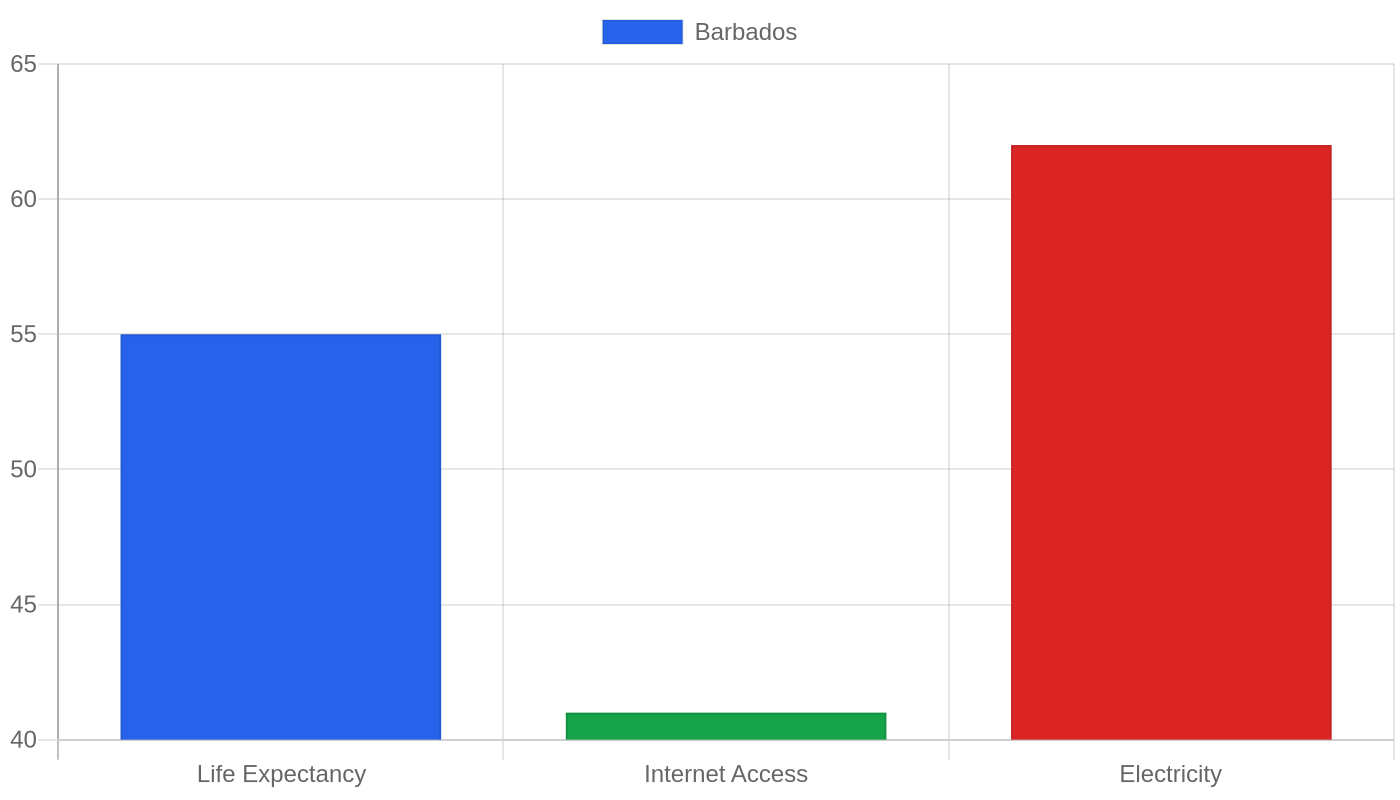
– Data Transparency Gap: While comprehensive World Bank economic metrics are currently unavailable, the country’s institutional framework suggests a mature, structured economy.
The Economic Engine: Structure Over Speed
Barbados may not be posting headline-grabbing GDP growth figures at the moment, but the absence of fresh World Bank data should not be mistaken for economic stagnation. The country’s economic architecture is built on a mix of tourism, international business services, and a robust domestic consumer market.
The presence of the Barbados Stock Exchange as one of the nation’s top financial institutions signals a mature capital market that facilitates investment and corporate governance — a rarity among smaller Caribbean nations. Meanwhile, the Barbados National Oil Company Limited underscores the country’s ongoing, albeit modest, engagement with the energy sector, even as global pressures mount to transition toward renewable sources.
Inflation and unemployment metrics remain unquantified in the latest World Bank release, but the composition of the country’s leading companies offers a window into its economic priorities. The prominence of consumer goods firms like Banks Barbados Brewery and the Barbados Ice Cream Company points to a resilient domestic consumption base. These are not export-oriented behemoths; they are local institutions that anchor everyday life, providing jobs and goods that sustain the island’s population.
The Barbados Advocate, a long-standing newspaper, and the Caribbean Broadcasting Corporation reflect a functioning media ecosystem, which in turn supports an informed citizenry and a healthy public discourse — essential ingredients for sustainable economic development.
The economic narrative here is not one of explosive growth but of structural persistence. In the absence of hard numbers, the qualitative picture is of an economy that has weathered storms before and built institutions that endure. The World Bank’s silence on specific indicators may reflect reporting lags rather than economic distress. For investors and analysts, the lesson is to look beyond the data vacuum and examine the institutional fabric that has kept Barbados functional and stable for decades.
Cost of Living: The Price of Paradise
Living in Barbados carries a premium, though precise figures on housing and daily expenses are not currently available from the World Bank dataset. What can be inferred from the corporate landscape is that the cost of living is shaped by a mix of imported goods, local production, and utility services dominated by state-linked providers.
The Barbados Light and Power Company and the Barbados Water Authority are central to household budgets, and their operational efficiency directly impacts monthly expenses for residents.
Rent versus buy dynamics in Barbados typically favour long-term ownership for locals, while expatriates and remote workers often gravitate toward rental markets in coastal areas. The presence of consumer goods companies like Banks Barbados Brewery suggests that everyday items such as beer and ice cream are produced locally, which can mitigate some import costs. However, the island’s reliance on imported fuel and manufactured goods likely keeps prices above regional averages.
Compared to other Caribbean nations, Barbados has historically been positioned as a mid-to-high cost destination, with utilities and housing consuming a significant share of household income. For those considering a move, the trade-off is clear: higher living costs in exchange for safety, stability, and a high quality of life.
Investment and Business Climate: A Stable Bet in Choppy Waters
Barbados offers a business environment that is institutionally solid, even if not flashy. The presence of the Barbados Stock Exchange provides a regulated venue for capital raising and investment, while the diversity of top companies — from Bajan Helicopters in the industrials sector to CariAccess in telecommunications — indicates a broadening economic base.
For investors, the utilities sector, represented by the Barbados Light and Power Company and the Barbados Water Authority, offers regulated, predictable returns, albeit with limited growth potential. The consumer goods sector, anchored by Banks Barbados Brewery, provides exposure to domestic demand and brand loyalty that has been cultivated over decades.
The Barbados National Oil Company Limited remains a point of interest, particularly as global energy markets fluctuate. While the country is not a major producer, its national oil company suggests a strategic interest in energy security. The financial sector, bolstered by the stock exchange, offers opportunities in asset management and corporate services.
The political stability of a Westminster-style republic, with a President elected by Parliament for a four-year term, provides a predictable regulatory environment that businesses value. For foreign investors, Barbados represents a low-risk entry point into the Caribbean market, with a legal system familiar to international lawyers and accountants.
Safety, Politics, and Quality of Life: The Social Contract
Crime and safety indices for Barbados are currently unavailable, but the country’s political structure and social institutions suggest a relatively stable and secure environment. As a parliamentary republic modelled on the British Westminster system, Barbados benefits from the rule of law, an independent judiciary, and a tradition of peaceful transfers of power.
The President, currently Jeffrey Bostic, serves as head of state, while the Prime Minister directs government policy — a separation of roles that mirrors the UK system and provides checks and balances.
The 30-member House of Assembly and the Senate ensure legislative representation and oversight, contributing to a political culture that values debate and accountability. This institutional maturity often correlates with lower levels of political violence and stronger social cohesion. Quality of life in Barbados is generally considered high, with good healthcare, education, and a strong sense of community.
The island’s cultural output, supported by the Caribbean Broadcasting Corporation and The Barbados Advocate, enriches public life and fosters a shared national identity. While crime exists, as it does everywhere, the structural safeguards of a stable democracy and a functioning civil society make Barbados a comparatively safe and pleasant place to live.
What’s Happening Now: The Republic in Transition
Barbados is in a moment of quiet transformation. Having transitioned to a republic in recent years, the country is still calibrating its new constitutional arrangements. President Jeffrey Bostic’s role, while largely ceremonial, symbolises a break from colonial-era governance and a renewed sense of national identity.
This political evolution is occurring alongside economic shifts, as the country seeks to reduce its reliance on traditional sectors and embrace new opportunities in technology, finance, and renewable energy. The presence of CariAccess in the telecommunications sector suggests ongoing investment in digital infrastructure, which is critical for attracting remote workers and tech companies.
The Barbados Stock Exchange is likely playing a role in facilitating capital for these emerging industries, while the government’s focus on climate resilience — a pressing issue for all Caribbean nations — may drive policy changes in the energy and utilities sectors. The Barbados National Oil Company’s future is uncertain as the global community pushes for decarbonisation, but the company’s existence indicates a pragmatic approach to energy transition.
For residents and investors alike, the current period is one of cautious optimism. The country is not undergoing radical reform, but it is steadily modernising its institutions and infrastructure. The coming years will reveal whether Barbados can translate its political maturity into sustained economic dynamism.
The Bottom Line
Barbados is a country to watch for those who value stability, institutional strength, and gradual progress over rapid, disruptive change. Investors seeking a safe Caribbean entry point will find a regulated stock exchange, established utilities, and a consumer market anchored by trusted local brands. Policymakers and academics studying post-colonial governance will find a compelling case study in the country’s transition to a republic.
While the lack of current World Bank data makes precise economic assessment difficult, the qualitative indicators — a diverse corporate sector, a stable political system, and a functioning civil society — paint a picture of a nation that is quietly confident and steadily moving forward. For those willing to look beyond the numbers, Barbados offers a compelling narrative of resilience and reinvention.
Sources & Methodology
This article is authored by Economic Pulse Net for informational and research purposes. Economic Pulse Net sources its data from multilateral institutions, national statistics bureaus, and proprietary databases. All data is believed to be current as of the date of publication.
Published: August 06, 2026 | Category: Research — Barbados
Use these signals in your own platform
Economic Pulse publishes its live signal feed through a documented, read-only API. Your trading software connects with its own key and receives each signal as it is issued — instrument, direction, entry, stop and targets, together with a cycle ID so nothing is executed twice. The feed is independent of this website and cannot change it.
Signals are informational only and are not financial advice.