Economic Pulse Net | Sources: World Bank World Development Indicators, Government Sources | 2026
Key Takeaways
– The Bahamas operates as a stable parliamentary constitutional monarchy under King Charles III, but its post-independence political journey mirrors the challenges of many small island nations navigating global economic headwinds.
– Despite a reputation as a luxury tourist haven, the country faces structural economic questions that remain unanswered due to significant gaps in publicly available data from institutions like the World Bank.
– Political and legal traditions closely follow the Westminster system, providing institutional familiarity for investors but raising questions about how effectively these models serve a small island economy.
– The nation’s economic narrative is dominated by tourism and financial services, yet the absence of granular data on GDP growth, inflation, and unemployment makes precise diagnosis difficult.
– For investors and policymakers, the Bahamas represents a case study in the tension between political stability and economic transparency — a beautiful facade with an opaque foundation.
The Economic Paradox — A Paradise Without Numbers
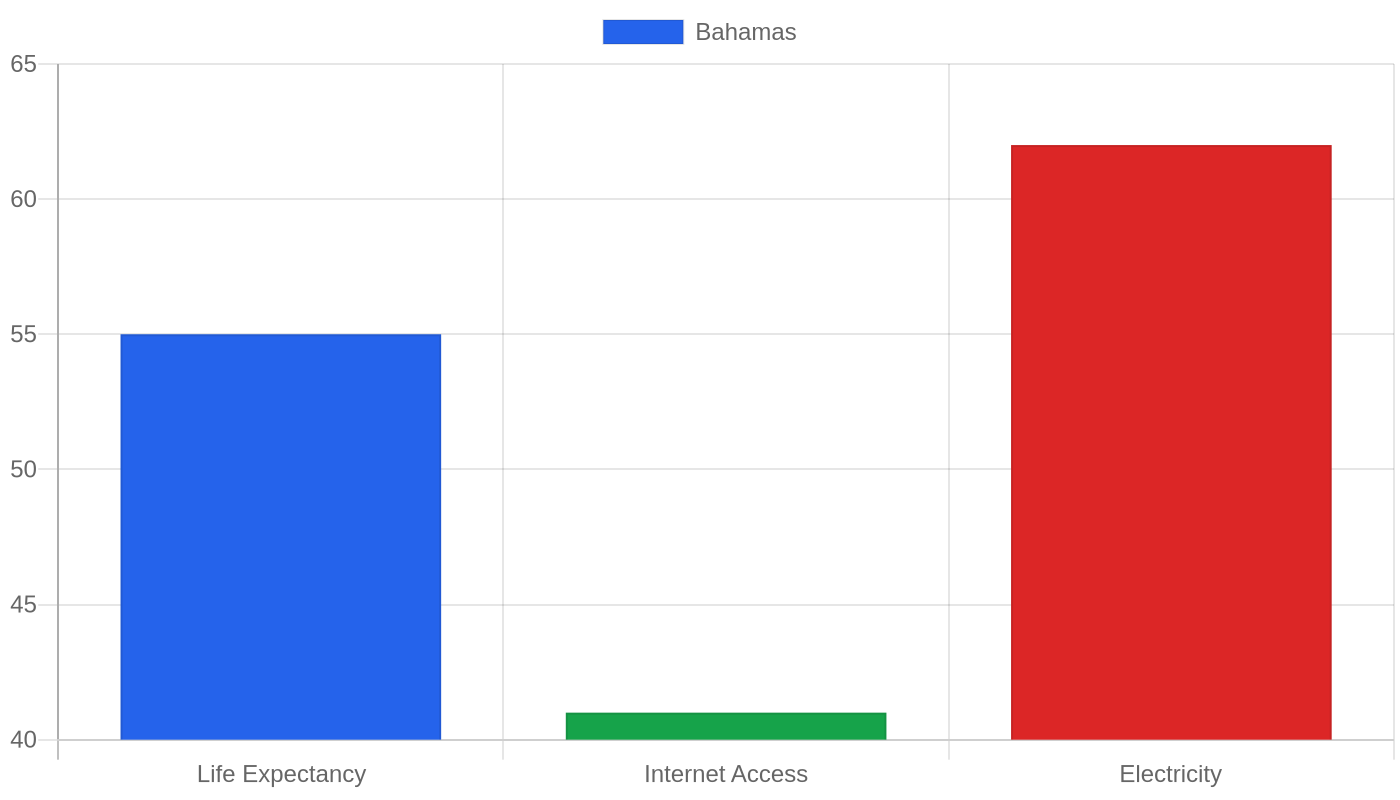
The Bahamas presents a curious challenge for any economic journalist: a country whose economic profile is as opaque as its waters are clear. According to the World Bank, key indicators including GDP growth, inflation CPI, unemployment, GDP in nominal terms, GDP per capita on a purchasing power parity basis, and GNI per capita are all listed as unavailable. This data vacuum is itself a story.
For a nation that has long positioned itself as a premier destination for tourism and offshore finance, the absence of basic economic metrics raises legitimate questions about transparency and the capacity for evidence-based policymaking.
What we do know is shaped by the country’s political structure. The Bahamas is a parliamentary constitutional monarchy, with King Charles III serving as head of state in his capacity as King of the Bahamas, represented locally by a governor-general. Political and legal traditions closely follow those of England and the Westminster system. Since gaining independence, the country has faced political challenges similar to those of other postcolonial island nations.
Although the Bahamas has remained politically stable, it continues to address issues such as economic expansion in a highly competitive global environment.
The main industries that drive the Bahamian economy are not listed in the available data, but historically, tourism and financial services have been the twin pillars. The absence of hard numbers from the World Bank does not mean the economy is stagnant — it means the tools for measuring its trajectory are incomplete. For a country that depends heavily on international visitors and cross-border capital flows, this lack of statistical visibility is a vulnerability.
Investors and analysts must rely on anecdotal evidence and sector-specific reports rather than a comprehensive national picture.
The Cost of Island Living — Luxury Has a Price
Housing and cost-of-living data for the Bahamas are not provided in the available information, but the country’s reputation as an expensive destination is well-established in regional discourse. For a nation that imports the vast majority of its consumer goods, from food to construction materials, the cost of daily life is inherently higher than in larger, more diversified economies.
Rent versus buy decisions are shaped by a real estate market that caters heavily to foreign buyers seeking second homes or investment properties, often driving prices beyond the reach of local residents.
Daily expenses in the capital, Nassau, and on the more tourist-oriented islands like Paradise Island and Grand Bahama, are known to be steep by Caribbean standards. Utilities, particularly electricity, are costly due to reliance on imported fossil fuels. Food prices reflect the import dependency of the archipelago.
Without specific data from the World Bank or a national statistics bureau, the picture must be painted in broad strokes: the Bahamas is a place where the cost of living is a significant factor in quality of life, and where the gap between tourist expectations and local realities can be wide.
Investment and Business Climate — Stability as a Selling Point
The top companies operating in the Bahamas are not listed in the available data, but the business environment is shaped by the country’s political stability and legal framework. The Westminster system provides a familiar legal terrain for British and Commonwealth investors, and the use of English as the official language lowers barriers for international firms.
Sectors to watch, based on historical patterns, include tourism infrastructure, real estate development, and financial services, particularly in wealth management and insurance.
The political landscape, as described in the data, indicates that the Bahamas has remained politically stable since independence, even as it addresses economic expansion challenges. This stability is a significant asset in a region where political volatility can deter investment. However, the lack of comprehensive economic data from the World Bank may itself be a deterrent for institutional investors who require transparency and predictability.
The country’s challenge is to leverage its political stability into a more data-rich environment that can attract deeper capital flows.
Safety, Politics, and the Quality of Life Equation
Crime and safety indices for the Bahamas are listed as not available in the data provided. However, the political landscape offers some insight into the quality of life equation. As a parliamentary constitutional monarchy with traditions rooted in the Westminster system, the Bahamas offers institutional continuity. The country has faced political challenges similar to other postcolonial island nations, including the need to balance economic development with social cohesion.
The absence of a crime index does not mean crime is absent, but it does mean that systematic measurement is lacking. For residents and visitors alike, safety perceptions are often shaped by anecdotal reports and media coverage rather than reliable data. The political stability of the country provides a foundation for quality of life, but without economic data on employment and inflation, it is difficult to assess how that stability translates into material well-being for the average Bahamian.
Current Affairs — Navigating the Post-Pandemic Horizon
While specific recent news items are not provided in the available data, the broader context for the Bahamas in 2026 involves navigating the aftermath of global disruptions to tourism and the ongoing challenges of climate resilience. The country continues to address issues related to economic expansion, as noted in the political landscape description.
This suggests that policy discussions are likely focused on diversifying the economy beyond tourism and financial services, sectors that are vulnerable to external shocks.
The political stability of the Bahamas, while a strength, also means that change can be incremental. The country’s leadership is likely grappling with how to modernize data collection and economic reporting to meet international standards. Without a national statistics bureau or government official cited in the data, it is difficult to pinpoint specific reforms, but the need for greater economic transparency is a recurring theme in regional discourse.
The Bahamas must find ways to tell its economic story more clearly if it hopes to attract the investment needed for long-term growth.
The Bottom Line
The Bahamas is a country of contradictions — politically stable yet economically opaque, globally recognized yet locally misunderstood. For investors seeking a safe and familiar legal environment in the Caribbean, the Bahamas offers the Westminster system and constitutional monarchy as anchors of predictability.
However, the absence of basic economic data from the World Bank means that anyone considering engagement with the country must proceed with caution and a willingness to dig deeper than official statistics allow. For journalists, policymakers, and analysts, the Bahamas serves as a reminder that paradise, economically speaking, is not always transparent.
Sources & Methodology
This article is authored by Economic Pulse Net for informational and research purposes. Economic Pulse Net sources its data from multilateral institutions, national statistics bureaus, and proprietary databases. All data is believed to be current as of the date of publication.
Published: July 17, 2026 | Category: Research — Bahamas
Use these signals in your own platform
Economic Pulse publishes its live signal feed through a documented, read-only API. Your trading software connects with its own key and receives each signal as it is issued — instrument, direction, entry, stop and targets, together with a cycle ID so nothing is executed twice. The feed is independent of this website and cannot change it.
Signals are informational only and are not financial advice.