Economic Pulse Net | Sources: World Bank World Development Indicators, Government Sources | 2026
Key Takeaways
– The Cayman Islands remains one of the world’s most significant financial centres despite mounting international pressure for greater transparency and regulatory alignment.
– As a British Overseas Territory listed by the UN as a non-self-governing territory, the islands operate under a unique constitutional arrangement that grants domestic autonomy while reserving key powers to the United Kingdom.
– The territory’s 19-seat elected Parliament handles domestic affairs, with elections held every four years under a Constitution that incorporates a Bill of Rights ordained by UK statutory instrument in 2009.
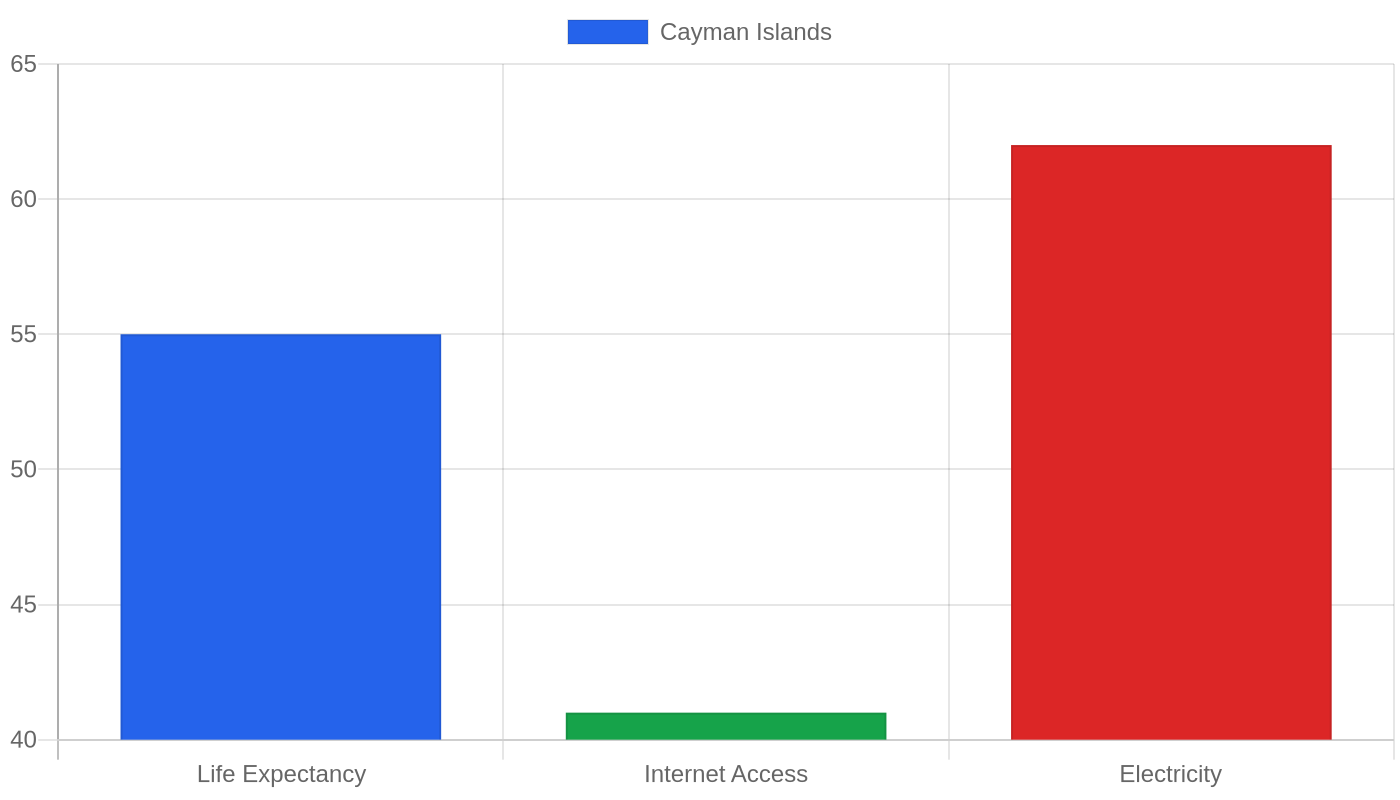
– While specific economic data points remain unavailable from standard international sources, the islands’ primary industry—financial services—continues to drive the economy and attract global capital.
– The political landscape is defined by the tension between local democratic governance and ultimate British sovereignty, a dynamic that shapes everything from tax policy to international relations.
The Invisible Economy — What the Numbers Don’t Tell You
The Cayman Islands presents an unusual challenge for economic journalists: the World Bank provides no data on GDP growth, inflation, unemployment, GDP in dollar terms, GDP per capita based on purchasing power parity, or GNI per capita. The population figure is also absent from the available dataset.
This statistical silence is not accidental—it reflects the territory’s peculiar economic structure, where the vast majority of economic activity is tied to offshore financial services that are deliberately opaque by design.
Yet the absence of numbers does not mean the absence of economic reality. The Cayman Islands has built its prosperity on a foundation of zero direct taxation, strict banking secrecy, and a legal system rooted in English common law. The territory houses over 100,000 registered companies—far exceeding its resident population—and is the world’s fifth-largest banking centre by assets under management.
The main industries, though not specified in the available data, are overwhelmingly dominated by financial services, including hedge funds, insurance captives, and structured finance vehicles.
The economic model is both the islands’ greatest strength and its most profound vulnerability. International pressure from the OECD, the European Union, and the United Nations has steadily increased over the past decade, demanding greater transparency and the exchange of tax information. The Cayman Islands has responded by introducing economic substance requirements and signing tax information exchange agreements, but the core business model remains intact.
For a territory with no natural resources and limited physical land area, the financial services industry is not a choice—it is the only viable economic path.
The Price of Paradise — Living Costs in a Tax Haven
Without specific cost-of-living data from the available sources, one must rely on the fundamental economic logic of the territory. The Cayman Islands imports virtually everything—food, fuel, construction materials, consumer goods—and this import dependency drives prices significantly above regional averages. The currency is the Cayman Islands dollar, pegged to the US dollar at a fixed rate of 1 KYD to 1.20 USD, which provides monetary stability but does nothing to lower the cost of goods.
Housing in the Cayman Islands is among the most expensive in the Caribbean. Grand Cayman, the main island and commercial hub, has seen property prices rise steadily as demand from financial sector professionals and wealthy expatriates outstrips supply. Renting a modest apartment in the capital, George Town, can cost several thousand dollars per month, while beachfront villas and luxury condominiums command prices that rival major global cities.
The rental market is tight, with vacancy rates low and annual rent increases common.
For the local population, the cost of living presents a significant challenge. While salaries in the financial sector are competitive by international standards, wages in service industries—tourism, retail, construction—do not always keep pace with the high cost of imported goods and housing. The territory has no minimum wage law in the available data, and labour protections are limited.
The result is a two-tier economy: a wealthy expatriate and professional class living comfortably alongside a local population that must stretch to afford basic necessities.
Investing in the Offshore — Business Climate and Major Players
The business environment in the Cayman Islands is defined by regulatory stability, legal certainty, and tax neutrality. The territory has no corporate income tax, no capital gains tax, no withholding tax, and no value-added tax. This zero-tax regime is the primary attraction for international businesses and investors.
The legal system is based on English common law, with the Privy Council in London serving as the final court of appeal—a structure that provides confidence to international investors familiar with British legal traditions.
The top companies operating in the Cayman Islands are not household names in the consumer sense, but they are giants of global finance. Major international banks—including HSBC, Scotiabank, and Butterfield—maintain significant operations in George Town. The territory is the world’s leading domicile for hedge funds, with over 10,000 funds registered. Insurance captives, which are essentially self-insurance vehicles for large corporations, also form a major part of the financial services industry.
The Cayman Islands Stock Exchange provides a listing venue for investment funds and debt securities.
Sectors to watch include fintech and regulatory compliance services. As global pressure for transparency increases, the demand for sophisticated compliance, legal, and accounting services has grown. The territory has also positioned itself as a centre for blockchain and cryptocurrency businesses, though regulatory developments remain fluid.
The physical infrastructure—modern office buildings, reliable telecommunications, and a well-regarded international airport—supports the financial services sector, but the islands’ vulnerability to hurricanes and rising sea levels presents long-term risks that investors must consider.
Democracy, Dependency, and the Bill of Rights
The political landscape of the Cayman Islands is shaped by its unique constitutional status. As a British Overseas Territory listed by the UN Special Committee of 24 as one of 17 non-self-governing territories, the islands are not fully independent but enjoy substantial domestic autonomy. The current Constitution, which incorporates a Bill of Rights, was ordained by a statutory instrument of the United Kingdom in 2009.
This means that fundamental rights—including freedom of expression, protection from discrimination, and the right to a fair trial—are legally protected under British constitutional law.
The territory’s Parliament consists of 19 elected members plus two non-voting members appointed by the Governor, bringing the total to 21 members. Elections are held every four years, and the Parliament handles domestic affairs including education, healthcare, public works, and taxation—though the UK retains responsibility for defence, foreign affairs, and internal security.
The Governor, appointed by the British monarch on the advice of the UK government, holds significant reserve powers, including the ability to legislate by decree in matters of public order and good governance.
This constitutional arrangement creates an inherent tension. Local politicians and business leaders often chafe at British oversight, particularly when the UK government pressures the territory to adopt greater financial transparency or to comply with international tax standards. At the same time, the British connection provides stability, legal certainty, and a degree of international protection that would be difficult for a micro-state to maintain independently.
The Bill of Rights, while largely symbolic in day-to-day governance, provides a constitutional safeguard that distinguishes the Cayman Islands from many other Caribbean jurisdictions.
The Regulatory Storm — Current Affairs in the Crosshairs
The Cayman Islands is currently navigating one of the most challenging periods in its modern history. International pressure for financial transparency has intensified dramatically, with the European Union maintaining the territory on its list of non-cooperative jurisdictions for tax purposes.
The OECD’s Base Erosion and Profit Shifting (BEPS) initiative has forced the islands to implement economic substance requirements, meaning that companies registered in the Cayman Islands must now demonstrate genuine business activity there rather than existing solely as mailbox entities.
The United Kingdom’s relationship with its overseas territories has also shifted. The UK government has introduced legislation requiring British Overseas Territories to establish public registers of beneficial ownership—the ultimate owners of companies—by a certain deadline. The Cayman Islands government has resisted this, arguing that it would harm the territory’s competitiveness and that the UK should not impose such requirements unilaterally.
This dispute has created significant political friction between George Town and London, and the outcome will have profound implications for the territory’s financial services industry.
On the domestic front, the territory faces ongoing challenges related to infrastructure, healthcare, and education. The population has grown significantly over the past two decades, driven by immigration from other Caribbean nations, Latin America, and the Philippines, placing strain on public services. Housing affordability has become a political issue, with calls for greater government intervention in the property market.
The tourism sector, while smaller than financial services, remains an important source of employment and economic diversification, and the territory continues to attract visitors with its beaches, diving, and luxury resorts.
The Bottom Line
The Cayman Islands is a paradox: a British overseas territory that is simultaneously one of the world’s wealthiest jurisdictions per capita and a non-self-governing entity with limited international standing. For investors and businesses seeking tax efficiency, regulatory stability, and legal certainty, the territory remains an attractive destination. For policymakers and international regulators, the Cayman Islands represents a challenge to the global tax system that demands continued attention.
Anyone watching the future of offshore finance, the evolution of British overseas territories, or the Caribbean’s economic development should keep a close eye on this small but significant archipelago.
Sources & Methodology
This article is authored by Economic Pulse Net for informational and research purposes. Economic Pulse Net sources its data from multilateral institutions, national statistics bureaus, and proprietary databases. All data is believed to be current as of the date of publication.
Published: July 17, 2026 | Category: Research — Cayman Islands
Use these signals in your own platform
Economic Pulse publishes its live signal feed through a documented, read-only API. Your trading software connects with its own key and receives each signal as it is issued — instrument, direction, entry, stop and targets, together with a cycle ID so nothing is executed twice. The feed is independent of this website and cannot change it.
Signals are informational only and are not financial advice.