Economic Pulse Net | Sources: World Bank World Development Indicators, Government Sources | 2026
Key Takeaways
* Resilient Growth: The UK economy is projected to expand by approximately 1.39% in 2025, demonstrating stability despite global headwinds and internal political complexities.
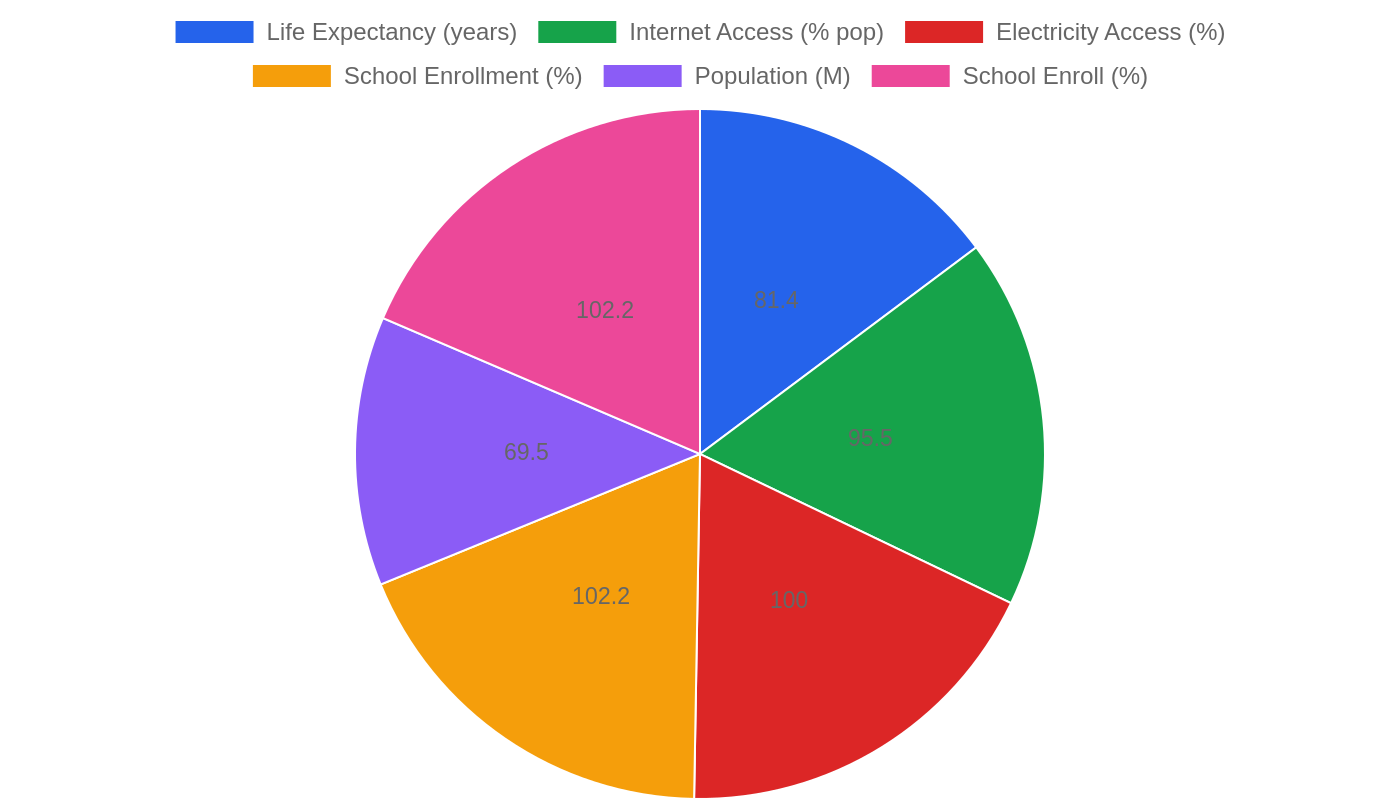
High-Income Status: With a GDP per capita (PPP) exceeding $64,600 and a GNI per capita of $54,550, the nation remains one of the world’s wealthiest economies, supporting a population of nearly 70 million.
Labor Market Tightness: Unemployment stands at a relatively low 4.746%, indicating a robust labor market, though this coexists with persistent inflationary pressures.
Political Centralization: The country operates under a centralized, unitary parliamentary democracy where the Parliament of the United Kingdom holds sovereign power, creating a distinct but complex business regulatory environment.
Economic Resilience Amidst Inflationary Pressures
The United Kingdom’s economic trajectory for 2025 presents a nuanced picture of moderate expansion constrained by lingering price instability. According to data from the World Bank, the nation’s Gross Domestic Product (GDP) is forecasted to grow by 1.38844207858726% in 2025. While this figure may appear modest compared to emerging markets, it reflects a mature economy navigating post-pandemic adjustments and global geopolitical tensions.
The total GDP stands at an impressive $4,002,587,541,846.01 USD, underscoring the sheer scale of the British financial system. However, growth does not come without cost; the Consumer Price Index (CPI) inflation rate is recorded at 3.88306881625999%. This level of inflation suggests that while the economy is growing, the purchasing power of consumers is still being eroded by rising prices, a dynamic that complicates monetary policy decisions.
On the employment front, the unemployment rate sits at 4.746%, which indicates a tight labor market where job opportunities are plentiful relative to the workforce size. This low unemployment is a critical pillar of the current economic health, ensuring that household incomes remain supported even as the cost of living fluctuates. For international observers, these numbers signal a country that is not shrinking but rather stabilizing, albeit slowly, after years of volatility.
The interplay between steady GDP growth and stubborn inflation creates a challenging environment for both domestic consumers and foreign investors who must navigate real returns carefully.
Cost of Living and Housing Dynamics
Understanding the daily economic reality for residents and expatriates requires looking beyond aggregate GDP figures to the micro-level costs of living. Although specific housing rent indices or detailed consumer basket data are not provided in the current dataset, the high income metrics offer a clear proxy for affordability and standard of living.
With a GDP per capita based on Purchasing Power Parity (PPP) at $64,606.4955066338, the average individual in the UK enjoys a significantly higher standard of living than the global average. This high PPP-adjusted income suggests that despite inflationary pressures, the underlying wage structure supports substantial consumption capacity for the median worker.
Furthermore, the Gross National Income (GNI) per capita of $54,550.0 reinforces this picture of wealth, indicating that income generated by UK residents, whether domestically or abroad, remains robust. For a population of 69,487,000.0 people, this distribution of wealth implies that major urban centers likely command premium housing costs, yet the overall national income levels provide a buffer against the highest tiers of expense.
Investors and migrants should recognize that while entry-level costs in cities like London may be steep, the broader national economic indicators suggest that disposable income potential remains strong across many sectors. The absence of direct crime or safety indices in the provided data means that quality-of-life assessments must rely heavily on these economic fundamentals, which generally correlate with well-maintained infrastructure and public services.
Investment & Business Climate
The United Kingdom continues to serve as a premier hub for global finance and commerce, driven by its status as a centralized, unitary state with a sovereign Parliament. The political framework, described as a “democratic parliamentary monarchy,” provides a stable legal backbone for long-term corporate planning, although the concentration of power in Westminster can lead to rapid shifts in regulation.
The main business of Parliament takes place in two houses—the elected House of Commons and the appointed House of Lords—alongside the Crown, ensuring a layered approach to legislative scrutiny. This structural complexity can sometimes slow down policy implementation, but it also offers checks and balances that protect investor rights.
While specific top companies and industry breakdowns are not listed in the provided text, the massive GDP figure of over $4 trillion implies a diversified economy with significant contributions from financial services, technology, and professional industries. The low unemployment rate of 4.746% further supports a favorable business climate, as firms have access to a large pool of available talent.
However, the 3.88% inflation rate necessitates careful margin management for businesses operating within the UK, as input costs and wage demands may rise in response to price increases. Companies looking to enter or expand in the UK market must therefore prioritize efficiency and innovation to maintain competitiveness in a high-income, high-cost environment.
The sovereign nature of the UK Parliament means that tax policies and trade regulations are determined locally, offering both autonomy and the risk of unilateral change.
Safety, Politics & Quality of Life
Navigating the socio-political landscape of the United Kingdom requires an appreciation for its unique constitutional setup. As a constitutional monarchy and parliamentary democracy operating under the Westminster system, the UK maintains a tradition of governance that is both historic and modern. The state is centralized, meaning that legislative authority is concentrated in London rather than dispersed among regional governments, which can streamline national initiatives but may frustrate peripheral regions.
Regarding personal security, the provided data lists the Crime Index and Safety Index as N/A, leaving a gap in quantitative assessment of local safety conditions. Consequently, qualitative judgments about quality of life must be inferred from the broader economic stability and high per capita income levels. A society with such high GDP per capita (PPP) typically invests significantly in public services, healthcare, and infrastructure, which indirectly contributes to a safer and more comfortable living environment.
The political sovereignty of the Parliament ensures that laws are made domestically, providing a consistent legal framework for residents and businesses alike. While the lack of specific safety metrics prevents a granular analysis, the overall political stability inherent in the Westminster model suggests a predictable social order. Residents and visitors alike operate within a system where the rule of law is firmly established, even if the day-to-day experience of safety varies by location.
What’s Happening Now / Current Affairs
The current economic narrative in the United Kingdom is defined by a delicate balancing act between sustaining growth and managing inflation. With the GDP growth projected at just under 1.4% for 2025, policymakers are likely focused on stimulating productivity rather than chasing rapid expansion. The inflation rate of approximately 3.88% remains above typical central bank targets, suggesting that monetary authorities are keeping interest rates at levels designed to cool demand without triggering a recession.
This environment creates a “wait-and-see” atmosphere for businesses, as they monitor how quickly price pressures will dissipate. The tight labor market, evidenced by the 4.746% unemployment rate, means that wage growth could continue to outpace productivity gains, potentially feeding into the inflationary cycle. Meanwhile, the political structure remains active, with the Parliament of the United Kingdom continuing to legislate on issues ranging from trade agreements to domestic spending.
The centralized nature of the state allows for swift government action, but the need for royal assent and bicameral approval adds procedural steps that shape the pace of reform. For observers, the key indicator to watch is whether the combination of high income levels and moderate growth can successfully decouple the economy from inflationary shocks. The resilience shown by maintaining positive GDP growth amidst these pressures is a testament to the underlying strength of the British economic engine.
The Bottom Line
The United Kingdom presents a compelling case for investors and analysts seeking exposure to a mature, high-income economy that is stabilizing after recent turbulence. Its strong GDP per capita and low unemployment rates indicate a healthy underlying demand and labor market, even as inflation keeps a lid on immediate prosperity. Those interested in the UK should focus on sectors that benefit from high disposable income and the country’s role as a global financial center.
Ultimately, the UK remains a critical player in the global economy, offering stability through its established political institutions and robust financial infrastructure.
Sources & Methodology
This article is authored by Economic Pulse Net for informational and research purposes. Economic Pulse Net sources its data from multilateral institutions, national statistics bureaus, and proprietary databases. All data is believed to be current as of the date of publication.
Published: October 24, 2026 | Category: Research — United Kingdom
Use these signals in your own platform
Economic Pulse publishes its live signal feed through a documented, read-only API. Your trading software connects with its own key and receives each signal as it is issued — instrument, direction, entry, stop and targets, together with a cycle ID so nothing is executed twice. The feed is independent of this website and cannot change it.
Signals are informational only and are not financial advice.