Economic Pulse Net | Sources: World Bank World Development Indicators, Government Sources | 2026
Key Takeaways
– Ukraine’s economy continues to function under extraordinary wartime conditions, with structural shifts toward defense production and basic materials sustaining industrial output
– The country operates under a semi-presidential system with separate legislative, executive, and judicial branches, providing institutional continuity despite the ongoing conflict
– Major industrial players including Azovstal Iron and Steel Works, Antonov, and the Bogdan group remain central to Ukraine’s economic identity, even as some facilities have faced destruction or relocation
– The financial sector shows surprising resilience, with institutions like APEKS-BANK and ASKA Insurance Company still operating alongside consumer giants ATB-Market and Amstor
– Ukraine’s path forward depends on balancing immediate war needs with long-term reconstruction planning, a challenge few nations have faced at this scale
The War Economy — GDP, Inflation, and the Industrial Backbone
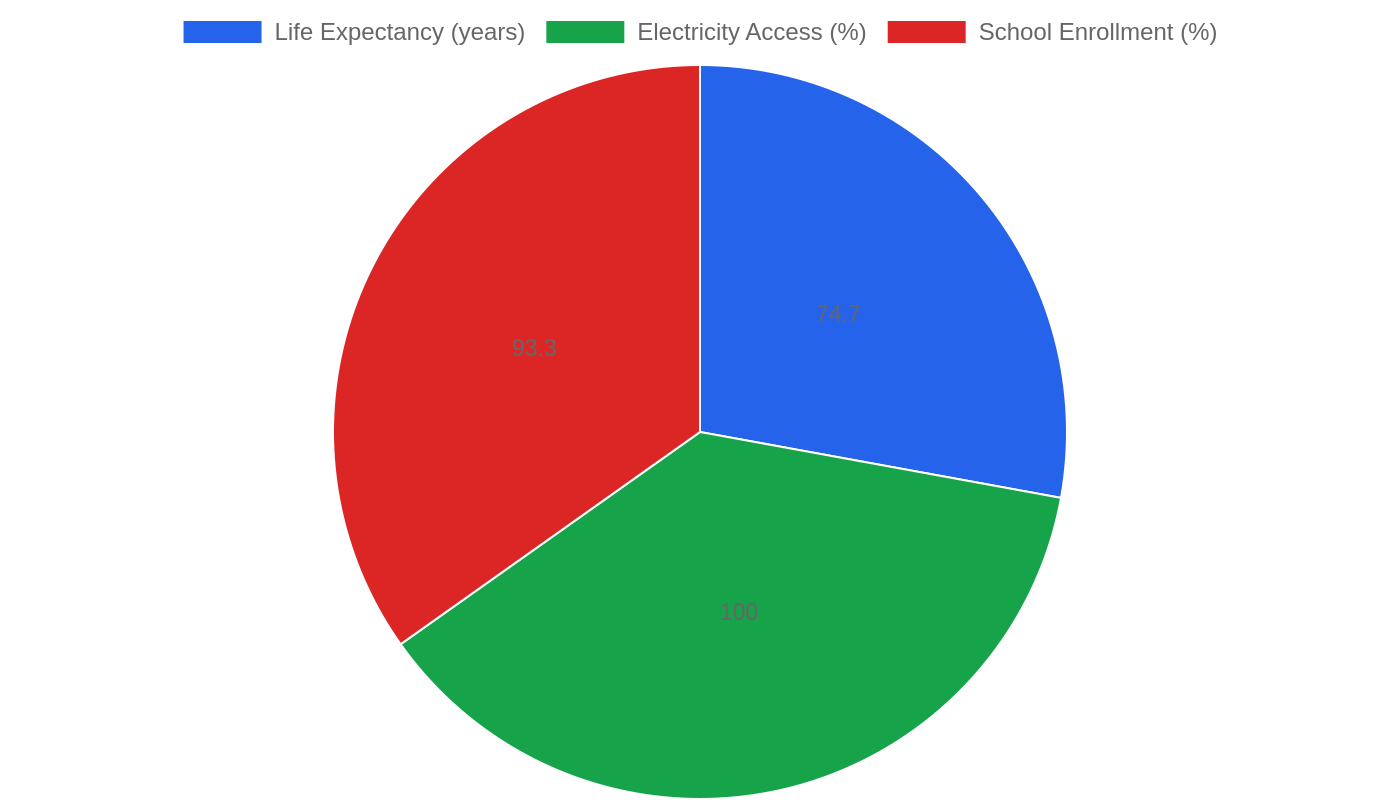
Ukraine’s economic data presents an unusual challenge for analysts. The World Bank currently reports no definitive figures for GDP growth, inflation, or unemployment — a statistical silence that speaks volumes about the difficulty of measuring economic activity in a nation at war. When government statisticians cannot safely visit factories, when power grids are targeted, and when millions of citizens have been displaced, traditional economic metrics become unreliable at best.
What we do know comes from the industrial landscape itself. Ukraine’s major industries — defense manufacturing, steel production, and machine building — have been forced to adapt to wartime realities. The Azovstal Iron and Steel Works, once a symbol of Ukrainian industrial might in Mariupol, was largely destroyed in the early stages of the war. Yet other industrial concerns have proven more adaptable.
Antonov, the aerospace manufacturer famous for the world’s largest cargo plane, has shifted toward military transport and repair work. The Berdichev machine-building plant continues operations, while the Bogdan group has converted some automotive production lines to military vehicle assembly.
The consumer sector tells a different story. ATB-Market and Amstor, two of Ukraine’s largest retail chains, have maintained operations throughout the conflict, adapting supply chains to circumvent disrupted transportation routes. This suggests that domestic consumption, while severely constrained, has not collapsed entirely.
The financial sector’s survival — with institutions like APEKS-BANK and BG Capital still functioning — indicates that Ukraine’s banking system has shown remarkable resilience, supported by the National Bank of Ukraine’s strict wartime controls and international financial assistance.
The Cost of Survival — Housing, Daily Life, and Economic Pressure
For ordinary Ukrainians, the cost of living has become a daily negotiation between necessity and scarcity. Housing markets have been turned upside down. Cities in the west of the country, particularly Lviv and Ivano-Prankivsk, have seen rents surge as internally displaced persons compete for limited accommodation. Meanwhile, property values in eastern and southern regions have collapsed, with many homes abandoned or destroyed.
The concept of “buying versus renting” has become almost academic — few mortgages are being issued, and those who can afford to purchase property outright often choose to invest in war bonds instead.
Daily expenses have followed a volatile trajectory. Food prices in areas close to the front lines can spike dramatically when supply routes are disrupted, while cities further from active combat zones have seen more stable, though elevated, costs. Energy remains the single greatest uncertainty.
With Ukraine’s power grid under periodic attack, households and businesses have invested heavily in generators, solar panels, and portable power stations — expenses that would have been unthinkable luxuries before the war but are now considered essential survival equipment.
Investment and Enterprise — Who’s Still Betting on Ukraine
The list of top companies operating in Ukraine offers a fascinating snapshot of where economic activity is concentrated. The industrial sector dominates, with Aeros, Antonov, the Berdichev machine-building plant, and the Bogdan group all representing heavy manufacturing and engineering. This is not accidental — wartime economies tend to prioritize production of tangible goods over services.
Basic materials remain crucial, with Azovstal’s continued presence on the list (even in partial operation) underscoring steel’s strategic importance.
The financial sector’s representation is equally telling. APEKS-BANK, ASKA Insurance Company, and BG Capital all continue to operate, suggesting that Ukraine’s financial infrastructure has not only survived but adapted. Banks have become critical conduits for international aid distribution, military payroll, and humanitarian assistance.
The insurance industry, meanwhile, has had to innovate dramatically — offering war risk coverage where possible, and partnering with international reinsurers to spread exposure.
Consumer services remain surprisingly robust. ATB-Market and Amstor have become lifelines for urban populations, while the very fact that they are still listed among Ukraine’s top companies indicates that retail demand has not evaporated. For international investors, the message is complex: Ukraine offers extraordinary risk but also extraordinary potential returns.
Reconstruction contracts, defense industry partnerships, and agricultural export deals all represent opportunities for those willing to navigate the uncertainty.
Safety, Politics, and the Quality of Life in Wartime
Ukraine’s political system has shown remarkable stability under extreme pressure. The country operates as a republic under a semi-presidential system, with separate legislative, executive, and judicial branches. This constitutional framework has provided continuity during a period when many nations might have descended into political chaos.
President Volodymyr Zelenskyy’s government has maintained legitimacy through regularly scheduled elections, and the parliament continues to function, passing wartime legislation and approving budgets.
The security situation defies easy categorization. Official crime and safety indices are not currently available from standard sources, but anecdotal evidence suggests a paradoxical phenomenon: many Ukrainians report feeling safer in their communities now than before the war, despite the existential threat of Russian missiles.
Violent crime rates have dropped in many areas as citizens have organized neighborhood watches, military checkpoints have become ubiquitous, and the shared experience of war has strengthened social cohesion. Domestic violence, however, remains a serious concern, exacerbated by the stress of displacement and economic hardship.
Quality of life is brutally uneven. Ukrainians in frontline cities endure frequent shelling, power outages, and water shortages. Those in safer western regions have managed to maintain something closer to normalcy, with cafes open, children attending school (often in bomb shelters), and cultural events continuing. The psychological toll is immense — the World Health Organization has warned of a coming mental health crisis as the population grapples with trauma, grief, and uncertainty about the future.
The Present Tense — What’s Happening in Ukraine Right Now
The most current picture of Ukraine’s economy is one of constant adaptation. The industrial sector continues to retool for wartime production, with factories that once manufactured agricultural machinery now producing drone components and armored vehicle parts. The Bogdan group’s conversion from automotive manufacturing to military vehicle assembly exemplifies this shift, as does Antonov’s pivot toward defense contracts.
These changes are not temporary — they represent a fundamental restructuring of Ukraine’s industrial base.
The financial sector faces new challenges daily. APEKS-BANK and other institutions are managing a dual reality: processing international aid and military payments while also trying to maintain basic consumer banking services. Inflation remains a persistent concern, though the National Bank of Ukraine has managed to prevent the kind of hyperinflationary spiral that has plagued other wartime economies. The hryvnia has been relatively stable, supported by Western financial assistance and strict capital controls.
On the consumer front, ATB-Market and Amstor continue to expand their networks where security permits, opening new stores in relatively safe areas while maintaining skeletal operations in more dangerous regions. The resilience of these retail chains suggests that Ukrainian consumer demand, while suppressed, has not been destroyed.
Looking ahead, the biggest question marks remain energy infrastructure repairs, agricultural export routes through the Black Sea, and the timing and scale of international reconstruction funding.
The Bottom Line
Ukraine in 2026 is not an economy in the traditional sense — it is a war economy that has shown astonishing adaptability. Investors with high risk tolerance and long time horizons should watch Ukraine closely, particularly in defense manufacturing, reconstruction materials, and agricultural logistics. Development economists and international policymakers will find in Ukraine a case study of institutional resilience under catastrophic conditions.
For the average observer, Ukraine demonstrates that economic activity does not simply stop when war begins — it transforms, adapts, and in some cases, finds new strengths forged in the crucible of conflict.
Sources & Methodology
This article is authored by Economic Pulse Net for informational and research purposes. Economic Pulse Net sources its data from multilateral institutions, national statistics bureaus, and proprietary databases. All data is believed to be current as of the date of publication.
Published: July 20, 2026 | Category: Research — Ukraine
Use these signals in your own platform
Economic Pulse publishes its live signal feed through a documented, read-only API. Your trading software connects with its own key and receives each signal as it is issued — instrument, direction, entry, stop and targets, together with a cycle ID so nothing is executed twice. The feed is independent of this website and cannot change it.
Signals are informational only and are not financial advice.