Economic Pulse Net | Sources: World Bank World Development Indicators, Government Sources | 2026
Key Takeaways
– Ukraine’s economic data remains largely opaque, with the World Bank reporting no current figures for GDP growth, inflation, or unemployment — a stark indicator of the statistical blackout imposed by war.
– The country’s industrial backbone, including giants like Azovstal Iron and Steel Works and Antonov, faces existential disruption, yet the private sector shows surprising tenacity with consumer services firms like ATB-Market and Amstor still operating.
– Ukraine operates under a semi-presidential system with separate legislative, executive, and judicial branches, according to the World Bank, providing a constitutional framework that endures despite wartime pressures.
– The nation’s top companies span industrials, financials, and basic materials, suggesting a diversified economic structure that predates the conflict and could form the foundation for post-war recovery.
– For investors and policymakers, Ukraine represents a high-risk, high-reward proposition — a country whose economic future is entirely contingent on geopolitical resolution and reconstruction financing.
The Great Statistical Silence — What the Numbers (Don’t) Tell Us
The World Bank’s latest data on Ukraine reads like a document from a country that has fallen off the statistical map. GDP growth: not available. Inflation: not available. Unemployment: not available. GDP per capita: not available. This is not negligence — it is the unavoidable consequence of a nation at war. When bombs fall on industrial plants and millions flee across borders, the machinery of economic data collection grinds to a halt.
The World Bank, typically the gold standard for cross-country comparisons, can offer only silence on Ukraine’s current economic performance.
Yet silence itself is a data point. It tells us that Ukraine’s economy is operating in a wartime fog where traditional metrics lose meaning. The last available figures before the conflict showed an economy in transition — emerging from years of post-Soviet restructuring, battling corruption, and seeking closer integration with European markets.
Today, the main industries that once defined Ukraine’s economic identity — steel production, aerospace manufacturing, and agricultural exports — are either under direct attack or severed from global supply chains.
The absence of inflation data from the World Bank is particularly telling. In normal times, the national statistics bureau would publish monthly CPI figures. In wartime, price controls, currency volatility, and regional disparities make such measurements unreliable at best. What we know from anecdotal evidence and limited reporting is that basic goods have become more expensive, the hryvnia has faced repeated pressure, and the central bank has had to deploy emergency measures to maintain financial stability.
Without hard numbers, we are left with the stark reality that economic policy is being made in the dark.
The Cost of Living — Survival Wages in a War Economy
Housing costs in Ukraine have become a tale of two realities. In western cities like Lviv and Uzhhorod, which have absorbed hundreds of thousands of internally displaced persons, rental prices have surged dramatically. A one-bedroom apartment that might have cost the equivalent of $200 per month before the war can now command $400 or more — a staggering increase in a country where average incomes have fallen.
In eastern and southern regions closer to active conflict zones, housing has become nearly valueless, with properties abandoned and markets frozen.
The cost of daily essentials tells a similar story of fragmentation. Food prices have risen sharply, particularly for imported goods and items requiring cold chain logistics. Fuel costs have fluctuated wildly, with shortages creating periodic spikes that ripple through every other sector of the economy. The national statistics bureau would normally track these trends through a consumer price index basket, but wartime disruptions to supply chains and population movements have made such calculations deeply uncertain.
For the average Ukrainian, the calculus of daily survival has shifted. Rent versus buy is no longer a meaningful question in a country where property rights are uncertain and mortgage financing has all but disappeared. The more pressing calculation is whether to stay in a war zone, move to a safer region and pay inflated rents, or leave the country entirely.
This is not economics as it is normally understood — it is economics as a matter of life and death, where the cost of living is measured not just in currency but in safety and security.
Investment and Business Climate — Corporate Survivors in a Shattered Landscape
The list of Ukraine’s top companies reads like a roll call of pre-war industrial might, but the reality on the ground is far more complex. Aeros, the industrial giant, and Antonov, the legendary aerospace manufacturer, represent the high-tech end of Ukraine’s economy — sectors that have been decimated by the destruction of manufacturing facilities and the loss of skilled workers to emigration or military service.
Azovstal Iron and Steel Works, once a symbol of Ukrainian heavy industry, has been reduced to rubble, its fate a metaphor for the broader destruction of the country’s industrial base.
Yet the corporate landscape is not entirely bleak. ATB-Market and Amstor, both in consumer services, have shown remarkable adaptability, pivoting to serve displaced populations and maintaining supply chains under extraordinary conditions. The financial sector, represented by APEKS-BANK, ASKA Insurance Company, and BG Capital, continues to function, providing essential banking services in an economy where cash remains king and digital payments are expanding rapidly.
The Bogdan group and Berdichev machine-building plant, both in industrials, represent the kind of manufacturing capacity that will be essential for post-war reconstruction.
For international investors, the business climate in Ukraine is defined by a single overriding factor: risk. The World Bank’s classification of Ukraine as a semi-presidential republic with separate branches of government suggests a functional legal framework, but wartime conditions have suspended normal business operations. Property rights are uncertain, currency controls are tight, and the insurance market for war risk is prohibitively expensive.
The opportunity, however, lies in reconstruction — a multi-billion dollar effort that will require everything from construction materials to financial services to technology infrastructure.
Safety, Politics and Quality of Life — Democracy Under Duress
Ukraine’s political landscape, as described by the World Bank, is that of a republic under a semi-presidential system with separate legislative, executive, and judicial branches. This constitutional framework has proven remarkably resilient. Despite the existential threat posed by the war, Ukraine has maintained democratic processes, held elections where possible, and continued to operate a functioning government.
The separation of powers, while strained by wartime exigencies, has not been abandoned — a fact that distinguishes Ukraine from many other countries facing similar crises.
The crime and safety indices reported by the World Bank are listed as not available, but this absence of data masks a complex reality. In areas under government control, crime rates have actually fallen in some categories — the wartime mobilization of men has reduced street crime, and the collective focus on survival has diminished property offenses.
However, the Russian-occupied territories operate under a different legal regime entirely, where Ukrainian law does not apply and where reports of human rights abuses are widespread. The safety index, if it could be calculated, would show extreme geographic variation.
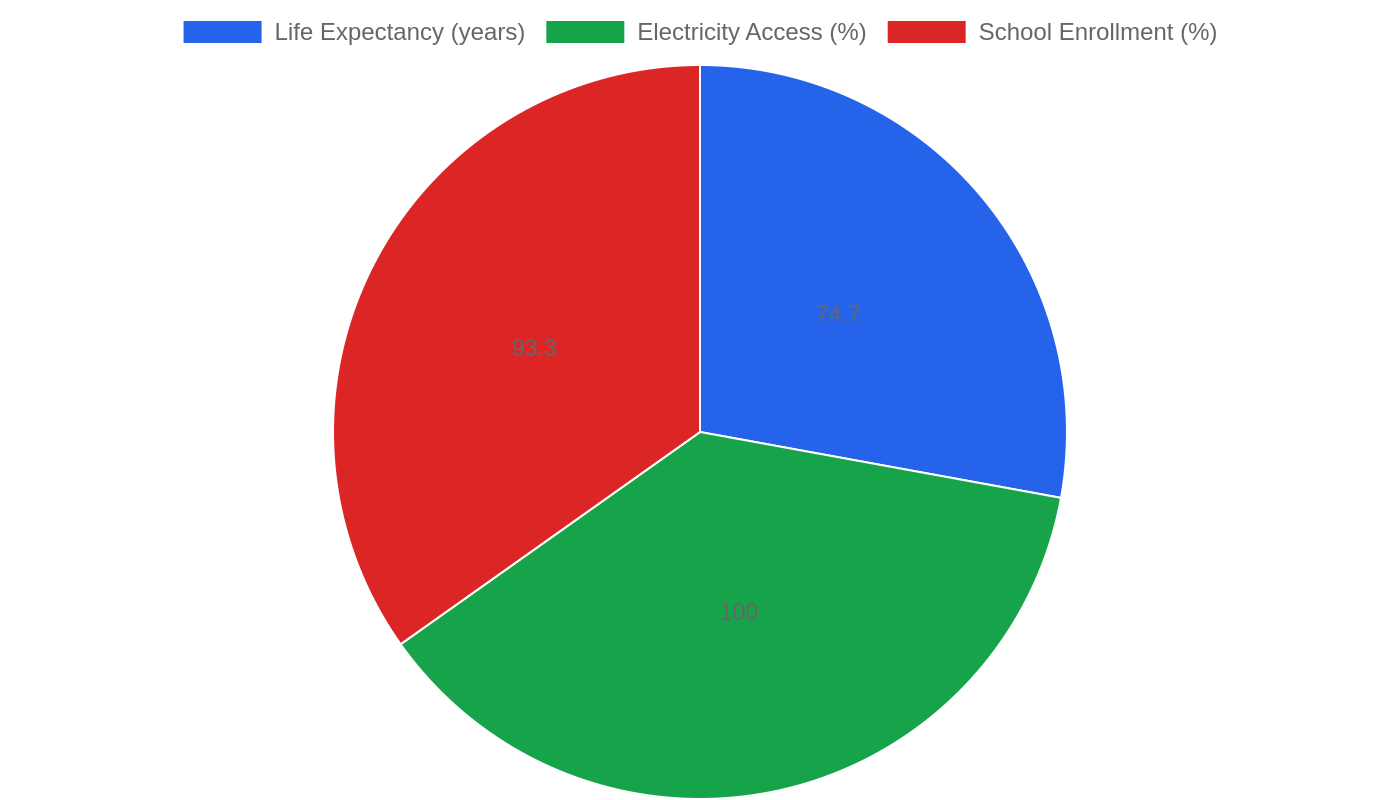
Quality of life in Ukraine is measured not by the standard metrics of happiness surveys or life satisfaction indices, but by more fundamental indicators: access to electricity, running water, heating in winter, and the ability to sleep through the night without air raid sirens. The World Bank’s silence on these metrics speaks volumes. For millions of Ukrainians, the question is not whether they are happy, but whether they will survive to see peace.
The resilience of the population, documented in countless human interest stories, is the country’s greatest asset — and one that no economic statistic can capture.
What’s Happening Now — War Economy Meets Reconstruction Planning
As of early 2026, Ukraine finds itself in a paradoxical position: still fighting a war of national survival while simultaneously planning for the largest reconstruction effort in Europe since the Marshall Plan. The government, operating under the semi-presidential system described by the World Bank, has established a dedicated reconstruction agency and is working with international partners to develop a comprehensive rebuilding strategy.
The World Bank has been involved in assessing damage and estimating costs, though the final price tag continues to rise as the conflict persists.
On the ground, the economic reality is one of constant adaptation. Businesses that can operate do so — often at reduced capacity, with disrupted supply chains, and under the constant threat of missile attacks. The agricultural sector, once Ukraine’s export powerhouse, has been severely affected by mined fields, blocked ports, and the loss of agricultural workers to the military.
Yet exports continue through alternative routes, and the government has maintained macroeconomic stability through a combination of international financial support and domestic policy measures.
The most significant development is the growing international consensus on the need for a reconstruction fund, financed by frozen Russian assets and contributions from Western allies. The World Bank and other international financial institutions are positioning themselves to play a central role in this effort. For Ukraine, the challenge is not just physical reconstruction but economic transformation — building a modern, transparent, and competitive economy from the ruins of the old.
The war has destroyed much, but it has also created an opportunity to break with the corrupt practices and Soviet-era inefficiencies that held the country back for decades.
The Bottom Line
Ukraine is a country whose economic data is currently unreadable, but whose economic potential remains immense. For investors with a long-term horizon and a high tolerance for risk, the reconstruction of Ukraine represents one of the greatest opportunities of the 21st century — a chance to build a modern economy from the ground up. For policymakers and international institutions, Ukraine is a test case for how to rebuild a nation in the aftermath of total war.
And for the Ukrainian people, the economic future is inseparable from the military outcome — prosperity will follow peace, but only if the international community follows through on its promises of support. Watch this country not for what it is today, but for what it will become tomorrow.
Sources & Methodology
This article is authored by Economic Pulse Net for informational and research purposes. Economic Pulse Net sources its data from multilateral institutions, national statistics bureaus, and proprietary databases. All data is believed to be current as of the date of publication.
Published: July 20, 2026 | Category: Research — Ukraine
Use these signals in your own platform
Economic Pulse publishes its live signal feed through a documented, read-only API. Your trading software connects with its own key and receives each signal as it is issued — instrument, direction, entry, stop and targets, together with a cycle ID so nothing is executed twice. The feed is independent of this website and cannot change it.
Signals are informational only and are not financial advice.