Economic Pulse Net | Sources: World Bank World Development Indicators, Government Sources | 2026
Key Takeaways
- Modest Growth: Ukraine’s GDP is projected to grow by approximately 1.8% in 2025, signaling a fragile but positive recovery trajectory according to World Bank data.
- Sticky Inflation: The Consumer Price Index (CPI) stands at 12.7%, indicating that the cost of living remains a significant pressure point for households and businesses alike.
- Labor Market Tension: Unemployment sits at 9.8%, reflecting a labor market that is adjusting to post-conflict realities and structural shifts in the economy.
- Industrial Backbone: The economy continues to rely heavily on established industrial giants in sectors like steel, machinery, and consumer services, which serve as critical anchors for economic stability.
The Macro Picture: Growth Meets Inflationary Reality
According to the World Bank, Ukraine’s economy is poised for a modest expansion, with GDP growth estimated at 1.82% for the year 2025.
This figure, while positive, suggests that the country is in a phase of cautious recovery rather than a robust boom, a reality that many economists would expect given the ongoing challenges facing the region.
The total GDP is valued at approximately $214.2 billion, providing a baseline for understanding the scale of the national economy.
However, this growth must be viewed through the lens of persistent inflation, which the World Bank records at 12.73%.
High inflation erodes purchasing power, meaning that while the economy is technically growing, the real value of income for many citizens may not be keeping pace with the rising cost of goods and services.
The labor market presents a complex picture, with an unemployment rate of 9.83%.
This figure indicates that nearly one in ten job seekers is without work, a rate that can be attributed to various structural factors, including the need for workforce retraining and the ongoing adjustment of industries to new economic conditions.
When analyzing the per capita figures, the World Bank data shows a GDP per capita (PPP) of $18,904.98, which offers a clearer picture of the standard of living when adjusted for local costs.
This is notably higher than the GNI per capita of $5,510, highlighting the significant difference between nominal international comparisons and the actual purchasing power within the country.
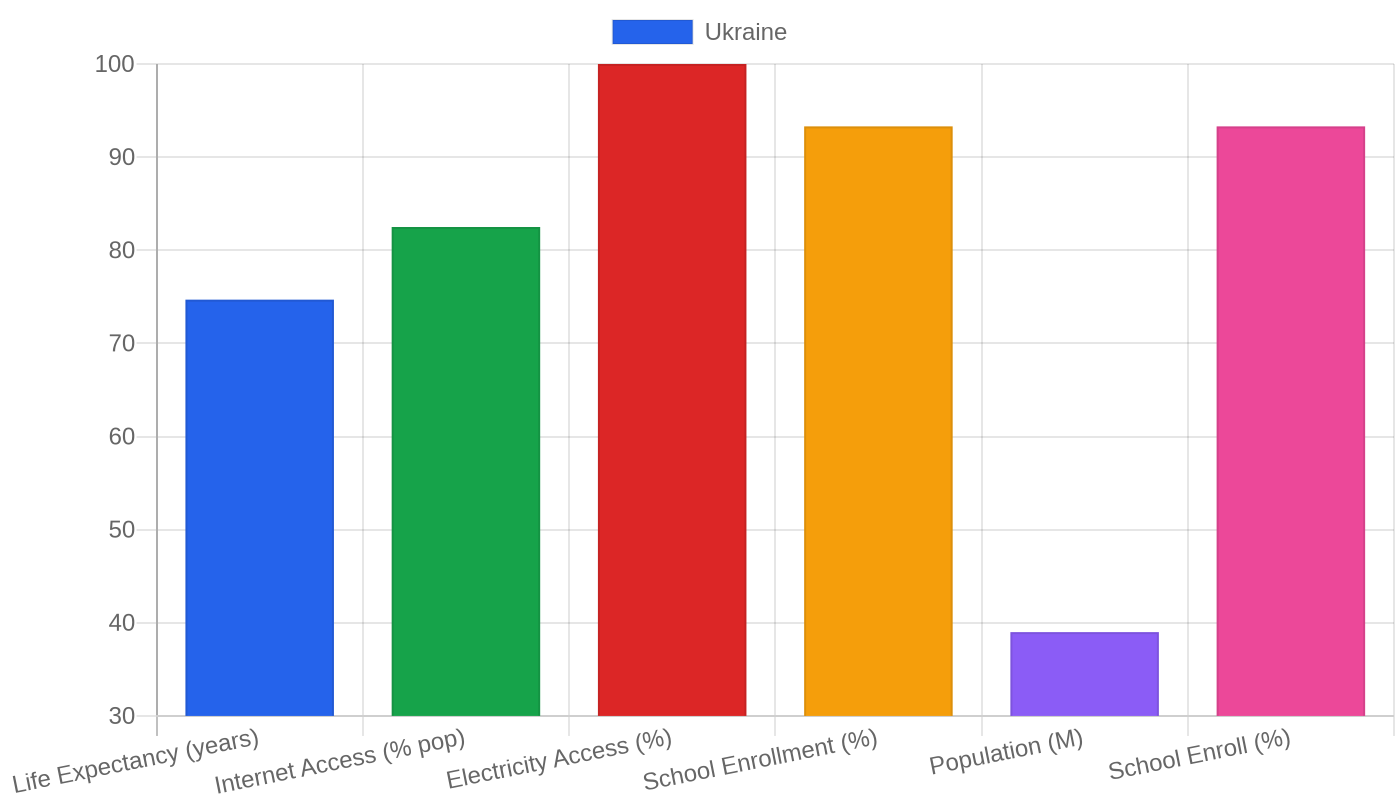
With a population of nearly 39 million, the economic output must support a large demographic, making efficiency and sustainable growth critical for maintaining social stability.
These numbers collectively paint a picture of an economy that is holding its ground but facing significant headwinds from price instability and labor market friction.
The Cost of Living: Navigating Daily Expenses
While specific housing and rent data was not provided in the immediate dataset, the overall economic indicators offer strong clues about the cost of living environment.
With a CPI inflation rate of 12.73%, consumers are likely experiencing noticeable price increases in daily essentials such as food, utilities, and transportation.
This level of inflation typically forces households to reallocate their budgets, often prioritizing basic needs over discretionary spending.
The GNI per capita of $5,510 suggests that the average individual income, when viewed in international terms, is relatively low, which can make high inflation particularly burdensome for the middle and lower-income brackets.
In such an environment, the decision to rent versus buy property often hinges on the stability of the currency and the availability of credit, both of which are influenced by the broader macroeconomic trends described by the World Bank.
Although specific rent-to-buy ratios are not detailed here, the high inflation rate implies that asset values, including real estate, may also be experiencing volatility, complicating long-term financial planning for residents.
The disparity between the high PPP-adjusted GDP per capita and the lower nominal GNI per capita further underscores the internal cost of living dynamics, where local prices may be lower than in Western economies, but the impact of inflation on local wages is a critical factor for household welfare.
Ultimately, the daily economic experience for Ukrainians is shaped by the need to stretch finite incomes against a backdrop of rising prices, making financial resilience a key theme for many families.
Investment Climate: Anchored by Industrial Giants
The business landscape in Ukraine is characterized by a robust presence of established industrial and service companies that have weathered significant economic turbulence.
Among the top companies listed are major players such as Azovstal Iron and Steel Works, which stands as a cornerstone of the basic materials sector, and Antonov, a historic name in the industrials sector.
These entities are not just commercial entities but are integral to the country’s export potential and industrial capacity.
In the financial sector, institutions like APEKS-BANK and BG Capital play vital roles in providing the necessary capital and services for business operations, helping to maintain liquidity in the market.
The consumer services sector is represented by giants like ATB-Market and Amstor, which are essential for ensuring the availability of goods and services to the general population.
These companies serve as critical links in the supply chain, helping to stabilize prices and ensure that consumers have access to necessary products despite economic pressures.
The diversity of these top companies, spanning from heavy industry to insurance (ASKA Insurance Company) and capital management, suggests a multi-faceted economy that is not overly dependent on a single sector.
For investors, the presence of these established firms indicates a market with deep-rooted operations, although the investment climate is inevitably influenced by the broader macroeconomic factors such as the 12.73% inflation rate and the 1.82% GDP growth projection.
Understanding the performance of these key players is crucial for assessing the health of the broader Ukrainian economy.
Politics and Safety: Governance in a Republic
Ukraine operates as a republic under a semi-presidential system, a political structure that features distinct legislative, executive, and judicial branches.
This separation of powers is designed to ensure checks and balances within the government, providing a framework for governance that can adapt to various political and economic challenges.
The stability of this political system is fundamental to the economic outlook, as investors and citizens alike look for consistency in policy-making and legal enforcement.
While specific crime and safety indices were not provided in the current data, the political structure itself suggests a formalized approach to maintaining order and justice through established governmental channels.
The semi-presidential nature of the system implies a shared executive power, which can sometimes lead to complex decision-making processes but also allows for a broader range of political perspectives to be considered in governance.
This political landscape is the backdrop against which economic policies, such as those aimed at managing the 12.73% inflation rate, are formulated and implemented.
The interplay between political stability and economic performance is evident in the country’s ability to maintain a GDP growth rate of 1.82% despite significant internal and external pressures.
For citizens, the political system’s ability to effectively manage public services and security is a key component of quality of life, even if specific safety metrics are not currently quantified in this report.
The ongoing function of these branches serves as the institutional foundation upon which the economic recovery and development of Ukraine are built.
Current Affairs: The Pulse of 2025
As we move through 2025, the economic narrative for Ukraine is defined by a delicate balance between recovery and resistance to inflationary pressures.
The World Bank’s projection of 1.82% GDP growth signals that the economy is finding a new equilibrium, though it is a slow-burn recovery rather than a rapid surge.
The persistence of inflation at 12.73% remains the most acute issue, as it directly impacts the purchasing power of the 38.9 million residents.
This high rate of price increase necessitates careful monetary and fiscal policy responses to prevent it from becoming entrenched in the economy.
The labor market, with an unemployment rate of 9.83%, is another area of current focus, as the economy seeks to absorb workers and integrate them into productive sectors.
The presence of major industrial players like Azovstal and Antonov suggests that the manufacturing and export sectors are continuing to play a pivotal role in driving this modest growth.
The financial sector, led by entities like APEKS-BANK, is likely under scrutiny to ensure that credit remains accessible to businesses and individuals amidst the high inflation environment.
The semi-presidential political system continues to navigate these economic challenges, with policy decisions in the legislative and executive branches directly influencing the economic outcomes seen in the data.
The current affairs landscape is one of careful management, where every policy decision is weighed against the potential impact on the 1.82% growth rate and the 12.73% inflation figure.
The Bottom Line
Ukraine in 2025 is a country of significant resilience, managing to achieve modest economic growth despite a challenging macroeconomic environment.
For investors and observers, the key metrics to watch are the trajectory of the 12.73% inflation rate and the ability of the labor market to reduce the 9.83% unemployment rate.
The strength of its industrial base, represented by companies like Azovstal and Antonov, provides a solid foundation for future growth, provided that political and economic stability are maintained.
This country warrants close attention as it navigates the complexities of recovery, offering a case study in economic resilience and adaptive governance.
Sources & Methodology
This article is authored by Economic Pulse Net for informational and research purposes.
Economic Pulse Net sources its data from multilateral institutions, national statistics bureaus, and proprietary databases.
All data is believed to be current as of the date of publication. Published: September 04, 2026 |
Category: Research — Ukraine
Use these signals in your own platform
Economic Pulse publishes its live signal feed through a documented, read-only API. Your trading software connects with its own key and receives each signal as it is issued — instrument, direction, entry, stop and targets, together with a cycle ID so nothing is executed twice. The feed is independent of this website and cannot change it.
Signals are informational only and are not financial advice.