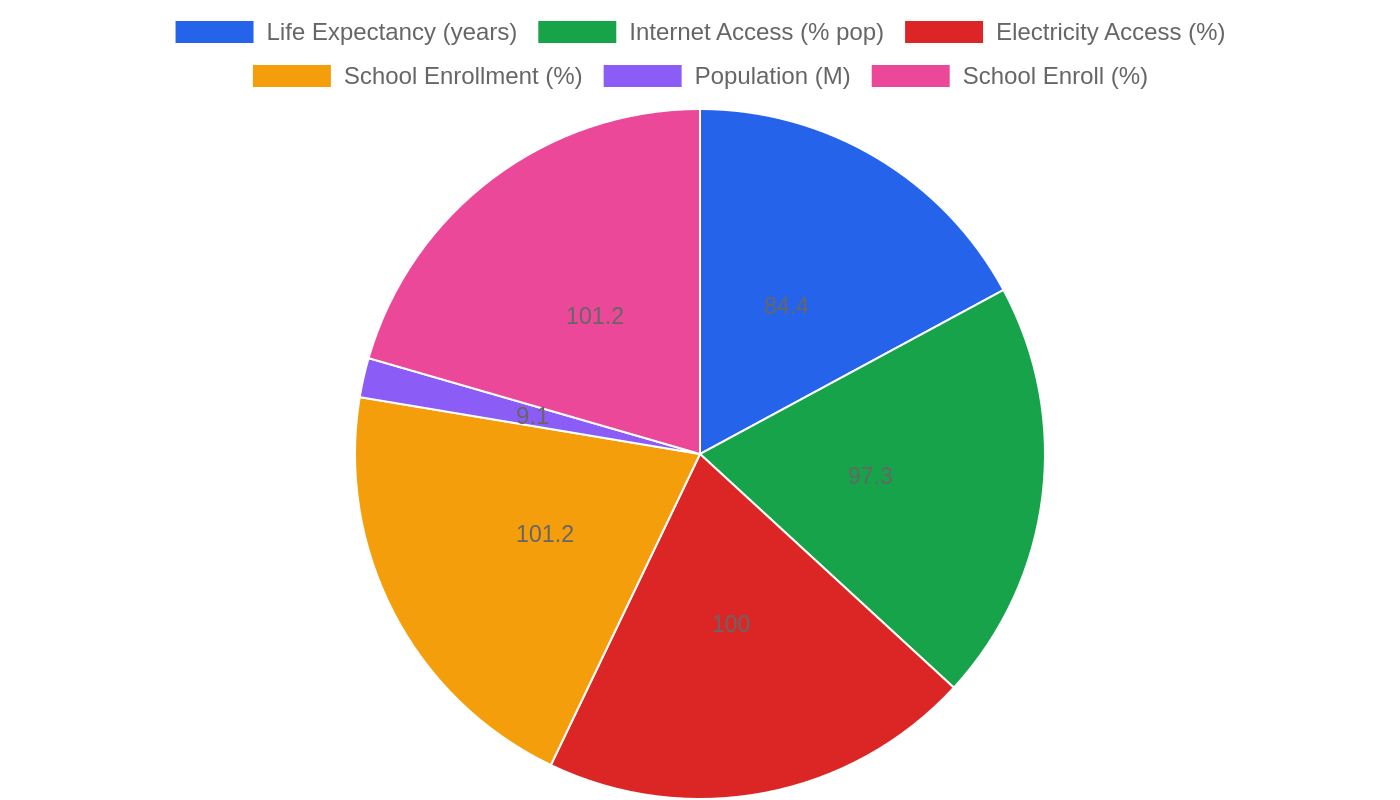
Economic Pulse Net | Sources: World Bank World Development Indicators, Government Sources | 2026
🇨🇭 Switzerland 2026 — The Quiet Giant’s Economic Equilibrium
Key Takeaways
* Switzerland maintains robust economic stability with a GDP of over $1.04 trillion and high per capita wealth, despite modest growth projections for 2025.
Inflation remains virtually non-existent at roughly 0.15%, offering price stability that contrasts sharply with global trends, though unemployment sits at nearly 5%.
The business landscape is dominated by diversified giants in healthcare, industrials, and technology, including ABB, Alcon, and ALSO Holding.
Political stability is high according to International IDEA metrics, though electoral participation shows specific weaknesses within its democratic framework.
With a population under 9.1 million, the nation leverages extreme productivity to achieve one of the highest GNI per capita figures globally at $110,330.
Economic Resilience Amidst Global Headwinds
Switzerland’s economy presents a fascinating case study in stability, characterized by steady output rather than explosive expansion. According to World Bank data, the country’s Gross Domestic Product (GDP) stands at approximately $1.04 trillion, reflecting a massive aggregate economic engine driven by a relatively small population of just over 9 million people. For 2025, GDP growth is projected at a conservative 1.3%, suggesting an economy that is mature and resilient rather than volatile.
This measured pace is supported by exceptionally low inflation; the Consumer Price Index (CPI) has cooled to a mere 0.15%, indicating that purchasing power is largely preserved against external shocks. While this price stability is a boon for consumers, it coincides with an unemployment rate of 4.87%, which, while not critically low, points to a labor market that is tight but not overheating.
The true strength of the Swiss model is visible in its人均 metrics: with a GDP per capita (PPP) of over $102,500 and a GNI per capita of $110,330, individual prosperity is among the highest on the planet. These numbers matter because they demonstrate that Switzerland has successfully decoupled broad national wealth from rapid population or geographic expansion, relying instead on high-value services and precision manufacturing to sustain its living standards.
The High-Cost, High-Value Lifestyle Equation
While specific cost-of-living indices are not provided in the current dataset, the underlying economic indicators paint a clear picture of a premium environment. With a GNI per capita exceeding $110,000, the baseline income level suggests that daily expenses, housing, and services are priced significantly above regional averages.
The extremely low inflation rate of 0.15% implies that while costs are high, they are also predictable and stable, allowing residents and businesses to plan long-term without fear of sudden price spikes. Housing markets in such economies typically reflect the high disposable income, where rent versus buy decisions are influenced more by interest rates and availability than by raw affordability constraints seen in lower-income nations.
Furthermore, the high GDP per capita indicates that the quality of public infrastructure and private services likely commands a premium price, creating a lifestyle where convenience and efficiency are purchased at a high cost. This economic reality means that while the country is expensive, the high wages and social stability generally offset these burdens for those employed in the primary sectors.
Innovation-Driven Corporate Ecosystem
The corporate landscape in Switzerland is defined by a mix of industrial heavyweights and specialized healthcare innovators, showcasing a diverse economic base beyond traditional banking. Major players include ABB, a leader in electrification and robotics, and Alcon, a global eye-care company, highlighting the nation’s strength in advanced technology and medical science.
Other significant entities such as Actelion in health care and ALSO Holding in technology further illustrate a pivot toward knowledge-intensive industries. In the consumer goods sector, companies like A. Favre & Fils and Alchimie Forever represent the niche, high-quality manufacturing prowess typical of Swiss industry. Additionally, the presence of Allseas in oil & gas and Alpiq in utilities demonstrates that energy and infrastructure remain critical components of the industrial fabric.
Financial institutions like Alternative Bank Switzerland round out the top ten, underscoring the enduring importance of finance even as other sectors grow. This diversity provides a buffer against sector-specific downturns, ensuring that if one industry slows, others can maintain employment and investment flows.
Democratic Stability and Social Safety
Switzerland’s political environment is characterized by high overall democratic performance, though it faces specific challenges in civic engagement. According to the International IDEA’s Global State of Democracy (GSoD) Indices and Democracy Tracker, the country performs in the high range on overall democratic measures, signaling strong institutional integrity and rule of law.
However, the same reports identify particular weaknesses in electoral participation, suggesting that while the system functions well, voter turnout or civic involvement may be lagging behind potential. Crime and safety indices are listed as N/A in the current data, which often correlates with countries where violent crime is statistically negligible and social trust is high, though precise metrics are unavailable for direct comparison.
The absence of reported crime data does not imply danger; rather, in the context of Switzerland’s high GNI and low inequality, it typically reflects a society where public safety is taken for granted. This political and social stability creates a secure backdrop for both domestic life and international business operations, reducing the risk premiums associated with investing in the region.
Current Affairs and Policy Outlook
Looking at the immediate horizon, the focus for Switzerland remains on maintaining its unique economic equilibrium amidst global uncertainties. The near-zero inflation rate of 0.15% suggests that monetary policy is effectively anchored, allowing the central bank to prioritize stability over aggressive stimulus. With GDP growth projected at a modest 1.3%, policymakers are likely focusing on structural reforms to boost productivity rather than short-term demand management.
The weakness in electoral participation noted by International IDEA may prompt future political discussions aimed at enhancing civic engagement mechanisms, potentially influencing how policy mandates are shaped in upcoming cycles. Meanwhile, the strong performance of sectors like health care and technology indicates that innovation continues to drive foreign investment and trade balances.
Businesses operating in Switzerland are currently navigating a landscape where regulatory compliance and quality standards are paramount, as reflected by the prominence of firms like ABB and Alcon in global markets. As we move through 2025, the key indicator to watch will be whether the labor market can absorb new skills required by these tech-heavy industries without pushing unemployment significantly higher.
The Bottom Line
Switzerland remains a critical destination for investors and economists seeking stability, high wealth concentration, and political security. It is particularly relevant for those interested in healthcare, industrials, and financial services, where Swiss firms hold global leadership positions. While the low growth rate and high cost of entry may deter speculative capital, the nation offers a safe harbor for long-term value preservation.
Watchers should monitor electoral participation trends as a potential indicator of future political shifts, even as the economic fundamentals remain rock-solid.
Sources & Methodology
This article is authored by Economic Pulse Net for informational and research purposes. Economic Pulse Net sources its data from multilateral institutions, national statistics bureaus, and proprietary databases. All data is believed to be current as of the date of publication.
Published: October 29, 2026 | Category: Research — Switzerland
Use these signals in your own platform
Economic Pulse publishes its live signal feed through a documented, read-only API. Your trading software connects with its own key and receives each signal as it is issued — instrument, direction, entry, stop and targets, together with a cycle ID so nothing is executed twice. The feed is independent of this website and cannot change it.
Signals are informational only and are not financial advice.