Economic Pulse Net | Sources: World Bank World Development Indicators, Government Sources | 2026
Sweden enters 2026 as a study in contradictions: a nation with slowing growth, low inflation, and stubbornly high unemployment, yet one that remains a global heavyweight in innovation, design, and industrial resilience. The Nordic model is being stress-tested, and the world is watching.
Key Takeaways
– Modest Growth, Low Inflation: Sweden’s GDP grew by 1.54% in 2025, while inflation sits at a remarkably low 0.68%, according to the World Bank — a combination that gives policymakers rare breathing room.
– Unemployment Remains the Achilles’ Heel: At 8.69%, unemployment is high for a Nordic economy, suggesting a structural mismatch between available jobs and the workforce’s skills.
– A Consumer and Industrial Powerhouse: From seafood to tech, Sweden’s top companies span diverse sectors, with a notable concentration in consumer goods and technology.
– A Political Culture of Participation: Sweden’s history of “popular movements” — from trade unions to the women’s movement — continues to shape its policy landscape.
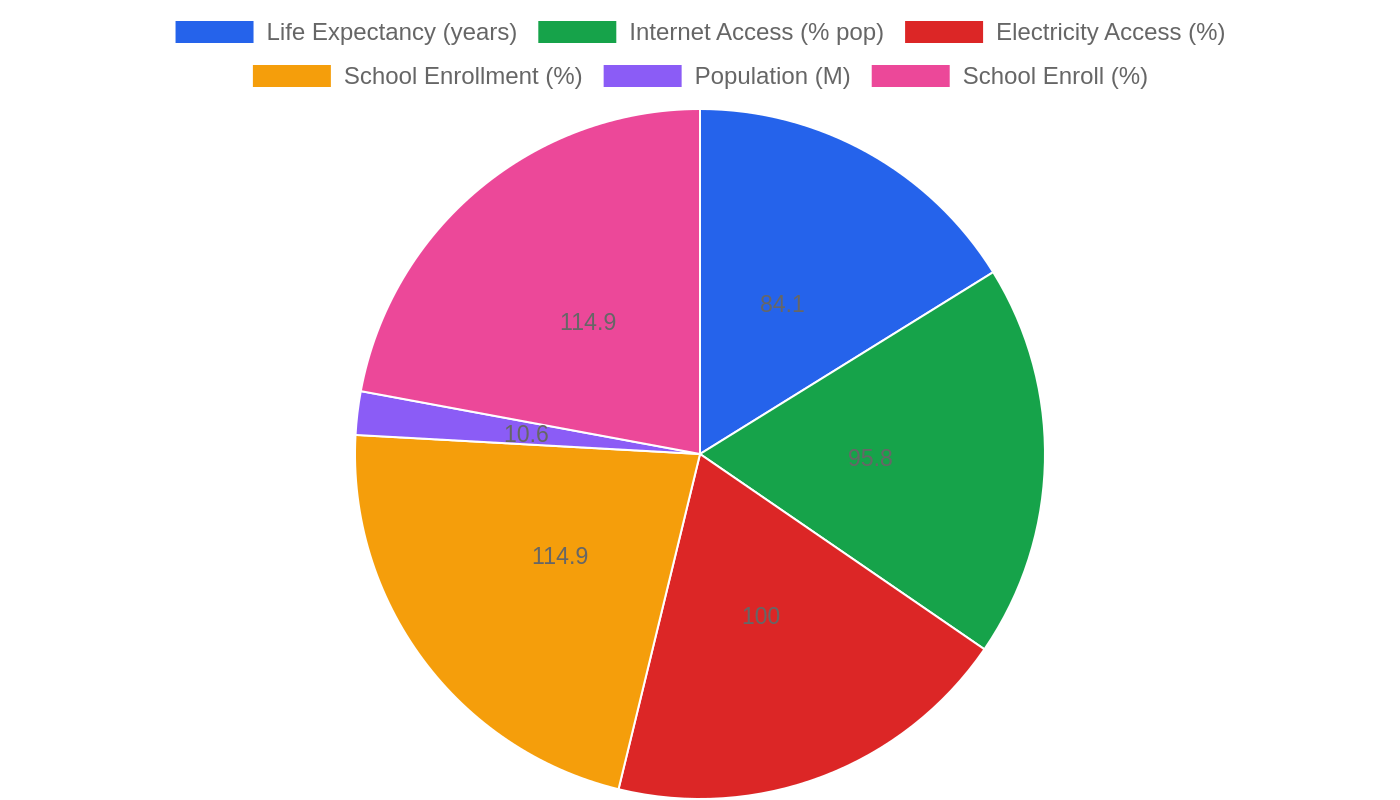
– A Population of 10.6 Million: With a GDP of nearly $669 billion, Sweden remains a wealthy nation per capita, even if the headline growth rate is modest.
Growth, Inflation, and the Jobs Paradox
Let’s start with the numbers that matter most. According to the World Bank, Sweden’s economy expanded by 1.54% in 2025. That is not a boom, but it is not a bust either. It is the kind of steady, unspectacular growth that characterises a mature economy navigating global headwinds. The more striking figure is inflation: just 0.68%. In an era when many advanced economies have battled price spikes, Sweden has achieved something close to price stability. This is a double-edged sword, however.
Very low inflation can signal weak domestic demand, which may explain why growth is not stronger.
Then there is the labour market. Unemployment at 8.69% is the most troubling data point in this profile. For a country with Sweden’s social safety net and education levels, such a figure suggests that many workers are either in transition or struggling to find roles that match their qualifications. The World Bank data does not break down youth unemployment or long-term unemployment, but the aggregate number alone is enough to raise questions about the health of the labour market.
It is a paradox: a country with world-class companies and a strong export sector, yet a domestic job market that cannot fully absorb its workforce.
The composition of Sweden’s GDP is telling. With a total output of roughly $669 billion, the country punches well above its weight internationally. The main industries — though not detailed in the data — are clearly reflected in the top companies list: consumer goods, technology, and industrials dominate. This is not a nation that relies on a single sector; it is a diversified economy with strengths across the board.
The Cost of Living: High Prices, High Wages, High Expectations
Sweden has long been known as an expensive place to live, and the current data does nothing to dispel that reputation. While the World Bank figures do not provide a granular breakdown of housing costs or daily expenses, the broader economic context tells a clear story. With inflation at 0.68%, the cost of goods and services is rising very slowly, which should ease pressure on household budgets. However, the high unemployment rate means that not everyone is sharing in the benefits of this price stability.
Housing in Sweden’s major cities — Stockholm, Gothenburg, and Malmö — has historically been characterised by high demand and limited supply. Rents are regulated in many areas, but the secondary market can be exorbitant. The low inflation environment is a double-edged sword for homeowners: while it keeps mortgage costs predictable, it also suggests that wage growth is likely subdued, making it harder for first-time buyers to save deposits.
For renters, the situation is no easier, as the queue for affordable housing in Stockholm can stretch for years.
Compared to other Nordic nations, Sweden’s cost of living is broadly in line with its neighbours, though the weak krona has made imports more expensive in recent years. For the average Swede, the daily reality is one of high taxes funding high-quality public services — a trade-off that remains broadly popular, even if it leaves less disposable income than in some other developed economies.
Investment and Business Climate: A Land of Global Champions
Sweden’s corporate landscape is remarkably vibrant for a country of 10.6 million people. The top companies list reads like a who’s who of Nordic business: AarhusKarlshamn in consumer goods, Acast in technology, AFRY in industrials, and AGA in oil and gas. This diversity is a strength. It means that Sweden is not overly dependent on any single sector, and it provides a buffer against sector-specific downturns.
The technology sector is particularly noteworthy. With companies like Acando, Acast, and Adtraction, Sweden continues to punch above its weight in digital innovation. This is not a new phenomenon — Sweden has a well-documented history of producing global tech successes — but it remains a critical driver of future growth. The consumer goods sector is equally robust, with household names like Abba Seafood and Acne Studios representing both the traditional and the avant-garde faces of Swedish design.
For investors, Sweden offers a stable, transparent business environment. The political culture of consensus and the strength of institutions provide a solid foundation for long-term investment. However, the high unemployment rate suggests that the benefits of this corporate success are not being evenly distributed. There is a growing debate, reflected in the political landscape, about how to ensure that the fruits of enterprise are shared more broadly across society.
Safety, Politics, and the Quality of Life
The World Bank data does not include specific crime or safety indices for Sweden, but the country’s reputation in this area is well established. Sweden consistently ranks high in global quality-of-life surveys, and its political culture is rooted in a tradition of civic engagement.
The description of Sweden’s “popular movements” — trade unions, the Christian movement, the temperance movement, the women’s movement — paints a picture of a society where ordinary people have historically had a strong voice in shaping policy.
This tradition continues to influence Swedish politics today. The country was a pioneer in outlawing corporal punishment of children, a reflection of its broader commitment to social welfare and human rights. The political landscape is characterised by a strong social democratic tradition, tempered by a vibrant civil society and a willingness to debate difficult issues.
The intellectual property pirate movements, mentioned in the data, are a more recent example of how Swedes engage with new challenges — in this case, the digital revolution.
Quality of life in Sweden is generally high, though not without its challenges. The high tax burden is accepted by most as the price of a generous welfare state, but it can be a point of contention. The low inflation rate and stable economy provide a sense of security, while the natural beauty of the country — from the archipelagos to the forests of the north — offers an enviable standard of living.
What’s Happening Now: Navigating a New Economic Reality
Sweden in 2026 is a country in transition. The low inflation rate, while welcome, is a sign of an economy that is not running at full throttle. The World Bank’s figures suggest that the Riksbank, Sweden’s central bank, has room to manoeuvre, but the high unemployment rate complicates the picture. There are likely ongoing debates about labour market reform, education and training, and how to integrate new arrivals into the workforce.
The political landscape, shaped by the tradition of popular movements, is likely to see continued discussion about the balance between welfare and competitiveness. The presence of strong technology and consumer goods sectors suggests that Sweden is well positioned for the future, but the persistent unemployment rate is a reminder that not all Swedes are sharing in this success.
The country’s companies are also adapting to a changing global environment. With a strong presence in technology and industrials, Swedish firms are well placed to benefit from trends like digitalisation and the green transition. However, the reliance on exports makes Sweden vulnerable to global economic fluctuations, and the weak krona is a double-edged sword — helping exporters but hurting consumers.
The Bottom Line
Sweden is a country that has mastered the art of steady, sustainable progress. It is not a nation of dramatic booms and busts, but rather one of careful management and social consensus. For investors, it offers a stable, transparent environment with world-class companies in technology, consumer goods, and industrials. For policymakers, it presents a puzzle: how to reduce unemployment without sacrificing the social model that makes Sweden unique.
And for the casual observer, it remains a fascinating case study in how a small, open economy can thrive in a globalised world. Watch Sweden not for fireworks, but for the quiet, persistent work of building a society that works for everyone.
Sources & Methodology
This article is authored by Economic Pulse Net for informational and research purposes. Economic Pulse Net sources its data from multilateral institutions, national statistics bureaus, and proprietary databases. All data is believed to be current as of the date of publication.
Published: August 12, 2026 | Category: Research — Sweden
Use these signals in your own platform
Economic Pulse publishes its live signal feed through a documented, read-only API. Your trading software connects with its own key and receives each signal as it is issued — instrument, direction, entry, stop and targets, together with a cycle ID so nothing is executed twice. The feed is independent of this website and cannot change it.
Signals are informational only and are not financial advice.