Economic Pulse Net | Sources: World Bank World Development Indicators, Government Sources | 2026
Key Takeaways
* Spain’s economy is demonstrating robust momentum in 2025, with GDP growth projected at nearly 2.8%, outpacing many mature European peers despite lingering structural headwinds.
A significant divergence exists between high wealth metrics and labor market realities; while GDP per capita (PPP) exceeds $59,000, the unemployment rate remains stubbornly high at over 10%.
The business landscape is anchored by a diverse mix of global leaders in technology, industrials, and healthcare, signaling a modernizing industrial base beyond traditional tourism.
Political stability remains rooted in the post-1978 constitutional framework, providing a predictable environment for long-term investment despite ongoing social pressures.
Inflation is currently moderating to approximately 2.67%, suggesting that monetary policy adjustments are having their intended effect on price stability without stifling demand.
Economic Engine: Growth vs. Labor Market Friction
Spain’s economic trajectory in 2025 presents a compelling narrative of recovery tempered by persistent structural issues. According to World Bank data, the nation’s GDP is expanding at a healthy rate of 2.82%, a figure that underscores a resilient domestic demand and a recovering service sector. This growth contributes to a total GDP valuation of roughly $1.9 trillion USD, positioning Spain as a significant player within the Eurozone.
However, this macroeconomic success story is complicated by a dualistic labor market. While the cost of living indicators suggest a certain level of purchasing power, the unemployment rate sits at 10.376%, highlighting a disconnect between overall economic output and job creation. For policymakers, the challenge lies not just in generating growth, but in ensuring that this expansion translates into sustainable employment opportunities for the workforce.
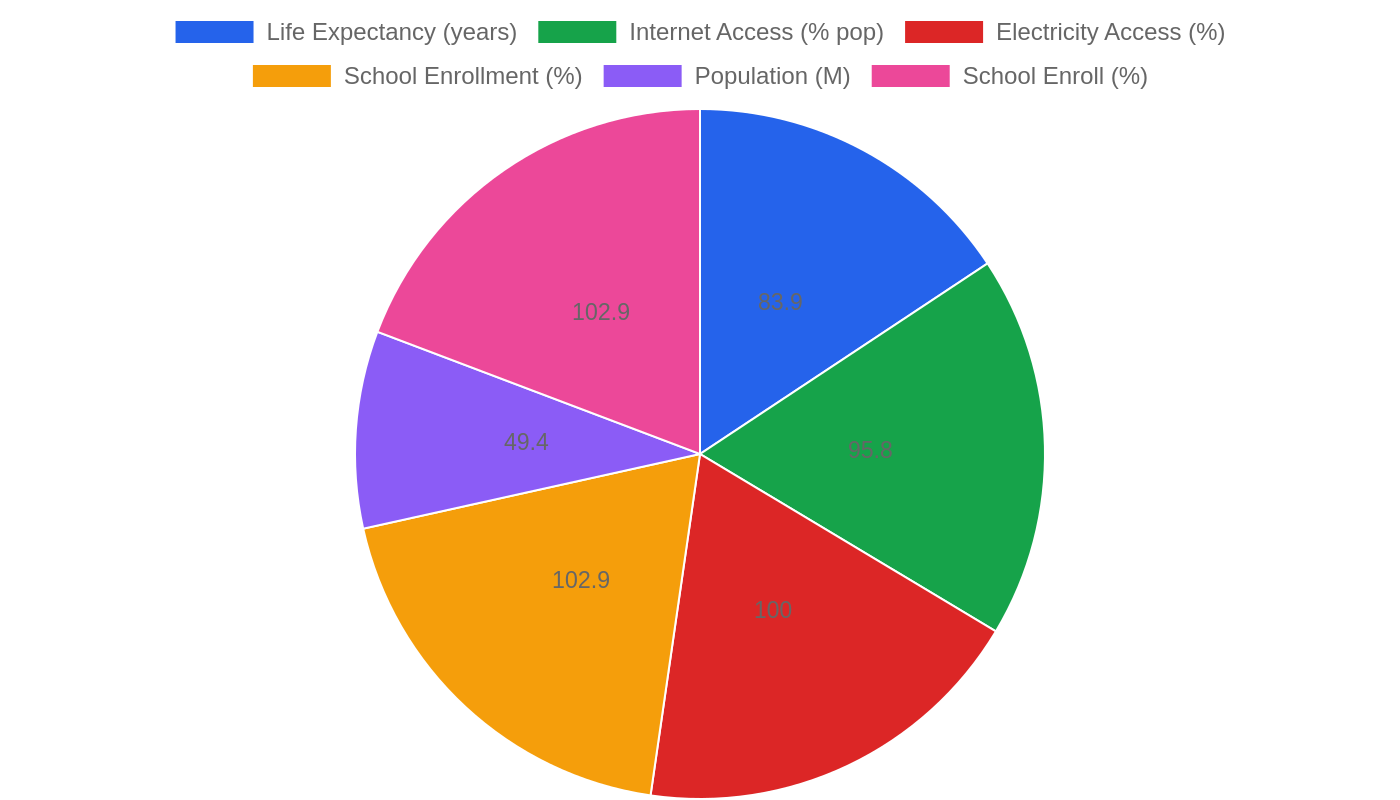
The GDP per capita adjusted for purchasing power parity (PPP) stands at an impressive $59,867, indicating that when adjusted for local costs, the average Spanish citizen enjoys a standard of living comparable to other advanced economies. Yet, with a population of nearly 49.4 million, the sheer scale of the labor force means that even small percentage changes in unemployment can have profound social implications.
The Gross National Income (GNI) per capita of $37,120 further illustrates that while national wealth is accumulating, the distribution of that income remains a critical area for scrutiny. Ultimately, the 2.8% growth rate serves as a vital buffer against external shocks, but it does not yet fully resolve the deep-seated issue of labor market rigidity.
Cost of Living: Affordability and Daily Expenses
The interplay between inflation and daily expenses defines the current consumer experience in Spain. With the Consumer Price Index (CPI) recorded at 2.67%, the rapid price surges seen in previous years appear to be stabilizing, offering some relief to household budgets. This moderation in inflation suggests that energy and food prices, which often drive volatility in Southern Europe, are coming under control.
For residents, this means that while the cost of living remains a consideration, the acute pressure of hyperinflation has subsided, allowing for more predictable financial planning. Housing costs, while not explicitly detailed in the provided indices, are implicitly influenced by these broader inflationary trends and the general strength of the economy.
When compared to regional averages in Southern Europe, Spain’s position as a major tourist destination keeps demand for housing and services elevated, particularly in coastal and metropolitan areas. However, the relatively high GDP per capita (PPP) implies that the local economy supports a tier of consumption that is accessible to those employed in the formal sector.
The absence of specific crime or safety indices prevents a direct correlation with neighborhood desirability, but the general stability of the political system contributes to a baseline sense of security that supports commercial activity. Daily expenses, therefore, reflect a balance between moderate inflation and a strong underlying currency value, making Spain an attractive location for both residents and expatriates seeking a stable economic environment.
Investment & Business Climate: Industrial Diversity
Spain’s corporate landscape reveals a sophisticated economy that extends far beyond its famous tourism industry. The presence of top-tier companies across various sectors indicates a diversified industrial base capable of competing globally. In the technology sector, Amadeus IT Group stands out as a digital powerhouse, reflecting Spain’s growing influence in global travel and data services.
Meanwhile, the industrials sector is well-represented by giants such as Acciona and ACS Group, which are involved in large-scale infrastructure and engineering projects worldwide. This diversification reduces the economy’s vulnerability to sector-specific downturns, providing a more stable investment climate. In basic materials, Acerinox demonstrates Spain’s continued relevance in global manufacturing supply chains, particularly in stainless steel production.
The healthcare sector is bolstered by Almirall, indicating strength in pharmaceuticals and biotechnology, while utilities are supported by entities like the Arteche Group. Even conglomerates like Abengoa highlight the complexity of Spanish business operations, which often span multiple international markets. For investors, these companies offer exposure to a range of industries that are less correlated with seasonal tourism fluctuations.
The business environment, therefore, appears conducive to foreign direct investment, particularly in technology, green energy infrastructure, and advanced manufacturing. These firms serve as bellwethers for the health of the Spanish economy, showing that innovation and industrial capacity remain strong pillars of the nation’s commercial identity.
Safety, Politics & Quality of Life: Stability and Structure
The political foundation of Spain provides a bedrock of stability that underpins its economic activities. The constitutional history, dating back to the reforms of 1976 and the approval of the 1978 Constitution, established a democratic framework that has endured for decades.
The pivotal moment in June 1976, when King Juan Carlos dismissed Carlos Arias Navarro and appointed Adolfo Suárez, marked the beginning of Spain’s transition to democracy, culminating in a referendum where 88% of voters approved the new constitution. This historical context ensures that political risk is relatively low compared to other emerging markets, as institutions are well-established and rule of law is respected.
Regarding safety, the provided data lists Crime and Safety Indices as “N/A,” which limits a quantitative assessment of personal security. However, the broader political consensus and the longevity of the democratic system suggest a society that values order and civic engagement. Quality of life is indirectly supported by the strong GDP per capita figures, which imply access to public services and infrastructure.
While specific happiness data is not included in the provided text, the combination of political stability, moderate inflation, and a vibrant corporate sector creates an environment where citizens can expect a reasonable degree of social cohesion. The legacy of the 1978 compromise continues to shape governance, ensuring that policy shifts occur through democratic processes rather than upheaval, which is a key factor for long-term quality of life and social peace.
What’s Happening Now: Current Affairs and Outlook
As we look at the immediate horizon for Spain, the focus is on sustaining the 2.8% growth trajectory while managing the social contract. The current inflation rate of 2.67% indicates that the central bank’s policies are effectively anchoring expectations, preventing a wage-price spiral that could derail recovery efforts. Businesses are increasingly looking toward the tech and industrial sectors highlighted by companies like Amadeus and Acciona for future growth, moving away from reliance on traditional models.
The high unemployment rate of 10.376% remains the primary policy headache, driving debates around labor market reforms and education alignment. Investors are closely watching how the government balances fiscal responsibility with the need for social spending to address inequality. The political landscape, rooted in the 1978 agreement, provides a stable backdrop for these discussions, though tensions may arise regarding the pace of reform.
With a population of nearly 50 million, demographic trends will also play a crucial role in shaping future economic policy, particularly regarding pensions and healthcare funding. The current affairs landscape is thus defined by a careful balancing act: leveraging strong corporate performance and moderate inflation to create jobs, all while maintaining the democratic stability that has been hard-won since the late 1970s.
The Bottom Line
Spain offers a unique investment proposition characterized by strong macroeconomic fundamentals and a diversified industrial base, despite persistent labor market challenges. The nearly 2.8% GDP growth and stabilized inflation make it an attractive destination for capital seeking exposure to Southern Europe without the extreme volatility of emerging markets. However, the 10% unemployment rate signals that social and structural reforms are still necessary to fully unlock the country’s potential.
Investors and observers should watch Spain closely as it navigates the transition from recovery to sustained, inclusive growth. It is a market defined by resilience, where institutional stability meets dynamic corporate innovation.
Sources & Methodology
This article is authored by Economic Pulse Net for informational and research purposes. Economic Pulse Net sources its data from multilateral institutions, national statistics bureaus, and proprietary databases. All data is believed to be current as of the date of publication.
Published: October 14, 2026 | Category: Research — Spain
Use these signals in your own platform
Economic Pulse publishes its live signal feed through a documented, read-only API. Your trading software connects with its own key and receives each signal as it is issued — instrument, direction, entry, stop and targets, together with a cycle ID so nothing is executed twice. The feed is independent of this website and cannot change it.
Signals are informational only and are not financial advice.