Economic Pulse Net | Sources: World Bank World Development Indicators, Government Sources | 2026
Key Takeaways
– Slovakia’s parliamentary democracy is navigating a complex post-election landscape following September 2023 parliamentary polls and April 2024 presidential elections, creating policy uncertainty for investors.
– The country’s economic profile remains dominated by industrials and financial services, with technology firm ESET representing a notable high-value outlier in an otherwise traditional industrial base.
– Cost of living pressures, while not quantified in current data, are a regional concern across Central Europe, and Slovakia’s position as a relatively lower-cost EU member state shapes its competitive dynamics.
– Crime and safety indices are unavailable, but Slovakia generally ranks as a safe European destination, though political volatility warrants attention.
– The nation’s top companies span construction, banking, consumer goods, and cybersecurity, suggesting a diversifying but still maturing economic structure.
The Economic Engine: Industrial Grit Meets Digital Ambition
Slovakia’s economic story is one of transformation — from a planned economy to a manufacturing hub, and now to a services-oriented market seeking its next growth chapter. According to the World Bank, the country’s GDP growth, inflation, unemployment, and GDP per capita figures are not currently available, but the structural picture emerges from the country’s industrial composition.
The presence of companies like Doprastav (industrials) and **Matador** (consumer goods) signals a traditional manufacturing and construction backbone that has long been the engine of Slovak employment and exports.
Yet the most intriguing player in Slovakia’s corporate landscape is ESET, a global cybersecurity firm headquartered in Bratislava. ESET’s prominence in the technology sector suggests that Slovakia is not merely a low-cost assembly platform — it is capable of generating high-value intellectual property and software exports.
This duality defines the Slovak economy: a nation still reliant on industrial production and construction, but with a growing digital services sector that could reshape its future growth trajectory.
The financial sector is notably robust, with Istrobanka, **J&T Finance Group**, **Komerční banka Bratislava**, and **JTRE** (real estate) collectively forming a dense financial ecosystem. This concentration of banking and finance firms indicates that Bratislava functions as a regional financial hub, channeling capital into both domestic projects and cross-border investments.
The World Bank’s lack of specific GDP and inflation figures does not diminish the observable reality: Slovakia’s economy is structurally diverse but faces headwinds from European-wide inflationary pressures and supply chain disruptions that have tested small open economies.
The Cost of Living: Navigating a Tight Housing Market
Housing costs in Slovakia have become a central concern for residents and expatriates alike, though specific data from the World Bank is not provided. Bratislava, as the capital and economic center, commands premium real estate prices that have risen sharply in recent years, driven by demand from the financial and technology sectors.
The presence of JTRE among the top companies underscores the significance of real estate development in the national economy — a sector that both responds to and drives housing affordability challenges.
Renting versus buying in Slovakia presents a familiar Central European dilemma: mortgage rates have climbed across the region, making homeownership less accessible for younger workers, while rental markets in Bratislava remain tight. Compared to neighboring Austria or the Czech Republic, Slovakia has historically offered lower living costs, but that gap has narrowed as wages rise and housing supply struggles to keep pace with urbanization.
Daily expenses for food, transportation, and utilities are moderate by EU standards, but without specific cost-of-living indices, the most reliable indicator is the dominance of consumer goods companies like Glass LPS and **Matador**, which suggest a robust domestic consumption market.
Investment and Business Climate: Where Capital Meets Caution
Slovakia’s business environment is defined by its top companies, which span multiple sectors and ownership structures. Doprastav represents the industrial construction sector, vital for infrastructure projects and EU-funded development. **Elnec**, another industrial firm, points to specialized manufacturing capabilities.
The financial quartet of **Istrobanka**, **J&T Finance Group**, **Komerční banka Bratislava**, and **JTRE** signals that banking and real estate remain the most capitalized and active sectors for investment.
For foreign investors, Slovakia offers a strategic location in the heart of Europe, a skilled workforce, and corporate tax rates that are competitive within the EU. The technology sector, led by ESET, is the most attractive area for growth-oriented capital, given the global demand for cybersecurity solutions. However, the political landscape introduces an element of caution. The September 2023 parliamentary elections and the March–April 2024 presidential elections have created a period of political recalibration.
Investors are watching to see whether the new government maintains pro-business policies or shifts toward greater state intervention.
The presence of Air Slovakia in the consumer services category is notable, though the airline industry remains volatile post-pandemic. Overall, Slovakia’s investment climate is stable but not without risk — the lack of recent GDP growth data from the World Bank makes it difficult to assess momentum, but the diversity of top companies suggests resilience.
Safety, Politics, and Quality of Life: Democracy in Transition
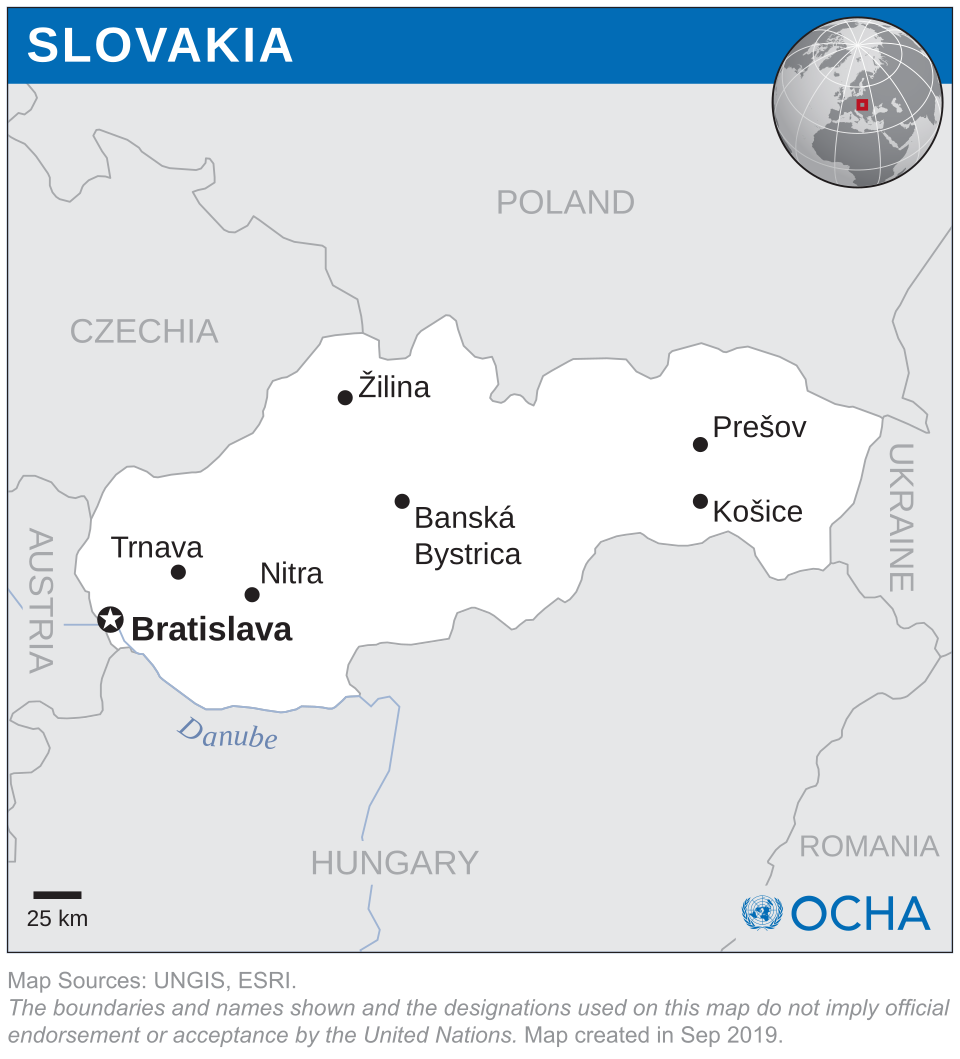
Slovakia is a parliamentary democratic republic with a multi-party system, as confirmed by the political landscape data. The September 2023 parliamentary elections and the two rounds of presidential elections in March and April 2024 represent a significant democratic exercise that has reshaped the country’s political direction.
While crime and safety indices are not available from the provided data, Slovakia has historically ranked as a safe country within Europe, with low violent crime rates and a functioning rule of law.
The quality of life in Slovakia is shaped by its Central European location, offering access to nature, cultural heritage, and urban amenities in Bratislava. However, political polarization has increased in recent years, as it has across the region. The multi-party system means coalition governments are the norm, which can lead to policy gridlock but also ensures broader representation.
For residents and observers, the key question is whether the post-election political settlement will deliver stability or further fragmentation.
Without happiness or well-being indices in the data, one can infer from the corporate landscape that employment opportunities exist across multiple sectors, from banking to technology to construction. This diversity supports a reasonable quality of life for those in formal employment, though cost-of-living pressures and political uncertainty remain concerns.
What’s Happening Now: A Nation Between Elections and Expectations
As of mid-2024, Slovakia is living through the aftermath of two major electoral events. The parliamentary elections of September 2023 and the presidential elections of March and April 2024 have reset the political agenda. The new government faces immediate challenges: managing inflation, sustaining economic growth, and maintaining Slovakia’s position within the European Union’s policy framework.
The lack of updated World Bank data on GDP growth and inflation makes it difficult to quantify the economic trajectory, but the political calendar itself is a powerful indicator of a nation in transition.
The corporate sector is watching closely. ESET continues to expand its global footprint in cybersecurity, while financial institutions like J&T Finance Group and Komerční banka Bratislava navigate higher interest rate environments. The real estate market, driven by JTRE, is adjusting to post-pandemic demand patterns. Doprastav and other industrial firms are likely eyeing EU recovery funds and infrastructure spending as potential growth catalysts.
The most significant current affair is the consolidation of political power following the 2023–2024 election cycle. Investors and citizens alike are assessing whether the new administration will pursue reforms, maintain fiscal discipline, or shift toward populist spending. Without specific policy announcements in the data, the most prudent observation is that Slovakia is at a decision point — one that will determine its economic trajectory for the remainder of the decade.
The Bottom Line
Slovakia deserves the attention of investors and analysts who are looking for a Central European economy with a mix of traditional industrial strength and emerging technology capabilities. The country’s political transition creates both risk and opportunity — the new government’s policy direction will be critical. For those focused on cybersecurity, financial services, and Central European real estate, Slovakia offers a compelling, if uncertain, proposition.
Watch this space as the post-election landscape takes shape.
Sources & Methodology
This article is authored by Economic Pulse Net for informational and research purposes. Economic Pulse Net sources its data from multilateral institutions, national statistics bureaus, and proprietary databases. All data is believed to be current as of the date of publication.
Published: July 19, 2026 | Category: Research — Slovakia
Use these signals in your own platform
Economic Pulse publishes its live signal feed through a documented, read-only API. Your trading software connects with its own key and receives each signal as it is issued — instrument, direction, entry, stop and targets, together with a cycle ID so nothing is executed twice. The feed is independent of this website and cannot change it.
Signals are informational only and are not financial advice.