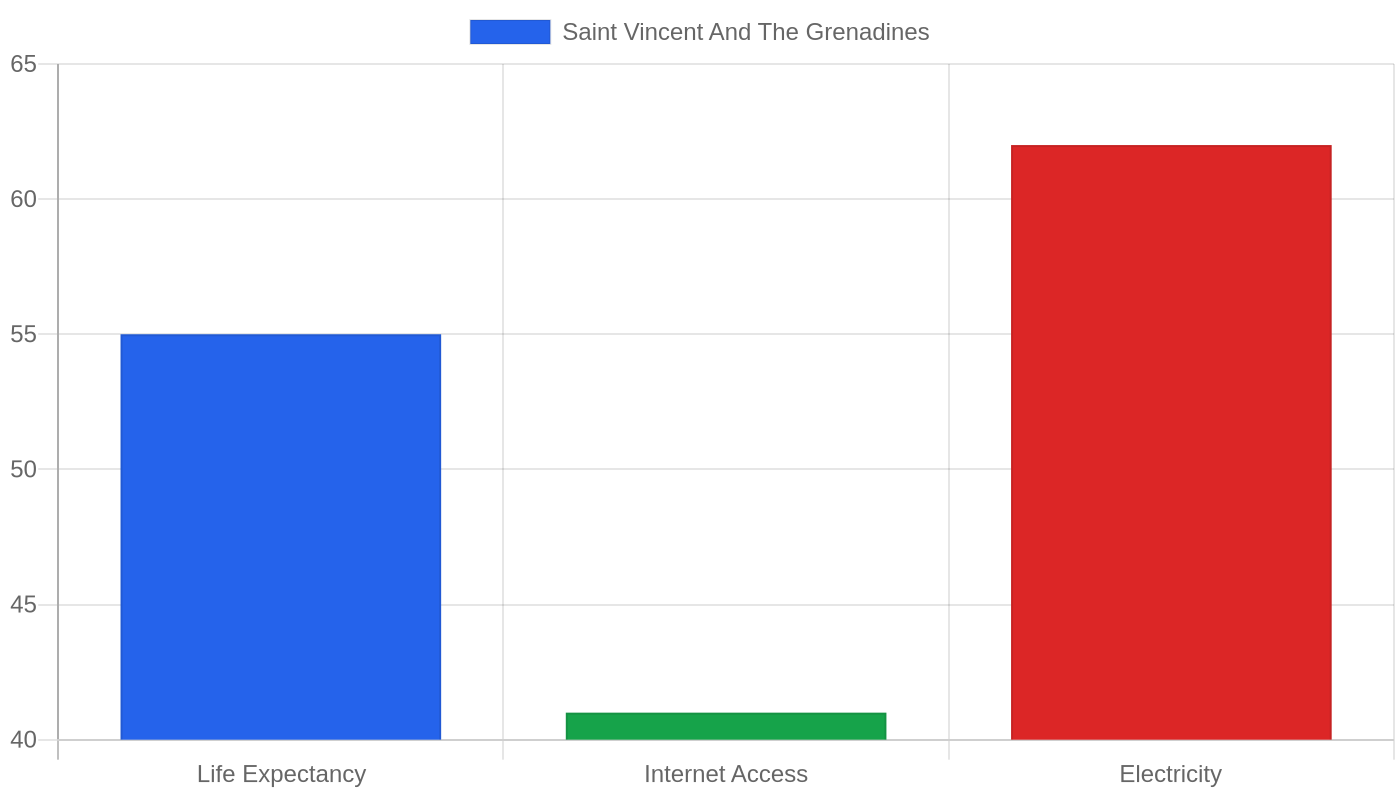
Economic Pulse Net | Sources: World Bank World Development Indicators, Government Sources | 2026
Key Takeaways
* Political Stability with New Leadership: The nation remains a stable parliamentary democracy and constitutional monarchy, currently operating under Governor-General Stanley John, who assumed office on January 5, 2026.
Data Transparency Challenges: Comprehensive economic metrics such as GDP growth, inflation rates, and unemployment figures are currently listed as N/A by the World Bank, indicating significant gaps in publicly available statistical reporting.
Institutional Continuity: Despite the absence of granular economic data, the political framework remains firmly anchored to King Charles III, ensuring continuity in governance structures.
Focus on Core Indicators: With detailed cost-of-living, industry, and crime indices unavailable, the current economic narrative is defined more by institutional stability than by measurable financial performance indicators.
Economic Foundations and Statistical Silence
The economic landscape of Saint Vincent and The Grenadines presents a unique journalistic challenge: while the nation operates within a functioning democratic system, the quantitative backbone of its economy appears obscured from public view. According to the latest data from the World Bank, critical indicators including GDP growth, inflation CPI, and unemployment rates are recorded as N/A.
This absence of data does not necessarily imply economic stagnation or chaos; rather, it suggests that either statistical collection mechanisms are undergoing revision, or that the specific datasets required for international benchmarking have not been recently published or aggregated into accessible global databases. For investors and analysts, this gap creates a high degree of uncertainty, as traditional models for assessing economic health rely heavily on these precise metrics.
Without clear figures on GDP (USD) or GNI per capita, it is impossible to calculate standard purchasing power parity comparisons or assess the real income levels of the population relative to regional peers. Consequently, any discussion of the country’s economic trajectory must be approached with caution, acknowledging that the silence in the data streams may reflect administrative delays rather than underlying market failures.
However, the lack of reported inflation spikes or unemployment surges allows for a neutral interpretation, where the absence of negative news is not inherently positive, but simply unverified.
Cost of Living and Daily Expenses
Assessing the daily financial reality for residents and potential expatriates in Saint Vincent and The Grenadines is difficult without concrete cost-of-living indices or housing market data. The provided information lists the general cost of living and top companies as N/A, leaving no direct basis for comparing rent versus buy ratios or estimating daily expenditure on essentials.
In typical Caribbean economies, costs are often influenced by import dependencies and tourism flows, but without specific data points, we cannot infer whether the island offers a budget-friendly environment or a premium lifestyle cost structure. This opacity extends to the corporate sector, where the “Top Companies” field is also empty, making it challenging to identify major employers or dominant commercial entities that might drive local wage standards.
Therefore, prospective visitors or investors must rely on anecdotal evidence or on-the-ground inquiries rather than pre-visit statistical guides. The absence of this data means that the financial experience of living in St. Vincent remains a variable known only to those already present, rather than a predictable metric derived from national statistics.
Investment and Business Climate
The business environment in Saint Vincent and The Grenadines is currently framed by institutional clarity rather than commercial visibility. While the main industries and top companies are not specified in the available data, the political structure provides a steady hand for long-term planning. As a parliamentary democracy, the government’s role in regulating commerce is well-defined, with the head of state represented by Governor-General Stanley John since early 2026.
This continuity suggests that regulatory frameworks are likely stable, even if specific sectoral performances are not being highlighted in international reports. For businesses looking to enter the market, the primary advantage appears to be the predictability of the legal and political system, which operates under the constitutional monarchy shared with other Commonwealth realms.
However, the lack of identified key industries means that opportunities are less obvious to outside observers, potentially favoring local actors who possess insider knowledge of niche markets. Investors must therefore navigate this landscape with a focus on governance risk, which appears low, rather than sector-specific growth trends, which remain undefined in the current dataset.
Safety, Politics and Quality of Life
Quality of life assessments in Saint Vincent and The Grenadines are currently limited by missing safety indices, yet the political backdrop offers reassuring context. The Crime Index and Safety Index are both listed as N/A, preventing a direct comparison with neighboring islands or regional averages regarding security concerns. Nevertheless, the political landscape is robustly documented as a parliamentary democracy, providing a layer of social stability that often correlates with lower civil unrest.
The presence of King Charles III as the symbolic head of state, physically absent but constitutionally present via the Governor-General, underscores the island’s deep ties to broader international diplomatic norms. This political alignment often brings with it a certain level of procedural transparency and rule-of-law adherence that can enhance the perceived safety for foreigners and residents alike.
While we cannot quantify street-level safety through a numerical index, the structured nature of the government suggests a society where civic order is maintained through established democratic processes. Residents and travelers can thus infer a baseline of political calm, even if specific crime statistics are withheld from public analysis.
What’s Happening Now and Current Affairs
The most significant recent development in Saint Vincent and The Grenadines is the transition of power at the highest ceremonial level of the state. On January 5, 2026, Stanley John assumed the role of Governor-General, replacing his predecessor and marking a new chapter in the nation’s constitutional history. This event, while largely symbolic, reinforces the country’s commitment to its parliamentary traditions and ensures the uninterrupted representation of the Crown in domestic affairs.
The timing of this appointment, occurring in the middle of the decade, signals a period of administrative continuity rather than upheaval. For the international community, this smooth transition is a positive indicator of institutional resilience. It demonstrates that despite the lack of frequent economic headlines or major policy shifts visible in global media, the internal machinery of the state continues to function efficiently.
The focus now shifts to how this new leadership will engage with existing challenges, particularly those related to economic data transparency and sustainable development, which remain pressing issues for small island developing states.
The Bottom Line
Saint Vincent and The Grenadines stands as a case study in political stability amidst economic opacity. For stakeholders, the primary takeaway is that the country offers a secure, democratically governed environment, but lacks the transparent data necessary for rigorous financial modeling. Those interested in the region should monitor the upcoming economic releases from the World Bank and local statistical bodies to fill the current informational voids.
Until then, the investment thesis rests on governance quality rather than measurable growth metrics.
Sources & Methodology
This article is authored by Economic Pulse Net for informational and research purposes. Economic Pulse Net sources its data from multilateral institutions, national statistics bureaus, and proprietary databases. All data is believed to be current as of the date of publication.
Published: October 22, 2026 | Category: Research — Saint Vincent And The Grenadines
Use these signals in your own platform
Economic Pulse publishes its live signal feed through a documented, read-only API. Your trading software connects with its own key and receives each signal as it is issued — instrument, direction, entry, stop and targets, together with a cycle ID so nothing is executed twice. The feed is independent of this website and cannot change it.
Signals are informational only and are not financial advice.