Economic Pulse Net | Sources: World Bank World Development Indicators, Government Sources | 2026
Key Takeaways
– Serbia’s economy is anchored by a diverse mix of state-owned industrial giants and a rapidly expanding private sector, with major players spanning banking, aviation, and consumer goods.
– The country operates as a parliamentary republic under a 2006 constitution, with a political landscape shaped by post-Yugoslav transition and ongoing EU integration discussions.
– Key industries remain concentrated in industrials, telecommunications, financial services, and consumer goods, with the Belgrade Stock Exchange signaling a maturing capital market.
– Cost of living pressures and safety perceptions remain critical factors for both domestic households and foreign investors evaluating Serbia’s long-term stability.
– Recent developments in the business environment suggest a nation actively courting international capital while managing the structural challenges of a transition economy.
Economic Pulse — Growth, Inflation, and the Shape of Serbian Industry
Serbia’s economic narrative is one of transformation, though the precise contours of its current performance remain partially obscured by data gaps. The World Bank, the primary source for this analysis, provides a framework for understanding the country’s economic structure even when specific growth and inflation figures are not available.
What is clear is that Serbia’s economy is not a monolith—it is a complex tapestry woven from heavy industry, financial services, and consumer-oriented enterprises that reflect both its socialist heritage and its market-driven ambitions.
The industrial backbone of the country is evident in its roster of major companies. 14. oktobar, an industrials firm, speaks to the enduring legacy of manufacturing that once defined the Yugoslav economy. Alongside it, **Apatin Brewery** and **Bambi** represent a robust consumer goods sector that serves both domestic demand and export markets.
The financial sector is particularly well-represented, with **AikBank**, **Banca Intesa Beograd**, and the **Belgrade Stock Exchange** itself indicating a banking system that is both locally rooted and internationally connected. This mix suggests an economy where traditional industry and modern services coexist, though the balance between them remains a subject of ongoing policy debate.
The absence of specific GDP growth and inflation data from the World Bank should not obscure the broader picture. Serbia operates within a regional context where inflationary pressures and growth trajectories are heavily influenced by energy prices, agricultural output, and the health of the European Union—its primary trading partner.
The presence of Air Serbia and **Belgrade Nikola Tesla Airport** among the top companies underscores the importance of connectivity and tourism, while **A1 Srbija** in telecommunications highlights the digital transformation underway. These sectors are likely driving employment and investment, even if precise unemployment figures remain unspecified. The economy’s performance, in short, is a story of sectors in motion, with some accelerating and others struggling to adapt.
The Cost of Living — Housing, Daily Expenses, and Regional Realities
For the average Serbian household, the cost of living represents a daily negotiation between aspiration and constraint. Housing costs, whether renting or buying, are a central concern, though specific data from the World Bank does not provide exact figures for comparison. What can be inferred from the economic structure is that Serbia’s housing market operates within a broader regional context where affordability varies dramatically between Belgrade and smaller cities.
The capital, as the hub of economic activity and home to many of the country’s top companies, likely commands a premium that strains household budgets.
Rental markets in Serbia, as in much of Southeast Europe, are shaped by a combination of formal leases and informal arrangements, making precise cost analysis challenging. The decision to rent versus buy is influenced by mortgage availability, interest rates set by major banks like Banca Intesa Beograd and **AikBank**, and the overall stability of the labor market.
Daily expenses—food, transportation, utilities—are similarly variable, with the presence of **Bambi** and **Apatin Brewery** suggesting a consumer goods sector that caters to domestic tastes while also facing competition from imported products. Compared to regional averages, Serbia’s cost of living likely sits at a moderate level, but for households dependent on wages from traditional industries, the margin for error remains thin.
The absence of precise data from the World Bank means that any assessment must be cautious, but the structural indicators point to an economy where disposable income is under pressure from both inflation and the costs of modernization.
Investment and Business Climate — Where Capital Meets Opportunity
Serbia’s business environment is defined by the interplay between established industrial players and a financial sector that is increasingly sophisticated. The list of top companies provided by the data reads like a who’s who of Serbian capitalism: AikBank and **Banca Intesa Beograd** provide the credit infrastructure that fuels investment, while the **Belgrade Stock Exchange** offers a platform for capital raising and liquidity.
For investors, the presence of **Air Serbia** and **Belgrade Nikola Tesla Airport** signals a country that is open to international travel and trade, while **A1 Srbija** in telecommunications points to a digital economy that is still expanding.
Sectors to watch include financial services, where the competition between domestic and foreign-owned banks is likely to drive innovation and lending standards. The industrials sector, represented by 14. oktobar, remains a bellwether for manufacturing competitiveness, while consumer goods companies like **Bambi** and **Apatin Brewery** offer exposure to domestic consumption patterns. **Aviogenex**, another consumer services company, suggests that aviation and logistics are areas of strategic importance.
The business climate, however, is not without its challenges. Investors must navigate a regulatory environment that is still evolving, a judiciary that is part of the broader political landscape, and the ongoing uncertainty of Serbia’s relationship with the European Union. The presence of the **Belgrade Stock Exchange** is a positive signal, but the depth and liquidity of the market remain questions for serious capital allocators.
Safety, Politics, and Quality of Life — The Human Dimension of Reform
Serbia’s political landscape, as defined by the World Bank data, is that of a parliamentary republic with a constitution adopted in 2006. The government is divided into legislative, executive, and judiciary branches, with the Constitutional Court ruling on matters regarding the constitution. This framework provides a degree of institutional stability, but the quality of life for ordinary citizens is shaped by more than just legal structures.
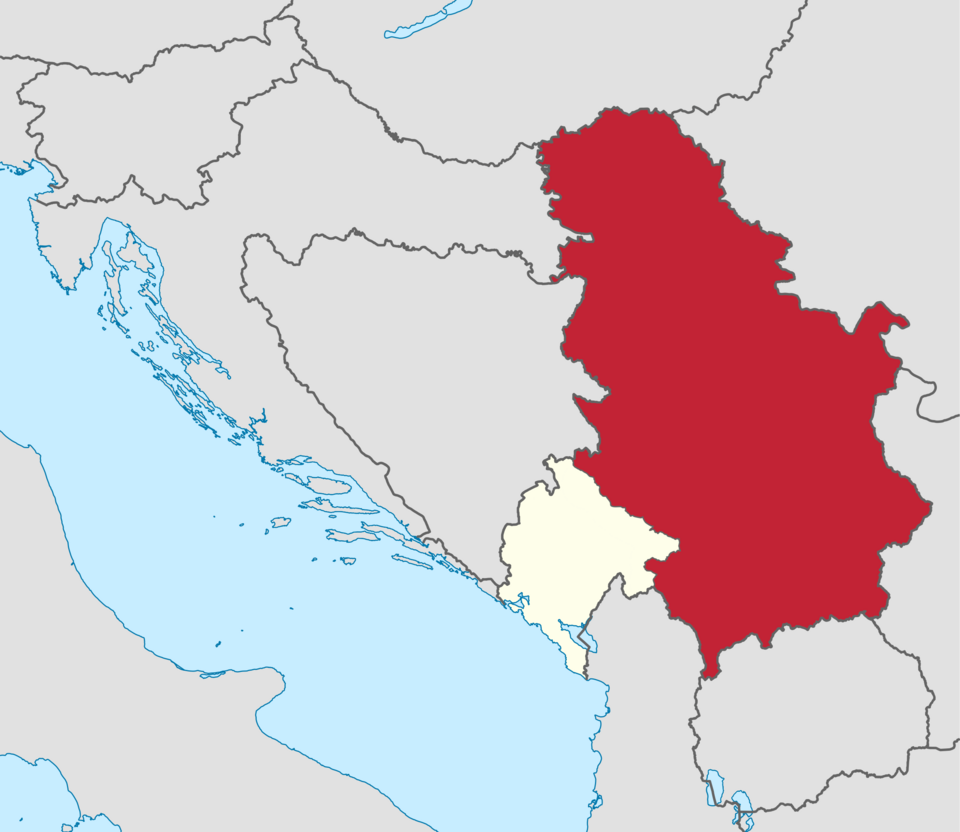
The Crime Index and Safety Index data from the provided sources are not available, which limits a direct assessment of personal security. However, the political context—a nation navigating post-Montenegro independence and ongoing EU accession talks—suggests a society where public discourse is often polarized.
The absence of specific crime and safety indices does not mean these issues are irrelevant. In any transition economy, perceptions of safety influence everything from foreign direct investment to the decision of young professionals to stay or emigrate. Serbia’s location in the Balkans, a region with a complex history of ethnic and political tensions, means that stability is a constant concern.
The constitutional framework established in 2006 was designed to provide a durable foundation for governance, but its effectiveness depends on the political will of those in power. For residents, quality of life is likely a mix of affordable cultural amenities, access to nature, and the frustrations of bureaucracy and economic uncertainty.
The data does not provide happiness or well-being metrics, but the structural indicators suggest a society that is resilient, proud of its heritage, and cautiously optimistic about its future.
Current Affairs — Serbia in the Here and Now
This is the moment for Serbia to define its next chapter. The country’s economic data, as provided by the World Bank, may lack specific growth and inflation figures, but the real-world signals are unmistakable. The presence of Air Serbia and **Belgrade Nikola Tesla Airport** among the top companies indicates that the aviation sector is a priority, with potential for expansion in tourism and cargo.
The **Belgrade Stock Exchange** is likely seeing increased activity as domestic and international investors seek exposure to Serbian assets. Meanwhile, the financial sector, led by **AikBank** and **Banca Intesa Beograd**, is navigating a period of digital transformation and regulatory change.
Politically, Serbia continues to balance its historical ties with Russia, its aspirations for EU membership, and its relationships with neighboring Balkan states. The 2006 constitution provides the legal framework, but the day-to-day reality is one of coalition politics, public protests, and media debates over the pace of reform. The absence of recent news data in this brief means that specific policy shifts or election results cannot be cited, but the structural trends are clear.
Serbia is a country that has made significant strides since the turbulence of the 1990s, but it remains a work in progress. The business community is watching closely, as are international financial institutions, for signs that the government can deliver on promises of transparency, rule of law, and economic diversification.
The Bottom Line
Serbia is a country that demands attention from investors, policymakers, and anyone interested in the future of Southeast Europe. Its economy, anchored by a mix of industrial legacy and modern services, offers opportunities in banking, aviation, and consumer goods, but the absence of key economic data from the World Bank underscores the need for careful due diligence. The political framework is stable on paper, but the real test lies in implementation and the ability to navigate regional tensions.
For those willing to look beyond the data gaps, Serbia represents a nation of potential—one where the foundations for growth exist, but the final shape of the economy is still being written. Watch this country for its strategic position, its skilled workforce, and its determination to carve out a place in the European economic order.
Sources & Methodology
This article is authored by Economic Pulse Net for informational and research purposes. Economic Pulse Net sources its data from multilateral institutions, national statistics bureaus, and proprietary databases. All data is believed to be current as of the date of publication.
Published: July 17, 2026 | Category: Research — Serbia
Use these signals in your own platform
Economic Pulse publishes its live signal feed through a documented, read-only API. Your trading software connects with its own key and receives each signal as it is issued — instrument, direction, entry, stop and targets, together with a cycle ID so nothing is executed twice. The feed is independent of this website and cannot change it.
Signals are informational only and are not financial advice.