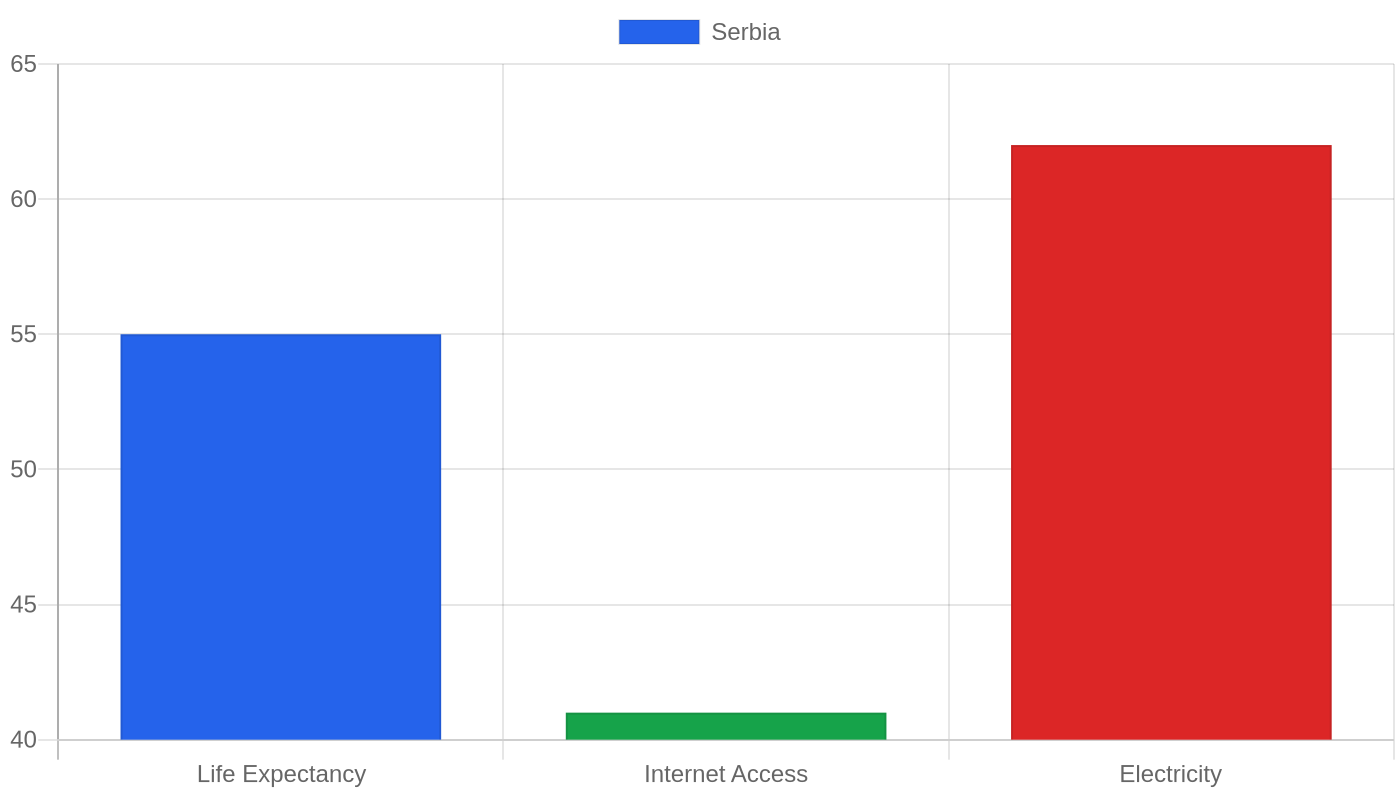
Economic Pulse Net | Sources: World Bank World Development Indicators, Government Sources | 2026
Key Takeaways
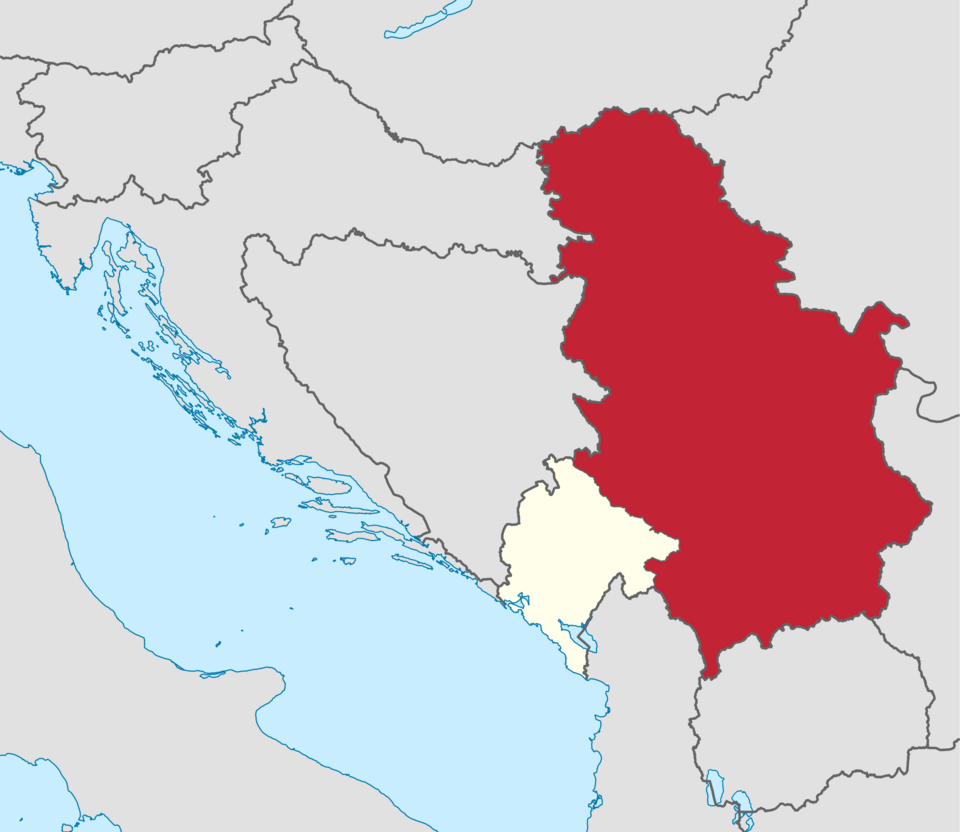
* Serbia operates as a parliamentary republic with a constitutional framework established in 2006, following the dissolution of the State Union of Serbia and Montenegro.
The economy is anchored by key industrial players such as 14. oktobar, while consumer services and telecommunications are dominated by major entities like Air Serbia and A1 Srbija.
Financial stability and market activity are supported by institutions including Banca Intesa Beograd and the Belgrade Stock Exchange, indicating a structured financial sector.
Despite the lack of specific macroeconomic growth or inflation figures in current datasets, the presence of diverse industries suggests a multifaceted economic base.
The political environment remains defined by the 2006 Constitution, which mandates Constitutional Court review of laws, ensuring a formalized legal oversight mechanism.
Economic Foundations and Industrial Structure
The Serbian economy presents a complex tapestry woven from traditional industrial strengths and emerging service sectors, though precise macroeconomic metrics such as GDP growth, inflation rates, and unemployment figures remain unavailable in current datasets. This absence of specific numerical data does not negate the underlying structural reality of the nation’s economic engine; rather, it highlights the need to look at the institutional and corporate landscape to understand its trajectory.
The country’s industrial base is robust, featuring significant players in manufacturing and logistics that serve as pillars for regional trade. For instance, the presence of 14. oktobar in the industrials sector points to ongoing production capabilities that likely support infrastructure and manufacturing needs. Meanwhile, the telecommunications giant A1 Srbija indicates a mature digital infrastructure, which is crucial for modern economic activity and foreign direct investment.
In the financial realm, the operation of AikBank and Banca Intesa Beograd demonstrates a banking system that facilitates both domestic commerce and international capital flows. These institutions provide the necessary liquidity and credit mechanisms that allow businesses to expand and consumers to spend. Furthermore, the existence of the Belgrade Stock Exchange serves as a critical barometer for investor sentiment and corporate performance, offering a platform for capital raising and wealth management.
While we cannot quantify the exact velocity of money through these channels without GDP or CPI data, the sheer diversity of listed companies—from consumer goods giants like Bambi and Apatin Brewery to service providers like Air Serbia—suggests an economy that is not reliant on a single commodity but is diversified across multiple value chains. This diversification typically provides a buffer against external shocks, even if the specific resilience metrics are currently obscured by missing statistical reports.
The interplay between these heavy industry roots and the growing consumer services sector creates a dynamic environment where traditional manufacturing meets modern service delivery. Understanding this blend is essential for any analyst looking beyond the headline numbers to see the actual mechanics of how value is created and distributed within the country.
Cost of Living and Housing Dynamics
Navigating the cost of living in Serbia requires an understanding of its unique position as a bridge between Western European price levels and those more typical of the broader Balkan region. Without specific inflation or purchasing power parity data, we must infer trends from the structure of the available corporate landscape.
The dominance of major consumer goods companies such as Bambi and Apatin Brewery suggests a well-established local supply chain for everyday necessities, which can help stabilize prices for basic food items compared to countries heavily reliant on imports. Similarly, the presence of large-scale hospitality and transport operators like Air Serbia and Aviogenex indicates that travel and tourism-related costs are managed by significant domestic and international players who influence pricing strategies.
Housing costs, while not explicitly detailed in the provided indices, are often correlated with the health of the financial sector and the availability of credit. With active banks like Banca Intesa Beograd operating in the market, mortgage accessibility and interest rate environments play a pivotal role in determining whether renting or buying is the more viable option for residents.
The Belgrade Nikola Tesla Airport also serves as a gateway for business travelers and expatriates, whose housing needs often drive premium real estate markets in urban centers. Daily expenses for locals are likely shaped by the balance between imported luxury goods and locally produced staples, with the latter benefiting from the strong agricultural and brewing heritage represented by Apatin Brewery.
For foreigners or investors, the cost of doing business may be influenced by the operational efficiencies of telecom provider A1 Srbija, which sets the baseline for digital connectivity costs.
Overall, while the exact dollar amounts for rent or groceries are absent, the ecosystem of companies suggests a cost structure that is competitive relative to more expensive Western European neighbors, yet potentially higher than some surrounding regional peers due to the concentration of multinational subsidiaries like A1 and Air Serbia. This middle-ground positioning makes Serbia an interesting case study for affordability versus quality of life trade-offs.
Investment and Business Climate
Serbia offers a compelling, albeit complex, landscape for investors seeking exposure to the Balkan market, characterized by a mix of state-influenced enterprises and private sector dynamism. The business environment is underpinned by a legal framework that includes a Constitutional Court responsible for reviewing the constitutionality of laws, providing a layer of judicial oversight that can enhance predictability for long-term investments.
Major corporations dominate key sectors, signaling opportunities for partnership, acquisition, or supply chain integration. In the industrials space, 14. oktobar represents potential avenues for manufacturing partnerships or infrastructure development projects. The telecommunications sector, led by A1 Srbija, offers stable cash flows and high penetration rates, making it attractive for tech-focused investors looking for reliable returns.
Consumer goods present another avenue for growth, with companies like Bambi and Apatin Brewery leveraging strong brand loyalty and distribution networks that extend beyond national borders. The financial sector’s strength, evidenced by the operations of AikBank, Banca Intesa Beograd, and the Belgrade Stock Exchange, provides a sophisticated platform for capital allocation and risk management.
Investors should note that the presence of Belgrade Stock Exchange allows for public market entry points, though liquidity and volatility would need to be assessed through real-time trading data. Service-oriented businesses, including Air Serbia and Aviogenex, benefit from Serbia’s geographic location as a transit hub, offering strategic advantages for logistics and passenger transport ventures.
However, the business climate is also shaped by the broader political context, which involves navigating regulatory frameworks established post-2006. Companies must remain agile in adapting to policy shifts while leveraging the existing infrastructure provided by these established players. The diversity of top companies suggests that no single sector holds a monopoly on opportunity; instead, a balanced portfolio approach might mitigate risks associated with any one industry’s downturn.
For foreign direct investment, the presence of internationally recognized brands like A1 and Air Serbia often signals a degree of regulatory compliance and market maturity that can reduce entry barriers for new entrants.
Safety, Politics, and Quality of Life
The quality of life in Serbia is deeply intertwined with its political stability and social safety measures, creating a nuanced environment for residents and expatriates alike. Politically, the country is a parliamentary republic governed by a constitution adopted in 2006, which emerged from the dissolution of the State Union of Serbia and Montenegro.
This constitutional arrangement provides a clear hierarchy of law, with the Constitutional Court tasked with reviewing the constitutionality of legislative acts, thereby serving as a check on executive and legislative power. This legal structure aims to ensure that governance remains within defined boundaries, contributing to a sense of institutional continuity despite potential political fluctuations.
Regarding personal safety, specific crime and safety indices are currently unavailable, leaving a gap in quantifiable metrics for assessing day-to-day security concerns. However, the general stability implied by the enduring constitutional framework since 2006 suggests a society that has moved past the immediate turbulence of the previous decade.
Urban centers like Belgrade, home to major economic actors such as the Belgrade Stock Exchange and numerous corporate headquarters, likely offer varying levels of safety depending on the district and time of day. The absence of explicit safety scores means that prospective residents or business owners must rely on localized intelligence and anecdotal evidence rather than broad statistical guarantees.
Happiness data is also not provided, making it difficult to gauge the overall emotional well-being of the population, which is often linked to economic security and political freedom. Nevertheless, the functioning of democratic institutions, such as the constitutional court and the parliamentary system, indicates a commitment to procedural democracy that can foster a stable social contract.
For those considering relocation, the interplay between political transparency and physical safety will require careful, on-the-ground assessment. The political landscape, therefore, acts as a foundational pillar for quality of life, influencing everything from rule of law enforcement to public service delivery.
What’s Happening Now: Navigating the Current Landscape
In the current moment, Serbia’s economic and political narrative is being shaped by the ongoing implementation of its 2006 constitutional framework and the evolving roles of its key industrial and service entities. The focus for policymakers and business leaders alike appears to be on maintaining stability within the parliamentary republic structure while fostering growth in core sectors.
The activities of major companies like Air Serbia and A1 Srbija reflect broader trends in connectivity and digitalization, which are critical for integrating Serbia into wider European and global markets. Simultaneously, the financial sector, represented by Banca Intesa Beograd and the Belgrade Stock Exchange, plays a vital role in channeling capital towards productive uses, although the lack of recent GDP or inflation data makes it challenging to assess the immediate impact of monetary policies.
The political landscape continues to operate under the scrutiny of the Constitutional Court, which ensures that legislative changes align with constitutional principles, a process that can influence investor confidence and regulatory clarity. Recent developments likely involve adjustments to industrial policies affecting firms like 14. oktobar, as well as expansions in consumer services driven by domestic demand and tourism recovery.
The absence of specific crime or safety statistics means that public discourse may be focusing more on economic indicators and political reforms than on social unrest. Businesses are probably navigating a landscape where regulatory compliance and political alignment are equally important for success. The ongoing dialogue between the government and key economic players suggests a collaborative effort to sustain growth despite external regional uncertainties.
As the country moves forward, the emphasis seems to be on leveraging its strategic location and established corporate base to attract further investment and enhance living standards.
The Bottom Line
Serbia presents a fascinating case for observers interested in emerging markets with deep historical roots and a structured legal system. While specific economic metrics like GDP and inflation are currently opaque, the presence of a diverse range of major companies across industrials, finance, and services indicates a resilient and multifaceted economy.
Investors and analysts should focus on the institutional framework established by the 2006 Constitution and the operational dynamics of key players like A1 Srbija and Banca Intesa Beograd to gauge future trends. This country warrants attention not just for its potential growth, but for its role as a stabilizing force in the Balkans with a clear path for legal and commercial development.
Sources & Methodology
This article is authored by Economic Pulse Net for informational and research purposes. Economic Pulse Net sources its data from multilateral institutions, national statistics bureaus, and proprietary databases. All data is believed to be current as of the date of publication.
Published: September 25, 2026 | Category: Research — Serbia
Use these signals in your own platform
Economic Pulse publishes its live signal feed through a documented, read-only API. Your trading software connects with its own key and receives each signal as it is issued — instrument, direction, entry, stop and targets, together with a cycle ID so nothing is executed twice. The feed is independent of this website and cannot change it.
Signals are informational only and are not financial advice.