Economic Pulse Net | Sources: World Bank World Development Indicators, Government Sources | 2026
Key Takeaways
* Stagnant but Positive Growth: Russia’s economy is expanding at a modest rate of approximately 1.0% in 2025, indicating stability rather than robust acceleration.
High Inflation Pressure: Consumer prices are rising significantly, with the CPI hovering near 8.7%, challenging household purchasing power and monetary policy effectiveness.
Tight Labor Market: Unemployment has hit historic lows at roughly 2.1%, reflecting a severe shortage of available workers which supports wages but constrains production capacity.
Wealthy Per Capita Metrics: Despite broader economic headwinds, GDP per capita (PPP) remains high at nearly $49,500, suggesting that aggregate wealth is substantial even if growth is slow.
Economic Engine: Navigating Low Growth and High Costs
The Russian economy in 2025 presents a complex picture of cautious expansion constrained by persistent price pressures. According to World Bank data, the nation’s GDP growth stands at approximately 1.00%, a figure that suggests the economy is stabilizing after recent shocks but lacks the momentum for rapid development. This sluggish growth occurs against a backdrop of significant inflation, with the Consumer Price Index (CPI) recorded at roughly 8.72%.
For consumers, this means that while the national output is increasing, the cost of goods and services is eroding real income gains. However, the labor market tells a different story of extreme tightness; unemployment has fallen to just 2.13%, one of the lowest rates globally. This scarcity of workers is likely a contributing factor to wage pressures and subsequent inflation, as businesses compete for a limited pool of employees.
On a per-person basis, the economic picture appears more affluent, with GDP per capita (PPP) reaching $49,568, indicating that the average citizen benefits from a relatively high standard of living compared to global averages, despite the macroeconomic friction.
Cost of Living: The Purchasing Power Paradox
While headline inflation runs high, the underlying structure of the Russian economy supports a high level of consumption power when adjusted for purchasing power parity. With a GNI per capita of $15,960 and a PPP-adjusted GDP per capita nearing $50,000, domestic costs for essential goods and services may be lower in international terms than they appear in nominal USD figures. This disparity allows households to maintain a certain quality of life even as nominal prices rise.
However, the high CPI of 8.72% indicates that daily expenses are climbing faster than many can tolerate, particularly for those on fixed incomes or in sectors not benefiting from the tight labor market’s wage premiums. For residents, the challenge lies in managing the gap between official statistical wealth and the immediate reality of supermarket bills and utility costs.
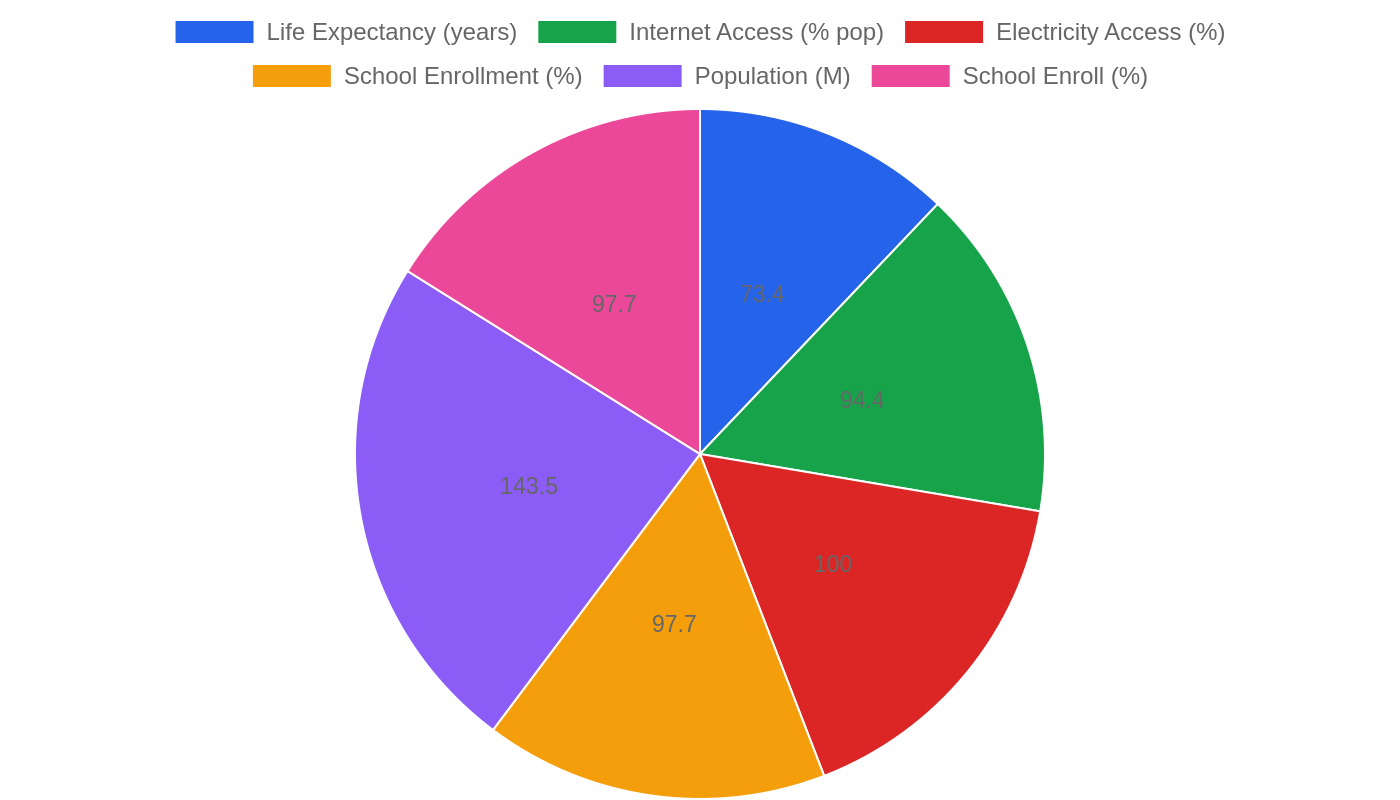
The population base of over 143 million people further dilutes the impact of high per-capita metrics, creating a diverse landscape where urban centers may experience different cost dynamics than rural regions.
Investment & Business Climate: Tech and Finance Lead the Way
The corporate landscape in Russia is dominated by a mix of legacy financial institutions and emerging technology firms, signaling a shift toward digital resilience and domestic substitution. Major players such as Alfa Group and its subsidiary Alfa-Bank remain central to the financial ecosystem, providing critical banking services to both individuals and corporations.
In the technology sector, companies like 1C Company and Alawar Entertainment highlight Russia’s strength in software development and gaming, industries that have thrived due to reduced foreign competition and increased local demand. Other notable entities include Aeroflot, which continues to serve as the flag carrier despite logistical challenges, and Acron Group, representing the industrial and chemical sectors.
These top companies operate within a framework that requires navigating complex geopolitical sanctions and supply chain disruptions. Investors watching this space should note that success is increasingly tied to domestic market penetration and technological self-sufficiency rather than global integration. The presence of holding companies like Ak Bars Holding suggests a consolidation of assets that provides stability but also reduces market liquidity for external investors.
Safety, Politics & Quality of Life: A Complex Federal Structure
Russia operates under an asymmetric federal republic system with semi-presidential characteristics, where the president holds significant executive power as head of state, while the prime minister leads the government. This political structure creates a multi-party representative democracy on paper, though the concentration of authority in the presidency defines the current governance model.
Regarding safety, specific crime and safety indices are currently listed as N/A, leaving a gap in quantifiable data regarding personal security for expatriates and tourists. However, the political environment is defined by strict federal control and a centralized approach to governance. The quality of life for citizens is influenced heavily by these political structures, with access to services and rights varying across the vast federal territories.
While happiness data is not explicitly provided in the current dataset, the economic indicators suggest a population that is economically active but potentially stressed by inflationary pressures. The lack of clear safety metrics makes it difficult to assess risk levels accurately, requiring caution for those planning long-term stays.
What’s Happening Now: Policy Shifts and Market Realities
In the current climate, Russian policymakers are balancing the need to control inflation with the imperative to sustain employment levels. The low unemployment rate of 2.13% indicates that the labor market is fully utilized, which often precedes wage-driven inflation. As the CPI sits at 8.72%, the central bank faces pressure to adjust interest rates to cool down demand without triggering a recession in the already slowing 1.0% growth environment.
Businesses are adapting by focusing on efficiency and domestic sourcing, as seen in the continued prominence of tech firms like 1C and financial giants like Alfa-Bank. There is a noticeable trend toward economic insularity, with major holdings like Ak Bars consolidating assets to protect against external volatility. Recent developments suggest that the government is prioritizing social stability through employment support, even if it means tolerating higher inflation temporarily.
This delicate balancing act defines the current economic narrative, where survival and adaptation take precedence over aggressive expansion.
The Bottom Line
Russia in 2026 is a country of stark contrasts: high per-capita wealth coexisting with stagnant growth and high inflation. It is a market best watched by investors interested in domestic tech and finance sectors who can navigate regulatory complexities. For economists, it serves as a case study in how tight labor markets can drive inflation even during periods of low overall growth.
The country remains resilient, but its future trajectory depends heavily on how well it manages the internal pressures of cost-of-living increases and political centralization.
Sources & Methodology
This article is authored by Economic Pulse Net for informational and research purposes. Economic Pulse Net sources its data from multilateral institutions, national statistics bureaus, and proprietary databases. All data is believed to be current as of the date of publication.
Published: October 03, 2026 | Category: Research — Russia
Use these signals in your own platform
Economic Pulse publishes its live signal feed through a documented, read-only API. Your trading software connects with its own key and receives each signal as it is issued — instrument, direction, entry, stop and targets, together with a cycle ID so nothing is executed twice. The feed is independent of this website and cannot change it.
Signals are informational only and are not financial advice.