Economic Pulse Net | Sources: World Bank World Development Indicators, Government Sources | 2026
Key Takeaways
– Romania’s economy, valued at over $428 billion by the World Bank, is navigating a complex period of high inflation at 7.19% alongside relatively low unemployment at just under 6%, presenting a classic stagflationary challenge.
– The country’s political system operates as a unitary semi-presidential republic, with a President as head of state and a Prime Minister as head of government, providing structural stability amid economic headwinds.
– Major homegrown companies like Banca Transilvania, Automobile Dacia, and Bitdefender anchor the economy, spanning financial services, manufacturing, and technology sectors.
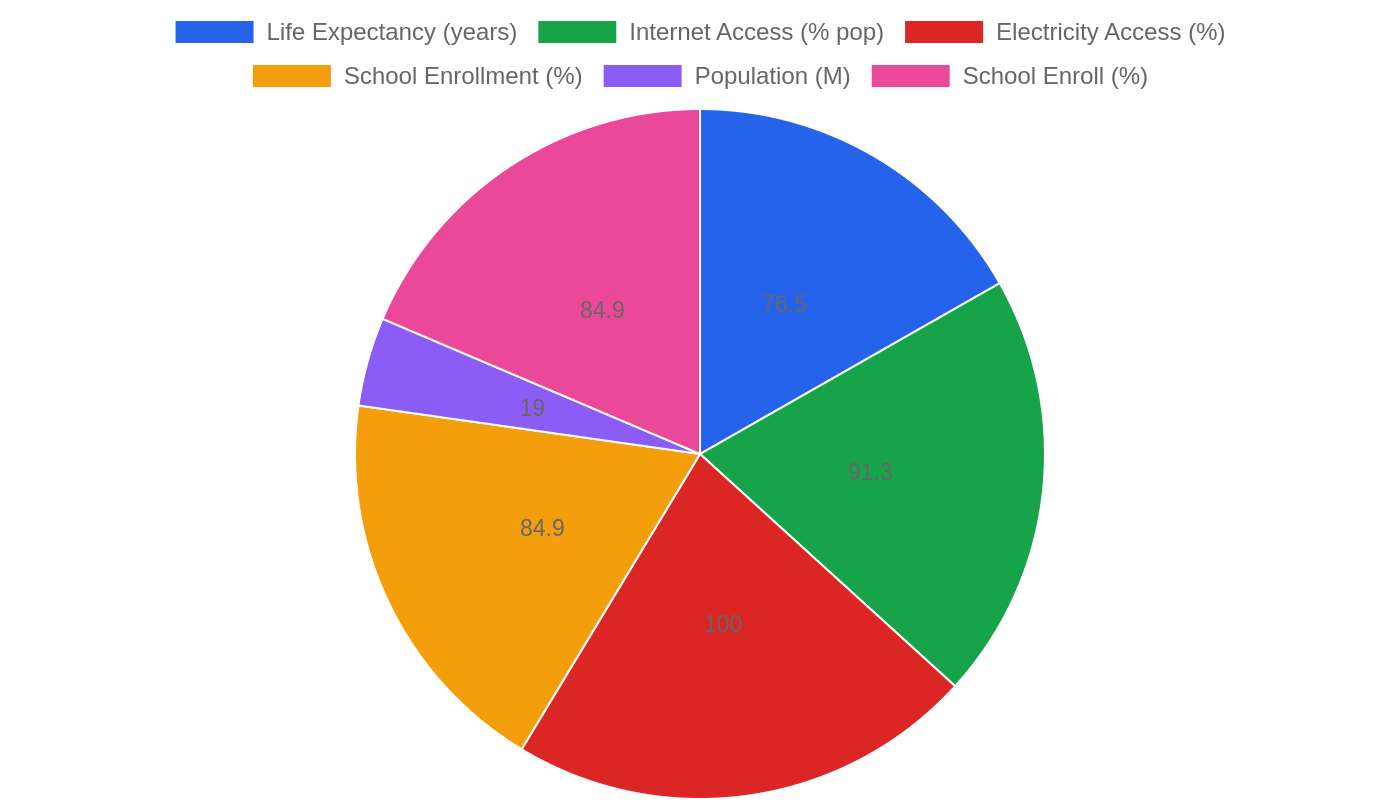
– With a population of just over 19 million, Romania is a mid-sized European economy that has experienced significant transformation since joining the European Union, but current inflation data suggests persistent cost-of-living pressures.
– The country faces a delicate balancing act: maintaining fiscal discipline and attracting investment while protecting households from the erosion of purchasing power caused by elevated inflation.
The Growth Paradox — Low Unemployment, High Inflation, and What It Means
Romania’s latest economic data from the World Bank paints a picture of contradictions. The country’s GDP stands at roughly $428.7 billion, making it one of the larger economies in Central and Eastern Europe. But the headline story is inflation, running at 7.19% — a figure that would raise alarm in most developed economies.
To put this in context, this level of price growth significantly outpaces wage gains for many workers, meaning real purchasing power is being squeezed even as the official unemployment rate sits at a remarkably low 5.99%. That unemployment figure, by the World Bank’s measurement, suggests a labor market that is fundamentally tight. Employers are still hiring, and workers are still relatively scarce.
Yet the high inflation rate indicates that the cost of everything — from food to energy to services — is climbing faster than most households can comfortably absorb.
The paradox here is a familiar one to economists but painful for ordinary Romanians. Low unemployment typically fuels wage growth, which in turn can drive consumer spending and economic expansion. But when inflation is running above 7%, those wage gains can be rendered meaningless. The central bank faces a difficult task: it must cool the economy enough to bring inflation down without tipping the country into recession and causing unemployment to spike.
The World Bank data does not provide a GDP growth rate for the latest period, which itself is telling. It suggests that growth may have slowed or become uncertain, adding another layer of complexity to the policymaking environment. Romania’s main industries — though not specified in the available data — have historically included automotive manufacturing, IT services, energy, and agriculture. These sectors are now operating in an environment where input costs are rising and consumer demand may be softening.
The Cost of Living Squeeze — Housing, Daily Expenses, and Regional Realities
While the World Bank data does not provide specific cost-of-living indices for Romania, the 7.19% inflation figure speaks volumes about what households are experiencing at the supermarket, the pharmacy, and the rental market. In practical terms, inflation at this level means that a basket of goods that cost 100 lei last year now costs over 107 lei. For families already operating on tight budgets, that difference adds up quickly.
Housing costs, which typically consume the largest share of household income in any economy, are likely under particular pressure. Romania’s major cities — Bucharest, Cluj-Napoca, Timișoara, and Iași — have seen significant property price appreciation in recent years, driven by demand from both domestic buyers and foreign investors. Rents in desirable urban areas have followed suit, making the decision between renting and buying increasingly difficult for young professionals and families.
When comparing Romania to its regional peers in Central and Eastern Europe, the inflation picture is concerning but not entirely out of step. Countries across the region have grappled with similar post-pandemic price shocks, supply chain disruptions, and energy cost volatility. However, a 7.19% inflation rate places Romania on the higher end of the spectrum among EU member states.
This means that everyday expenses — groceries, utilities, transportation, and healthcare — are eating into disposable income at a faster rate than in some neighboring economies. For the approximately 19 million Romanians, the cost-of-living challenge is not an abstract statistic. It is the rising price of bread, the higher electricity bill, and the increasing cost of filling up the car. These are the microeconomic realities that shape public sentiment and, ultimately, political outcomes.
Business and Investment Climate — Homegrown Giants and Sectoral Strengths
Romania’s corporate landscape, as reflected in the top companies list, reveals an economy with surprising depth and diversity. Banca Comercială Română and Banca Transilvania dominate the financial sector, providing the credit and banking infrastructure that supports both consumer spending and business investment. Automobile Dacia, a household name across Europe, anchors the manufacturing sector and demonstrates Romania’s integration into global automotive supply chains.
Perhaps most striking is the presence of Bitdefender, a technology company that has achieved global recognition in cybersecurity — a sector that demands high skill, high trust, and continuous innovation. This is not an economy reliant solely on low-cost manufacturing; it has genuine technological heft.
The business environment in Romania has improved significantly over the past two decades, driven by EU membership, legal reforms, and infrastructure investment. Foreign direct investment has flowed into automotive, IT, and energy sectors. However, challenges remain. Corruption, bureaucratic inefficiency, and an uneven judicial system have historically been cited by investors as concerns.
The political landscape, described as a unitary semi-presidential representative democratic republic with an active civil society, provides a framework for accountability. The President serves as head of state and supreme commander of the armed forces, while the Prime Minister, appointed by the President and confirmed by Parliament, runs the executive branch. This dual-executive system can sometimes create friction, but it also provides checks and balances.
For investors, the key question is whether Romania can maintain its trajectory of reform and integration into European markets while managing the inflationary pressures that threaten to undermine economic stability.
Safety, Politics, and Quality of Life — The Social Fabric Under Strain
The World Bank data does not provide a crime index or safety index for Romania, but the country is generally considered safe by European standards, particularly in smaller towns and rural areas. Violent crime is relatively low, though petty theft and scams can be issues in tourist-heavy urban centers. The broader quality-of-life picture is shaped by the economic forces already discussed. High inflation erodes living standards, and when people feel financially insecure, social cohesion can suffer.
The political system, with its active civil society, provides avenues for expression and protest, but it also means that public dissatisfaction can translate quickly into political pressure on the government.
Romania’s political landscape is structured and stable on paper, but like many democracies, it is subject to the ebb and flow of public opinion. The President’s role in safeguarding constitutional order and representing the country internationally provides a degree of continuity, while the Prime Minister and Parliament handle the day-to-day business of governance. This system has served Romania well through multiple transitions, but it is now being tested by economic stress.
Citizens who feel that their living standards are declining may become disillusioned with mainstream parties, opening the door to populist or nationalist alternatives. The quality of life in Romania is not just about GDP or inflation numbers; it is about whether people feel they can afford a decent home, access healthcare, educate their children, and plan for the future. Those fundamentals are currently under pressure.
What’s Happening Now — Inflation, Policy Responses, and the Road Ahead
The most pressing issue for Romania right now is the 7.19% inflation rate reported by the World Bank. This is not a historical artifact; it is a live indicator that shapes every economic decision in the country. The central bank has likely been engaged in a tightening cycle, raising interest rates to try to cool demand and bring price growth under control. But monetary policy is a blunt instrument, and its effects take time to filter through the economy.
Meanwhile, the government faces pressure to provide relief to households — through subsidies, tax cuts, or social spending — without blowing out the fiscal deficit. This is a delicate balancing act, and the outcome will determine Romania’s economic trajectory for the next several years.
On the political front, the unitary semi-presidential system continues to function, but the economic headwinds are creating friction. The President, as head of state, and the Prime Minister, as head of government, must coordinate their responses to the inflation crisis. Disagreements over fiscal policy, energy subsidies, or relations with the European Union could create instability. At the same time, Romania’s active civil society is unlikely to remain silent if living standards continue to deteriorate.
Protests, strikes, or political mobilizations are possible if the public perceives that the government is not acting effectively. For businesses, the immediate priority is managing costs and maintaining access to credit. For households, it is stretching the lei further. For investors, it is watching to see whether Romania can navigate this period of high inflation without derailing its long-term growth story.
The Bottom Line
Romania is a country with genuine economic strengths — a skilled workforce, strategic location, and globally competitive companies — but it is currently caught in a high-inflation trap that threatens to undermine those advantages. Investors should watch Romania for opportunities in technology, manufacturing, and financial services, but they must also account for the risks posed by persistent price pressures and potential political fallout.
For policymakers and analysts, Romania offers a case study in how mid-sized European economies manage the tension between growth and stability. The next 12 to 18 months will be decisive in determining whether the country emerges stronger or faces a prolonged period of economic adjustment.
Sources & Methodology
This article is authored by Economic Pulse Net for informational and research purposes. Economic Pulse Net sources its data from multilateral institutions, national statistics bureaus, and proprietary databases. All data is believed to be current as of the date of publication.
Published: July 17, 2026 | Category: Research — Romania
Use these signals in your own platform
Economic Pulse publishes its live signal feed through a documented, read-only API. Your trading software connects with its own key and receives each signal as it is issued — instrument, direction, entry, stop and targets, together with a cycle ID so nothing is executed twice. The feed is independent of this website and cannot change it.
Signals are informational only and are not financial advice.