Economic Pulse Net | Sources: World Bank World Development Indicators, Government Sources | 2026
🇷🇴 Romania 2026 — Europe’s Quiet Engine Sputters as Inflation Bites
Key Takeaways
– Romania’s economy is barely moving, with the World Bank putting GDP growth at just 0.68% for 2025 — a near-stall for a country that once ranked among the EU’s fastest catch-up economies.
– Inflation remains stubbornly high at 7.19%, more than triple the European Central Bank’s 2% target, squeezing household budgets and complicating the central bank’s room to manoeuvre.
– Unemployment sits at a relatively contained 5.99%, but the headline figure masks deep regional divides and the persistent emigration of Romania’s working-age population.
– With GDP per capita (PPP) at roughly $50,895 and GNI per capita at $20,190, Romania remains a middle-income European economy with real convergence gains — but the gap with Western Europe is still wide.
– A dense corporate landscape spanning banking, automotive, technology and consumer goods gives Romania a diversified base, yet the stagnation in growth suggests the momentum has cooled.
A Near-Stall Economy: When 0.68% Growth Is the Headline
Romania’s most striking economic fact in 2025 is not a crisis — it is the absence of momentum. The World Bank pegs GDP growth at just 0.678%, a figure that would be unremarkable in a mature Western European economy but is jarring for a country that spent much of the past two decades posting some of the EU’s strongest expansion rates.
When growth falls below 1%, an economy is essentially treading water: it is not shrinking, but it is not generating the new jobs, wage gains and fiscal revenues that a catch-up economy needs to close the gap with richer neighbours.
The total economy, measured by GDP in current US dollars, stands at approximately $428.7 billion — a substantial size by regional standards, reflecting Romania’s status as one of the larger economies in Central and Eastern Europe. Yet the composition of that output matters. The country’s corporate roster, as reflected in its leading firms, is heavily weighted toward consumer-facing sectors: Automobile Dacia and Arctic S.A.
in consumer goods, Banca Transilvania and Banca Comercială Română in financials, and Adevărul Holding and Angst in consumer services. This is the profile of an economy driven by domestic consumption and manufacturing for export — sectors that are acutely sensitive to inflation and to demand conditions in Western Europe.
And inflation is the central problem. At 7.189%, Romania’s consumer price index is running at a pace that erodes real incomes, discourages saving and forces the central bank to keep monetary conditions tighter than growth would otherwise warrant. For a household earning an average wage, a 7% rise in prices is not an abstraction — it is the difference between making rent and falling behind.
The combination of near-zero growth and high inflation is the classic “stagflation-lite” trap: painful for households, awkward for policymakers, and corrosive to business confidence.
Unemployment at 5.992% offers some consolation. That is a moderate rate by European standards, and it suggests the labour market has not collapsed despite the growth slowdown. But headline unemployment in Romania has long understated the true picture, because millions of working-age Romanians have emigrated to Italy, Spain, Germany and the UK over the past two decades.
The people who left are not counted as unemployed — they are simply gone, which flatters the jobless rate while shrinking the tax base and the domestic consumer market.
The Cost of Living Squeeze: Paying More for Less
The single most important number for Romanian households right now is the 7.189% inflation rate reported by the World Bank. That figure tells you that the cost of everyday life — food, utilities, transport, rent — is rising substantially faster than most wages. In practice, this means real disposable income is falling for many families, particularly those on fixed incomes or working in sectors where pay rises have lagged price growth.
Housing is where the squeeze is felt most acutely. Romania has one of the highest home-ownership rates in Europe, a legacy of the post-communist privatisation of state housing, but that statistic hides a stark urban-rural divide.
In Bucharest, Cluj-Napoca and Timișoara — the country’s economic engines — rents have risen sharply as young professionals cluster in a handful of dynamic cities, while wages in the capital region, though higher than the national average, have not kept pace with property price inflation. For a young graduate earning a typical urban salary, the arithmetic of rent, utilities and food leaves little room for savings.
Compared with regional peers such as Poland, Hungary or Bulgaria, Romania’s cost of living is generally lower — but so are its wages. GNI per capita of $20,190 (Atlas method) places Romania well below the EU average, even as its GDP per capita on a purchasing-power-parity basis, at $50,895, looks considerably healthier.
That gap between the two measures is the story of Romanian living standards: when you adjust for what money actually buys inside the country, Romanians are better off than the raw income figures suggest — but they are still catching up, and inflation is making that catch-up harder.
Investment and Business: A Diversified but Cautious Landscape
Romania’s corporate map is more varied than many investors assume. The presence of Bitdefender, a globally recognised cybersecurity firm, signals a genuine technology sector with export potential — a rare bright spot in a region where tech ecosystems are still maturing. Antibiotice Iași gives the country a foothold in healthcare and pharmaceuticals, while Apulum and Arctic S.A. represent the consumer-goods manufacturing base that has attracted significant foreign investment over the years.
Automobile Dacia, owned by France’s Renault, remains the flagship of Romanian industry and a major exporter.
The financial sector is anchored by two large domestic banks, Banca Transilvania and Banca Comercială Română, which between them dominate retail and corporate lending. A concentrated banking sector can be a source of stability, but it also means credit conditions are shaped by a small number of institutions — and when inflation is high and growth is weak, banks tend to tighten lending, which in turn dampens business investment.
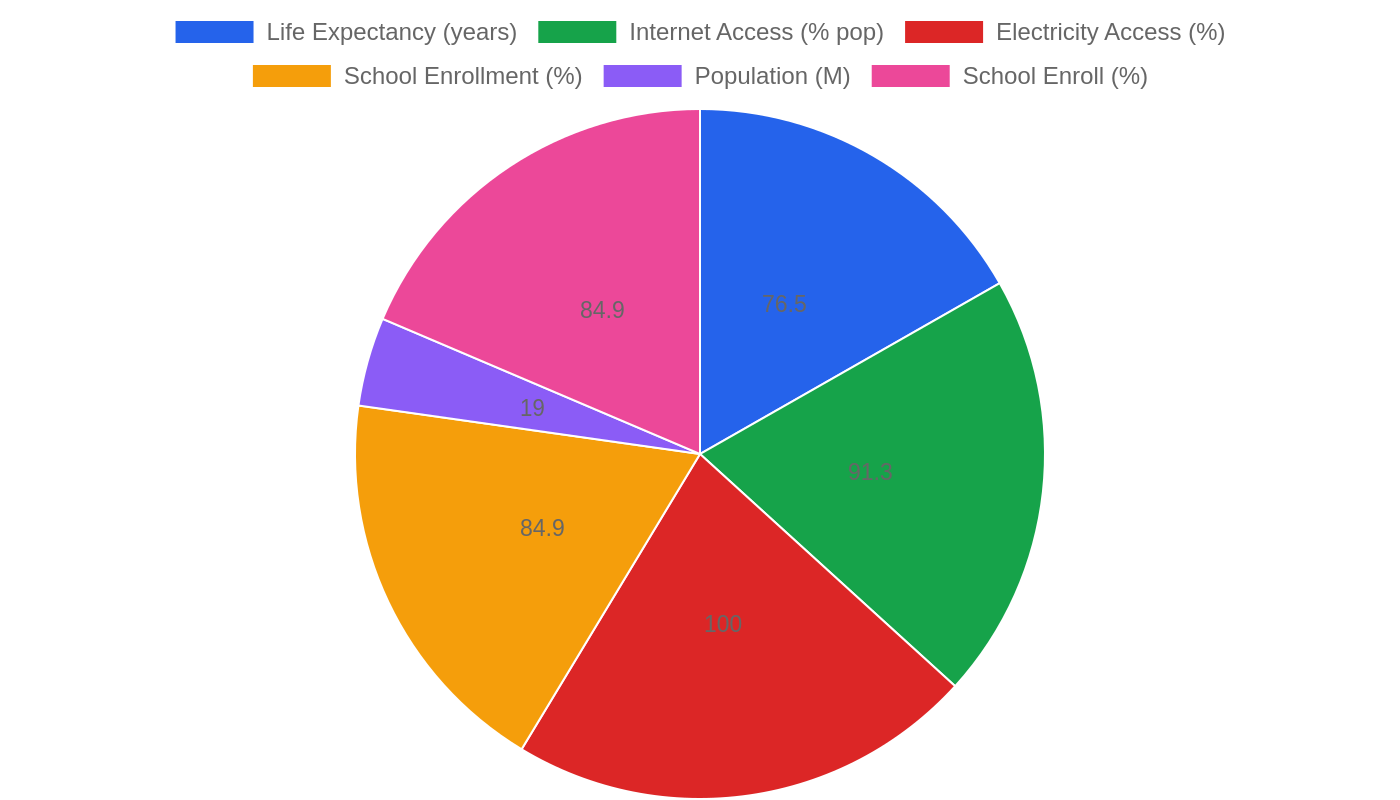
The broader investment climate is caught between two forces. On one hand, Romania’s EU membership, its large domestic market of roughly 19 million people, and its relatively low labour costs make it attractive for manufacturing and services outsourcing. On the other, the 0.68% growth rate, 7.19% inflation and the uncertainty that comes with a semi-presidential political system in which the president and prime minister can sometimes pull in different directions all argue for caution.
Investors watching Romania in 2026 are likely to wait for clearer signs that inflation is falling and growth is returning before committing fresh capital.
Politics, Safety and the Quality-of-Life Equation
Romania is a unitary semi-presidential representative democratic republic — a system in which the president, elected by popular vote, serves as head of state, guardian of constitutional order and supreme commander of the armed forces, while the prime minister, appointed by the president and confirmed by parliament, runs the government.
This dual-executive structure has served Romania since the end of communism, but it also creates the potential for friction between a president and a prime minister from different political camps, which can slow decision-making at precisely the moments when decisive economic policy is needed.
On crime and safety, the data provided does not include a crime index or safety index, so a precise quantitative assessment is not possible here. What can be said is that Romania is a full member of the European Union and NATO, with the institutional and legal framework those memberships require.
For most visitors and residents, daily life in Romanian cities is not characterised by the kind of violent crime that afflicts some other European urban centres — but as with any country, experiences vary by region and neighbourhood, and readers should consult current official travel and safety advisories for the most up-to-date picture.
Quality of life in Romania is best described as a work in progress. The country has made enormous strides since 1989 — joining the EU in 2007, modernising its infrastructure, and building a vibrant civil society. But the combination of high inflation, stagnant growth and the ongoing drain of emigration means that many Romanians still feel the gap between their daily reality and the Western European standard of living they see on television and social media.
That gap is the central political and economic tension of the country today.
What’s Happening Now: Inflation, Stagnation and the Policy Squeeze
The most immediate story in Romania right now is the collision between high inflation and near-zero growth. The World Bank’s 2025 figures — 0.678% GDP growth and 7.189% inflation — describe an economy that is essentially stuck: prices are rising fast, but output is not. For the central bank, this is the worst of both worlds.
Raising interest rates to fight inflation risks pushing an already-weak economy into outright recession; cutting rates to stimulate growth risks letting inflation run even higher and further eroding household purchasing power.
The political system adds another layer of complexity. With a president and a prime minister sharing executive power, any serious anti-inflation or pro-growth package requires coordination between two offices that do not always see eye to eye. In practice, this means policy responses can be slow, partial or overtaken by events — a dynamic that markets and investors watch closely.
On the corporate side, the companies that dominate Romania’s economy are navigating the same squeeze as households. Banks such as Banca Transilvania and Banca Comercială Română must balance the need to protect margins against rising funding costs with the political and social pressure to keep credit flowing to households and businesses. Manufacturers like Automobile Dacia and Arctic S.A. face higher input costs and softer demand in Western European export markets.
Even Bitdefender, Romania’s tech champion, operates in a global market where currency swings and client budgets matter.
The labour market is the quiet pressure point. With unemployment at 5.99% and millions of working-age Romanians abroad, employers in sectors like construction, healthcare and IT report persistent skills shortages. That pushes wages up in some sectors — which feeds inflation — while leaving other regions and industries behind. The result is an economy that is not collapsing, but is not converging either: it is marking time, and time is not on its side.
The Bottom Line
Romania in 2026 is a country of unrealised potential. Its economy is large, diversified and anchored in the EU and NATO; its corporate sector includes genuine international players in automotive, technology and banking; and its GDP per capita on a purchasing-power basis shows that living standards have risen substantially over two decades. But the World Bank’s 2025 data — 0.68% growth, 7.19% inflation, 5.99% unemployment — tells a story of an economy stuck in a low-growth, high-inflation holding pattern.
Who should watch Romania? Long-term investors with an appetite for frontier-market risk and a horizon measured in years rather than quarters; manufacturers looking for a low-cost EU base with a large domestic market; and anyone tracking the broader question of whether Central and Eastern Europe can sustain its convergence with the West.
The answer for Romania will depend less on external factors than on whether its political system can deliver a coherent response to the inflation-growth squeeze — and whether the millions of Romanians who left can be persuaded, one day, to come home.
Sources & Methodology
This article is authored by Economic Pulse Net for informational and research purposes. Economic Pulse Net sources its data from multilateral institutions, national statistics bureaus, and proprietary databases. All data is believed to be current as of the date of publication.
Published: September 23, 2026 | Category: Research — Romania
Use these signals in your own platform
Economic Pulse publishes its live signal feed through a documented, read-only API. Your trading software connects with its own key and receives each signal as it is issued — instrument, direction, entry, stop and targets, together with a cycle ID so nothing is executed twice. The feed is independent of this website and cannot change it.
Signals are informational only and are not financial advice.