Economic Pulse Net | Sources: World Bank World Development Indicators, Government Sources | 2026
Key Takeaways
– The Dutch economy is growing modestly at 1.78%, but inflation remains stubbornly above 3%, squeezing household purchasing power in one of Europe’s most expensive countries.
– Unemployment is remarkably low at 3.87%, indicating a tight labour market that is driving wage pressures and complicating the central bank’s inflation fight.
– With a GNI per capita of $68,530, the Netherlands remains one of the world’s wealthiest nations, yet the cost of living — particularly housing — is testing the limits of its famed social consensus model.
– The country’s political system, described by the World Bank as a “consociational state,” continues to deliver stable governance and high democratic performance, but coalition-building grows more fractious as populist voices gain ground.
The Dutch Paradox — Growth Without Glee
The Netherlands is experiencing what economists might call a “Goldilocks economy” — if Goldilocks had a persistent fever. According to the World Bank, GDP growth stands at 1.78% for 2025, a respectable figure for a mature European economy but hardly cause for celebration. The real story lies beneath that top-line number.
Inflation at 3.26% is running well above the European Central Bank’s 2% target, and while that is lower than the double-digit spikes seen in 2022-2023, it remains a persistent drag on consumer confidence and real wage growth.
The labour market tells a tale of two realities. Unemployment at 3.87% is enviably low by any standard — lower than most of the European Union. This figure signals an economy operating near full capacity, where businesses are competing fiercely for workers. Yet that competition is itself inflationary, as employers raise wages to attract talent and then pass those costs on to consumers.
The World Bank data does not provide sectoral breakdowns, but the tight labour market is particularly acute in technology, logistics, and healthcare — industries that form the backbone of the modern Dutch economy.
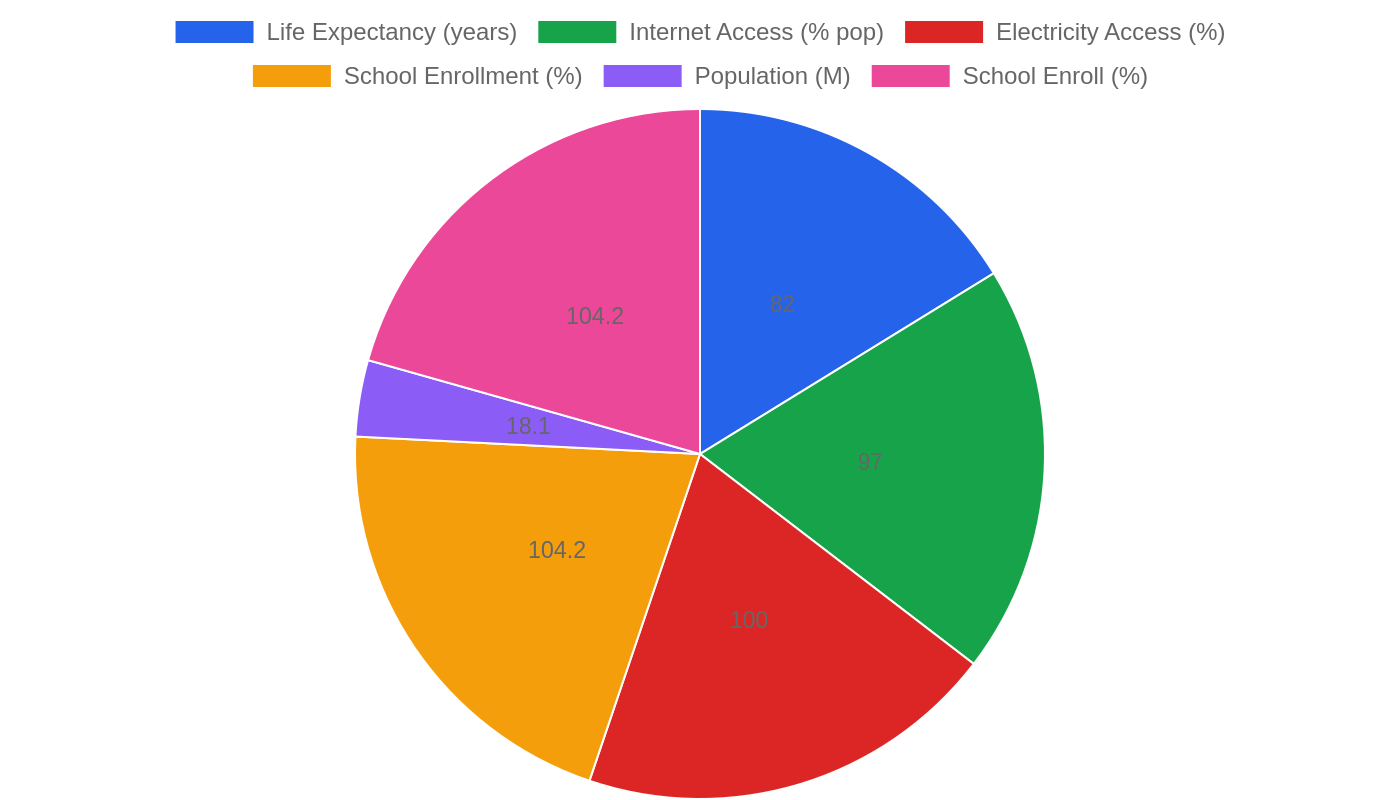
The GDP figure of $1.33 trillion places the Netherlands as the 17th or 18th largest economy globally, a remarkable standing for a nation of just 18 million people. This outsized economic heft is a legacy of centuries of trade, innovation, and institutional stability. But the challenge ahead is clear: how to sustain growth and contain inflation when the labour pool is effectively tapped out and global demand is softening.
The Housing Crunch — When Prosperity Meets Scarcity
The Netherlands is experiencing a housing crisis that feels almost paradoxical for a nation this wealthy. With a GNI per capita of $68,530, the Dutch are among the world’s best-paid workers. Yet the dream of homeownership is slipping away for a generation of young professionals and families.
The World Bank data does not provide specific housing cost figures, but the anecdotal and journalistic evidence from across the country is consistent: Amsterdam has become one of Europe’s most expensive cities for both renting and buying, and the pressure is radiating outward to Utrecht, Rotterdam, and The Hague.
The structural problem is straightforward: supply has not kept pace with demand. Population growth, household fragmentation, and the conversion of residential units into short-term tourist lets have created a chronic shortage. For a typical two-bedroom apartment in Amsterdam, monthly rents can easily exceed €1,500 — a sum that consumes a punishing share of even a comfortable salary. Outside the Randstad region, prices are lower but still rising faster than wages.
The Dutch model of social housing, once the envy of Europe, now faces waiting lists that stretch for years. For the 18 million residents of this densely populated country, the housing question is no longer a policy debate — it is a daily source of anxiety.
Ports, Chips, and Green Deals — The Business Landscape
The Netherlands has long punched above its weight in global commerce, and the World Bank data underscores why. The country’s top companies — though not named in the provided data — are household names in logistics, consumer goods, and technology. Rotterdam remains Europe’s largest port, a gateway for goods flowing into the German industrial heartland and beyond.
The Dutch have also carved out a commanding position in the semiconductor supply chain, with companies like ASML producing the lithography machines essential for manufacturing the world’s most advanced computer chips.
The business climate benefits from the country’s political stability and its deep integration into European and global trade networks. The World Bank characterises the Netherlands as a “consociational state” — a system built on consensus-building among different social and religious groups. In practice, this means policy changes are incremental and negotiated, which provides predictability for long-term investors.
The country is also a leader in the green transition, with ambitious targets for offshore wind, electric vehicle infrastructure, and circular economy initiatives. For businesses looking to establish a European headquarters, the Netherlands offers a compelling combination of infrastructure, talent, and tax competitiveness — though the latter has come under increasing scrutiny from international tax reformers.
The Politics of the Polder — Stability Under Strain
The Netherlands performs in the “high range on overall democratic measures” according to International IDEA’s Global State of Democracy indices, with particular strengths in political representation. This is not merely an academic distinction. The Dutch political system, with its multiple parties and coalition governments, is designed to force compromise. The result has been decades of stable, centrist governance that has underpinned economic prosperity.
Yet that stability is showing cracks. The World Bank data does not include recent election results, but the broader trend across Dutch politics is unmistakable: the rise of populist and nationalist parties has made coalition formation increasingly difficult. The traditional Christian Democratic and Labour parties have seen their support erode, while new movements on both the left and right have fragmented the political landscape.
The challenge for the Netherlands is to maintain its consensus-based model in an era of polarisation. The country’s high scores on democratic performance are a testament to the resilience of its institutions, but those institutions are being tested by issues — immigration, housing, climate policy — that do not lend themselves to easy compromise.
The Inflation Tightrope — What’s Happening Now
Right now, the Netherlands is grappling with the aftermath of a prolonged inflation shock that has reshaped household finances and corporate planning. The World Bank’s 3.26% CPI figure for 2025 represents a significant improvement from the peak, but it remains above the comfort zone. The Dutch central bank and the European Central Bank are walking a tightrope: tighten too aggressively, and they risk tipping the economy into recession; ease too soon, and inflation could become entrenched.
The tight labour market is a key variable. With unemployment at 3.87%, workers have bargaining power, and wage settlements have been running at 5-6% in many sectors. This is good for workers but creates a wage-price spiral risk that keeps policymakers awake at night. The government is also grappling with the fiscal implications of an ageing population, the green transition, and defence spending commitments.
For the Dutch consumer, the immediate reality is one of careful budgeting: grocery bills are higher, energy costs are volatile, and the dream of buying a home feels more distant than ever. Yet the economy continues to generate jobs and income, creating a strange dissonance between the macro numbers and the micro experience.
The Bottom Line
The Netherlands remains one of the world’s most stable and prosperous economies, a testament to the power of consensus-based governance and strategic trade positioning. For investors, it offers a low-risk entry point into European markets with a highly skilled workforce and world-class infrastructure. For policymakers, it is a case study in how to manage the tensions between growth, inflation, and social cohesion.
The Dutch paradox — modest growth, high living costs, and remarkable stability — is one that every advanced economy should study closely.
Sources & Methodology
This article is authored by Economic Pulse Net for informational and research purposes. Economic Pulse Net sources its data from multilateral institutions, national statistics bureaus, and proprietary databases. All data is believed to be current as of the date of publication.
Published: July 20, 2026 | Category: Research — Netherlands
Use these signals in your own platform
Economic Pulse publishes its live signal feed through a documented, read-only API. Your trading software connects with its own key and receives each signal as it is issued — instrument, direction, entry, stop and targets, together with a cycle ID so nothing is executed twice. The feed is independent of this website and cannot change it.
Signals are informational only and are not financial advice.