Economic Pulse Net | Sources: World Bank World Development Indicators, Government Sources | 2026
Key Takeaways
– South Sudan’s economic data remains largely unrecorded by major international institutions, reflecting the profound challenges of state-building in a nation scarred by civil war and political instability.
– The financial sector dominates the country’s corporate landscape, with the Bank of South Sudan and numerous commercial banks forming the backbone of formal economic activity.
– A transitional constitution, signed by President Salva Kiir Mayardit on Independence Day in 2011, remains the supreme law of the land, but governance has been repeatedly tested by conflict.
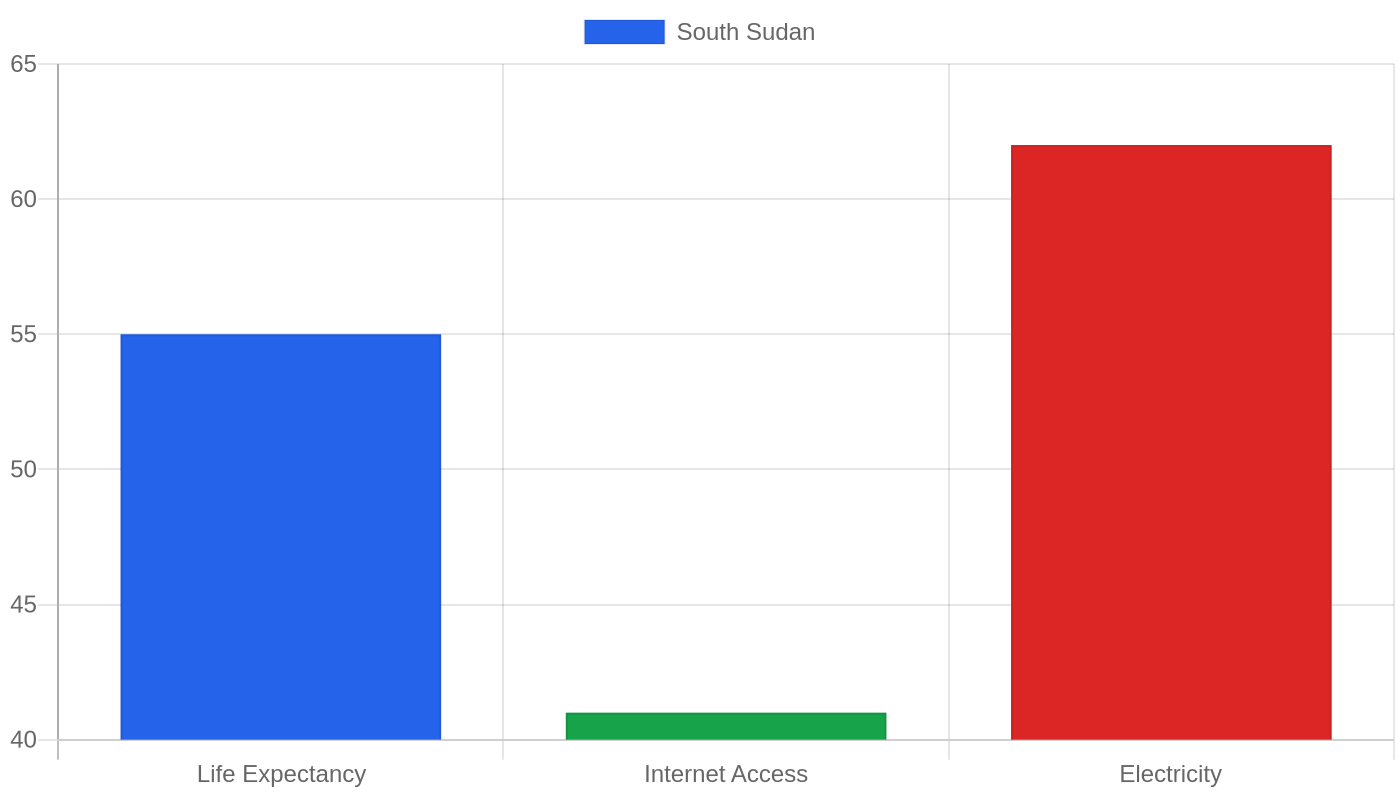
– The absence of reliable macroeconomic indicators—no GDP growth rate, no inflation figure, no unemployment statistic—tells its own story about the difficulty of conducting basic economic administration.
– Aviation services, represented by Feeder Airlines and Southern Star Airlines, suggest a small but functioning transport sector serving a country with limited road infrastructure.
The Data Vacuum — What the Missing Numbers Really Mean
The World Bank’s database for South Sudan is almost entirely empty. No GDP growth rate. No inflation figure. No unemployment statistic. No GDP per capita. No GNI per capita. No population estimate. For an economic journalist, this is not merely an inconvenience—it is the story itself.
When an economy becomes statistically invisible, it signals that the basic machinery of governance has not yet taken hold. The World Bank, which meticulously tracks economic performance for nearly every country on earth, has been unable to compile standard indicators for South Sudan. This is not because the country is too small or too poor—there are nations with smaller populations and lower incomes that produce regular data.
It is because the institutions required to measure economic activity—a functioning statistics bureau, regular census-taking, reliable tax records, consistent border monitoring—have not been established or sustained.
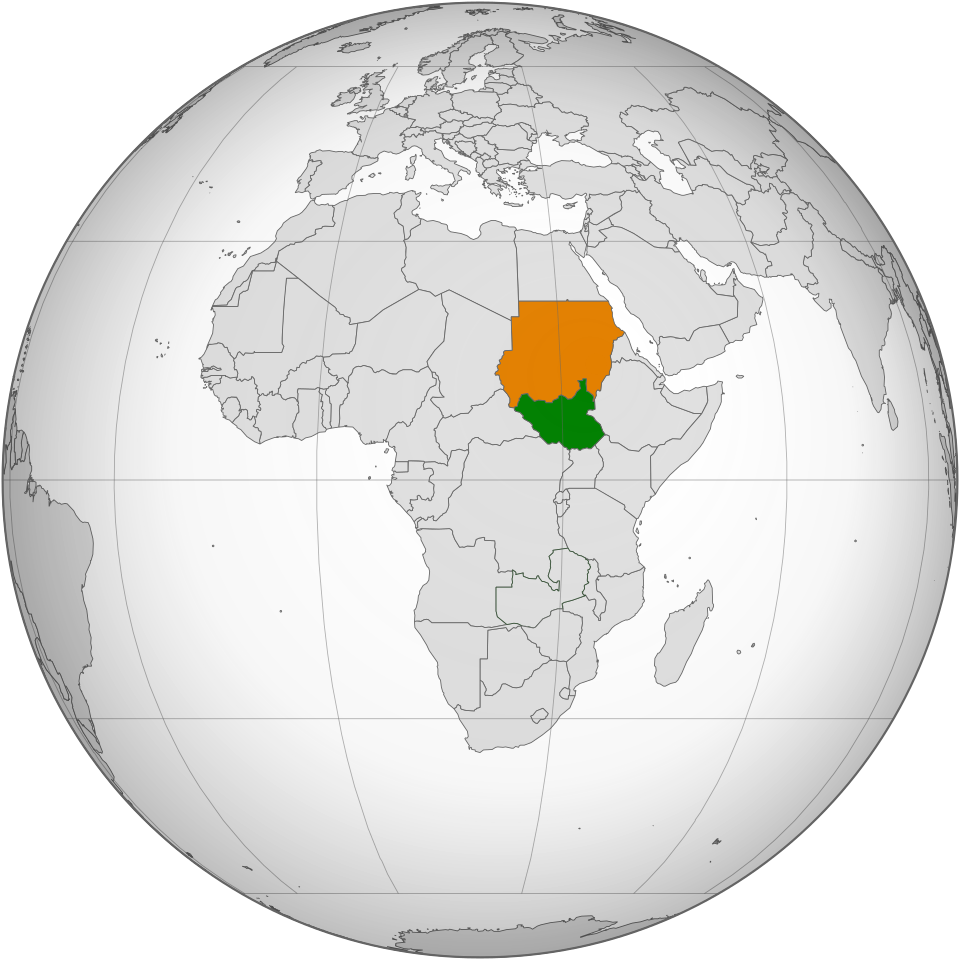
South Sudan gained independence from Sudan in July 2011, making it the world’s youngest nation. The euphoria of statehood quickly gave way to the brutal realities of building a country from scratch. Civil war erupted in 2013, barely two years after independence, and has periodically flared since. Conflict destroys more than lives and infrastructure—it destroys the administrative capacity to count, measure, and plan.
When government officials are focused on survival and security, collecting GDP data falls far down the priority list.
What we do know comes from inference. The corporate landscape is dominated by financial institutions—the Bank of South Sudan, Buffalo Commercial Bank, Cooperative Bank of South Sudan, Equity Bank South Sudan Limited, Ivory Bank, KCB Bank South Sudan Limited, Mountain Trade and Development Bank, and Nile Commercial Bank.
This concentration suggests an economy where banking and finance represent the most visible formal sector, likely serving government payroll, international aid organisations, and a small urban professional class. The presence of two airlines—Feeder Airlines and Southern Star Airlines—hints at a country where air travel is a necessity rather than a luxury, given the absence of paved roads across much of the territory.
The Price of Survival — Living Costs in a Broken Economy
Without official cost-of-living data from the World Bank or national statistics authorities, one must piece together the economic reality facing ordinary South Sudanese from the fragmentary evidence available. The dominance of banks suggests a highly cash-based economy where currency stability is a constant concern. When a country cannot produce an inflation figure, it often means price volatility is so extreme that a single number would be misleading within weeks.
Housing in Juba, the capital, is notoriously expensive relative to local incomes, driven by the presence of international aid workers, United Nations personnel, and diplomats who can pay premium rates. A modest apartment that would cost a few hundred dollars in a stable East African capital can run into thousands of dollars per month in Juba.
This creates a stark two-tier economy: an expatriate and elite class living in fortified compounds with generators and water tanks, and the vast majority of the population surviving in informal settlements with minimal services.
Daily expenses for basic goods—food, cooking fuel, transport—absorb most household income for ordinary South Sudanese. The country imports the vast majority of its consumer goods, from rice to soap to construction materials, because domestic production has never recovered from decades of conflict. Every imported item carries transport costs over poor roads or by expensive air freight, pushing prices far above what neighbouring countries pay.
For a population that is largely subsistence farming, the cash economy remains out of reach for many.
Banking on the Future — Investment in a High-Risk Frontier
The list of South Sudan’s top companies reads like a roll call of financial institutions, and this is no accident. The Bank of South Sudan functions as the central bank, while commercial banks such as Equity Bank South Sudan Limited, KCB Bank South Sudan Limited, and Cooperative Bank of South Sudan represent some of the few functioning formal businesses in the country.
These banks serve a narrow but crucial niche: processing government salaries, facilitating aid organisations’ operations, and providing basic savings accounts for those with enough income to participate in the formal economy.
For an investor considering South Sudan, the risk calculation is extreme but not entirely without logic. The country sits on significant oil reserves—the very resource that made independence economically viable. Before the civil war disrupted production, oil accounted for virtually all government revenue and nearly all exports. The potential for a post-conflict oil boom remains, but it requires security guarantees, infrastructure rehabilitation, and political stability that have proven elusive.
The aviation sector, represented by Feeder Airlines and Southern Star Airlines, points to another investment niche. In a country where roads are impassable for months during the rainy season and where landmines remain a hazard, air transport is not a luxury—it is a lifeline. Airlines that can operate safely and reliably in this environment serve a captive market of aid organisations, government officials, and business travellers willing to pay premium fares.
The business environment, however, remains extraordinarily challenging. The transitional constitution signed by President Salva Kiir Mayardit on Independence Day provides a legal framework, but rule of law is weak, contracts are difficult to enforce, and corruption is endemic. Foreign investors typically require political risk insurance and a very long time horizon to consider committing capital.
The Politics of Survival — Governance Under the Transitional Constitution
The political landscape of South Sudan is defined by the transitional constitution that the now-defunct Southern Sudan Legislative Assembly ratified shortly before independence on 9 July 2011. President Salva Kiir Mayardit signed the document on Independence Day, making it the supreme law of the land, superseding the Interim Constitution of 2005. This constitution was meant to be temporary—a bridge to a permanent governing document that would be drafted through an inclusive national process.
That permanent constitution has never materialised. More than a decade later, South Sudan still operates under a transitional framework, with power concentrated in the presidency and the institutions of government frequently disrupted by internal conflict. The political settlement that ended the civil war in 2018 with a power-sharing agreement between President Kiir and opposition leader Riek Machar has held, but barely.
Violence continues at local levels, and the implementation of key provisions—including security sector reform and constitutional drafting—remains incomplete.
The absence of crime and safety indices from international databases is itself revealing. When an organisation like the World Bank cannot produce a crime index for a country, it usually means that police reporting systems are non-functional, that large areas are outside government control, or that the distinction between political violence and criminal activity is impossible to draw. South Sudan likely suffers from all three conditions.
Quality of life for the average South Sudanese is among the lowest in the world by any measure. The United Nations has repeatedly warned of famine conditions, massive displacement, and humanitarian catastrophe. Yet the country endures, its people displaying remarkable resilience in the face of state failure. The informal economy—subsistence farming, petty trade, cross-border commerce—keeps millions alive where the formal economy has collapsed.
The Present Tense — A Nation Waiting for Its Next Chapter
Right now, South Sudan exists in a state of suspended animation. The peace agreement that ended the worst of the civil war has not translated into economic recovery. Oil production, which once provided the government with billions of dollars in revenue, remains below capacity due to damaged infrastructure, technical problems, and periodic disruptions. The government continues to rely on borrowing from the Bank of South Sudan to pay salaries, a practice that fuels inflation and currency depreciation.
The international community remains deeply engaged but increasingly frustrated. Aid organisations continue to deliver life-saving assistance to millions of South Sudanese, but donor fatigue is real. The United Nations peacekeeping mission, one of the largest and most expensive in the world, maintains a presence but has been unable to prevent recurring violence. There is no clear roadmap for transitioning from humanitarian dependency to self-sustaining development.
The corporate sector, dominated by banks and airlines, waits for a signal that the country is ready to move beyond survival mode. Equity Bank South Sudan Limited and KCB Bank South Sudan Limited have the backing of major regional banking groups, giving them capital and expertise that local institutions lack. But even these well-capitalised banks cannot lend aggressively in an environment where the rule of law is uncertain and the economy is dominated by a single volatile resource.
For the people of South Sudan, daily life continues with a patience that outsiders find difficult to comprehend. Markets operate, children go to school where schools exist, and families find ways to feed themselves. The country that was born with such hope in 2011 has not fulfilled its promise, but it has not disappeared either. It remains, stubbornly, a nation in formation.
The Bottom Line
South Sudan is a country for those who take the very long view—investors and policymakers willing to accept extreme risk for the possibility of extraordinary reward if peace and stability ever take hold. The oil reserves are real, the need for infrastructure is immense, and the human capital of a young population is waiting to be unleashed. But for now, the absence of basic economic data is the most honest indicator of the country’s condition.
Watch South Sudan not for what it is today, but for what it might become if its people ever get the chance to build the nation they fought for.
Sources & Methodology
This article is authored by Economic Pulse Net for informational and research purposes. Economic Pulse Net sources its data from multilateral institutions, national statistics bureaus, and proprietary databases. All data is believed to be current as of the date of publication.
Published: July 20, 2026 | Category: Research — South Sudan
Use these signals in your own platform
Economic Pulse publishes its live signal feed through a documented, read-only API. Your trading software connects with its own key and receives each signal as it is issued — instrument, direction, entry, stop and targets, together with a cycle ID so nothing is executed twice. The feed is independent of this website and cannot change it.
Signals are informational only and are not financial advice.