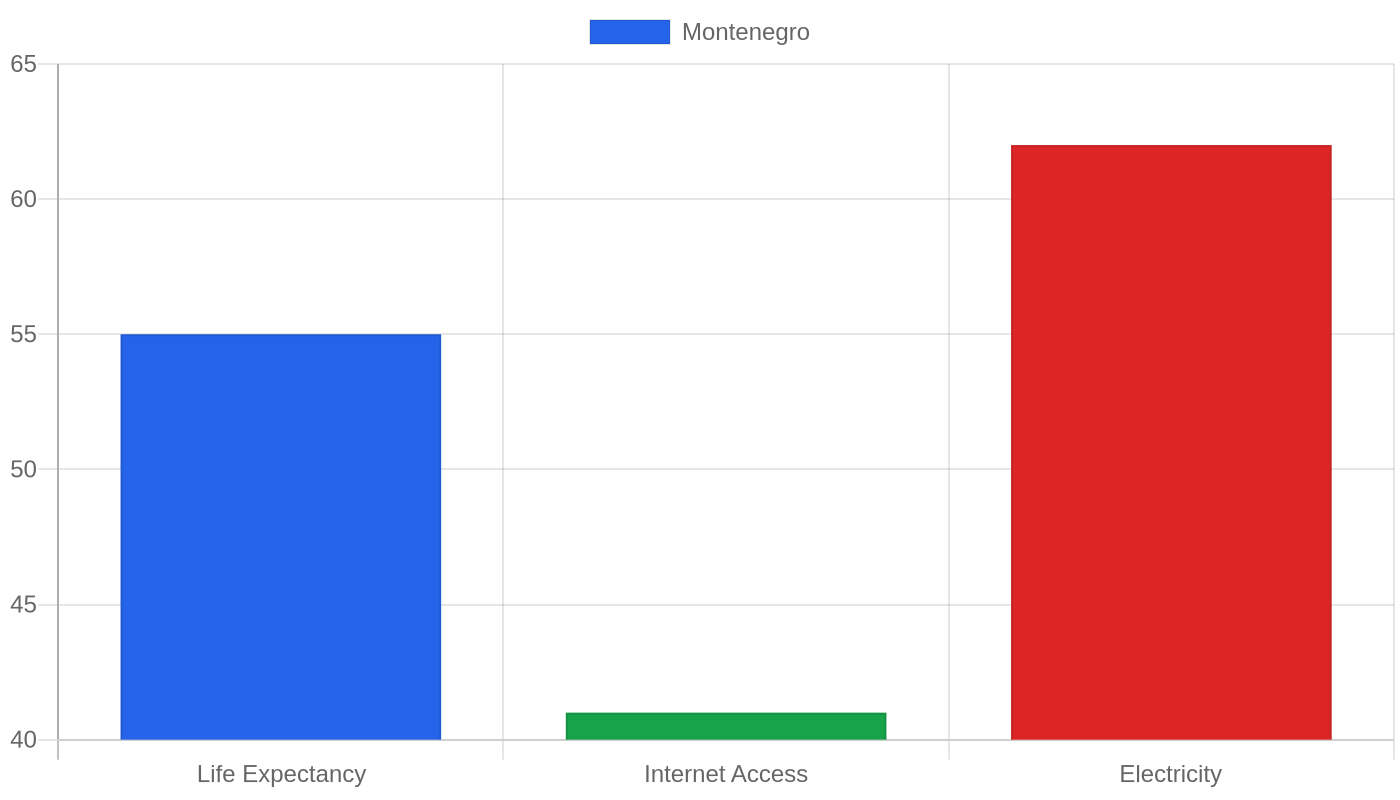
Economic Pulse Net | Sources: World Bank World Development Indicators, Government Sources | 2026
Key Takeaways
– Montenegro operates as a parliamentary democratic republic with a codified constitution that enshrines it as a “civic, democratic, ecological state of social justice” — a unique identity in the Western Balkans.
– The economy remains anchored by legacy industries like aluminium production and tourism, with state-owned utilities and financial institutions dominating the corporate landscape.
– Political stability is underpinned by a multi-party system, though the country’s small size and open economy make it vulnerable to external shocks.
– Cost of living and safety data remain opaque, but the country’s strategic Adriatic position and EU candidate status continue to draw investor attention.
The Economy: Between Aluminium and Adriatic Ambitions
Montenegro’s economic story is one of transition and potential, yet the most recent World Bank data presents a frustratingly incomplete picture. With GDP growth, inflation, unemployment, and GDP per capita all listed as unavailable, analysts must rely on structural observation rather than precise metrics. What is clear is that Montenegro’s economy has historically been shaped by two dominant forces: heavy industry and tourism.
The presence of Aluminium Plant Podgorica among the top companies signals the enduring weight of basic materials in the national economy. This smelter, a relic of the Yugoslav era, has been both a source of export revenue and a persistent environmental challenge. Alongside it, Elektroprivreda Crne Gore (the state power utility) and Crnogorski Elektroprenosni Sistem (the grid operator) underscore the centrality of energy — particularly hydropower — to Montenegro’s industrial base.
The World Bank’s classification of the country as an “ecological state” in its constitution creates an inherent tension between industrial expansion and environmental protection.
On the services side, Budvanska Rivijera and Di Air reflect the tourism and aviation sectors that have become Montenegro’s most visible economic drivers. The Adriatic coastline, with its medieval towns and developing resort infrastructure, draws visitors from across Europe and beyond. Yet the presence of Montenegro Airlines among the top companies — a carrier that has faced repeated financial difficulties — hints at the fragility of this service economy.
Without inflation or employment figures from the World Bank, it is impossible to gauge the real wage pressure or labour market tightness, but the mix of state-owned utilities and consumer-facing services suggests an economy still finding its post-transition footing.
Cost of Living: The Price of Paradise
Montenegro’s cost of living presents a paradox familiar to many small, tourism-dependent economies. Housing costs in coastal municipalities like Budva and Kotor have risen sharply in recent years, driven by foreign demand for second homes and short-term rental properties. The gap between renting and buying is significant: purchasing property in prime locations often requires capital from outside the country, while rental markets cater increasingly to seasonal workers and digital nomads.
Daily expenses for food, transport, and utilities are generally lower than in Western Europe but higher than in neighbouring Balkan countries, reflecting Montenegro’s reliance on imports and its euroised economy. The country uses the euro as its official currency, which provides stability but removes the ability to devalue for competitiveness. For residents, this means that price levels are pinned to Eurozone trends, even as wages lag significantly behind.
Without specific cost of living indices from the World Bank, one can only observe that the affordability gap between tourist hotspots and inland towns is widening, creating a two-speed Montenegro that challenges social cohesion.
Investment & Business Climate: A Small Market with Big Neighbours
Montenegro’s corporate landscape, as revealed by the top companies list, is dominated by a mix of state-owned enterprises and foreign-owned service providers. The Central Bank of Montenegro, NLB Banka Podgorica, and Jugopetrol Kotor represent the financial and energy trading sectors, while Crnogorski Telekom (part of the Deutsche Telekom group) anchors telecommunications. This concentration in utilities, banking, and basic materials suggests that private sector diversification remains limited.
For investors, Montenegro offers several structural attractions: a strategic location on the Adriatic, EU candidate status, and a relatively liberal tax regime. The country’s small population — though exact figures are unavailable from the World Bank data — means that domestic demand is limited, making export-oriented or tourism-linked investments more viable. The presence of Di Air, a low-cost airline, hints at efforts to boost connectivity and tourism flows.
However, the dominance of state-linked firms in energy and aluminium creates a business environment where political connections matter, and smaller entrepreneurs often face bureaucratic hurdles. The multi-party political system, while democratic, has at times produced coalition governments that struggle to push through structural reforms.
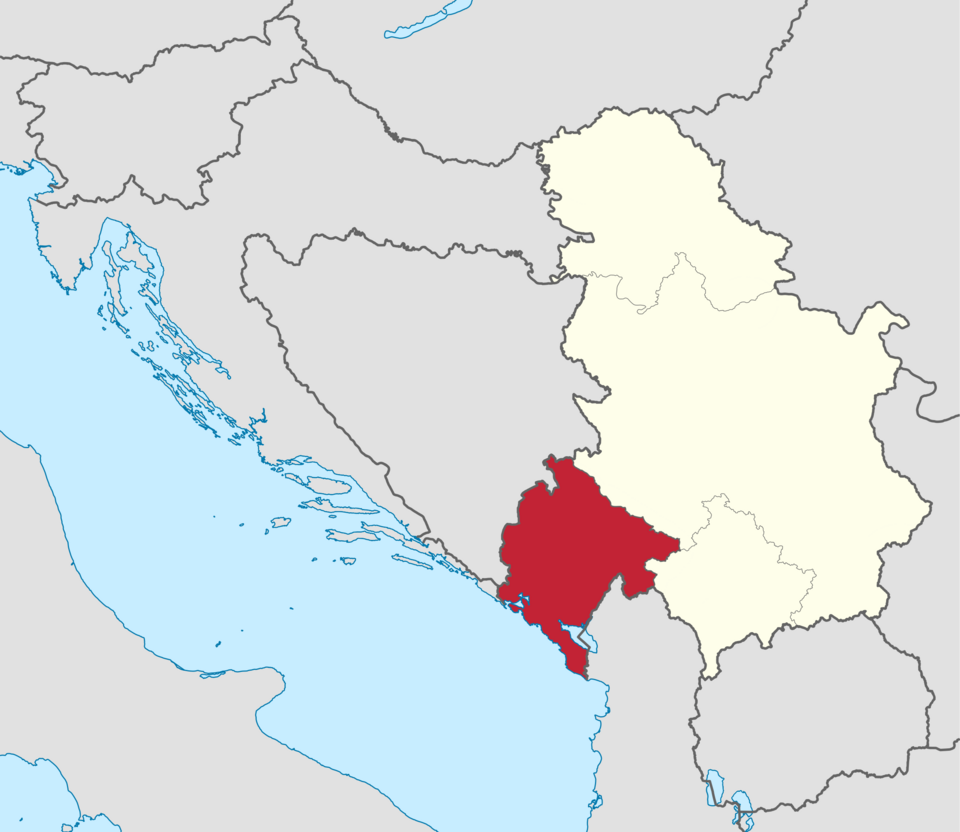
Safety, Politics & Quality of Life: Democracy on the Adriatic
Montenegro’s political identity is unusually explicit for a small nation. The constitution, established in 2007, describes the country as a “civic, democratic, ecological state of social justice, based on the reign of law.” This is not mere rhetoric — it reflects a deliberate post-independence effort to define Montenegro as distinct from its larger neighbours, emphasising civic nationalism over ethnic identity.
The multi-party system has produced competitive elections and regular transfers of power, though politics remains shaped by clan networks and regional loyalties.
The Crime Index and Safety Index are listed as unavailable, which is itself notable. In the absence of official data, anecdotal evidence suggests that Montenegro is generally safe for residents and tourists, with petty crime in tourist areas being the primary concern. Organised crime has been a persistent challenge, with the country sometimes described as a transit route for illicit goods.
The quality of life is heavily dependent on location: coastal residents enjoy Mediterranean amenities and tourism-driven services, while those in the northern mountainous regions face higher poverty rates and limited access to healthcare and education. The “ecological state” designation has spurred some environmental protections, but enforcement remains inconsistent.
What’s Happening Now: The EU Path and Economic Crossroads
Montenegro is currently at a critical juncture in its European Union accession process. As the most advanced of the Western Balkan candidates in terms of negotiating chapters, the country faces pressure to deliver on rule of law reforms, judicial independence, and anti-corruption measures. The political landscape has been volatile in recent years, with coalition governments forming and collapsing, often over issues of national identity and relations with Serbia and Kosovo.
On the economic front, the aluminium plant in Podgorica continues to operate under challenging conditions, with global aluminium prices and energy costs determining its viability. The tourism sector has rebounded strongly following the pandemic, but faces headwinds from inflation in key source markets and competition from other Mediterranean destinations. Montenegro Airlines’ struggles have highlighted the difficulty of maintaining national carrier status in a small, open economy.
Meanwhile, the government has pursued infrastructure projects, including highway construction to connect the coast with the interior and Serbia, though financing has been a persistent issue. The country’s adoption of the euro without being an EU member creates a unique monetary dynamic: it benefits from currency stability but has no control over interest rates or money supply.
The Bottom Line
Montenegro is a country of outsized ambition for its size — a small nation with a big constitutional vision, a strategic location, and a complex relationship with its own past. Investors should watch it for its tourism potential, energy assets, and EU accession trajectory, but must be prepared for political volatility and data gaps that make traditional economic analysis challenging.
For policymakers and geopolitical observers, Montenegro offers a test case of whether a small, multi-ethnic state can succeed as a civic democracy in a region still grappling with nationalist pressures. The data may be incomplete, but the story is far from over.
Sources & Methodology
This article is authored by Economic Pulse Net for informational and research purposes. Economic Pulse Net sources its data from multilateral institutions, national statistics bureaus, and proprietary databases. All data is believed to be current as of the date of publication.
Published: July 20, 2026 | Category: Research — Montenegro
Use these signals in your own platform
Economic Pulse publishes its live signal feed through a documented, read-only API. Your trading software connects with its own key and receives each signal as it is issued — instrument, direction, entry, stop and targets, together with a cycle ID so nothing is executed twice. The feed is independent of this website and cannot change it.
Signals are informational only and are not financial advice.