Economic Pulse Net | Sources: World Bank World Development Indicators, Government Sources | 2026
Key Takeaways
– Luxembourg has cemented its status as a global financial powerhouse, with its economy dominated by a dense concentration of banking and investment institutions that far outweigh its small physical footprint.
– The country operates as a “full democracy” under a constitutional monarchy, with a parliamentary system that has remained remarkably stable since its constitution was originally adopted in 1868.
– Major industrial players like ArcelorMittal anchor the basic materials sector, proving that Luxembourg’s economic story extends well beyond financial services.
– The nation’s political landscape was most recently updated in its constitution on 1 July 2023, reflecting a commitment to modern governance within a centuries-old framework.
– For investors and businesses, Luxembourg offers a unique blend of political stability, financial sophistication, and strategic European positioning.
The Steel and Gold Paradox — Understanding Luxembourg’s Economic Engine
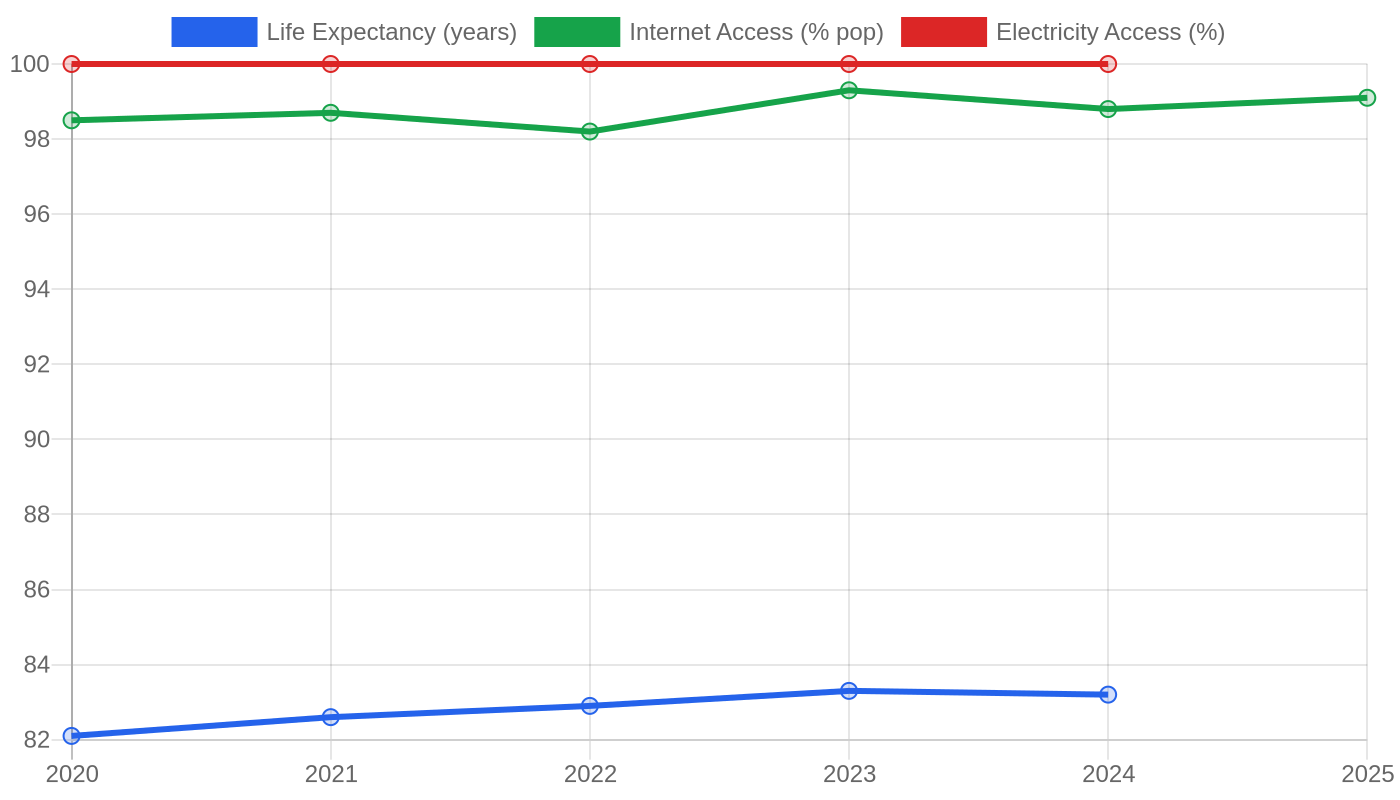
The World Bank’s latest data on Luxembourg presents an intriguing picture of a mature, highly developed economy where traditional growth metrics tell only part of the story. While specific GDP growth figures, inflation rates, and unemployment numbers are not currently available in the latest reporting cycle, the structural composition of Luxembourg’s economy speaks volumes about its enduring strength.
The nation has successfully navigated a remarkable transformation from its industrial roots into a services-led economy, yet it has not abandoned its manufacturing heritage.
The presence of both Arcelor and ArcelorMittal among the country’s top companies underscores the continued importance of basic materials to Luxembourg’s economic identity. ArcelorMittal, one of the world’s largest steel producers, maintains deep ties to the Grand Duchy even as the global steel industry has undergone dramatic consolidation and change.
This dual focus on heavy industry and sophisticated financial services creates a rare economic resilience that few countries of comparable size can match.
The financial sector, however, remains the undisputed crown jewel of Luxembourg’s economy. The concentration of banking institutions—including Advanzia Bank, Banque de Luxembourg, Banque et Caisse d’Épargne de l’État, Banque Raiffeisen, and BGL BNP Paribas—illustrates the depth and breadth of the country’s financial ecosystem.
This is not merely a collection of branch offices; these are substantial, full-service institutions that manage assets, facilitate international transactions, and provide sophisticated investment products to clients across Europe and beyond.
The presence of BIP Investment Partners further demonstrates Luxembourg’s role as a hub for private equity and venture capital, while Artec 3D’s inclusion among the top companies signals a growing technology sector that could diversify the economy even further. The World Bank’s data, while incomplete on traditional metrics, paints a picture of an economy that has deliberately positioned itself at the intersection of European finance and industrial innovation.
Luxembourg’s GDP per capita has historically ranked among the highest globally, a testament to the value generated by its financial services industry relative to its small population base.
The Price of Prestige — Housing and Living Costs in the Grand Duchy
Living in Luxembourg carries a premium that reflects its status as one of Europe’s most prosperous nations. While specific cost of living indices are not available in the current data set, the fundamental economics of the country suggest a high-cost environment driven by limited geographic space and strong demand from a well-compensated workforce.
The country’s small territorial footprint means that housing supply is inherently constrained, creating persistent upward pressure on property prices and rental costs.
The financial sector’s high salaries create a dynamic where housing costs in Luxembourg City and its immediate surroundings are comparable to, and in some cases exceed, those found in larger European financial centers. Commuters from neighboring countries—France, Belgium, and Germany—form a significant portion of the workforce, a pattern that speaks to both the employment opportunities available in Luxembourg and the affordability challenges that push some workers to live across borders.
For those considering a move to Luxembourg, the trade-off is clear: higher living costs in exchange for one of the highest standards of living in Europe. The concentration of well-paying jobs in finance and professional services means that many residents can absorb these costs, but the entry barrier for newcomers—particularly in terms of housing—remains substantial.
The rental market is competitive, and purchasing property requires significant capital or substantial mortgage financing, which the country’s sophisticated banking sector is well-equipped to provide.
Where Capital Meets Opportunity — Investment and Business Climate
Luxembourg’s business environment is defined by its remarkable concentration of financial institutions and its strategic position within the European Union. The top companies list reads like a who’s who of European banking—Advanzia Bank, Banque de Luxembourg, Banque et Caisse d’Épargne de l’État, Banque Raiffeisen, and BGL BNP Paribas all maintain significant operations in the Grand Duchy.
This is not coincidental; Luxembourg has deliberately cultivated a regulatory environment that is attractive to financial institutions, offering stability, expertise, and access to European markets.
The continued presence of ArcelorMittal and Arcelor as major employers demonstrates that Luxembourg has managed to maintain its industrial base even as it has pivoted toward services. This dual-track economy provides a measure of stability that purely service-based economies often lack. The steel industry, while cyclical, remains a significant contributor to exports and employment, and its persistence suggests deep structural advantages in logistics, energy, and skilled labor.
For investors, the sectors to watch are clear: financial services, technology (as evidenced by Artec 3D), and basic materials. The presence of BIP Investment Partners signals a vibrant private equity and venture capital ecosystem, which could help nurture the next generation of Luxembourg-based companies. The country’s political stability, confirmed by its status as a “full democracy,” provides the kind of long-term certainty that institutional investors prize.
The consumer goods sector, represented by Brasserie Nationale, adds another dimension to the economy, reminding observers that Luxembourg is not solely a financial center but also a functioning society with domestic industries that serve local and regional markets. This diversification, while not as pronounced as in larger economies, provides a buffer against sector-specific downturns.
The Politics of Stability — Governance, Safety, and Quality of Life
Luxembourg’s political system is a study in continuity and measured evolution. Described as a “full democracy” with a parliamentary democracy headed by a constitutional monarch, the country has maintained a stable governance framework since its constitution was originally adopted on 17 October 1868. The fact that this constitution was last updated on 1 July 2023 demonstrates a commitment to gradual, deliberate reform rather than radical change.
Executive power in Luxembourg is exercised by the Grand Duke and the cabinet, which includes ministers, ministers delegate, and secretaries of state, all headed by a Prime Minister. This structure, while rooted in 19th-century constitutional design, has proven adaptable enough to govern a modern, prosperous European nation effectively. The stability this system provides is a significant factor in Luxembourg’s attractiveness to international businesses and investors.
While specific crime and safety indices are not available in the current data, Luxembourg’s status as one of Europe’s wealthiest nations and its reputation for orderly governance would suggest a high level of public safety. The country’s small size and homogeneous population contribute to a sense of community and social cohesion that is often absent in larger, more diverse nations.
Quality of life in Luxembourg is generally considered excellent, with high incomes, good public services, and a pleasant living environment. The country’s commitment to maintaining its constitutional framework while adapting to modern challenges—as evidenced by the 2023 constitutional update—suggests a society that values both tradition and progress. For residents, this translates into a predictable, well-managed society where the rule of law is respected and public institutions function effectively.
A Constitutional Evolution — Luxembourg’s Current Moment
The most significant recent development in Luxembourg’s governance is the constitutional update that took effect on 1 July 2023. This was not a cosmetic change but a substantive revision of the country’s supreme law, reflecting a deliberate effort to modernize the framework that has governed the nation since 1868.
The update demonstrates a commitment to keeping political institutions relevant in a rapidly changing world while preserving the fundamental structures that have served the country well for over 150 years.
This constitutional evolution occurs against a backdrop of economic transformation. The continued strength of the financial sector, anchored by major institutions like BGL BNP Paribas and the state-owned Banque et Caisse d’Épargne de l’État, positions Luxembourg to navigate the challenges facing global finance, including digitalization, regulatory pressure, and competition from other financial centers.
The technology sector, represented by Artec 3D, suggests that Luxembourg is actively seeking to diversify its economic base beyond traditional banking and steel. This is a prudent strategy, as it reduces dependence on any single sector and positions the country for long-term growth in emerging industries. The presence of investment firms like BIP Investment Partners indicates that there is capital available to support this diversification.
For observers watching Luxembourg’s trajectory, the key question is whether the country can maintain its economic dynamism while adapting its governance structures to meet contemporary challenges. The 2023 constitutional update suggests a positive answer, indicating a political class that is engaged, forward-looking, and willing to make necessary reforms.
The stability of the political system, combined with the strength of the financial sector and the resilience of the industrial base, gives Luxembourg a solid foundation for continued prosperity.
The Bottom Line
Luxembourg deserves attention not despite its small size but because of what it has achieved within that constraint. For investors, the country offers a stable, well-regulated environment with deep financial expertise and access to European markets. For businesses, it provides a strategic location, a sophisticated workforce, and a government that understands the needs of international commerce.
For observers of European politics, Luxembourg demonstrates how a small nation can maintain relevance and prosperity through adaptability and institutional strength. The Grand Duchy may be small in geography, but its economic and political influence extends far beyond its borders, making it a country worth watching closely in the years ahead.
Sources & Methodology
This article is authored by Economic Pulse Net for informational and research purposes. Economic Pulse Net sources its data from multilateral institutions, national statistics bureaus, and proprietary databases. All data is believed to be current as of the date of publication.
Published: August 08, 2026 | Category: Research — Luxembourg
Use these signals in your own platform
Economic Pulse publishes its live signal feed through a documented, read-only API. Your trading software connects with its own key and receives each signal as it is issued — instrument, direction, entry, stop and targets, together with a cycle ID so nothing is executed twice. The feed is independent of this website and cannot change it.
Signals are informational only and are not financial advice.