Economic Pulse Net | Sources: World Bank World Development Indicators, Government Sources | 2026
Key Takeaways
– Liechtenstein operates a unique tripartite political system that blends absolute monarchy, representative democracy, and direct democracy, giving the reigning prince extraordinary influence over all branches of government.
– Despite its small size, the principality hosts globally significant industrial and financial players, including Hilti, LGT Group, and Ivoclar Vivadent, spanning consumer goods, health care, and financial services.
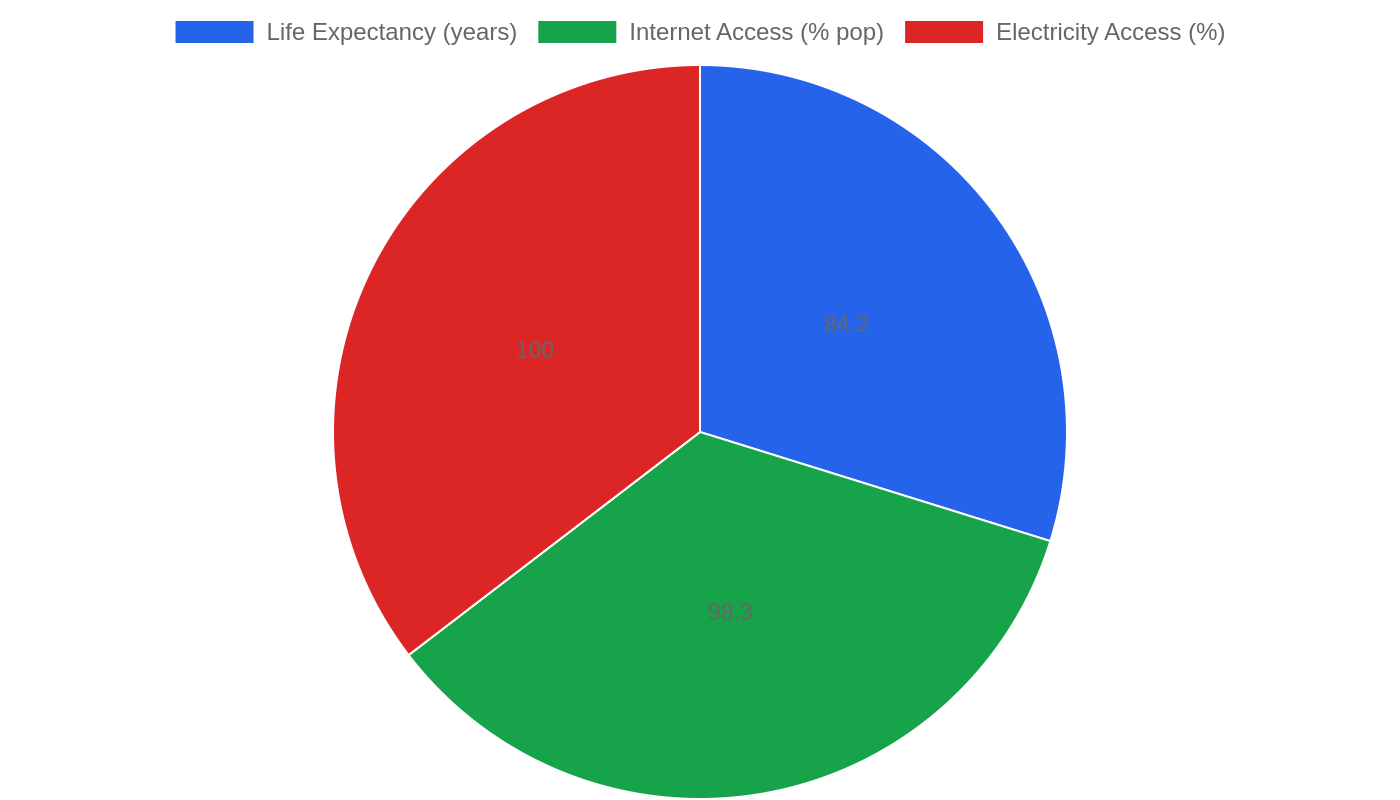
– The country’s economic data remains opaque — the World Bank reports no figures for GDP growth, inflation, unemployment, or population — making Liechtenstein one of Europe’s most statistically elusive economies.
– Major industries cluster around industrials, financials, and consumer goods, with companies like Neutrik and Intamin representing high-value manufacturing and engineering excellence.
– The political landscape is a living experiment in how hereditary power can coexist with citizen-led direct democracy, a model that draws both fascination and scrutiny from political scientists.
The Principality’s Paradox — Growth Without Numbers
Liechtenstein presents a singular challenge to economic journalists: the World Bank, the global authority on macroeconomic data, reports no figures whatsoever for this Alpine microstate. GDP growth, inflation, unemployment, GDP per capita, GNI per capita, and even population — all are recorded as “N/A” by the institution that typically tracks such metrics for every economy on earth. This statistical silence is itself a story.
It speaks to a country that operates with a level of economic discretion rare in modern Europe, a principality that has chosen, for reasons both practical and political, to keep its macroeconomic cards close to its chest.
What can be discerned comes not from aggregate numbers but from the industrial fingerprint the country leaves on global markets. The World Bank data does list Liechtenstein’s main industries, and they tell a tale of precision, quality, and niche dominance. The country is home to Hilti, a global powerhouse in construction and industrial tools; Hilcona, a major player in consumer food goods; and Ivoclar Vivadent, a leader in dental health care products.
These are not small operations serving a local population of perhaps 38,000 — they are multinational enterprises with reach across continents.
The industrials sector dominates, with companies like Intamin (known for roller coasters and amusement rides), Neutrik (audio and video connectors), Liechtenstein Bus, and Liechtensteinische Post forming the backbone of the economy. Financials are represented by the LGT Group, one of Europe’s largest private banking and asset management groups, and the National Bank of Liechtenstein.
This mix suggests an economy built on high-value manufacturing, specialized engineering, and discreet wealth management — a combination that has historically insulated the principality from the volatility that afflicts larger, more transparent economies.
The Price of Paradise — Living in Europe’s Tax Haven
Housing and cost-of-living data for Liechtenstein is as elusive as its GDP figures. The World Bank provides no cost-of-living indices, no rental averages, and no comparison to regional benchmarks. However, the country’s economic profile offers strong inferential clues. Liechtenstein is wedged between Switzerland and Austria, two of Europe’s most expensive countries, and its status as a low-tax jurisdiction has historically attracted wealthy individuals and businesses.
The result is a real estate market that is almost certainly among the most expensive in the Alpine region.
Daily expenses in Liechtenstein likely mirror those of neighboring Swiss cities like Zurich or St. Gallen, where groceries, transportation, and services carry premium price tags. The country uses the Swiss franc, a strong currency that further elevates the cost of living for anyone earning in weaker currencies.
For residents, the trade-off is clear: high costs are offset by one of the lowest tax burdens in Europe, with no capital gains tax and a flat income tax rate that has historically been among the continent’s most favorable. Renting is the norm for most, while buying property remains the preserve of the wealthy, the inherited, or the corporate.
Where Giants Grow Small — Investment and Enterprise in the Microstate
The World Bank’s list of top companies in Liechtenstein reads like a who’s who of niche global champions. Hilti alone generates annual revenues in the billions, employing tens of thousands worldwide while maintaining its headquarters in the principality. The LGT Group, owned by the princely family, manages assets worth hundreds of billions. Ivoclar Vivadent dominates the dental materials market.
These are not companies that happen to be based in Liechtenstein — they are deeply embedded in the country’s legal, fiscal, and cultural fabric.
For investors and entrepreneurs, the business climate is defined by stability, discretion, and access. The principality offers a corporate tax rate that has been competitive even by European standards, though recent international pressure has pushed Liechtenstein toward greater transparency. The financial sector remains the crown jewel, with private banking, wealth management, and insurance forming the core.
The industrials sector offers opportunities in precision manufacturing, while health care and consumer goods provide diversification. The challenge for outside investors is access — Liechtenstein’s companies are often privately held, family-controlled, and not easily penetrated by foreign capital.
The Prince and the People — Safety, Politics, and Alpine Quiet
Liechtenstein’s political system, as described by the World Bank, is a constitutional anomaly: it combines “elements of absolute monarchy, representative democracy, and direct democracy.” The reigning prince retains “extensive executive and legislative powers” and exercises “considerable influence over the daily conduct of politics and across all three branches of government.” At the same time, an elected parliament enacts legislation, and citizens can propose and adopt laws through direct democratic mechanisms.
This hybrid system has produced remarkable political stability — Liechtenstein has not experienced significant political violence or upheaval in modern history.
Crime and safety indices are not provided by the World Bank, but the principality’s reputation is one of extraordinary safety. With a small, homogeneous population and high standards of living, violent crime is virtually nonexistent. The quality of life is bolstered by the Alpine environment, excellent infrastructure, and proximity to Swiss and Austrian cultural and economic centers. The political system, while unusual by Western European standards, enjoys broad popular legitimacy.
The princely family is widely respected, and the direct democratic mechanisms give citizens a real voice. For those who value order, discretion, and stability above all, Liechtenstein offers a quality of life that few other places can match.
The Winds of Change — What’s Happening in Liechtenstein Now
The data provided offers no recent news or live indicators for Liechtenstein, but the absence of information is itself a contemporary reality. The country operates with a level of media discretion that makes it difficult to track policy shifts, economic reforms, or business developments in real time.
What can be inferred is that Liechtenstein is navigating the same pressures facing all European microstates: international demands for tax transparency, the European Union’s push for harmonized financial regulation, and the global shift toward digital currencies and decentralized finance.
The financial sector, long the principality’s economic engine, faces ongoing scrutiny from the OECD and the European Union. Liechtenstein has responded by signing numerous tax information exchange agreements and adopting international standards, but the tension between discretion and transparency remains unresolved. On the industrial side, companies like Hilti and Neutrik continue to innovate in their respective fields, driving exports and maintaining the country’s reputation for precision engineering.
The princely family, through the LGT Group, remains a central economic actor, and any significant policy change would likely require their assent. For now, Liechtenstein continues as it has for decades — quietly prosperous, politically stable, and statistically invisible.
The Bottom Line
Liechtenstein is a country for those who appreciate the value of discretion — in finance, in politics, and in data. It offers a unique model of governance that has delivered stability and prosperity, but at the cost of transparency. Investors should watch Liechtenstein for its industrial champions and its financial sector, while political observers should study it as a living laboratory of hybrid governance.
For the casual reader, the principality remains Europe’s best-kept secret — a tiny state where monarchy and markets have found an enduring, if enigmatic, equilibrium.
Sources & Methodology
This article is authored by Economic Pulse Net for informational and research purposes. Economic Pulse Net sources its data from multilateral institutions, national statistics bureaus, and proprietary databases. All data is believed to be current as of the date of publication.
Published: July 22, 2026 | Category: Research — Liechtenstein
Use these signals in your own platform
Economic Pulse publishes its live signal feed through a documented, read-only API. Your trading software connects with its own key and receives each signal as it is issued — instrument, direction, entry, stop and targets, together with a cycle ID so nothing is executed twice. The feed is independent of this website and cannot change it.
Signals are informational only and are not financial advice.