Economic Pulse Net | Sources: World Bank World Development Indicators, Government Sources | 2026
Key Takeaways
- Kosovo operates as a multi-party parliamentary republic with a constitutionally defined governance structure, yet the practical reach of its institutions remains uneven, particularly in the north.
- The country’s economic data is severely underreported, leaving analysts to rely on qualitative indicators and political developments to gauge its trajectory.
- The Brussels Agreement represents a pivotal, if incomplete, framework for normalising relations and extending state authority.
- Kosovo’s future hinges on its ability to translate political sovereignty into economic self-sufficiency.
- The nation’s demographic profile and regional position make it a critical, if overlooked, actor in Southeast European stability.
The Phantom Economy: Growth Without Numbers
Kosovo presents one of the most puzzling economic pictures in the Western Balkans — not because of what the data shows, but because of what it does not.
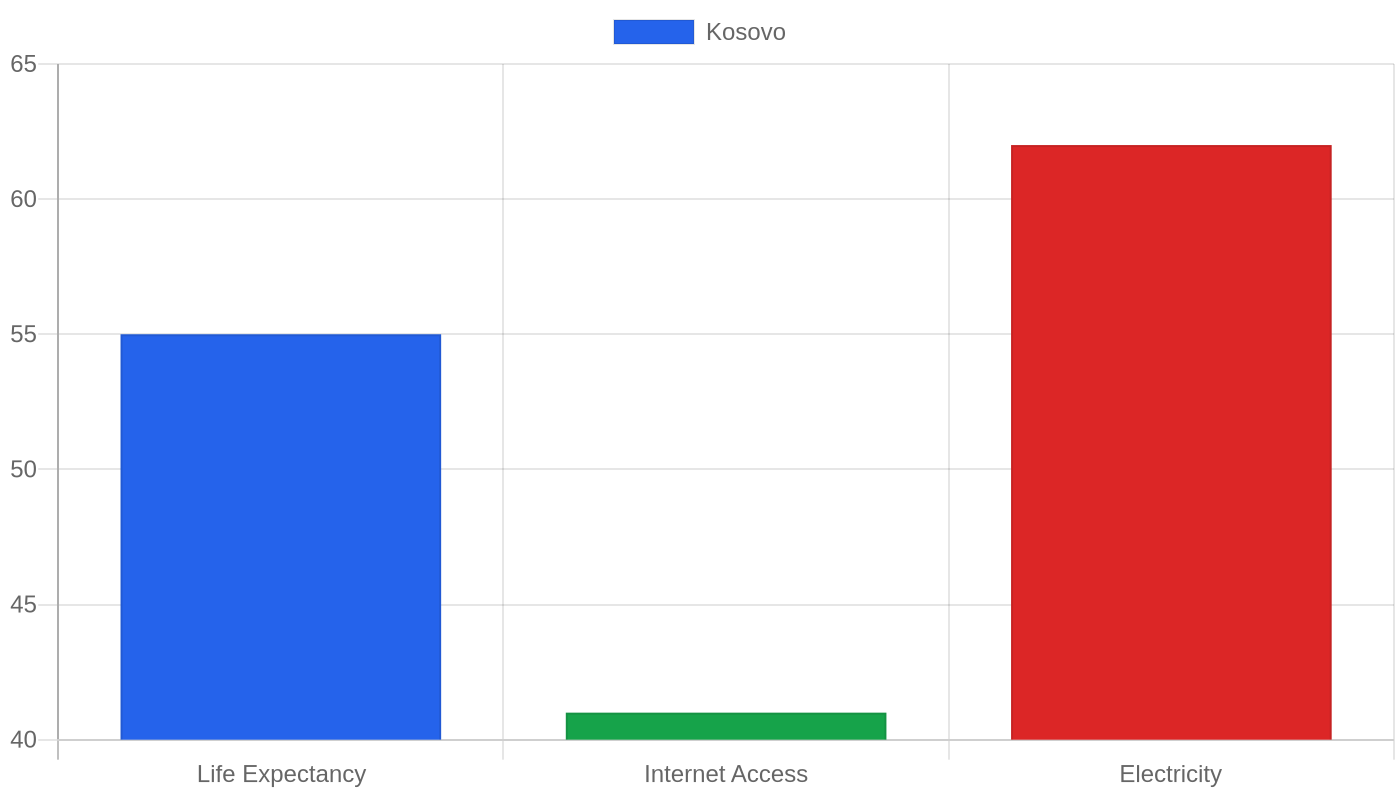
The World Bank’s latest figures list GDP growth, inflation, unemployment, and even GDP per capita as “N/A,” a striking absence for a country that has been independent since 2008.
This statistical vacuum is itself a story.
It speaks to a state still building its institutional capacity, still integrating its data systems, and still struggling to capture the informal economic activity that dominates daily life.
What analysts can piece together is fragmentary.
The economy is widely understood to be service-oriented, with a heavy reliance on remittances from the Kosovar diaspora in Western Europe — money that flows through informal channels and rarely appears in official statistics.
Agriculture remains a significant employer, though largely subsistence-based.
The energy sector, centred on lignite coal reserves, holds theoretical potential but suffers from chronic underinvestment and environmental degradation.
Meanwhile, unemployment has historically been among the highest in Europe, with youth joblessness particularly acute — a problem that fuels emigration and a brain drain that shows no signs of abating.
The absence of reliable inflation data is equally telling.
In a region where price stability is a constant concern, Kosovo’s inability to produce timely consumer price indices suggests a central statistical office stretched thin.
The country uses the euro unilaterally, which provides monetary stability but removes any independent monetary policy lever.
That means fiscal discipline and structural reform must do the heavy lifting — a difficult proposition in a state with limited revenue base and significant social needs.
The numbers may be missing, but the structural challenges are not.
The Housing Puzzle: Between Rent and Remittance
Housing in Kosovo operates in a strange dual reality.
In Pristina, the capital, property prices have climbed steadily, driven by a combination of population concentration, diaspora investment, and a construction boom that has transformed the city’s skyline.
New apartment blocks rise along main boulevards, many funded by Kosovars working abroad who see property as both a homecoming investment and a store of value.
For ordinary workers, however, these prices are increasingly out of reach.
The rental market tells a similar story.
Young professionals and students in Pristina face rents that consume a disproportionate share of income, particularly when formal salaries remain modest.
Outside the capital, the picture shifts dramatically.
In smaller towns and rural areas, housing is often family-owned, passed down through generations, with costs limited to maintenance and utilities.
The divide between urban and rural housing realities is stark, and without reliable cost-of-living indices, the true burden remains a matter of anecdote rather than analysis.
What is clear is that housing, like so much else in Kosovo, is a story of two economies running in parallel — one formal and expensive, one informal and traditional.
The Business Climate: A Market in Formation
Kosovo’s corporate landscape is dominated by small and medium enterprises, many of them family-run.
The top companies that do exist are concentrated in a few sectors: telecommunications, retail, construction, and the early stages of an information technology services industry that has shown surprising dynamism.
The country’s young, multilingual population is its greatest asset — a pool of tech-savvy workers who increasingly find employment with international clients rather than local firms.
The business environment, however, remains challenging.
The World Bank’s “N/A” entries for key economic indicators reflect a broader problem: regulatory opacity, weak rule of law, and a judicial system that struggles with contract enforcement.
Corruption is a persistent complaint among entrepreneurs, and access to finance is limited by a banking sector that prefers collateral-heavy lending to risk-taking.
On the positive side, the government has made digitalisation a priority, and the country’s low corporate tax rate is genuinely competitive.
For investors willing to navigate the complexity, the rewards can be substantial — but patience is not a luxury all can afford.
Safety, Politics, and the Unfinished State
Kosovo’s political landscape is defined by its constitution: a multi-party parliamentary representative democratic republic with legislative, executive, and judicial institutions.
On paper, it is a model of modern governance.
In practice, the state’s reach has been uneven.
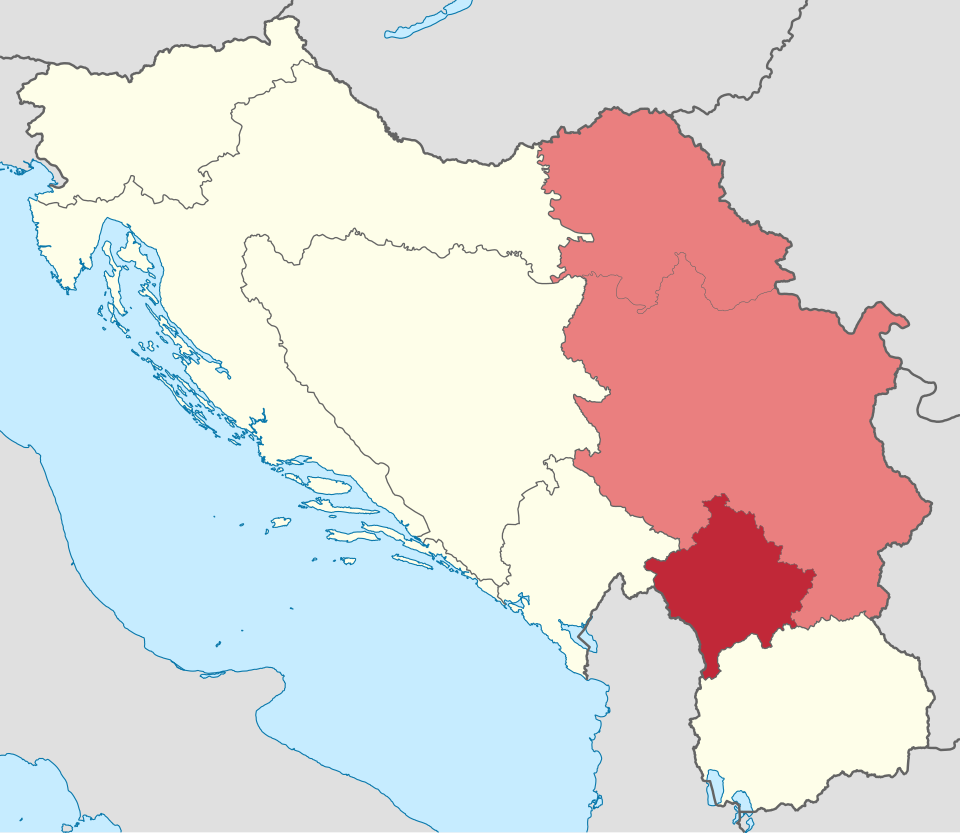
Until the Brussels Agreement, North Kosovo was in large part controlled by Serbian institutions or parallel structures funded by Belgrade.
That agreement, brokered by the European Union, marked a genuine attempt to extend Pristina’s authority across the entire territory — but its implementation has been halting, contested, and incomplete.
Crime and safety indices for Kosovo are listed as unavailable, which is itself a statement.
The country has avoided the large-scale violence that plagued the region in the 1990s, and street crime in Pristina is comparatively low.
But organised crime, smuggling networks, and political corruption remain significant concerns.
For ordinary citizens, the quality of life is shaped more by economic uncertainty than by physical danger.
The justice system is slow, public services are underfunded, and healthcare and education — the foundations of social mobility — are struggling to meet the population’s needs.
Kosovo is a safe country in the narrow sense, but it is not yet a secure one.
The Current Moment: Negotiating the Future
Right now, Kosovo is at a crossroads that is both political and economic.
The Brussels Agreement continues to shape the national conversation, with the government in Pristina pushing for full sovereignty while the Serbian minority in the north remains wary of integration.
The dialogue between the two governments, facilitated by the EU, is the single most important variable for the country’s future — not because it will resolve all tensions, but because it determines the predictability of the environment in which businesses and citizens must plan their lives.
On the economic front, the government is attempting to attract foreign direct investment through targeted incentives and infrastructure projects.
The energy transition is particularly significant: Kosovo’s reliance on coal is both an environmental liability and an opportunity for modernisation, with international partners eyeing renewable energy projects.
The country’s young population is also a double-edged sword — a demographic dividend if jobs can be created, a source of instability if they cannot.
The absence of hard data makes precise assessment impossible, but the direction of travel is clear: Kosovo is trying to build a modern, self-sustaining economy while still completing the basic tasks of statehood.
The Bottom Line
Kosovo is not a country for investors seeking certainty or analysts demanding clean data.
It is a country for those who see potential in unfinished business.
The political framework is fragile but functional, the economy is informal but dynamic, and the population is young and ambitious despite the obstacles.
For diplomats, development economists, and regional strategists, Kosovo offers a live case study in state-building under difficult conditions.
For the Kosovars themselves, the hope is that the next decade will finally deliver what the last one promised: an economy that works for everyone, and a state that reaches every corner of its territory.
The numbers may be missing, but the story is not.
Sources & Methodology
This article is authored by Economic Pulse Net for informational and research purposes.
Economic Pulse Net sources its data from multilateral institutions, national statistics bureaus, and proprietary databases.
All data is believed to be current as of the date of publication. Published: August 30, 2026 |
Category: Research — Kosovo
Use these signals in your own platform
Economic Pulse publishes its live signal feed through a documented, read-only API. Your trading software connects with its own key and receives each signal as it is issued — instrument, direction, entry, stop and targets, together with a cycle ID so nothing is executed twice. The feed is independent of this website and cannot change it.
Signals are informational only and are not financial advice.