Economic Pulse Net | Sources: World Bank World Development Indicators, Government Sources | 2026
Key Takeaways
* Unprecedented Economic Expansion: Ireland is witnessing a staggering GDP growth rate of over 12.3% in 2025, driven by its status as a global hub for multinational corporations and advanced services.
High Income, Moderate Inflation: With one of the world’s highest GDP per capita (PPP) figures at approximately $155,089, the economy remains resilient despite a moderate inflation rate of 2.21%.
Tight Labor Market: Unemployment sits at a healthy 4.63%, indicating a robust demand for labor across key sectors, particularly in technology, finance, and professional services.
Unique Political Geography: The island operates under a complex dual structure, with the Republic of Ireland maintaining independence while sharing an open border and common travel area with Northern Ireland, facilitating seamless cross-border economic activity.
The Engine of Growth: Analyzing Macro Trends
The Irish economy is currently operating at a velocity that defies typical European norms, characterized by a remarkable GDP growth figure of 12.3375990291434% projected for 2025. This explosive expansion suggests that Ireland has successfully positioned itself as a primary gateway for foreign direct investment into the European market, leveraging its English-speaking workforce and favorable corporate tax environment.
When viewed against a total GDP of roughly $721.7 billion USD, these percentages translate to significant absolute gains, reinforcing the nation’s status as a high-income economy. However, this growth is not without its nuances; the inflation rate, measured by CPI at 2.21044788475856%, indicates that while prices are rising, they are doing so at a controlled pace that preserves consumer purchasing power better than many peers.
Furthermore, the labor market reflects this vitality, with unemployment holding steady at 4.632%, a level that signals full employment conditions and tightness in the job market. For investors and policymakers alike, the combination of double-digit growth and low inflation creates a rare “goldilocks” scenario, although it places immense pressure on infrastructure and housing supply to keep pace with such rapid economic acceleration.
Living Costs and Housing Dynamics
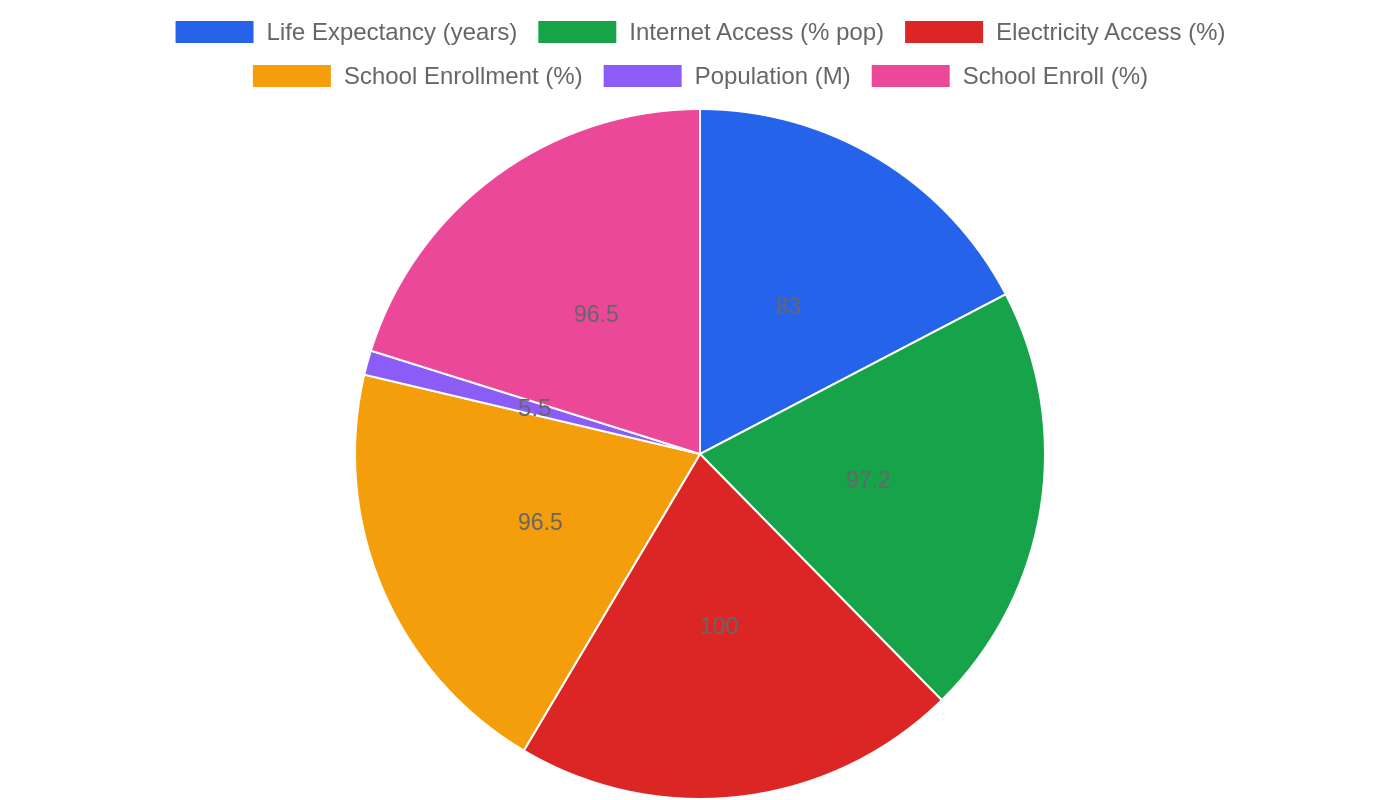
While macroeconomic indicators shine brightly, the lived experience in Ireland is shaped heavily by its demographic density and housing pressures. With a population of just over 5.48 million people concentrated in a relatively small geographic area, the demand for residential property far outstrips supply, driving up both rental and purchase costs significantly above regional averages.
Although specific cost-of-living indices are not provided in the current dataset, the exceptionally high GDP per capita based on purchasing power parity—standing at $155,089.41—suggests that average incomes are substantial enough to absorb higher living expenses, albeit with varying degrees of ease depending on location and sector. Daily expenses, from utilities to groceries, are influenced by the broader EU regulatory framework and local supply chains, but the core challenge remains real estate.
For expatriates and returning nationals, the disparity between high nominal wages and the cost of securing housing represents the most significant friction point in the quality of life equation, requiring careful financial planning to maintain the standard of living implied by national aggregate data.
Investment Climate and Corporate Powerhouses
Ireland’s business landscape is defined by a concentration of high-value service industries and industrial giants that anchor the global supply chain. Major players such as Accenture and AerCap dominate their respective fields, with Accenture contributing significantly to the industrials sector through digital transformation services, while AerCap leads in aircraft leasing, showcasing Ireland’s deep expertise in specialized financial instruments.
The consumer services sector is equally vibrant, featuring homegrown transport leaders like Aer Lingus and Aer Lingus Regional, alongside logistics providers such as Aircoach and The Airporter, which facilitate both tourism and domestic connectivity.
Energy security is managed by entities like Airtricity, ensuring that industrial operations have reliable power sources, while the financial backbone is supported by major institutions like Allied Irish Banks, which provide essential credit facilities to businesses ranging from startups to multinationals. Additionally, state-supported entities like An Post and Abrakebabra play crucial roles in maintaining national infrastructure and public service delivery.
This ecosystem demonstrates that Ireland’s economic strength is not reliant on a single commodity or industry, but rather on a diversified portfolio of high-margin services and industrial capabilities that attract sustained global capital.
Safety, Politics, and Social Fabric
Navigating the social and political landscape of Ireland requires an understanding of its unique historical and contemporary geopolitical position. The island is politically divided between the independent Republic of Ireland and Northern Ireland, which remains a constituent country of the United Kingdom; however, this division does not impede economic integration due to the existence of an open border.
Both jurisdictions are part of the Common Travel Area, which guarantees free movement of people, goods, services, and capital across the boundary, effectively creating a unified economic zone for practical purposes. Regarding personal safety, specific crime and safety indices are listed as N/A in the current data set, meaning precise statistical comparisons cannot be made; however, the absence of reported volatility in the political landscape suggests a stable environment conducive to long-term planning.
The stability of the Common Travel Area arrangement further enhances social cohesion, allowing families and businesses to operate seamlessly across the border without bureaucratic hindrance. This political maturity provides a predictable backdrop for residents and investors, minimizing the risks associated with geopolitical instability that often plague other regions.
Current Affairs and Emerging Trends
The freshest developments in Ireland center on the interplay between rapid economic expansion and the structural adjustments required to support it. As GDP growth accelerates toward 12.3% in 2025, government policy is likely shifting focus toward sustaining this momentum while managing the side effects of such rapid change, including potential bottlenecks in healthcare and education services.
The labor market’s tightness, evidenced by the 4.632% unemployment rate, is prompting increased attention on skills training and immigration policies to fill gaps in critical sectors like technology and engineering. Meanwhile, companies within the top tier, such as Allied Irish Banks and Accenture, are likely expanding their operational footprints to meet the heightened demand for financial and consulting services globally.
The ongoing maintenance of the open border with Northern Ireland continues to be a focal point for diplomatic and economic coordination, ensuring that trade flows remain uninterrupted despite broader UK-EU dynamics. These trends indicate a country actively managing its ascent, balancing the benefits of being a global corporate hub with the domestic needs of its growing population.
The Bottom Line
Ireland presents a compelling case for investors seeking exposure to high-growth, service-oriented economies with strong institutional frameworks. The combination of exceptional GDP growth, high per-capita income, and a stable political environment makes it an attractive destination for capital allocation in professional services, aviation, and finance. However, stakeholders must remain cognizant of the housing and infrastructure challenges that accompany such rapid expansion.
For those looking to invest or relocate, the key is to navigate the high-cost urban centers while leveraging the country’s robust legal and trade protections. Ultimately, Ireland stands as a testament to how a small nation can punch well above its weight in the global economic arena.
Sources & Methodology
This article is authored by Economic Pulse Net for informational and research purposes. Economic Pulse Net sources its data from multilateral institutions, national statistics bureaus, and proprietary databases. All data is believed to be current as of the date of publication.
Published: October 15, 2026 | Category: Research — Ireland
Use these signals in your own platform
Economic Pulse publishes its live signal feed through a documented, read-only API. Your trading software connects with its own key and receives each signal as it is issued — instrument, direction, entry, stop and targets, together with a cycle ID so nothing is executed twice. The feed is independent of this website and cannot change it.
Signals are informational only and are not financial advice.