Economic Pulse Net | Sources: World Bank World Development Indicators, Government Sources | 2026
Key Takeaways
* Unprecedented Economic Expansion: Ireland is experiencing a staggering GDP growth rate of 12.34% for 2025, driven by its status as a global hub for multinational corporations and advanced services.
High Living Standards with Distinctive Metrics: With a GDP per capita (PPP) exceeding $155,000 and a GNI per capita of $87,360, the country offers one of the highest material standards of living in Europe, though traditional income metrics may understate this reality.
Tight Labor Market: Unemployment sits at a robust 4.63%, indicating a highly utilized workforce despite the massive scale of economic output relative to population.
Unique Political Geography: The island’s division between the Republic of Ireland and Northern Ireland creates a unique cross-border economic zone with free movement of people and capital, influencing trade and labor dynamics.
The Engine of Extraordinary Growth
Ireland’s economic landscape in 2025 is defined by numbers that defy conventional expectations for a nation of its size. According to World Bank data, the country’s GDP growth has surged to an astonishing 12.3375990291434%, signaling a period of intense economic acceleration. This explosive growth is reflected in the total GDP, which stands at approximately $721.7 billion USD, a figure that underscores the immense value generated within its borders.
However, raw GDP figures can be misleading in economies dominated by multinational headquarters; therefore, looking at purchasing power parity (PPP) provides a clearer picture of actual welfare. Ireland’s GDP per capita (PPP) is a remarkable $155,089.41, while the Gross National Income (GNI) per capita is recorded at $87,360.
These disparities highlight the complex nature of Ireland’s tax and corporate structures, where profits are often booked locally but do not always translate directly to local wage inflation. Despite this high-output environment, the labor market remains tight, with unemployment holding steady at 4.632%.
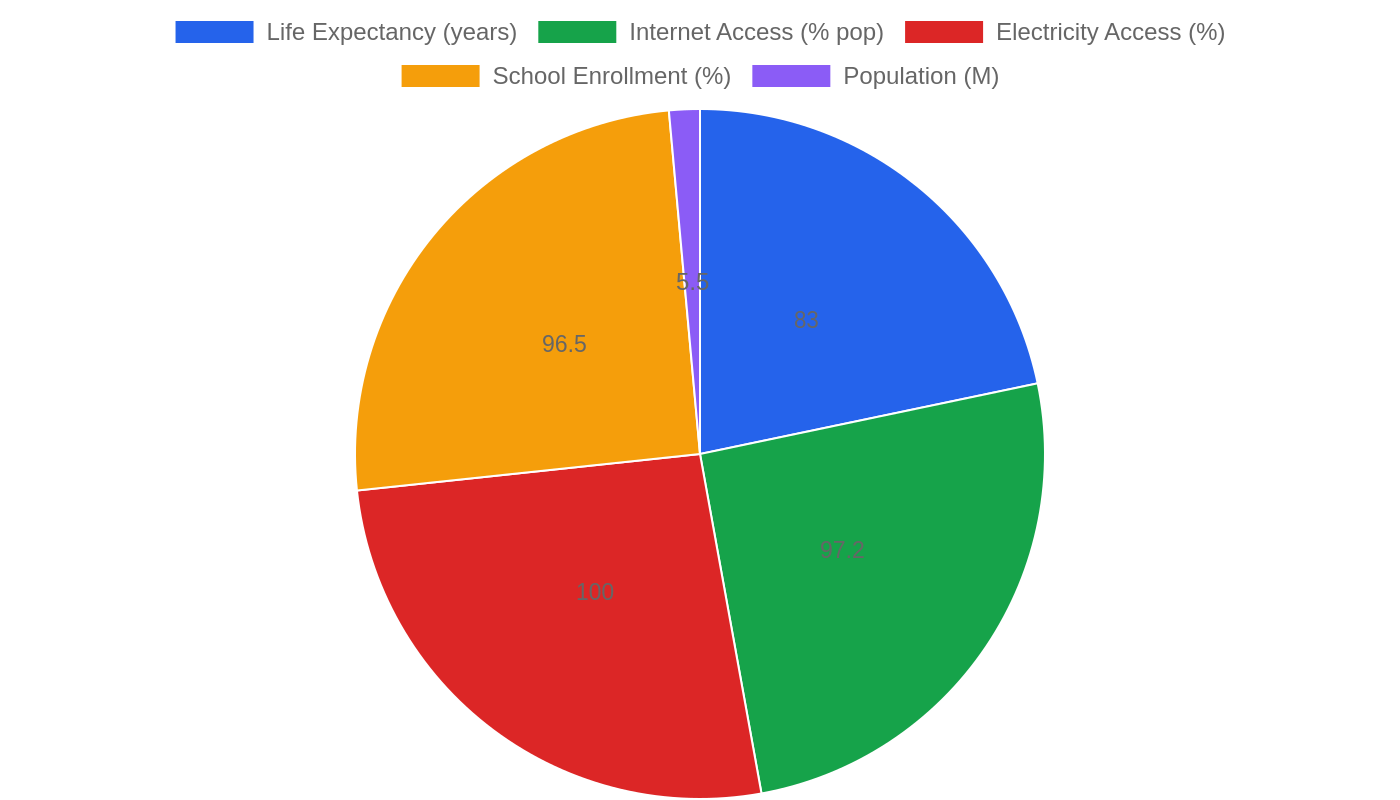
This low unemployment rate suggests that the economy is operating near full capacity, absorbing labor efficiently even as it generates disproportionate wealth relative to its population of roughly 5.48 million people.
Navigating the Cost of Living
While macroeconomic indicators suggest immense wealth, the daily experience of residents is shaped by the cost of living, which varies significantly across sectors. Although specific consumer price indices for housing or food baskets are not provided in the current dataset, the broader inflation metric offers a glimpse into price stability.
The Consumer Price Index (CPI) is reported at 2.21044788475856%, indicating that general price levels are rising at a moderate pace, well below the hyper-inflationary thresholds seen in many other global economies. For households, this means that while prices are increasing, they are doing so at a manageable rate that preserves much of the real value of incomes.
Given the high GDP per capita (PPP), the purchasing power of the average Irish citizen is substantial, potentially offsetting higher costs in key areas like housing or utilities. However, the disparity between GNI and GDP per capita suggests that the distribution of this wealth may be uneven, meaning that while the national average is high, individual experiences with affordability will depend heavily on sectoral employment and regional location.
Without detailed breakdowns of rent-to-income ratios, it is clear that the overall economic strength supports a high baseline standard of living, even if specific expense categories require careful budgeting.
Investment & Business Climate
Ireland has successfully positioned itself as a premier destination for global business, particularly in technology, pharmaceuticals, and financial services. The corporate landscape is dominated by major players such as Accenture, a giant in the industrials and professional services sector, and AerCap, which leads in aircraft leasing. Other significant entities include Allied Irish Banks, reflecting a strong domestic financial infrastructure, and Airtricity, a key utility provider.
The presence of these large-cap companies indicates a mature business environment with deep integration into global supply chains. Beyond the multinationals, there is a vibrant ecosystem of consumer services firms, including Aer Lingus, Aircoach, and The Airporter, which support both tourism and domestic mobility. The concentration of companies like Abrakebabra in consumer services highlights the diversity of the market, moving beyond just heavy industry into everyday service delivery.
For investors, this mix of established giants and dynamic service providers suggests a resilient economy that is not overly reliant on a single sector. The business climate appears conducive to expansion, supported by a skilled workforce and a regulatory framework that attracts international capital.
Safety, Politics & Quality of Life
The quality of life in Ireland is influenced by its unique political geography and social stability. The island is divided between the Republic of Ireland, an independent state, and Northern Ireland, a constituent country of the United Kingdom. Despite this political division, the two jurisdictions share an open border and are part of the Common Travel Area, facilitating the free movement of people, goods, services, and capital.
This arrangement reduces friction for businesses and families alike, creating a unified economic space that transcends political boundaries. Regarding personal safety, specific crime and safety indices are listed as N/A in the current data set, leaving a gap in quantitative assessment of security. However, the absence of reported conflict or severe instability in the region implies a generally peaceful environment.
The political landscape, characterized by cooperation through the Common Travel Area, contributes to a sense of predictability and openness that enhances the overall attractiveness of the country for expatriates and long-term residents.
What’s Happening Now: Current Affairs
In 2025, Ireland is navigating a period of rapid economic recalibration amidst global uncertainties. The standout feature of the current economic narrative is the unprecedented 12.34% GDP growth, which demands close attention from policymakers and analysts alike. This surge is likely driven by renewed corporate investment and favorable tax treatments that continue to attract foreign direct investment.
Simultaneously, the government is managing inflation, which currently sits at 2.21%, allowing for steady consumption without overheating the economy. The labor market remains a critical focus, with unemployment at 4.63%, suggesting that job creation is keeping pace with population growth. Companies like Accenture and AerCap are likely expanding their operations to meet global demand, further solidifying Ireland’s role as a European gateway.
Meanwhile, the seamless cross-border movement between the Republic and Northern Ireland continues to facilitate trade, ensuring that logistical hurdles do not impede the flow of goods and services. As the year progresses, the interplay between high growth and moderate inflation will determine whether this momentum can be sustained in the medium term.
The Bottom Line
Ireland presents a compelling case for investors and economists seeking exposure to a high-growth, developed market with unique structural advantages. The combination of soaring GDP growth, high per capita income, and a stable political framework makes it a standout performer in the European economic landscape. While specific details on housing costs and crime rates remain obscured by data gaps, the overarching trend points toward a prosperous and dynamic society.
Stakeholders should monitor how the government manages the implications of such rapid growth, particularly in terms of infrastructure development and social equity. For those looking at long-term opportunities, Ireland’s ability to attract top-tier global companies while maintaining a tight labor market is a testament to its enduring appeal.
Sources & Methodology
This article is authored by Economic Pulse Net for informational and research purposes. Economic Pulse Net sources its data from multilateral institutions, national statistics bureaus, and proprietary databases. All data is believed to be current as of the date of publication.
Published: October 20, 2026 | Category: Research — Ireland
Use these signals in your own platform
Economic Pulse publishes its live signal feed through a documented, read-only API. Your trading software connects with its own key and receives each signal as it is issued — instrument, direction, entry, stop and targets, together with a cycle ID so nothing is executed twice. The feed is independent of this website and cannot change it.
Signals are informational only and are not financial advice.