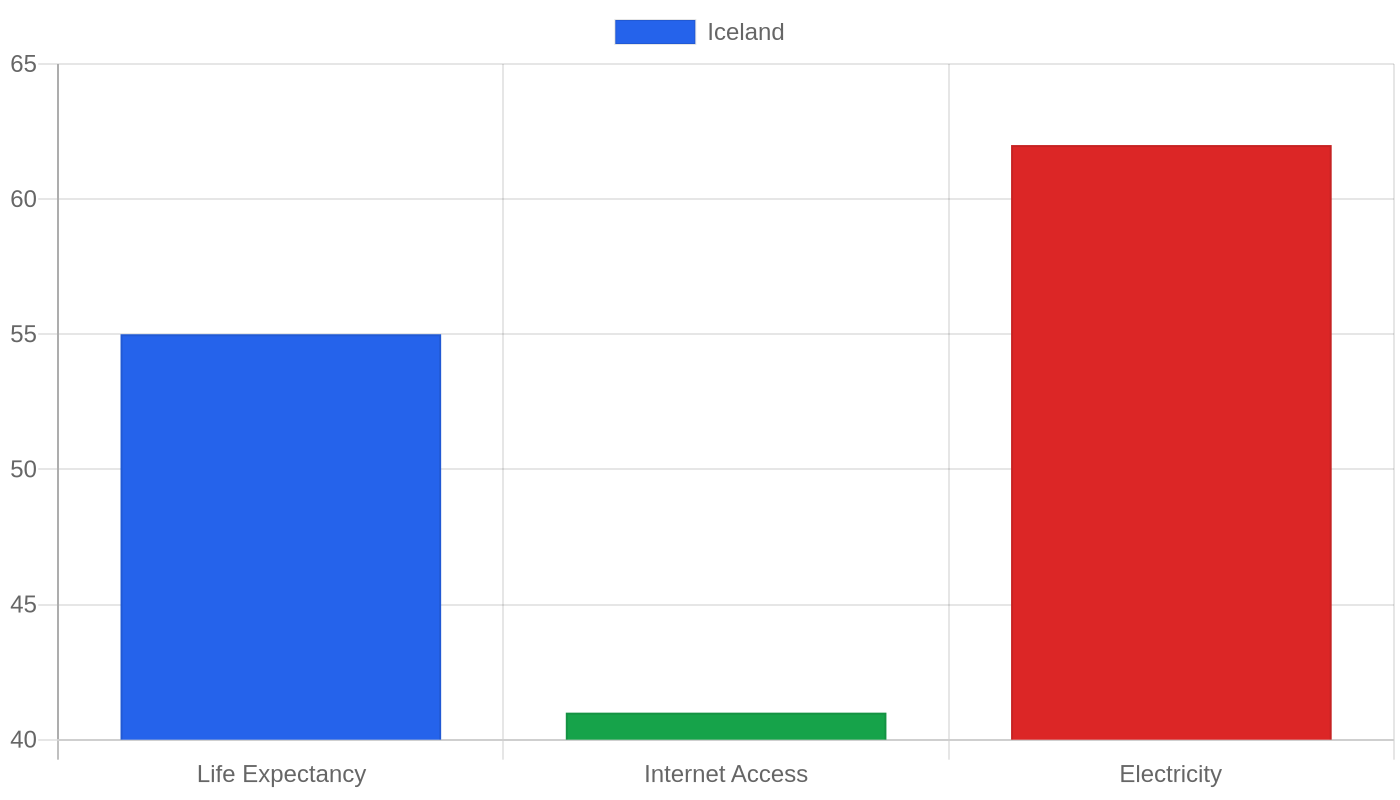
Economic Pulse Net | Sources: World Bank World Development Indicators, Government Sources | 2026
Key Takeaways
– A Nordic outlier: Iceland operates as a parliamentary representative democratic republic with a multi-party system, where the president serves as head of state and the prime minister leads the government — a political structure that has delivered remarkable stability.
– A knowledge economy rising: From genetics to gaming, Iceland’s top companies span cutting-edge sectors including biotechnology (deCODE genetics), video gaming (CCP Games), and renewable energy innovation (Carbon Recycling International).
– Retail and consumer powerhouses: The country’s corporate landscape includes household names like Bónus, the discount supermarket chain, and 365, a major media group, alongside state enterprises like ÁTVR, the national alcohol monopoly.
– Arctic expertise: Icelandic firms like Arctic Trucks have built global reputations for specialised vehicle modification, while Air Iceland connects the island’s remote communities.
– A unique economic model: Iceland’s small, open economy has historically punched far above its weight, leveraging natural resources, human capital, and strategic positioning between North America and Europe.
The Little Economy That Reinvents Itself
Iceland’s economic story is one of extraordinary resilience and reinvention. While the World Bank’s latest figures show no current GDP growth data, the country’s trajectory over recent decades has been remarkable for a nation of its size. The economy has transformed from a reliance on fishing and agriculture into a diversified, knowledge-driven system that now competes on the global stage in everything from software development to cutting-edge medical research.
The corporate landscape tells this story vividly. Reykjavík-based deCODE genetics, founded in 1996, became a world leader in human genome research and has attracted international investment and scientific acclaim. CCP Games, the video game developer behind EVE Online, has built a global player base from its Icelandic headquarters.
Carbon Recycling International, meanwhile, has pioneered technology that converts carbon dioxide into renewable methanol — a perfect metaphor for an economy that continually turns challenges into opportunities.
The services and technology sectors have grown alongside more traditional industries. Advania, one of the Nordic region’s largest IT services companies, has its roots in Iceland and has expanded throughout Europe. 365 – miðlar ehf dominates domestic media, while Dagsbrún ehf has become a significant player in telecommunications and media. The retail sector remains robust, anchored by Bónus, the discount supermarket chain that has become a household name for cost-conscious Icelandic consumers.
This economic transformation has not been without turbulence. Iceland’s banking collapse in 2008 was one of the largest in history relative to national GDP, yet the country’s subsequent recovery has been studied by economists worldwide. The nation’s ability to reinvent itself — from financial hub back to its productive roots, then forward into technology and innovation — demonstrates a flexibility that larger, more rigid economies often lack.
Housing and the Cost of Living — The Price of Paradise
Iceland has long been known as one of Europe’s more expensive countries to live in, a reality driven by its island geography, small population, and reliance on imports for many consumer goods. The cost of living in Reykjavík and surrounding areas reflects these structural factors, with housing costs representing the most significant burden for most households.
The property market in Iceland has historically been characterised by high prices relative to incomes, particularly in the capital region where the majority of the population resides. Rental costs have risen steadily, making home ownership an attractive but challenging ambition for younger Icelanders. The country’s harsh climate and remote location add to construction costs, which are passed through to buyers and renters alike.
Daily expenses for food, transportation, and utilities also run above European averages. Iceland’s agricultural sector, while productive, cannot meet all domestic demand, necessitating imports of everything from grains to tropical fruits. Energy costs, however, are a notable exception — the country’s abundant geothermal and hydroelectric resources provide some of the cheapest electricity in Europe, a significant advantage for both households and energy-intensive industries.
Despite these costs, Iceland consistently ranks high in quality-of-life surveys. The trade-off between expense and liveability is one that residents seem willing to accept, and the country’s small population of around 376,000 means that the pressures of urbanisation seen elsewhere in Europe are largely absent.
Business, Investment, and the Arctic Advantage
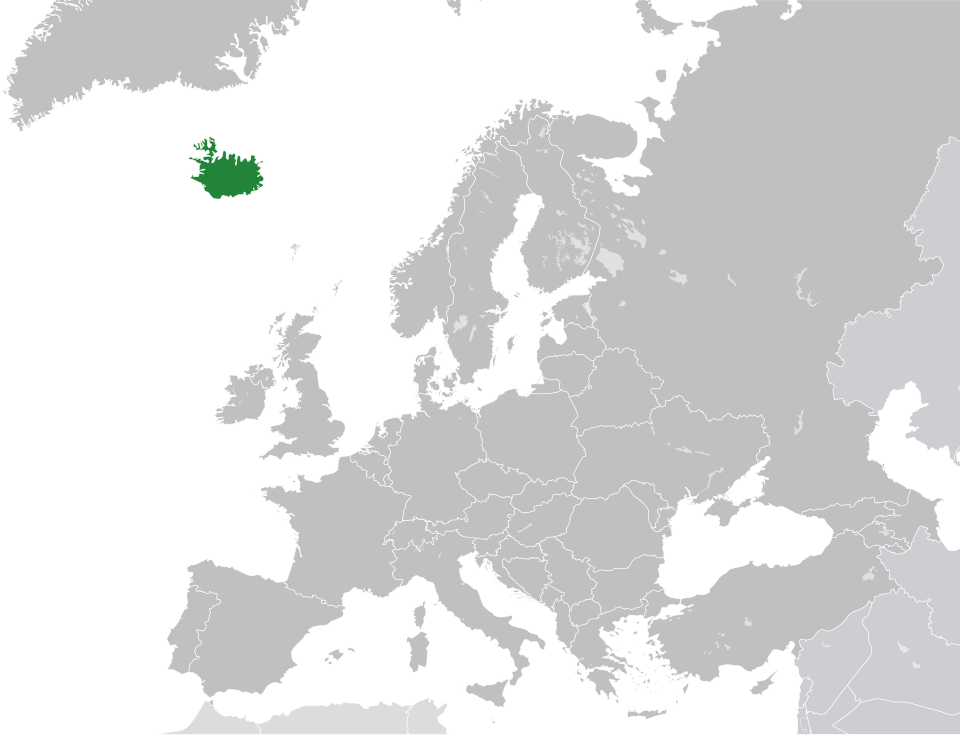
For investors and entrepreneurs, Iceland offers a distinctive proposition. The country’s political stability, educated workforce, and strategic location between Europe and North America make it an attractive base for companies looking to serve both markets. The presence of world-class firms like deCODE genetics and CCP Games demonstrates that Iceland can compete in high-value, export-oriented sectors.
The business environment is characterised by transparency and ease of doing business, consistent with Nordic governance standards. The multi-party political system, while sometimes requiring coalition governments, has generally produced pragmatic economic policies. State-owned enterprises like ÁTVR, the alcohol and tobacco monopoly, operate alongside a dynamic private sector, reflecting a mixed economy that balances social welfare with entrepreneurial energy.
Sectors with particular promise include renewable energy and carbon capture technology, where companies like Carbon Recycling International are at the forefront of global innovation. The fishing industry remains a cornerstone of the economy, managed through a quota system that has become a model for sustainable resource management worldwide. Tourism, which boomed in the years before the pandemic, continues to be a major economic driver, leveraging Iceland’s dramatic landscapes and unique geography.
The technology sector deserves particular attention. Iceland’s small population has paradoxically produced a disproportionate number of successful tech companies, a phenomenon attributed to the country’s excellent education system, egalitarian culture, and the necessity of competing globally from a small domestic market. Arctic Trucks, meanwhile, has carved out a niche in specialised vehicle modification, serving customers in some of the world’s most challenging environments.
Safety, Politics, and the Icelandic Quality of Life
Iceland’s political system is a study in democratic stability. As a parliamentary representative democratic republic, the country combines a ceremonial president as head of state with a prime minister who exercises executive authority as head of government.
The multi-party system, with members of parliament elected by proportional representation across constituencies, ensures that the Althing — one of the world’s oldest parliamentary institutions, dating back to 930 AD — reflects a broad spectrum of political opinion.
This political architecture has delivered remarkable social cohesion. Iceland’s crime rate is among the lowest in the world, with violent crime being particularly rare. The country’s small population and strong community bonds contribute to a sense of safety that residents often take for granted but visitors immediately notice. Police officers in Reykjavík are famously unarmed, a symbol of the trust between citizens and the state.
The quality of life in Iceland extends beyond safety. The country’s education and healthcare systems are comprehensive and accessible, funded through a tax system that Icelanders generally consider a fair price for social security. Gender equality is among the best in the world, with Iceland consistently topping international rankings. The country’s LGBTQ+ rights, environmental consciousness, and work-life balance all contribute to a social fabric that many other nations aspire to replicate.
Iceland’s political culture is characterised by consensus-building and pragmatism. While ideological differences exist between parties, the necessity of coalition government in the multi-party system encourages compromise. This has proven particularly valuable during economic crises, when cross-party cooperation has facilitated the difficult decisions required for recovery.
What’s Happening Now — Iceland at a Crossroads
Iceland in 2026 finds itself navigating a complex set of opportunities and challenges. The post-pandemic recovery has been strong, driven by a resurgence in tourism and continued growth in the technology and renewable energy sectors. The country’s geothermal and hydroelectric resources are attracting increasing international attention as Europe seeks to diversify its energy supplies and transition away from fossil fuels.
The government’s focus on innovation and sustainability has positioned Iceland as a potential leader in the green transition. Carbon Recycling International’s work on converting CO2 into methanol represents exactly the kind of circular economy solution that European policymakers are seeking to scale.
The country’s abundant renewable energy capacity could make it an attractive destination for energy-intensive industries, particularly those in the technology sector seeking to power data centres with clean electricity.
However, economic pressures remain. Inflation and interest rates, while not currently reported in the latest World Bank data, have been persistent concerns for Icelandic households. The cost of living continues to rise, and housing affordability remains a political issue. The tourism sector, while recovered, faces questions about sustainability and the environmental impact of increased visitor numbers on Iceland’s fragile landscapes.
The political landscape remains stable but active. Coalition negotiations and policy debates continue in the Althing, with discussions around taxation, welfare, and Iceland’s relationship with the European Union periodically resurfacing. The country’s unique position — a European nation not in the EU, but a member of the European Economic Area — allows it to participate in the single market while maintaining control over its fisheries and agricultural policies.
The Bottom Line
Iceland is a country that defies easy categorisation. Small in population but outsized in influence, it has built a prosperous, stable society in one of the world’s most challenging environments. For investors, the opportunities lie in renewable energy, technology, and sustainable resource management. For policymakers, Iceland offers lessons in resilience, consensus-building, and the management of boom-bust cycles.
And for anyone interested in how a nation can balance economic growth with environmental stewardship and social welfare, Iceland remains a compelling case study — a small country with big ideas, navigating the complexities of the modern global economy on its own terms.
Sources & Methodology
This article is authored by Economic Pulse Net for informational and research purposes. Economic Pulse Net sources its data from multilateral institutions, national statistics bureaus, and proprietary databases. All data is believed to be current as of the date of publication.
Published: August 08, 2026 | Category: Research — Iceland
Use these signals in your own platform
Economic Pulse publishes its live signal feed through a documented, read-only API. Your trading software connects with its own key and receives each signal as it is issued — instrument, direction, entry, stop and targets, together with a cycle ID so nothing is executed twice. The feed is independent of this website and cannot change it.
Signals are informational only and are not financial advice.