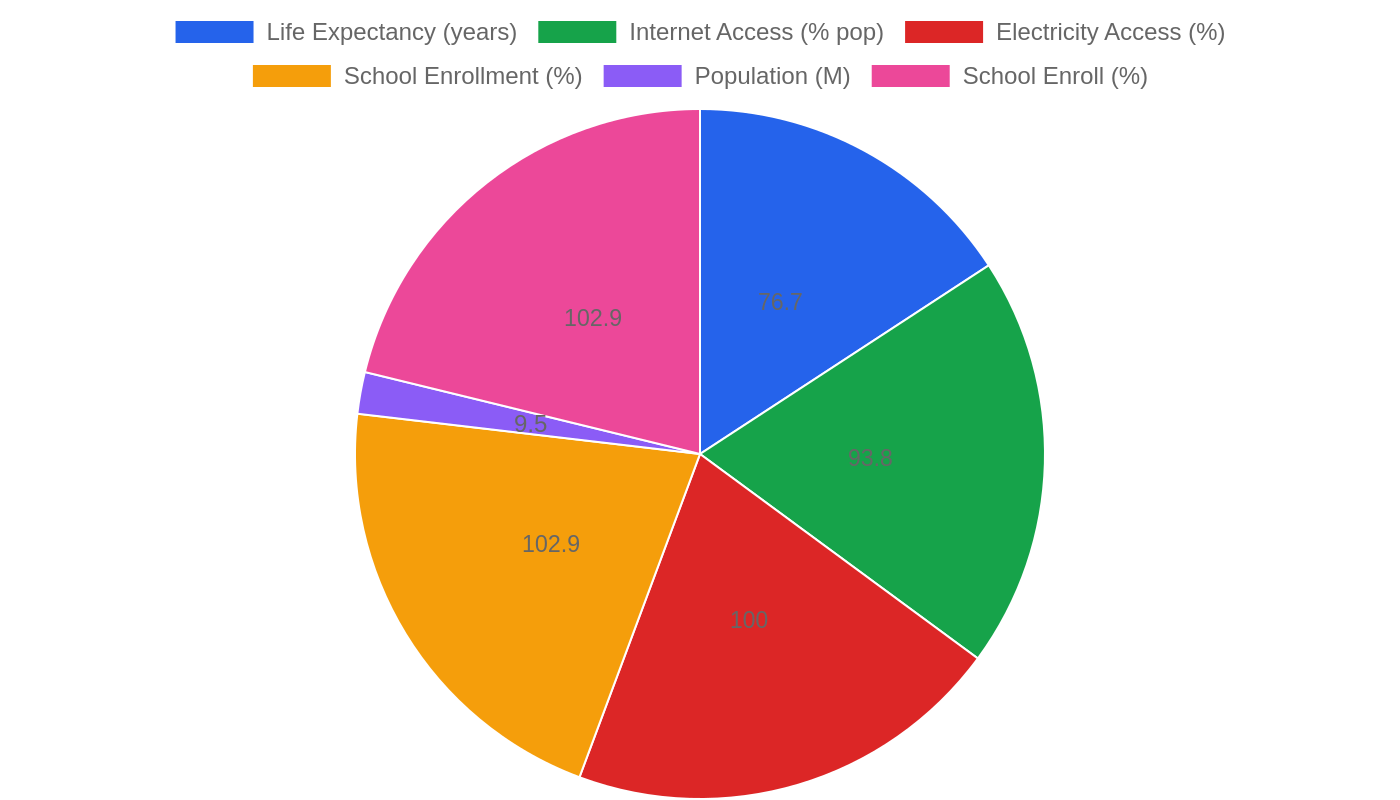
Economic Pulse Net | Sources: World Bank World Development Indicators, Government Sources | 2026
Key Takeaways
– Hungary’s GDP growth slowed to a near-standstill of just 0.51% in 2025, according to the World Bank, raising questions about the resilience of Central Europe’s most politically distinctive economy.
– Inflation remains stubbornly elevated at 4.41%, well above the central bank’s target, squeezing household budgets and complicating any pivot toward stimulus.
– The country boasts a GDP per capita (PPP) of nearly $50,000, placing it among the region’s wealthier nations, yet GNI per capita tells a more modest story at $23,850 — a gap that hints at significant income inequality and foreign profit repatriation.
– Hungary’s political landscape is defined by the 2012 Fundamental Law, which entrenches a supermajority requirement for constitutional amendments and enshrines certain principles “in perpetuity” — a framework that has drawn both praise for stability and criticism for democratic backsliding.
– Key industries span telecommunications, basic materials, consumer goods, and financial services, anchored by companies like 4iG, BorsodChem, and Budapest Bank, yet the economy remains heavily dependent on EU transfers and foreign automotive investment.
The Growth Conundrum — Stagnation in a High-Income Skin
On paper, Hungary looks like a Central European success story. The World Bank reports a GDP per capita (PPP) of $49,837.60 — a figure that places the country comfortably ahead of many of its regional peers. But that headline number masks a deeper unease. GDP growth in 2025 registered a paltry 0.51%, barely above stagnation. For a country that has historically punched above its weight in manufacturing and export-led growth, this is a warning signal.
The culprit is partly inflation, which at 4.41% remains stubbornly above the central bank’s tolerance zone. While not hyperinflation by any stretch, this level of price growth erodes real wages and consumer confidence month after month. Households feel it at the petrol pump, in the grocery aisle, and in utility bills — even as the government’s price caps on basic foods and fuel have distorted market signals without fully containing the problem.
The World Bank data does not provide unemployment figures, but anecdotal evidence from the labor market suggests tight conditions in Budapest and growing slack in the depressed northeastern counties.
Hungary’s economic model has long relied on three pillars: EU structural funds, foreign direct investment in automotive and electronics assembly, and a domestic consumption engine fueled by government transfers. All three are under strain. Brussels has frozen billions in cohesion payments over rule-of-law disputes. The automotive sector — dominated by Audi, Mercedes, and Suzuki — faces a rocky transition to electric vehicles.
And with inflation eating into disposable income, the consumer is no longer the reliable engine of growth that Prime Minister Viktor Orbán’s government once counted on. The World Bank’s data paints a picture of an economy that is rich in stock but poor in flow — high living standards on paper, but little forward momentum.
The Price of Living — Housing, Groceries, and the Squeeze on the Middle
While the World Bank data does not include a detailed cost-of-living breakdown for Hungary, the macroeconomic indicators tell a clear story. Inflation at 4.41% means that everyday expenses — from bread and milk to rent and utilities — are rising faster than wages for many workers. In Budapest, property prices have soared over the past decade, driven by foreign investment, Airbnb conversions, and a chronic shortage of new housing supply.
Renting a one-bedroom apartment in a desirable district of the capital now consumes a significant share of the average professional salary, pushing younger Hungarians toward longer commutes or multigenerational living arrangements.
Outside the capital, the picture is different but no less challenging. In cities like Debrecen, Miskolc, and Szeged, housing is more affordable, but job opportunities are fewer and wages lower. The gap between Budapest and the countryside has become a defining feature of Hungary’s economic geography. For those earning the national average wage — roughly in line with the World Bank’s GNI per capita of $23,850 — the cost of living in the capital feels increasingly prohibitive.
Utility costs, while partially capped by the government, have become a political flashpoint, with Brussels questioning the legality of Hungary’s differentiated energy pricing system. The bottom line for the average Hungarian: the country may look wealthy on a PPP basis, but the lived experience is one of stretched budgets and hard choices.
Business and Investment — A Landscape of Giants and Gatekeepers
Hungary’s corporate landscape is dominated by a mix of state-connected conglomerates, legacy industrial firms, and a handful of dynamic private companies. The World Bank data highlights ten major players spanning telecommunications, basic materials, consumer goods, and financial services. At the top sits 4iG, a telecommunications and IT group that has expanded aggressively under government-friendly ownership, winning contracts for everything from satellite communications to public-sector digitization.
BorsodChem, the chemical giant, represents Hungary’s industrial backbone, producing PVC and other basic materials for export across Europe.
In consumer goods, Ajka Crystal continues to trade on Hungary’s heritage of fine glassmaking, while Borsod Brewery serves the domestic beer market. The financial sector is anchored by Budapest Bank, which has undergone a series of ownership changes and now operates as a key player in retail and corporate lending.
The transportation and logistics sector — represented by ASL Airlines Hungary, Budapest Aircraft Service, and BKV Zrt., the capital’s public transport operator — underscores the importance of connectivity in a landlocked country that serves as a transit hub for European trade.
What is striking is the absence of a vibrant startup ecosystem or a deep bench of mid-cap companies. The business climate in Hungary is characterized by high barriers to entry, regulatory unpredictability, and a legal framework that the European Commission has repeatedly criticized for undermining judicial independence.
For foreign investors, the message is mixed: Hungary offers low corporate tax rates (9%, the lowest in the EU) and generous investment subsidies, but those incentives come with strings attached, including opaque procurement processes and pressure to align with government priorities. The World Bank data does not provide a comprehensive business environment ranking, but the composition of the top companies — heavy on state-linked and legacy firms — speaks volumes about who really gets to play.
Safety, Politics, and the Quality of Life Question
The World Bank data does not include a crime index or safety index for Hungary, but the country has long been considered one of Europe’s safer nations. Violent crime is rare, petty theft is moderate, and Budapest is generally safe even at night. But safety is not just about crime statistics — it is also about political stability, social cohesion, and the rule of law. And on those fronts, Hungary presents a more complicated picture.
The political landscape is defined by the 2012 Fundamental Law, which transformed Hungary from a parliamentary republic into what the government calls a “unitary parliamentary republic” with a strong executive. The constitution requires a two-thirds parliamentary majority for amendments — a threshold that Prime Minister Orbán’s Fidesz party has repeatedly met, allowing it to reshape institutions with little opposition.
The document also declares that certain principles — human dignity, the separation of powers, the state structure, and the rule of law — are “valid in perpetuity,” a clause that has not prevented the government from centralizing media, curtailing judicial independence, and rewriting electoral laws.
For ordinary Hungarians, the quality of life is a mixed bag. Public healthcare is underfunded and overstretched, leading many to seek private care. Education has become a political battleground, with the government asserting greater control over curricula and university governance. Yet Hungary also offers a rich cultural life, affordable public transport, and a strong sense of national identity.
The trade-off between material comfort and political freedom is a conversation that Hungarians have been having for over a decade — and the answer depends very much on whom you ask.
Current Affairs — Inflation, EU Funds, and the Orbán Tightrope
As of early 2026, Hungary finds itself navigating a delicate political and economic tightrope. Inflation at 4.41% remains the central bank’s primary headache. While the rate has eased from the double-digit peaks of 2023, it is still high enough to keep the Monetary Council cautious about cutting interest rates. The forint has stabilized against the euro but remains vulnerable to any shift in global risk appetite or EU-Hungary relations.
The biggest unresolved issue is the release of billions of euros in EU cohesion funds, frozen by Brussels over concerns about judicial independence, academic freedom, and LGBTQ+ rights. Negotiations have dragged on for years, with the Orbán government making some concessions — including a new anti-corruption authority — but stopping short of the structural reforms the European Commission demands. The result is a funding gap that constrains public investment at a time when the economy needs it most.
Infrastructure projects have been delayed, and local governments — many of which depend on EU money — are feeling the pinch.
Meanwhile, the business community is watching the 2026 parliamentary elections with a mix of anticipation and anxiety. Orbán’s Fidesz party remains popular among older, rural voters, but urban dissatisfaction is growing. The opposition, though fragmented, has found new energy around economic issues — inflation, housing affordability, and wage stagnation. For investors, the question is whether a post-Orbán Hungary would be more predictable or more chaotic.
For ordinary Hungarians, the question is simpler: can the economy deliver better days ahead?
The Bottom Line
Hungary is a country of contradictions — wealthy by regional standards but struggling to grow; politically stable but institutionally contested; culturally vibrant but economically constrained. For investors, the opportunity lies in the gap between perception and reality: a low-tax environment, a skilled workforce, and a strategic location in the heart of Europe. But the risks — political unpredictability, EU funding uncertainty, and stubborn inflation — are real and non-trivial.
For policymakers and analysts, Hungary offers a case study in how a small, open economy navigates the tension between national sovereignty and European integration. Watch this country if you want to understand where Central Europe is headed — but do not expect a straight line.
Sources & Methodology
This article is authored by Economic Pulse Net for informational and research purposes. Economic Pulse Net sources its data from multilateral institutions, national statistics bureaus, and proprietary databases. All data is believed to be current as of the date of publication.
Published: July 26, 2026 | Category: Research — Hungary
Use these signals in your own platform
Economic Pulse publishes its live signal feed through a documented, read-only API. Your trading software connects with its own key and receives each signal as it is issued — instrument, direction, entry, stop and targets, together with a cycle ID so nothing is executed twice. The feed is independent of this website and cannot change it.
Signals are informational only and are not financial advice.