Economic Pulse Net | Sources: World Bank World Development Indicators, Government Sources | 2026
Key Takeaways
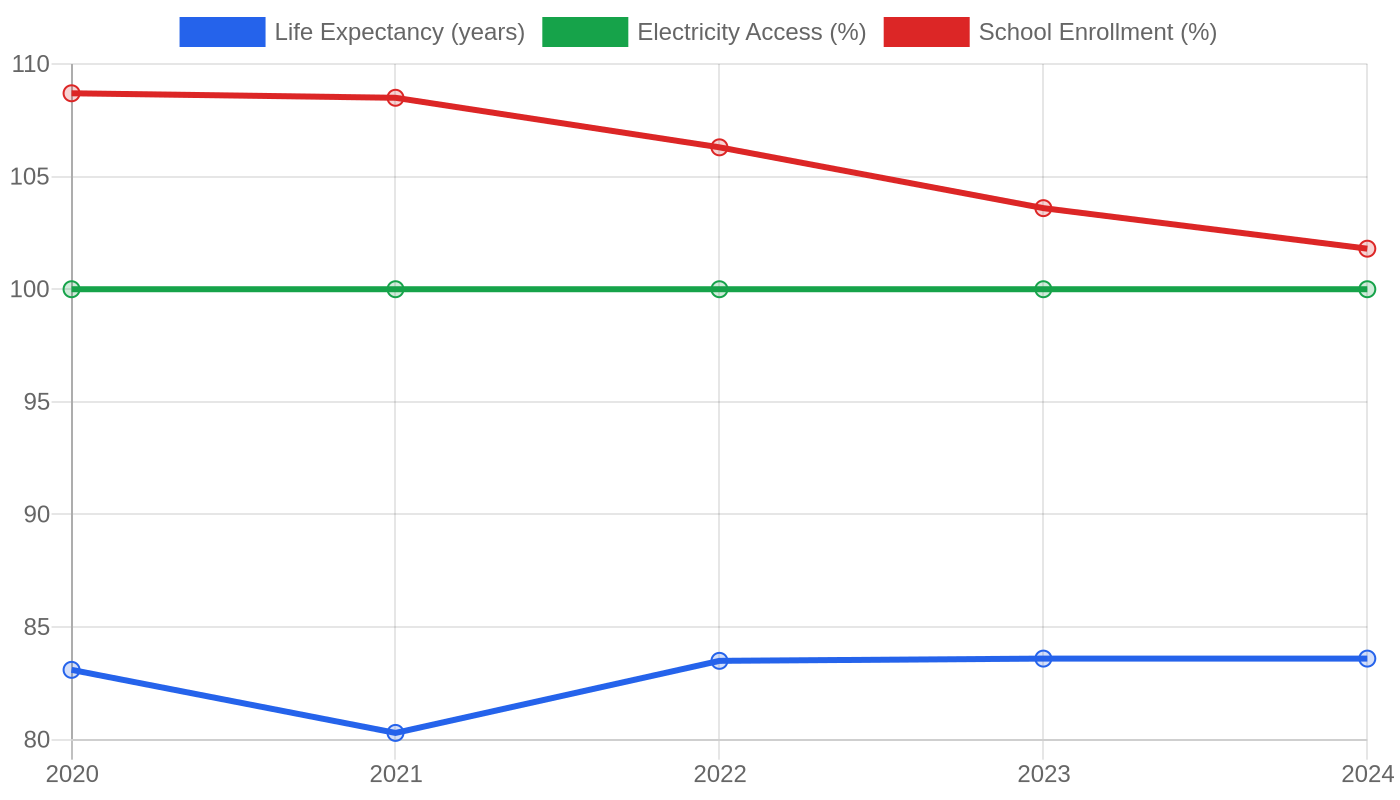
– Gibraltar’s economy operates in a unique data vacuum, with no publicly available GDP, inflation, or unemployment figures from the World Bank, reflecting its status as a British Overseas Territory rather than a sovereign state.
– The territory’s prosperity is built on a narrow foundation of financial services, online gaming, tourism, and port activities, making it acutely vulnerable to external shocks and political uncertainty.
– Brexit negotiations continue to cast a long shadow over Gibraltar’s relationship with both the United Kingdom and the European Union, with border fluidity with Spain remaining the single most critical economic variable.
– Despite the absence of official crime statistics, Gibraltar is widely regarded as a low-crime jurisdiction, though its status as a financial hub invites scrutiny over transparency and regulatory oversight.
– The cost of living is notoriously high due to limited land and reliance on imports, creating a stark contrast between the territory’s wealth and the everyday expenses faced by its residents.
The Invisible Economy — Growth Without a Number
Gibraltar presents a paradox for any economic journalist: a thriving, high-income territory for which the World Bank provides virtually no macroeconomic data. There are no GDP growth figures, no inflation readings, no unemployment rates, no GDP per capita calculations. This statistical silence is not a sign of economic weakness but rather a reflection of Gibraltar’s constitutional status.
As a British Overseas Territory, it does not report to the World Bank in the same manner as sovereign nations, and its economy is small enough to fall through the cracks of global data collection.
Yet the absence of numbers does not mean the absence of activity. Gibraltar’s economy has long been driven by three pillars: financial services, online gaming, and tourism. The territory has positioned itself as a low-tax jurisdiction with a regulatory environment designed to attract international businesses, particularly in the insurance, banking, and investment sectors.
Online gaming companies have flocked to the Rock for its stable legal framework and favourable corporate tax rates, which currently stand at 10% — significantly lower than in most of Europe.
Tourism remains the most visible driver of the economy. The famous Rock, its Barbary macaques, and the strategic location at the entrance to the Mediterranean draw hundreds of thousands of visitors each year, many arriving via cruise ships that dock at Gibraltar’s port. The territory also functions as a bunkering hub, supplying fuel to ships passing through the Strait of Gibraltar, and its port handles significant cargo volumes.
These activities generate substantial revenue but also create a dependency on external factors — global shipping trends, tourism demand, and geopolitical stability — that are entirely beyond Gibraltar’s control.
The lack of official inflation figures is particularly telling. Residents and businesses alike report that the cost of goods and services has risen sharply in recent years, driven by supply chain disruptions and the territory’s near-total reliance on imports. Without hard data, it is impossible to quantify the pressure on household budgets, but anecdotal evidence suggests that Gibraltar is not immune to the global inflation wave that has swept through Europe and the United Kingdom.
Living on the Rock — The Price of Paradise
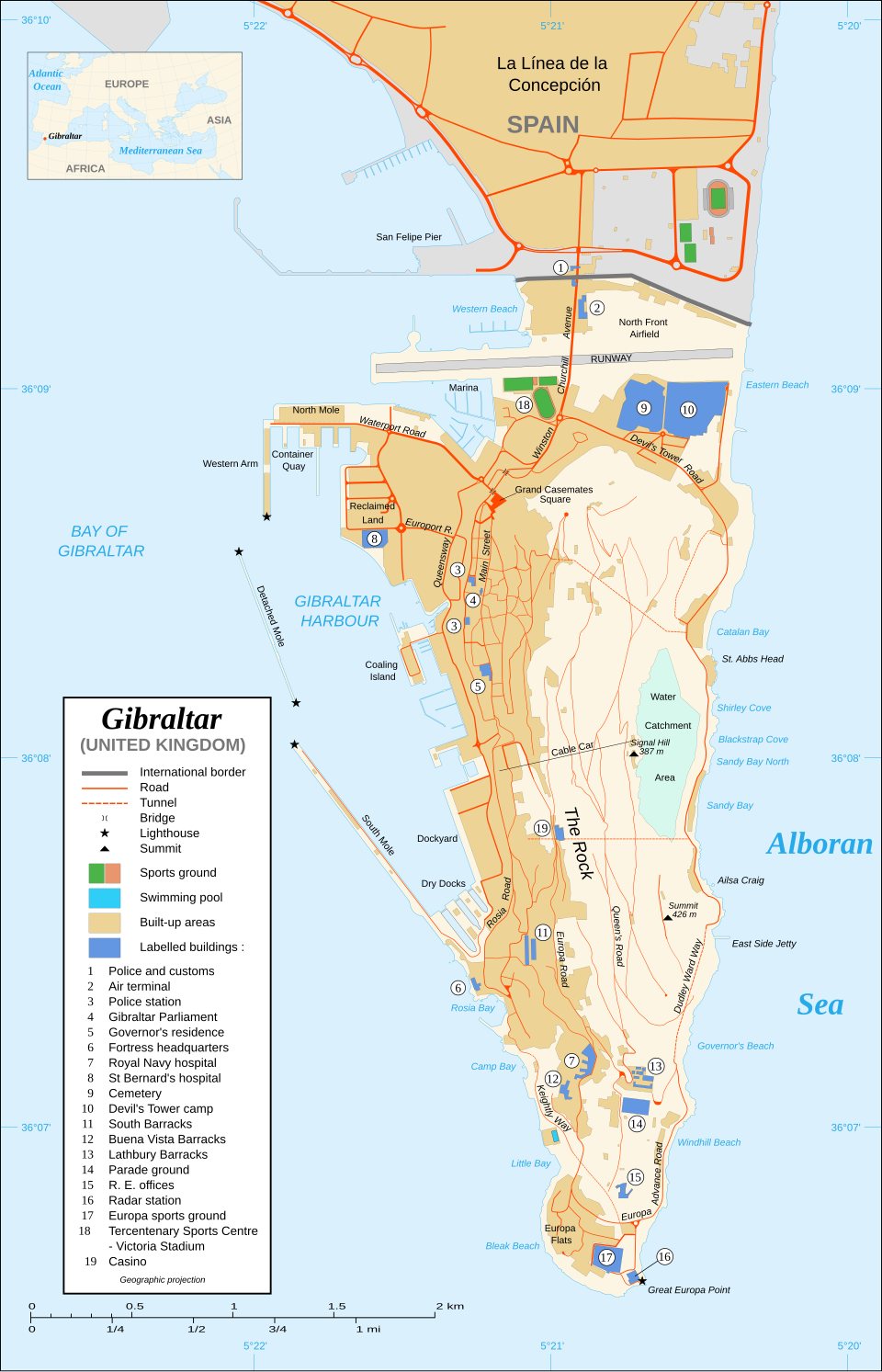
Gibraltar’s cost of living is among the highest in the region, a direct consequence of its geography. With just 6.8 square kilometres of territory and a population density that ranks among the highest in the world, land is the most precious commodity. Housing costs are astronomical. A modest one-bedroom apartment in the centre of Gibraltar can command rents that rival London or Geneva, while purchasing property is out of reach for all but the wealthiest residents and foreign investors.
The housing crisis has driven many workers to live across the border in Spain, commuting daily through the frontier with La Línea de la Concepción. This cross-border dynamic is central to Gibraltar’s economic model. Spanish workers fill many service-sector jobs, while Gibraltarians benefit from lower-cost housing and goods in Spain.
The arrangement depends entirely on the free movement of people across the border — a freedom that has been repeatedly threatened by political tensions between the United Kingdom and Spain.
Daily expenses for food, utilities, and transport are also elevated. Almost everything consumed on the Rock must be imported, either from Spain, the United Kingdom, or further afield. Supermarket prices reflect the logistics costs of moving goods into a small, densely populated territory with limited storage capacity. Petrol is cheaper than in neighbouring Spain due to lower taxes, but this is one of the few areas where residents enjoy a cost advantage.
For those who can afford it, Gibraltar offers a high quality of life: a Mediterranean climate, low crime, English legal and administrative systems, and access to both British and Spanish cultural spheres. But the cost of entry — both financial and logistical — is steep. The territory’s prosperity is real, but it is not evenly distributed, and the gap between those who can afford to live on the Rock and those who must commute from Spain is a source of growing social tension.
Betting on the Rock — Business in a Tax Haven
Gibraltar’s business environment is defined by its tax regime and its regulatory agility. The territory offers a flat corporate tax rate of 10%, no capital gains tax, no VAT, and no wealth tax. For companies in the financial services, insurance, and online gaming sectors, this is a powerful draw. The Gibraltar Financial Services Commission oversees a regulatory framework that is aligned with UK standards but tailored to the territory’s small size and specialised economy.
The online gaming industry deserves particular attention. Gibraltar has been a pioneer in regulating internet gambling, and companies such as 888 Holdings, Betfred, and Entain have established significant operations on the Rock. This sector generates substantial tax revenue and employs a highly skilled workforce in technology, compliance, and customer support roles.
However, the industry faces increasing regulatory scrutiny across Europe, and any tightening of rules in key markets like the United Kingdom or Germany could have outsized effects on Gibraltar’s economy.
Financial services remain the bedrock. Gibraltar is home to a cluster of insurance companies, particularly in the captive insurance space, as well as banks, investment firms, and trust companies. The territory has worked hard to shed its reputation as a secrecy jurisdiction and has implemented automatic exchange of information agreements with the European Union and other partners.
Yet the label of “tax haven” persists, and Gibraltar faces ongoing pressure from international bodies to demonstrate that its tax practices are transparent and fair.
The top companies operating in Gibraltar are predominantly in these two sectors, supplemented by a handful of shipping, logistics, and professional services firms. There is no manufacturing base to speak of, and the economy remains almost entirely service-oriented. This specialisation has brought wealth but also vulnerability. A major regulatory change in the gaming sector or a shift in international tax norms could fundamentally alter Gibraltar’s business landscape.
Safety, Sovereignty, and the Spanish Question
Gibraltar consistently ranks as one of the safest places to live in Europe, even in the absence of official crime indices from the data provided. Violent crime is rare, and the territory’s small size and tight-knit community make it difficult for serious criminal activity to go unnoticed. The Royal Gibraltar Police maintains a visible presence, and the border with Spain is monitored closely by both British and Spanish authorities.
The political landscape, however, is anything but tranquil. Gibraltar’s sovereignty is disputed by Spain, which has long sought the return of the territory ceded to Britain in the 1713 Treaty of Utrecht. The issue remains one of the most emotive in Spanish politics, and successive Spanish governments have used the border as a lever of pressure.
During periods of tension, border checks have been intensified, causing hours-long queues for the thousands of people who cross daily for work, shopping, or family visits.
Brexit has added a new layer of complexity. Gibraltar was not included in the UK’s withdrawal agreement with the EU, and its future relationship with the bloc has been the subject of protracted negotiations between London, Madrid, and Brussels. A framework agreement was reached in late 2020, but key details — particularly regarding the free movement of people and goods across the border — remain unresolved.
The prospect of a “hard border” between Gibraltar and Spain is the single greatest threat to the territory’s economy and way of life.
Quality of life in Gibraltar is high for those who can navigate the housing market and the political uncertainty. The territory offers excellent healthcare, a well-regarded education system following the UK curriculum, and a vibrant cultural scene that blends British, Spanish, and Mediterranean influences. But the constant shadow of sovereignty disputes and the precariousness of the border arrangement create a sense of impermanence that is difficult to quantify but impossible to ignore.
The Post-Brexit Tightrope — Gibraltar’s Current Crossroads
As of early 2026, Gibraltar finds itself in a period of intense diplomatic and economic negotiation. The post-Brexit talks between the United Kingdom, the European Union, and Spain have entered a critical phase, with the future of the territory’s relationship with the Schengen Area hanging in the balance.
The core issue is border management: Spain insists that Gibraltar must join the Schengen Area to ensure free movement, while the UK and Gibraltar argue that this would compromise British sovereignty over the territory.
The economic stakes could not be higher. If a deal is not reached, Gibraltar could face the reintroduction of hard border controls with Spain, disrupting the daily flow of workers, goods, and tourists that sustains the economy. The online gaming and financial services sectors, which rely on the ability to move staff and data freely, would be particularly affected. Some companies have already begun contingency planning, exploring relocation options to Malta, Cyprus, or Ireland.
On the positive side, Gibraltar has been proactive in diversifying its economy. The territory has invested in its port infrastructure, aiming to capture a larger share of the Mediterranean shipping and bunkering market. It has also sought to develop a niche in fintech and cryptocurrency regulation, positioning itself as a forward-thinking jurisdiction for digital assets. These efforts are still in their early stages, but they signal a recognition that the old model of tax-driven services may need to evolve.
The political mood on the Rock is one of cautious optimism tempered by realism. The government of Gibraltar, led by Chief Minister Fabian Picardo, has maintained close ties with London while engaging constructively with Madrid. There is a widespread understanding that Gibraltar’s future depends on finding a modus vivendi with Spain, one that preserves the territory’s British identity while securing the economic integration that makes its prosperity possible.
The Bottom Line
Gibraltar is a case study in how small territories can thrive through specialisation and strategic positioning, but also in how fragile such success can be. Investors and businesses with a tolerance for political risk will find a low-tax, well-regulated environment with access to both UK and EU markets — provided the border remains open.
For anyone watching the future of European micro-states, post-Brexit border arrangements, or the intersection of tax policy and sovereignty, Gibraltar is a story that demands attention. The Rock may be small, but its fate carries outsized implications for how contested territories navigate a world of hardening borders and shifting alliances.
Sources & Methodology
This article is authored by Economic Pulse Net for informational and research purposes. Economic Pulse Net sources its data from multilateral institutions, national statistics bureaus, and proprietary databases. All data is believed to be current as of the date of publication.
Published: July 17, 2026 | Category: Research — Gibraltar
Use these signals in your own platform
Economic Pulse publishes its live signal feed through a documented, read-only API. Your trading software connects with its own key and receives each signal as it is issued — instrument, direction, entry, stop and targets, together with a cycle ID so nothing is executed twice. The feed is independent of this website and cannot change it.
Signals are informational only and are not financial advice.