Economic Pulse Net | Sources: World Bank World Development Indicators, Government Sources | 2026
Key Takeaways
– Guinea-Bissau has a tragic political distinction: from independence in 1974 until José Mário Vaz completed his term in 2019, no president had ever served a full five-year term — a pattern of instability that has crippled economic planning.
– The country operates as a republic with a semi-presidential system, but the centralization of power and a history of coups have made governance unpredictable and investment scarce.
– Despite being rich in natural resources and agricultural potential, Guinea-Bissau’s economic data remains largely unavailable through major international institutions, reflecting the profound gaps in statistical capacity and formal economic tracking.
– The nation’s economy is heavily dependent on cashew nuts, which account for the vast majority of exports, leaving it dangerously exposed to commodity price swings and climate shocks.
– Political fragility, not a lack of resources, remains the single greatest barrier to development — and the country’s recent achievement of a full presidential term offers a fragile glimmer of hope.
The Phantom Economy — What We Don’t Know Tells Us Everything
The World Bank, the globe’s premier economic data institution, reports no figures for Guinea-Bissau’s GDP growth, inflation rate, unemployment level, total GDP in US dollars, GDP per capita based on purchasing power parity, GNI per capita, or even its population. This is not an oversight. It is a statement.
When an entire country’s economic profile is absent from the World Bank’s standard metrics, it signals something profound: the state’s capacity to measure, monitor, and manage its own economy is severely compromised. For a nation of roughly two million people, this data vacuum is both a symptom and a cause of underdevelopment. Without reliable statistics, international investors cannot model risk. Without risk models, capital stays away. Without capital, the economy remains trapped in informality.
What is known is that Guinea-Bissau’s economy is overwhelmingly agricultural, with cashew nuts serving as the dominant cash crop and primary export. Fishing licenses, timber, and small-scale gold mining contribute modestly. The country has offshore oil potential in the Senegal-Guinea-Bissau basin, but exploration has been stalled by political instability and boundary disputes. The industrial base is virtually nonexistent. Manufacturing is limited to basic food processing, brewing, and construction materials.
The absence of inflation data is particularly telling. In a country where the West African CFA franc is pegged to the euro, inflation should theoretically be contained. But anecdotal evidence from humanitarian organizations suggests that food price volatility is a persistent problem, especially in rural areas where markets are thin and transport infrastructure is poor. Without official statistics, the government cannot target subsidies, adjust social spending, or negotiate effectively with international lenders.
This data gap is not merely academic. It means that when the government applies for debt relief, budget support, or emergency food aid, it does so with incomplete information. The World Bank and International Monetary Fund have repeatedly attempted to strengthen Guinea-Bissau’s statistical agencies, but political turnover has undermined institutional continuity. The economy exists — people farm, trade, and survive — but it remains largely invisible to the global financial system.
The Cost of Living — Survival on the Cashew Margin
Housing costs in Guinea-Bissau vary dramatically between the capital Bissau and the rural interior, but reliable comparative data is scarce. What can be inferred is that the cost of living is heavily shaped by the country’s dependence on imported goods. Guinea-Bissau produces cashews, fish, and some rice, but virtually everything else — from fuel to pharmaceuticals to construction materials — must be imported, often through Senegal or Portugal.
Rent in Bissau’s better neighborhoods can consume a significant portion of formal sector salaries, which are themselves low by West African standards. Many civil servants go months without pay during political crises, a chronic problem that has led to strikes and protests. For the majority of the population living in rural areas, housing is traditional — mud brick, thatch roofs, no electricity — and monetized costs are minimal, but access to clean water, healthcare, and education is severely constrained.
Daily expenses for food are dominated by rice, the staple grain, which is largely imported. When global rice prices rise or the CFA franc strengthens, urban households feel immediate pressure. Cashew farmers, meanwhile, face a different kind of vulnerability: they receive cash income only once a year, during the harvest season, and must make it last through twelve months of expenses.
The absence of formal banking in rural areas means savings are often held in kind — livestock, grain stores, or cashew stocks — all of which are vulnerable to pests, weather, and price fluctuations.
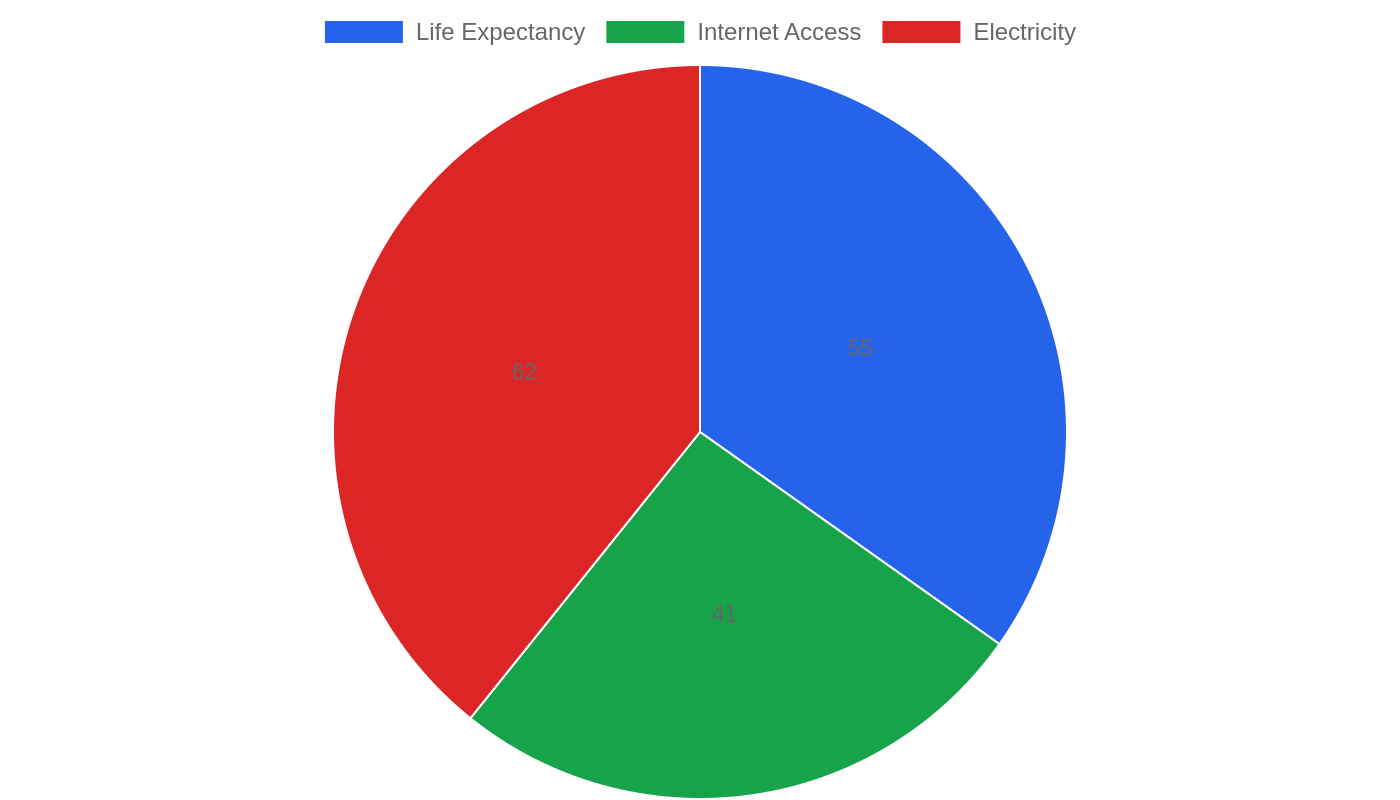
Compared to regional averages, Guinea-Bissau likely has a lower cost of living in absolute terms but a higher cost of living relative to income. The country consistently ranks near the bottom of the UN Human Development Index, and life expectancy, literacy, and access to electricity all trail behind West African peers. The economy of daily life is one of improvisation, informal credit, and extended family networks — resilient, but fragile.
Business in the Shadow of the Coup — Investment Climate Under Stress
The list of top companies in Guinea-Bissau is not publicly available through standard data sources, and this absence is itself revealing. The formal private sector is small, concentrated in a few hands, and heavily oriented toward the cashew trade. Major international firms have largely stayed away, deterred by political risk, corruption, and the unreliability of basic infrastructure like electricity and ports.
The sectors most worth watching are cashew processing, fisheries, and telecommunications. Cashew processing has long been identified as a high-potential industry — instead of exporting raw nuts to India and Vietnam for processing, Guinea-Bissau could capture more value by processing domestically. But this requires reliable electricity, functioning roads, and a stable regulatory environment, all of which have been lacking. A few small processing plants exist, but they operate well below capacity.
Fisheries are another area of unrealized potential. Guinea-Bissau’s waters are rich in fish, shrimp, and tuna, and the government sells fishing licenses to European and Chinese fleets. However, illegal fishing is rampant, and the country captures only a fraction of the potential revenue. Efforts to develop a local fishing fleet have been hampered by lack of credit and fuel shortages.
The business environment is characterized by high levels of informality, weak contract enforcement, and a judiciary that is often subject to political interference. Registering a business is theoretically straightforward, but operating it is another matter. Bureaucratic delays, demands for unofficial payments, and unpredictable tax assessments are common complaints. The telecom sector, dominated by a few mobile operators, has seen some investment, but internet penetration remains low and service quality is poor.
For the investor willing to accept high risk, the potential returns could be significant — first-mover advantages in a market that is, in many ways, still to be built. But for most, the combination of political uncertainty and data opacity is a dealbreaker.
The Presidency Curse — Politics and the Quality of Life
The political landscape of Guinea-Bissau is, in a word, unstable. The country is a republic, and since the introduction of multi-party governance in mid-1991, the government has been highly centralized. The president serves as head of state, the prime minister as head of government. But the system has been plagued by a toxic cycle: coups, assassinations, early terminations, and power struggles between the presidency and the military.
The statistic that defines modern Guinea-Bissau is this: from independence in 1974 until José Mário Vaz ended his five-year term on 24 June 2019, no president successfully served a full five-year term. The list of predecessors includes those who were overthrown, assassinated, or forced to resign. The military has repeatedly intervened, not always through outright coups, but through behind-the-scenes pressure that has undermined civilian authority.
This political fragility has direct consequences for quality of life. Schools close during crises. Hospitals run out of medicines. Civil servants go unpaid. The informal economy, which is the only economy for most people, keeps functioning, but public services collapse.
The country’s crime index and safety index are not available from standard sources, but humanitarian reports consistently cite high levels of gender-based violence, youth unemployment, and the presence of drug trafficking networks that use Guinea-Bissau’s porous coastline as a transit point for cocaine moving from South America to Europe.
The achievement of a full presidential term by Vaz was therefore a milestone, but a modest one. It did not signal the end of instability. It simply proved that a full term was possible. The underlying drivers of conflict — a weak state, a politicized military, an economy that cannot provide for its youth — remain unresolved.
A Fragile Milestone — What’s Happening Now in Guinea-Bissau
The most significant recent development in Guinea-Bissau is that the country has, for the first time in its independent history, achieved a peaceful transfer of power after a completed presidential term. This is not a small thing. It represents a break with a pattern that has defined the nation since 1974. But it is a break that remains tentative.
The government of President Umaro Sissoco Embaló, who succeeded Vaz, has made stability its primary selling point. Embaló, a former prime minister and army general, has sought to consolidate power while also reaching out to international donors. The IMF has maintained a program of budget support, contingent on fiscal discipline and anti-corruption measures. The World Bank has continued to fund infrastructure and agriculture projects, though implementation has been slow.
On the economic front, the cashew marketing season remains the central event of the year. The government sets a minimum price for farmers, negotiates with Indian and Vietnamese buyers, and hopes for a good harvest and stable global prices. In recent seasons, price disputes have led to farmer protests and delayed exports. The government has also pursued oil exploration partnerships, but commercial discoveries remain elusive.
The security situation remains tense. The military’s role in politics has not been fully resolved, and there have been periodic reports of coup plots and troop movements. Drug trafficking continues to be a major concern, with Guinea-Bissau described by UN officials as a “narco-state” in the past. The current government has made some progress in interdicting shipments and arresting traffickers, but the scale of the problem far exceeds the capacity of the country’s justice system.
For the ordinary citizen, daily life has not changed dramatically. Electricity remains unreliable. Jobs are scarce. The hope is that political stability, if sustained, will eventually translate into economic stability. But that translation is slow, and patience is wearing thin.
The Bottom Line
Guinea-Bissau is a country of enormous potential trapped in a cycle of political self-destruction. The fact that no president served a full term for 45 years is not a historical curiosity — it is the single most important fact about the country’s economy. Who should watch this country?
Development economists studying the political determinants of growth, investors with a very high risk tolerance and a long time horizon, and anyone interested in the question of whether fragile states can break their own patterns of instability. The data may be missing, but the story is clear: Guinea-Bissau’s future depends on whether its political class can do what it has never done before — govern consistently, predictably, and for the long term.
Sources & Methodology
This article is authored by Economic Pulse Net for informational and research purposes. Economic Pulse Net sources its data from multilateral institutions, national statistics bureaus, and proprietary databases. All data is believed to be current as of the date of publication.
Published: July 17, 2026 | Category: Research — Guinea Bissau
Use these signals in your own platform
Economic Pulse publishes its live signal feed through a documented, read-only API. Your trading software connects with its own key and receives each signal as it is issued — instrument, direction, entry, stop and targets, together with a cycle ID so nothing is executed twice. The feed is independent of this website and cannot change it.
Signals are informational only and are not financial advice.