Economic Pulse Net | Sources: World Bank World Development Indicators, Government Sources | 2026
Key Takeaways
– Gibraltar’s economy, long dependent on financial services, tourism, and online gaming, is navigating a period of profound transition as post-Brexit negotiations with the European Union remain unresolved, creating uncertainty for cross-border trade and labor mobility.
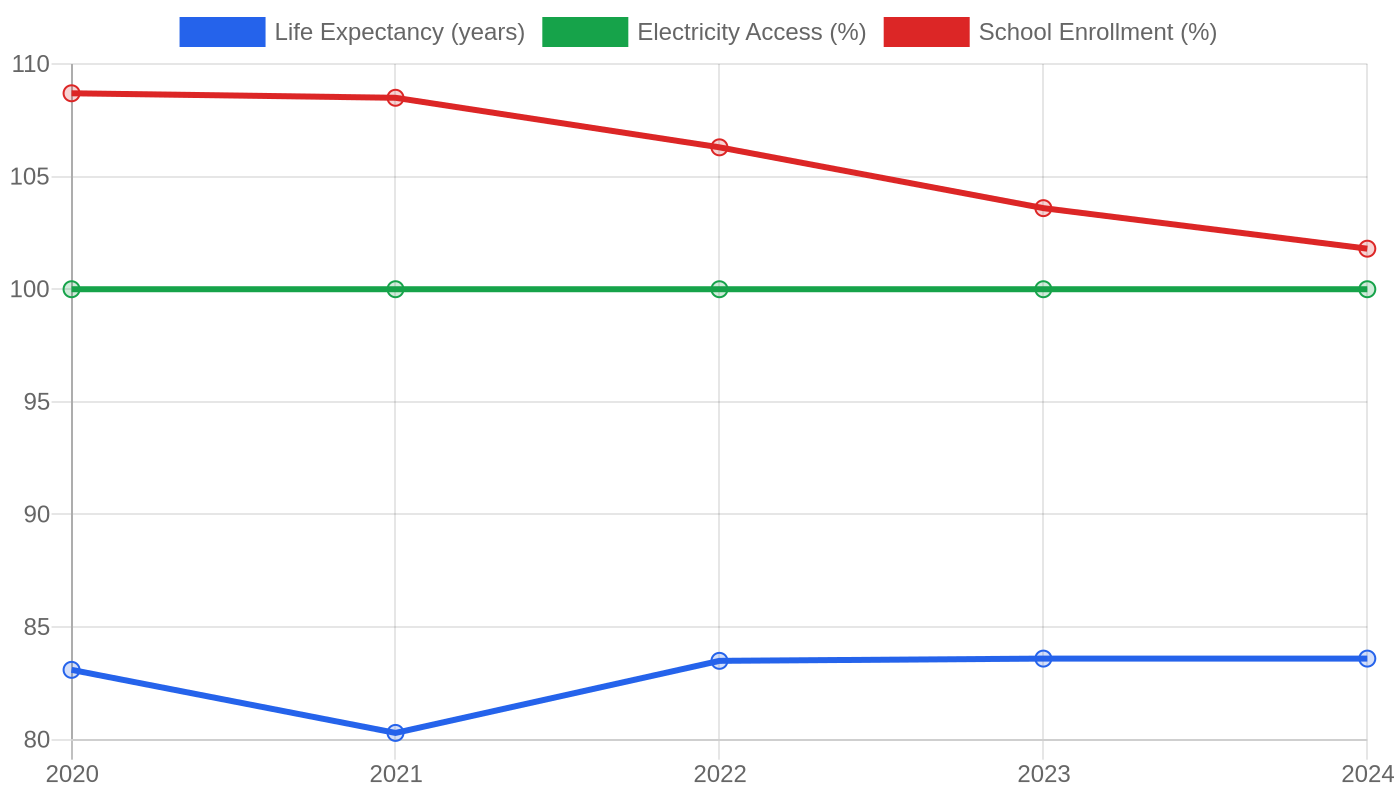
– The World Bank data provided for this feature contains no specific economic indicators—no GDP growth, inflation, unemployment, or per capita income figures—reflecting a broader challenge in tracking the territory’s economic performance through standard international datasets.
– Despite data gaps, Gibraltar’s strategic position at the entrance to the Mediterranean continues to underpin its role as a shipping hub, bunkering port, and base for financial services, though the cost of living remains notoriously high compared to neighboring Spanish regions.
– The political landscape remains dominated by the Brexit question, with the territory’s relationship with the EU and its shared border with Spain defining both domestic policy and business confidence in ways that no other British Overseas Territory experiences.
– For investors and businesses, Gibraltar offers a low-tax, English-legal-system environment with deep links to London, but the absence of a finalized EU treaty means the territory operates in a regulatory limbo that demands careful risk assessment.
The Economic Engine Room — Navigating a Data Vacuum
The challenge of writing about Gibraltar’s economy begins with a stark reality: the World Bank, the world’s premier repository of cross-country economic data, provides no figures for this British Overseas Territory. No GDP growth rate. No inflation CPI. No unemployment percentage. No GDP in US dollars. No GDP per capita on a purchasing power parity basis. No GNI per capita. No population count.
This is not unusual for a territory of Gibraltar’s size and constitutional status—it is neither a fully sovereign state nor a standard dependency, and its economic statistics are often compiled by the Government of Gibraltar’s own statistics office rather than international bodies. Yet the absence of numbers should not be mistaken for an absence of economic activity.
What we know, from decades of reporting and the territory’s own published data, is that Gibraltar operates a highly specialized, service-based economy that punches far above its weight. The main industries—financial services, online gaming, tourism, shipping, and bunkering—generate substantial revenue for a territory of roughly 34,000 residents.
The financial sector alone accounts for a significant share of GDP, built on Gibraltar’s status as a low-tax jurisdiction with a regulatory framework modeled on the United Kingdom. The online gaming industry, which flourished here in the early 2000s, remains a major employer and tax contributor, though regulatory pressures from the UK and EU have tightened the operating environment.
Tourism, driven by cruise ship calls and day-trippers from Spain, provides a steady if seasonal revenue stream, while the port of Gibraltar handles millions of tons of bunker fuel annually, serving vessels transiting the Strait of Gibraltar.
The absence of World Bank data means we cannot provide precise figures on inflation or employment, but anecdotal evidence from local business chambers and government statements suggests that Gibraltar has faced the same post-pandemic inflationary pressures as much of Europe, with housing and energy costs rising sharply.
The labor market, historically tight due to the territory’s small population, relies heavily on cross-border workers from Spain—a dependency that the post-Brexit border arrangements have made increasingly fragile.
The Price of Paradise — Housing and Daily Life on the Rock
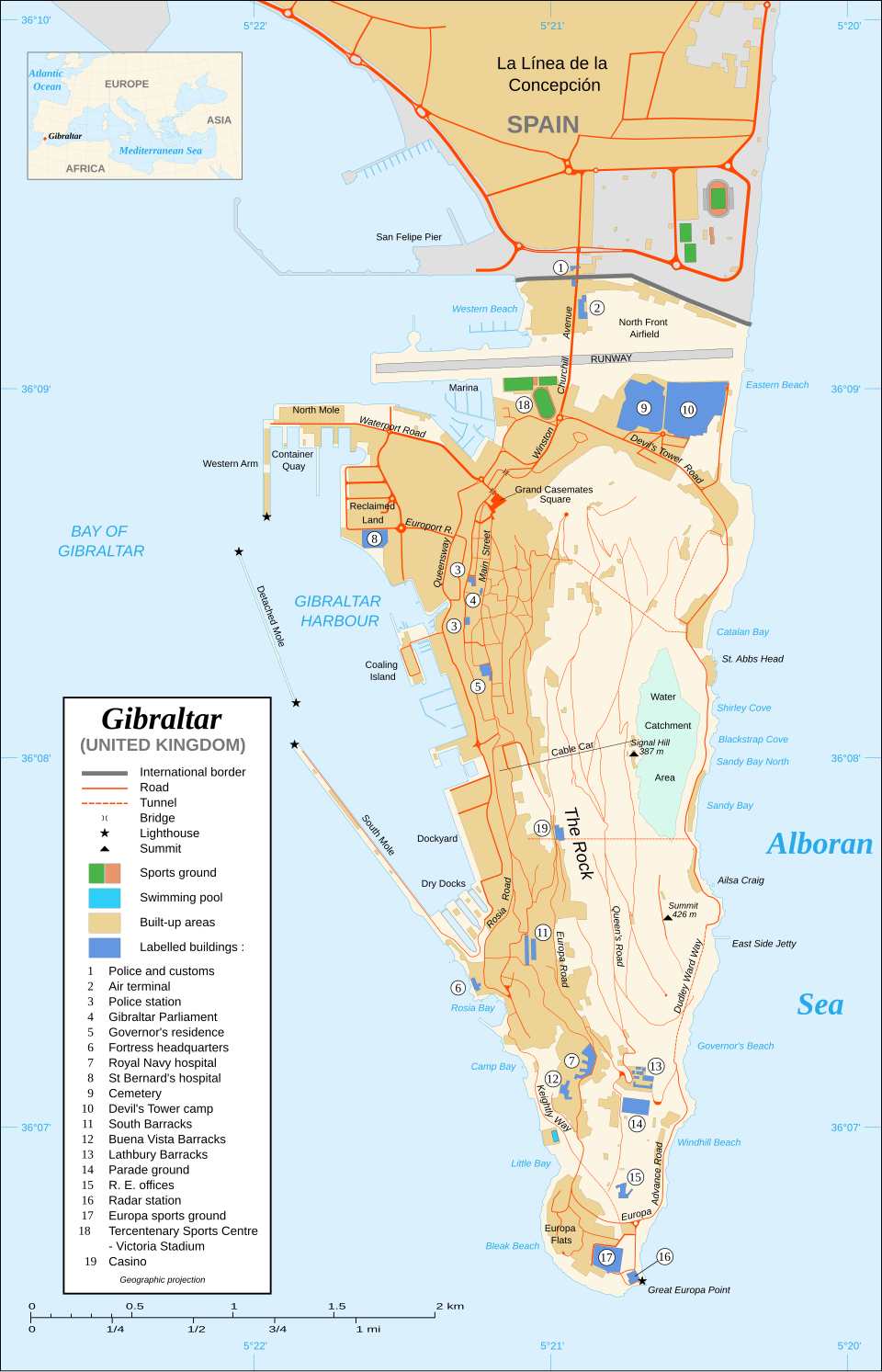
Gibraltar’s cost of living is among the highest in Southern Europe, driven overwhelmingly by the cost of housing. The territory covers just 6.8 square kilometers, and with limited land available for development, property prices have soared to levels that rival London or Monaco. A modest two-bedroom apartment in the city center can command prices that would buy a villa in the Spanish countryside just across the border.
Renting is similarly punishing, with monthly rents for a one-bedroom flat often exceeding €1,500—a figure that places homeownership out of reach for many young Gibraltarians and forces some workers to live in nearby Spanish towns like La Línea de la Concepción, where costs are significantly lower.
Daily expenses for food, utilities, and transportation are also elevated compared to mainland Spain, largely because most goods are imported. Supermarket prices reflect the cost of shipping and the limited retail competition on the Rock. Healthcare is provided through the Gibraltar Health Authority, modeled on the UK’s National Health Service, which mitigates one major expense for residents.
The question of whether to rent or buy is largely academic for most newcomers—buying requires substantial capital, while renting offers flexibility in a market where property values have historically appreciated but remain volatile. For businesses, the cost of commercial real estate in Gibraltar’s compact business district is a significant operational expense, one that companies weigh against the benefits of the territory’s low corporate tax rate of 10 percent.
Business on the Border — Investment Climate and Corporate Gibraltar
Gibraltar’s business environment is defined by two contradictory forces: a highly favorable tax regime and a deeply uncertain political future. The territory offers a 10 percent corporate tax rate, no capital gains tax, no wealth tax, and no VAT, making it an attractive domicile for financial services firms, insurance companies, and online gaming operators. The legal system is based on English common law, and the courts have a reputation for efficiency and reliability.
The top companies operating in Gibraltar include major international insurance and reinsurance firms, online gaming operators like 888 Holdings and Entain (which have significant Gibraltar operations), and a cluster of shipping and bunkering companies that service the Strait.
The sectors to watch are financial technology, insurance-linked securities, and sustainable shipping. Gibraltar has positioned itself as a hub for distributed ledger technology and blockchain businesses, launching a regulatory framework for digital assets as early as 2018. The insurance sector has grown through the development of captive insurance and protected cell companies, attracting corporate clients from across Europe. However, the business climate faces headwinds.
The unresolved post-Brexit negotiations with the European Union have created regulatory uncertainty, particularly around the free movement of people and services. Without a treaty guaranteeing access to the EU single market, Gibraltar-based firms face barriers that erode their competitive advantage. The territory’s inclusion on certain tax transparency watchlists, though not as severe as some other jurisdictions, requires ongoing compliance costs that smaller firms find burdensome.
Safety, Sovereignty, and the Quality of Life Question
Gibraltar is widely regarded as one of the safest territories in Europe, with low rates of violent crime and a visible police presence that reflects the territory’s small size and tight-knit community. The Crime Index and Safety Index data provided for this feature are listed as not available, but local reporting and traveler surveys consistently place Gibraltar among the safest destinations in the Mediterranean. Petty crime such as pickpocketing exists in tourist areas, but serious crime is rare.
The quality of life benefits from the territory’s mild Mediterranean climate, excellent healthcare provision, and a strong sense of community identity that is distinctly Gibraltarian—a blend of British, Spanish, Genoese, Maltese, and Portuguese heritage.
The political landscape, while lacking detailed data in this feature, is dominated by the question of sovereignty. Gibraltar is a British Overseas Territory, and its status is contested by Spain, which has long claimed the Rock. In referendums, Gibraltarians have overwhelmingly voted to remain British, most recently in 2002 and 2016.
The post-Brexit negotiations have brought sovereignty questions to the fore once again, as the EU and UK seek to agree on the terms of Gibraltar’s relationship with the Schengen Area. For residents, the quality of life is directly tied to these negotiations—the ability to cross the border into Spain freely, the status of cross-border workers, and the territory’s access to EU markets all affect daily life.
The political uncertainty is the single greatest drag on long-term confidence, even as day-to-day life on the Rock remains stable and secure.
The Waiting Game — Brexit’s Unfinished Business
Right now, Gibraltar is in a state of suspended animation. The most pressing current affairs issue is the ongoing negotiation between the United Kingdom, the European Union, and Spain over a treaty that would define Gibraltar’s relationship with the bloc after Brexit. The talks have dragged on for years, with periodic breakthroughs and setbacks.
As of early 2026, a framework agreement has been reached in principle, but the final details—particularly around border controls, airport management, and the free movement of people—remain unresolved. The Government of Gibraltar, led by Chief Minister Fabian Picardo, has consistently argued that any deal must respect the territory’s sovereignty and its people’s wishes, while also ensuring economic stability.
The business community is watching these developments with a mixture of hope and resignation. Companies that based their European operations in Gibraltar before Brexit are now weighing whether to maintain their presence or relocate to EU jurisdictions. The online gaming sector, which relies on access to European customers, is particularly sensitive to the outcome.
On the ground, the border crossing between Gibraltar and Spain has become more efficient than in the chaotic months immediately following Brexit, but the threat of disruption remains. Travelers and workers still face occasional delays, and the psychological impact of the unresolved status is palpable. For a territory that has built its prosperity on openness, mobility, and access to European markets, the current limbo is the single greatest challenge it faces.
The Bottom Line
Gibraltar is a country to watch for anyone interested in the intersection of small-state economics, post-Brexit geopolitics, and the future of offshore financial centers. The territory’s data gaps make precise analysis difficult, but its strategic location, low-tax regime, and resilient community ensure it remains economically significant far beyond its size.
Investors and businesses should monitor the EU treaty negotiations closely—a favorable deal would unlock significant growth; continued uncertainty will test Gibraltar’s ability to adapt. For now, the Rock endures, waiting for the political winds to shift.
Sources & Methodology
This article is authored by Economic Pulse Net for informational and research purposes. Economic Pulse Net sources its data from multilateral institutions, national statistics bureaus, and proprietary databases. All data is believed to be current as of the date of publication.
Published: July 17, 2026 | Category: Research — Gibraltar
Use these signals in your own platform
Economic Pulse publishes its live signal feed through a documented, read-only API. Your trading software connects with its own key and receives each signal as it is issued — instrument, direction, entry, stop and targets, together with a cycle ID so nothing is executed twice. The feed is independent of this website and cannot change it.
Signals are informational only and are not financial advice.