Economic Pulse Net | Sources: World Bank World Development Indicators, Government Sources | 2026
Key Takeaways
* Modest Expansion: France’s economy is projected to grow by approximately 0.84% in 2025, reflecting a period of cautious stabilization rather than rapid expansion.
High Living Standards: With a GDP per capita (PPP) nearing $64,000 and a GNI per capita of $48,630, the nation maintains one of the highest standards of living globally despite slower headline growth.
Industrial Powerhouse: The country remains anchored by major global players in aerospace, technology, and industrial goods, including Airbus and Alstom, which drive export strength.
Political Continuity: The semi-presidential system established in 1958 continues to provide a structured framework for governance, balancing executive power with legislative oversight.
Economic Resilience in a Mature Market
France’s economic landscape in 2025 is defined by steady, albeit modest, performance within a mature market structure. According to World Bank data, the country’s GDP is projected to grow by 0.84%, a figure that signals stability rather than volatility in a post-pandemic recovery phase. This growth occurs against a backdrop of low inflation, with the Consumer Price Index (CPI) holding at a manageable 0.94%, suggesting that price pressures are well-contained compared to many other advanced economies.
However, the labor market presents a nuanced challenge; while the workforce is substantial, the unemployment rate stands at 7.54%, indicating that full employment remains an ongoing policy objective. The sheer scale of the economy is evident in its total GDP of approximately $3.37 trillion USD, making it a significant pillar of the European economic bloc.
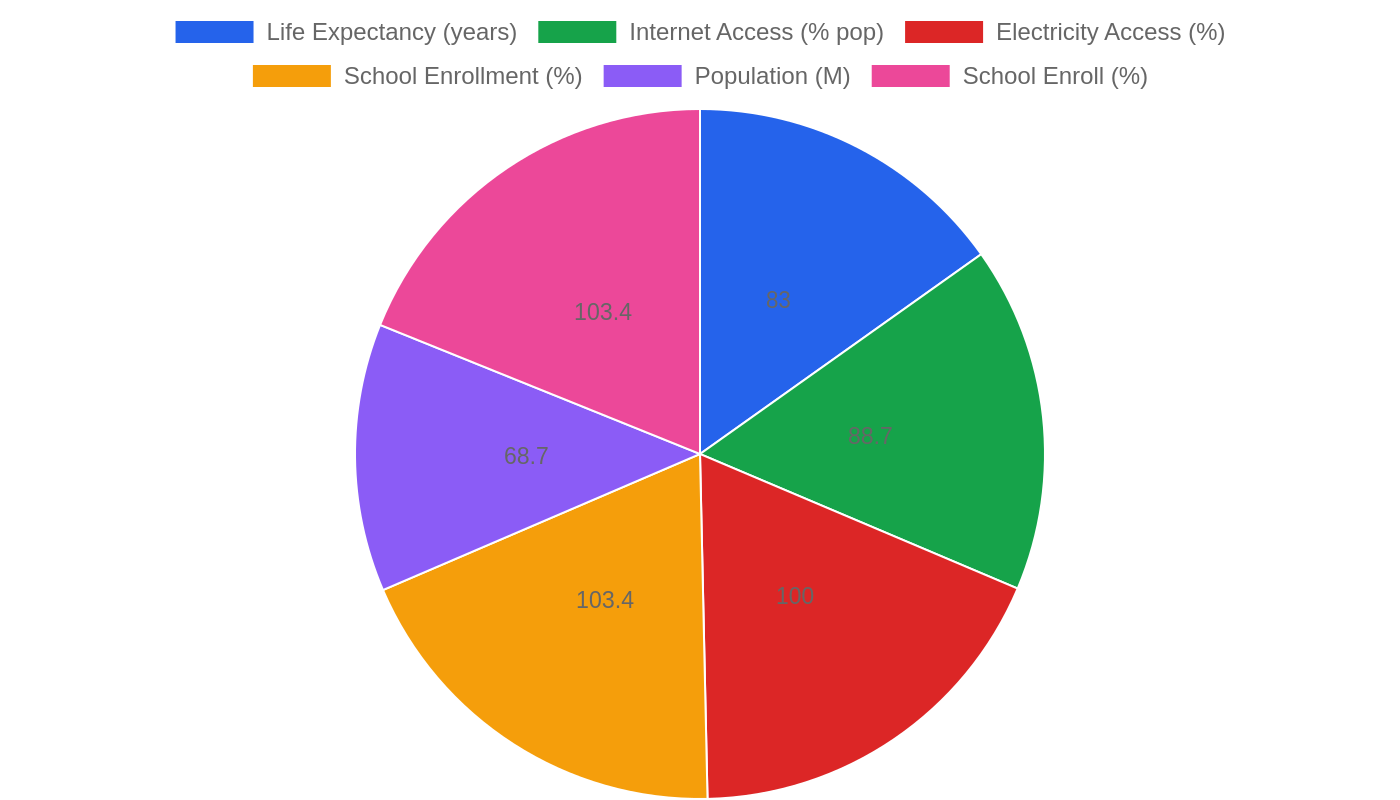
Furthermore, the wealth distribution is robust, with a GDP per capita (PPP) of roughly $63,975 and a GNI per capita of $48,630, underscoring the high purchasing power of the average citizen. A population of nearly 68.7 million people provides a large domestic consumer base, yet the focus remains on maintaining productivity and competitiveness in a globalized world.
These figures collectively paint a picture of an economy that is not chasing hyper-growth but is instead prioritizing sustainable value and social cohesion.
Cost of Living and Daily Expenses
For residents and expatriates alike, the cost of living in France reflects its status as a high-income nation. While specific housing indices are not detailed in the current dataset, the high GNI per capita of $48,630 implies that household incomes are generally sufficient to absorb standard urban living costs. The low inflation rate of 0.94% suggests that daily expenses, from groceries to utilities, have remained relatively stable over the recent period, offering some predictability for budgeting.
In a comparative context, this level of income relative to general price stability indicates that while entry-level costs may be higher than in emerging markets, the overall affordability for middle-to-upper-income earners remains strong. The absence of extreme inflationary spikes allows for better long-term financial planning for families and individuals. Consequently, the cost-of-living environment is characterized more by structural pricing levels typical of Western Europe rather than acute volatility.
This stability is crucial for maintaining consumer confidence, which is the engine of domestic demand. Ultimately, the balance between high incomes and controlled price increases creates a predictable, if premium, lifestyle environment for those residing in major urban centers like Paris or Lyon.
Investment & Business Climate
France offers a compelling investment landscape anchored by its dominance in key industrial sectors. The presence of top-tier companies such as Airbus, Alstom, and Air France-KLM highlights the nation’s strength in transportation and infrastructure, sectors that are critical for global connectivity. In the technology and telecommunications space, firms like Alcatel-Lucent and Alten represent a vibrant ecosystem for innovation and digital services.
Industrial giants such as Air Liquide and Aérospatiale-Matra further diversify the corporate portfolio, ensuring resilience across multiple economic cycles. For investors, these entities provide exposure to established brands with global reach and significant market capitalization. The concentration of “Industrials” and “Technology” among the top listed companies suggests a strategic focus on high-value manufacturing and digital transformation.
Additionally, consumer-facing entities like Aéropostale and Ales Groupe indicate a robust internal retail sector driven by domestic consumption. This mix of heavy industry and tech-forward services creates a balanced business environment that appeals to both conservative and growth-oriented capital. Companies operating within these frameworks benefit from France’s integration into the broader European supply chain and regulatory environment.
Safety, Politics & Quality of Life
The political architecture of France is built upon deep-rooted democratic traditions that emphasize liberty, equality, and fraternity. As a unitary semi-presidential republic, the Fifth Republic Constitution, approved in 1958, establishes a clear separation of powers among the executive, legislative, and judicial branches.
This system was designed specifically to correct the instability of previous republics, providing a durable framework for governance that balances presidential authority with parliamentary accountability. Democratic values are not just legal constructs but are woven into the cultural identity of the nation, influencing policy decisions and public discourse. Regarding safety, specific crime and safety indices are currently listed as N/A, meaning precise statistical comparisons cannot be made from this dataset alone.
However, the structural stability of the government suggests a consistent approach to law enforcement and public order. The quality of life is indirectly supported by the high national income metrics, which fund public services and social safety nets. For international observers, the political continuity offers a predictable environment for long-term engagement. The emphasis on democratic integrity ensures that civil liberties remain protected, contributing to overall social stability.
What’s Happening Now / Current Affairs
The current economic narrative in France is one of cautious navigation through a complex global environment. With GDP growth projected at less than 1% for 2025, policymakers are likely focusing on structural reforms to boost productivity rather than stimulating short-term spending. The near-zero inflation rate of 0.94% indicates that monetary policy has been effective in anchoring expectations, allowing the central bank to maintain a steady hand.
Meanwhile, the unemployment rate of 7.54% remains a focal point for government action, with potential shifts in labor market regulations being discussed to encourage hiring. The strong performance of major corporations like Airbus and Alstom suggests that the industrial sector continues to be a reliable exporter, offsetting some domestic sluggishness. Political stability under the Fifth Republic framework provides a steady backdrop for these economic adjustments, minimizing the risk of sudden policy reversals.
Stakeholders are watching closely to see how the government balances fiscal responsibility with social welfare commitments. The interplay between low inflation and moderate growth defines the current policy dilemma: how to accelerate expansion without reigniting price pressures. Recent developments suggest a preference for gradual, measured steps toward economic revitalization.
The Bottom Line
France represents a stable, high-income market ideal for investors seeking exposure to European industrial and technological leaders. The combination of strong corporate giants and a politically stable democratic framework reduces systemic risk for long-term capital allocation. While growth rates are modest, the high GDP per capita and controlled inflation offer a secure environment for business operations.
Investors should monitor labor market policies and industrial output as key indicators of future economic momentum.
Sources & Methodology
This article is authored by Economic Pulse Net for informational and research purposes. Economic Pulse Net sources its data from multilateral institutions, national statistics bureaus, and proprietary databases. All data is believed to be current as of the date of publication.
Published: September 28, 2026 | Category: Research — France
Use these signals in your own platform
Economic Pulse publishes its live signal feed through a documented, read-only API. Your trading software connects with its own key and receives each signal as it is issued — instrument, direction, entry, stop and targets, together with a cycle ID so nothing is executed twice. The feed is independent of this website and cannot change it.
Signals are informational only and are not financial advice.