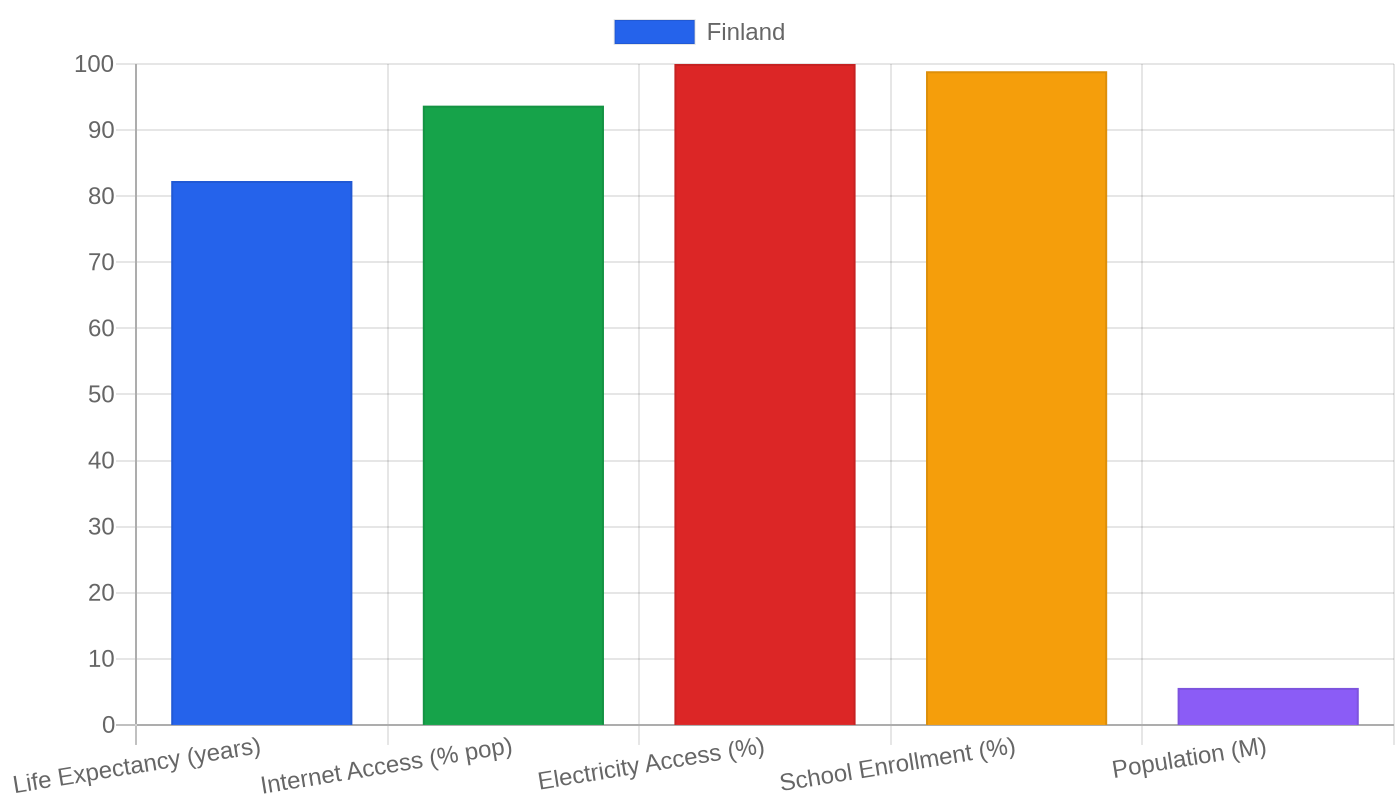
Economic Pulse Net | Sources: World Bank World Development Indicators, Government Sources | 2026
For a nation that consistently ranks among the world’s happiest and most stable, Finland is facing an uncomfortable paradox. Its economy, long buoyed by a robust welfare state and globally competitive industries, is barely growing. With GDP expansion hovering near zero and unemployment approaching double digits, the land of a thousand lakes is confronting a period of sluggishness that challenges its egalitarian ideals.
Yet, Finland’s deep reserves of social trust, political stability, and world-class infrastructure mean this is no crisis—but it is a wake-up call.
Key Takeaways
– Near-zero growth: Finland’s GDP grew by just 0.17% in 2025, according to the World Bank, signaling a prolonged period of economic lethargy.
– Inflation is tame, but unemployment is stubborn: CPI inflation sits at a mere 0.34%, but the jobless rate has climbed to 9.46%, well above the eurozone average.
– High income, high expectations: With a GDP per capita of nearly $66,000 (PPP) and a GNI per capita of $55,250, Finland remains wealthy—but growth is failing to keep pace with its Nordic neighbors.
– A political system built on trust: Finland’s Nordic welfare model, strong protections for women’s and LGBT rights, and secular, environmentalist values underpin a society that performs in the high range of global democracy indices.
– Business hubs are quiet giants: From Ahlstrom in basic materials to Cargotec in industrials, Finland’s top companies are global players—but the economy lacks a dynamic startup or tech engine to drive the next wave of growth.
The Quiet Slowdown — GDP, Inflation, and the Job Market
Finland’s economy in 2025 is best described as a car idling at a traffic light. The World Bank reports GDP growth of just 0.17%—a figure so close to zero that it essentially signals stagnation. For a country that weathered the pandemic with relative resilience and has long benefited from strong export demand in machinery, paper, and chemicals, this is a notable comedown.
The numbers suggest that Finland is struggling to regain momentum after a series of external shocks, including the war in Ukraine, which disrupted trade with Russia, and a broader European industrial slowdown.
Inflation, at least, is not the problem. The CPI reading of 0.34% is among the lowest in the developed world. That might sound like good news for consumers, and in many ways it is—prices are stable, and purchasing power is not being eroded. But ultra-low inflation in a near-zero growth environment also hints at weak demand. Finnish households and businesses are not spending or investing aggressively, and the central bank has limited room to stimulate.
The real pain point is employment. Unemployment stands at 9.46%, according to the World Bank. That is high by Finnish standards and significantly above the eurozone average. The Nordic welfare model, which the country maintains with “significant state intervention in critical economic sectors,” as the political landscape data notes, provides a strong safety net. But a jobless rate approaching double digits strains public finances and tests the social contract.
Young people and workers outside the Helsinki metropolitan area are likely feeling the pinch most acutely.
Finland’s GDP per capita (PPP) of nearly $65,884 underscores that this is still a very rich country. But the gap between its wealth and its growth trajectory is widening. Without a new engine—whether in technology, green energy, or services—the risk is that stagnation becomes structural.
The Price of Nordic Living — Housing and Daily Expenses
Finland is not cheap, but it is not the most expensive corner of Scandinavia either. For a country with a GNI per capita of $55,250, housing costs in Helsinki have risen steadily over the past decade, though they remain below Stockholm or Oslo. The rental market in the capital is tight, particularly for smaller apartments in central districts, while homeownership rates are high in smaller cities and rural areas.
Outside the greater Helsinki region, housing is far more affordable, but job opportunities thin out accordingly.
Daily expenses—groceries, transport, utilities—reflect the country’s high wage structure and value-added tax regime. Finland’s strong welfare state means that healthcare and education are largely publicly funded, which offsets some of the higher costs of living. For a middle-class family, the trade-off is clear: high taxes and high prices in exchange for excellent public services, low crime, and a clean environment.
The cost of living is manageable for those employed, but for the 9.46% without work, the gap between the safety net and a comfortable life can feel wide.
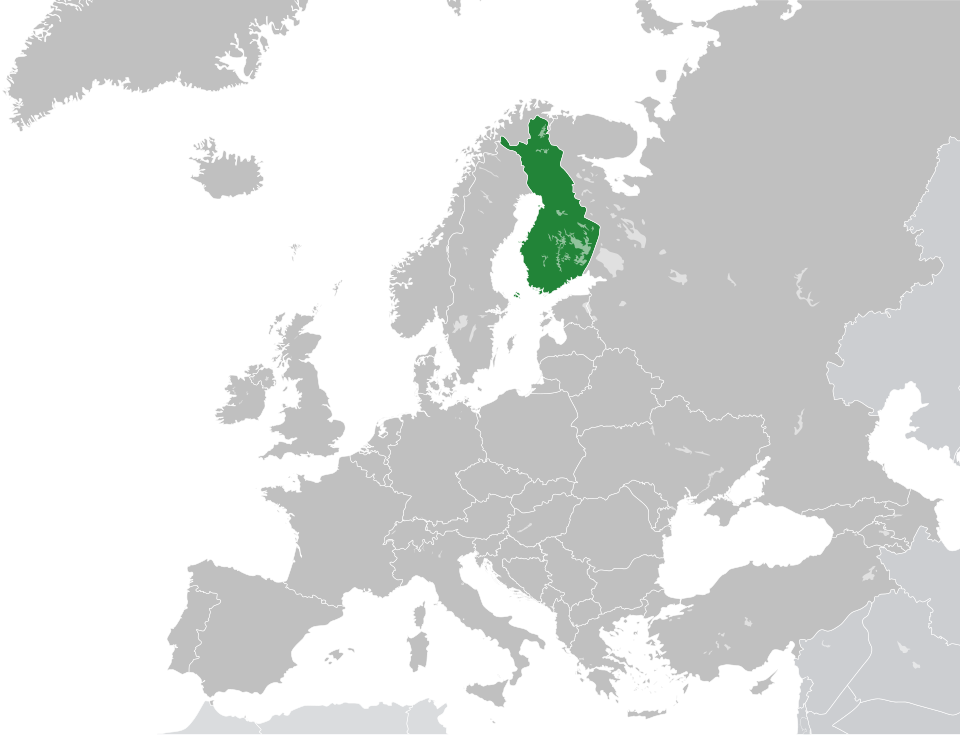
Where the Giants Sit — Investment and Business Climate
Finland’s corporate landscape is dominated by established industrial and financial players rather than flashy tech disruptors. The list of top companies includes Ahlstrom in basic materials, Cargotec in industrials, and Aktia Bank and Bank of Åland in financials. There are consumer-facing names like Alko, the state-owned alcohol retailer, and Alma Media in media services. Amer Sports, the sporting goods giant, is a rare consumer goods heavyweight with global reach.
What is missing is a vibrant, high-growth technology sector. Bittium and Codenomicon are present in the consumer goods and technology categories, but neither has the scale to drive national growth. Finland’s business environment remains stable, transparent, and well-regulated—ideal for long-term investment.
The political landscape, described as rooted in “egalitarian ideals” with “robust LGBT rights, strong efforts to eliminate poverty, broad protections for women’s rights, secularism, and environmentalism,” creates a predictable and socially cohesive climate for business. But predictability does not always breed dynamism. For investors, Finland offers safety and quality of life, but not explosive returns.
Safety, Trust, and the Finnish Way of Life
Finland performs in the “high range” of global democracy indices, according to International IDEA’s Global State of Democracy (GSoD) Indices and Democracy Tracker. That is no surprise. The country’s political culture is built on transparency, consensus, and a deep commitment to social welfare. The Nordic welfare model ensures that even in times of economic weakness, the social fabric holds.
Protections for women’s rights, LGBT rights, and environmental causes are not afterthoughts—they are core to national identity.
Crime and safety indices are not available in the provided data, but Finland is widely regarded as one of the safest countries in the world. Violent crime is rare, and trust in institutions—police, government, the judiciary—is exceptionally high. This social capital is a genuine economic asset. It reduces transaction costs, encourages investment, and makes life easier for residents and businesses alike. In a period of economic stagnation, that trust is a cushion that many other countries lack.
The Now — What Is Happening in Finland Right Now
Finland is not in crisis, but it is in a holding pattern. The near-zero GDP growth and rising unemployment suggest that the post-pandemic recovery has stalled. The country’s traditional export industries—paper, machinery, chemicals—face headwinds from weak European demand and structural shifts toward digitalization and green transitions. Finland has ambitious climate goals, and its environmentalist political culture means that the green transition is both a priority and a potential source of new growth.
But that transition takes time and investment, and the payoff is not immediate.
Politically, Finland’s government is stable, but the pressure is mounting. The welfare state requires tax revenue, and tax revenue requires growth. With unemployment at 9.46%, the government faces hard choices about labor market reform, immigration policy, and public spending. The country’s recent NATO membership, a historic shift prompted by Russia’s invasion of Ukraine, has reshaped its security posture but has not yet translated into an economic dividend.
For now, Finland is waiting—for European demand to recover, for its green industries to scale, and for a new wave of innovation to emerge from its world-class education system.
The Bottom Line
Finland is a country that has earned its reputation for stability, safety, and quality of life. But stability can become stagnation. With GDP barely growing and unemployment high, the Finnish model is being tested. Investors and businesses looking for a predictable, low-risk environment will find much to admire here. But those seeking rapid growth or a booming startup scene should look elsewhere.
For policymakers and economists, Finland offers a fascinating case study of how a wealthy, egalitarian society navigates the challenge of low growth without sacrificing its values.
Sources & Methodology
This article is authored by Economic Pulse Net for informational and research purposes. Economic Pulse Net sources its data from multilateral institutions, national statistics bureaus, and proprietary databases. All data is believed to be current as of the date of publication.
Published: July 18, 2026 | Category: Research — Finland
Use these signals in your own platform
Economic Pulse publishes its live signal feed through a documented, read-only API. Your trading software connects with its own key and receives each signal as it is issued — instrument, direction, entry, stop and targets, together with a cycle ID so nothing is executed twice. The feed is independent of this website and cannot change it.
Signals are informational only and are not financial advice.