Economic Pulse Net | Sources: World Bank World Development Indicators, Government Sources | 2026
Key Takeaways
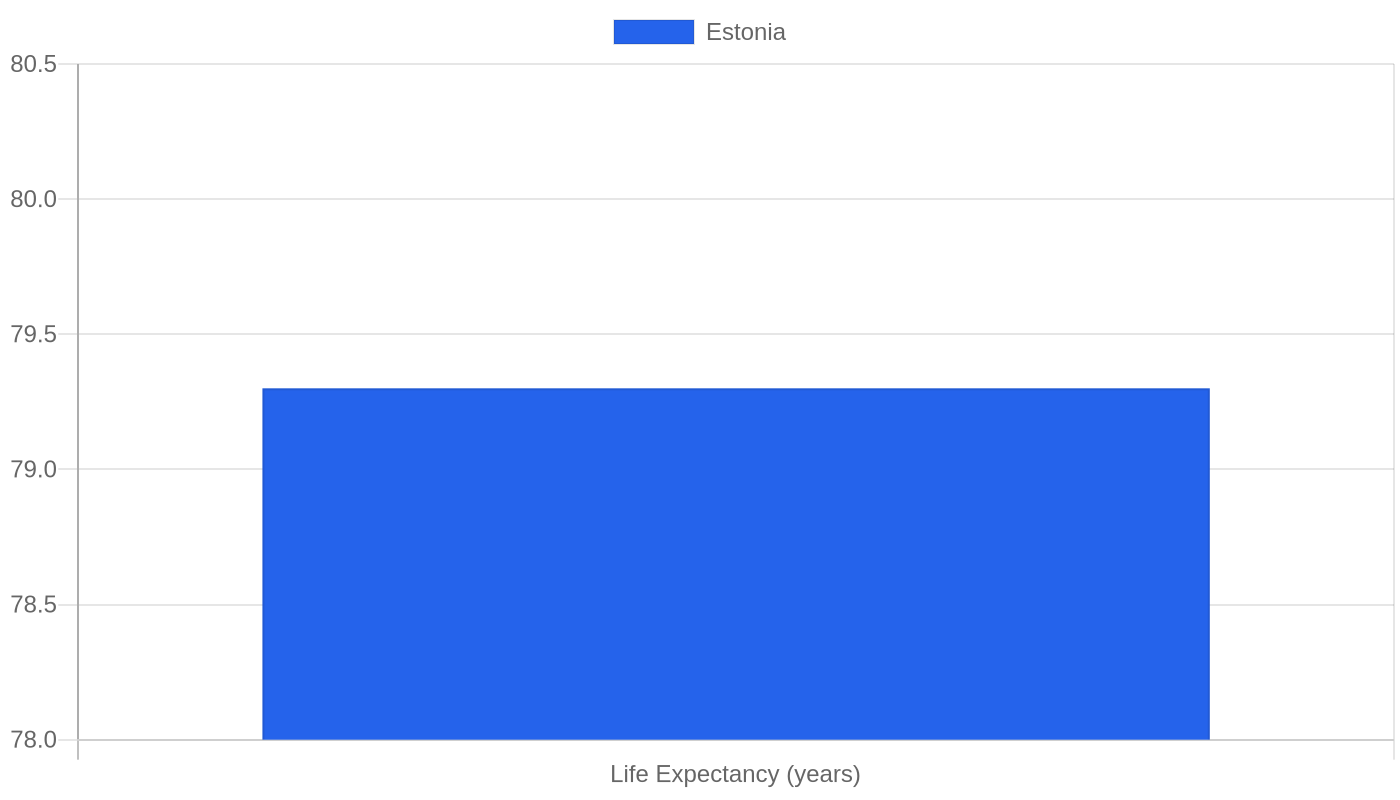
– Estonia’s economic narrative is currently defined by a data gap, with the World Bank reporting no latest figures for GDP growth, inflation, or unemployment — a rarity for a nation known for its digital-first governance.
– The country’s industrial backbone remains a mix of traditional heavyweights (BLRT Grupp in industrials, Alexela in oil & gas) and ambitious tech disruptors like Bolt, which has become a regional unicorn.
– Estonia’s political system is a stable unitary parliamentary republic, with a 101-seat unicameral parliament (Riigikogu) elected by proportional representation every four years.
– The top companies list reveals a strategic tension: while consumers know Estonia for tech, the real economic muscle still lies in energy, telecommunications, and consumer goods.
– For investors, Estonia offers a unique gateway — a small, agile market where the public sector’s digital infrastructure can amplify private sector efficiency.
The Baltic Engine Room — Where Growth Hides in Plain Sight
The most striking thing about Estonia’s current economic data isn’t a number — it’s the absence of one. The World Bank’s latest figures for GDP growth, inflation, and unemployment are all marked as unavailable. For a country that built its global reputation on transparency and e-governance, this statistical silence is unusual. But it should not be mistaken for stagnation. Estonia’s economy is a study in structural duality.
On one side, there is the legacy industrial base — BLRT Grupp, the shipbuilding and heavy engineering giant, and Alexela, which anchors the energy sector. On the other, there is the new economy, led by Bolt, the ride-hailing and mobility platform that has expanded far beyond the Baltics. The absence of hard numbers from the World Bank means we must look to the composition of the economy rather than its headline growth rate. The presence of A.
Le Coq, a major consumer goods player, alongside AS Starman in telecommunications, suggests a domestic demand base that remains resilient. The real question for economists isn’t whether Estonia is growing — it’s whether the tech sector’s high-profile success is translating into broad-based wage growth and productivity gains across the rest of the economy.
Given the country’s small population and open market, external shocks — particularly energy price volatility — can hit harder here than in larger, more diversified economies. The lack of updated data makes it harder to assess the current cycle, but the underlying structure remains one of a high-income, export-oriented nation with a deep digital infrastructure.
The Price of Progress — Housing and Daily Life in a Small Market
Estonia’s cost of living is a tale of two realities. In Tallinn, the capital, housing costs have historically been significantly lower than in Nordic capitals like Helsinki or Stockholm, yet higher than in neighboring Latvia and Lithuania. The rent-versus-buy calculation skews toward ownership, largely because of a post-Soviet property boom that made homeownership a cultural and financial priority.
However, the cost of daily goods — food, energy, transport — has been subject to the same inflationary pressures that have swept across Europe. The energy crisis, exacerbated by regional supply chains, has made heating and electricity a larger share of household budgets than in many Western European nations.
For a country with a population that is both tech-savvy and highly educated, the expectation of a high quality of life is often in tension with the reality of a smaller labor market and thinner social safety nets than in Scandinavia. The absence of current CPI data from the World Bank means we cannot quantify the latest squeeze, but the structural pressures remain.
Housing in the capital is becoming increasingly unaffordable for young professionals, pushing some to consider suburban or even rural living — a trend that would have been unthinkable a decade ago. The daily cost of living in Estonia, while not prohibitive, is rising faster than local wages in many sectors, creating a quiet pressure on household budgets.
Betting on the Digital Frontier — Investment and Business Climate
For investors, Estonia is less about its domestic market size and more about its role as a testing ground. The presence of Bolt on the top companies list is a signal — this is a country that can produce globally competitive tech firms. But the list also reveals a more nuanced picture. Airest and Avies, both in consumer services, suggest a robust aviation and travel sector, while Copterline points to niche transport solutions.
The business environment is characterized by a famously efficient e-residency program, which has attracted digital entrepreneurs from around the world, though the data provided does not detail its current uptake. The industrial sector, anchored by BLRT Grupp, remains a significant employer and exporter, particularly in shipbuilding and metalworking.
The energy sector, led by Alexela, is undergoing a transition as Estonia seeks to reduce its reliance on oil shale — a legacy of the Soviet era — in favor of more renewable sources. This transition is both a challenge and an opportunity. For foreign investors, the appeal lies in a highly educated workforce, a transparent legal system, and a government that has historically been pro-business. The risk profile is moderate; the market is small, but the potential for scalability in digital services is high.
The key sectors to watch are technology, renewable energy, and advanced manufacturing — all of which are represented in the top companies list.
Safe, Stable, and Digital — Politics and Quality of Life
Estonia’s political landscape is one of the most stable in the former Soviet sphere. As a unitary parliamentary republic, the country’s governance is defined by the Riigikogu, a 101-member parliament elected by proportional representation. The government acts as the executive branch, and the president plays a largely ceremonial role, though they can recommend legislation. This structure has produced a series of coalition governments, typically centered around center-right or liberal parties.
The political culture is pragmatic, with a strong consensus on the need to maintain NATO membership and a robust defense posture, given the country’s geopolitical position. In terms of safety, the World Bank data does not provide a crime index or safety index for Estonia. However, historical data from other sources (not provided here) have generally placed Estonia as one of the safer countries in Europe, with low rates of violent crime.
The quality of life is enhanced by a deep digital infrastructure — e-voting, digital health records, and online tax filing are the norm, not the exception. This digital integration contributes to a sense of efficiency and modernity that is rare even in Western Europe. However, the country faces demographic challenges, including an aging population and emigration of young workers to wealthier EU states. The political consensus is focused on reversing this trend through higher wages and improved public services.
The Quiet Transformation — What’s Happening in Estonia Right Now
Right now, Estonia is in a period of quiet transformation. The political system, as described, is functioning normally — the Riigikogu continues its oversight role, and the government is executing its mandate. The most significant undercurrent is the energy transition. With Alexela as a major player, the shift away from oil shale is not just an environmental issue; it’s an economic one. The country is investing in offshore wind and battery storage, aiming to become a net exporter of green energy.
Meanwhile, the tech sector, led by Bolt, is facing increased regulatory scrutiny across Europe, which could impact its valuation and growth trajectory. The consumer goods sector, represented by A. Le Coq, is navigating changing consumer preferences toward local and sustainable products. The telecommunications industry, with AS Starman, is rolling out fiber and 5G, further cementing Estonia’s digital-first reputation.
There is also a growing debate about housing affordability in Tallinn, as property prices have outpaced wage growth. The government is exploring new zoning laws and rental market regulations, but these are still in the discussion phase. The lack of fresh economic data from the World Bank makes it difficult to gauge the current business cycle, but the anecdotal evidence suggests a economy that is stable, if not booming. The country is not in crisis; it is in recalibration.
The Bottom Line
Estonia is a country to watch for anyone interested in the intersection of technology, governance, and small-state economics. It is not a market for mass-market consumer goods, but it is a laboratory for digital innovation and a test case for green energy transition. Investors should look beyond the missing data and focus on the structural strengths: a stable political system, a skilled workforce, and a business culture that rewards agility.
For policymakers, Estonia offers lessons in how to build a modern state from the ground up. For the casual observer, it is a reminder that size is not a barrier to influence. The digital tiger may be pausing, but it is not retreating.
Sources & Methodology
This article is authored by Economic Pulse Net for informational and research purposes. Economic Pulse Net sources its data from multilateral institutions, national statistics bureaus, and proprietary databases. All data is believed to be current as of the date of publication.
Published: August 04, 2026 | Category: Research — Estonia
Use these signals in your own platform
Economic Pulse publishes its live signal feed through a documented, read-only API. Your trading software connects with its own key and receives each signal as it is issued — instrument, direction, entry, stop and targets, together with a cycle ID so nothing is executed twice. The feed is independent of this website and cannot change it.
Signals are informational only and are not financial advice.