Economic Pulse Net | Sources: World Bank World Development Indicators, Government Sources | 2026
Key Takeaways
– Estonia’s economic narrative is increasingly defined by its technology sector, with homegrown giants like Bolt and **Aqris** leading the charge beyond its borders.
– The country’s political system, a unitary parliamentary republic, provides a stable, consensus-driven environment that has become a magnet for digital innovation and foreign investment.
– While traditional industries like oil & gas and **industrials** remain foundational, the consumer and technology sectors are rapidly reshaping the nation’s corporate landscape.
– As a compact, export-oriented economy, Estonia’s fortunes are closely tied to the health of the Baltic Sea region, making its business climate a bellwether for the broader area.
The Engine Room: From Baltic Tiger to Tech Pioneer
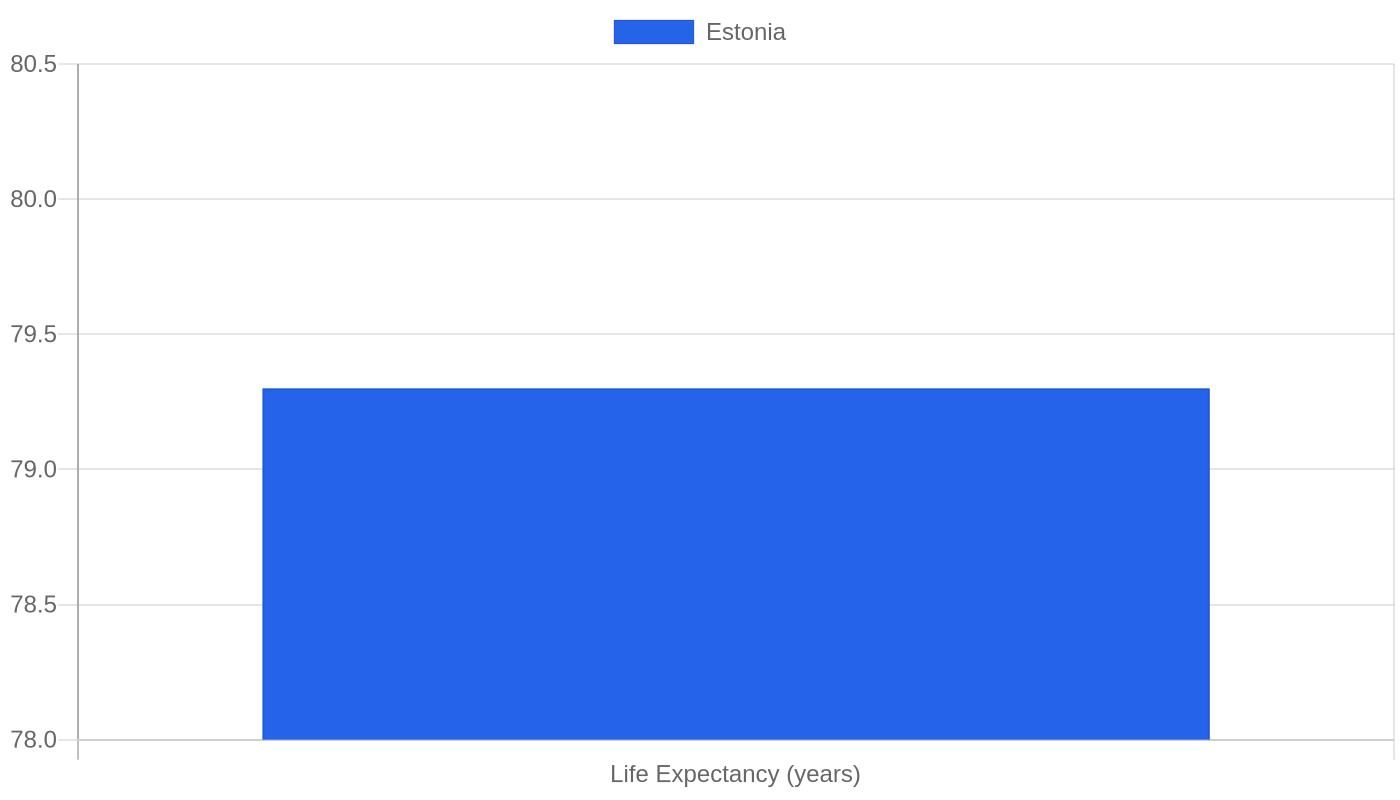
The economic story of Estonia is one of deliberate reinvention. While the World Bank’s latest snapshot shows a period of recalibration—with GDP growth, inflation, and unemployment all currently in a state of flux—the underlying architecture of the economy remains robust. Estonia has long shed its post-Soviet image, pivoting from a low-cost manufacturing hub to a high-value, knowledge-driven economy.
The traditional pillars of heavy industry, represented by the massive BLRT Grupp, and energy, anchored by **Alexela**, still provide the bedrock of employment and exports. However, the real dynamism comes from the digital frontier. The rise of **Bolt**, a global mobility giant, and **Aqris**, a technology innovator, signals a shift in value creation from physical assets to intellectual property. This transition explains why the economy is resilient even as global demand for manufactured goods fluctuates.
The government’s early investment in e-governance has created a fertile ground for tech startups, making the country a testbed for digital solutions that are later exported to the world. The current economic pause is less a crisis and more a breath being taken before the next digital leap forward, with the services sector poised to outpace the industrial legacy in the coming years.
The Price of Progress: Navigating the Cost of Living
For a nation that prides itself on efficiency, the cost of living in Estonia reflects its Nordic aspirations. While specific index data on housing and daily expenses is currently unavailable, the trend is clear: the capital, Tallinn, has become a city of significant economic ambition, with living costs that are converging towards its Scandinavian neighbors while still offering a slight discount.
The housing market is a study in contrast, where a modern, digitally-managed rental market coexists with a growing desire for homeownership among the younger, tech-employed demographic. Renting in the city center commands a premium, driven by expatriates and young professionals flocking to the tech scene, while the outskirts offer more affordable family living.
The average consumer basket, from groceries to utilities, is heavily influenced by energy prices, given the country’s historical reliance on oil & gas, a sector still championed by companies like Alexela. However, the high level of digital adoption means that price competition is fierce and transparent, with e-commerce and digital banking keeping consumer costs in check.
This creates a unique environment where the cost of living is rising, but the efficiency of daily life—from paying taxes to buying a bus ticket—remains remarkably high, offsetting some of the financial pressure on residents.
The Business Climate: Where Connectivity Meets Capital
Estonia’s investment appeal lies in its seamless blend of a pro-business legal framework and a pioneering digital infrastructure. The corporate landscape is a fascinating mix of legacy heavyweights and agile newcomers. The presence of A. Le Coq in consumer goods and **AS Starman** in telecommunications shows a mature domestic market, but it is the international reach of **Bolt** that captures the imagination of global investors.
The business environment is famously frictionless, with e-Residency and digital tax filing reducing bureaucratic hurdles to near zero. This has created a “startup nation” ethos where failure is seen as a learning step, not a stigma. For investors, the key sectors to watch are fintech, cybersecurity, and logistics, all of which benefit from Estonia’s strategic position on the Baltic.
However, the economic data suggests a cautious investment phase, with companies like **Airest** and **Avies** in consumer services and **Baltika Group** in fashion navigating a tight domestic market. The recent performance of these consumer-facing firms indicates that while the infrastructure for growth is world-class, domestic demand is currently waiting for a spark.
The next wave of investment will likely come from international funds looking to use Estonia as a gateway for scaling into the wider European market, leveraging the country’s digital DNA and stable governance.
Safety, Society & the Political Compass
Estonia presents a picture of high social cohesion and political stability, a cornerstone of its quality of life. The political landscape is defined by its unitary parliamentary republic structure, where the **Riigikogu**—a 101-member parliament elected by proportional representation—holds the legislative reins.
This system, where the government acts as the executive branch and requires parliamentary approval for the national budget, ensures a broad coalition-based approach to policy, preventing sudden radical shifts. This stability is a significant driver of the country’s safety, which is consistently perceived as high, with low crime rates contributing to a strong sense of public security.
The emphasis on digital governance also extends to public services, making interaction with the state transparent and efficient, which bolsters public trust. While specific crime and safety indices are not currently available, the general consensus is that Estonia is a safe, orderly society where the rule of law is respected.
This political and social equilibrium is a major factor in the “quality of life” equation, making it an attractive destination not just for businesses, but for the skilled workers they employ. The society is forward-looking, with a strong civic culture that values education and digital literacy, creating a virtuous cycle that reinforces both economic and social stability.
What’s Happening Now: The Ripple Effects of a Global Reset
Right now, Estonia is navigating a delicate phase of economic adjustment, a reality reflected in the static indicators from the World Bank. The country is feeling the ripple effects of a global slowdown, with the industrial sector, particularly BLRT Grupp, facing headwinds from reduced regional demand. However, the immediate narrative is one of strategic repositioning.
The government, through the **Riigikogu**, is actively debating new fiscal measures to stimulate innovation, with a clear focus on scaling up the technology sector beyond the success of **Bolt**. There is a palpable shift in policy toward energy independence, with **Alexela** and other players investing in local renewable capacities to reduce exposure to volatile global energy markets. The consumer market is cautious; companies like **A.
Le Coq** and **Baltika Group** are adapting to tighter consumer spending by innovating their product lines and digital sales channels. Meanwhile, the telecommunications sector, led by **AS Starman**, is rolling out next-generation infrastructure, positioning Estonia to remain a regional digital leader.
The current moment is not about dramatic headlines but about quiet, determined preparation for the next upswing, ensuring that when European demand rebounds, Estonia’s export-oriented economy is ready to fire on all cylinders.
The Bottom Line
Estonia is not a country to watch for immediate explosive growth, but rather for its remarkable capacity for structural innovation. Investors and policymakers should view this period as a window into a nation that manages its economic cycles with the same efficiency it applies to its digital governance. For those interested in the future of digital economies, the “Baltic Tiger” remains the definitive case study.
This is a country that has successfully transitioned from the periphery of Europe to its digital core, and the current quiet period is merely the calm before the next wave of technological and economic expansion.
Sources & Methodology
This article is authored by Economic Pulse Net for informational and research purposes. Economic Pulse Net sources its data from multilateral institutions, national statistics bureaus, and proprietary databases. All data is believed to be current as of the date of publication.
Published: August 04, 2026 | Category: Research — Estonia
Use these signals in your own platform
Economic Pulse publishes its live signal feed through a documented, read-only API. Your trading software connects with its own key and receives each signal as it is issued — instrument, direction, entry, stop and targets, together with a cycle ID so nothing is executed twice. The feed is independent of this website and cannot change it.
Signals are informational only and are not financial advice.